Owned and operated by a cf veteran


Glutathione drips are Bollywood’s worst-kept skin-lightening secret. Here is where that story comes from, what glutathione really does to skin colour, and what the research says about pills, creams and IV drips. Plain words, no hype.
- 4 small human trials
- 0 good IV trials
- 2.57M South Asian Canadians
- 8 easy visuals
Glutathione is your body’s main antioxidant. In the lab, it can push skin cells to make a lighter pigment. That is why it became famous for skin lightening, first in Asia and then across India’s film world.
The human proof is small. Four short trials used pills, a lozenge or a cream. They found mild lightening, mostly on skin that gets sun. The effect faded when people stopped.
There is no good trial of IV glutathione drips for skin lightening at all. Drug regulators in the Philippines and the United States have both warned against injectable skin lighteners.
Jump to the evidence and risk chart to see how each form compares.
- The short version
- The Bollywood story
- A short timeline
- Why Canadians search this
- What glutathione is
- How skin colour is made
- The four human trials
- Where lightening showed up
- Evidence and risk chart
- IV drips and injections
- The risks
- The sun trade-off
- Pills vs cream vs drips
- Help for dark spots
- Claims to watch for
- Questions to ask a clinic
- Picking a supplier
- Products
- Common questions
- Bottom line
- Sources
The short version
- Glutathione is a tiny molecule every cell in your body makes. Its main job is clean-up.
- In skin cells, it can switch pigment making from dark brown to a lighter red-yellow.
- Four small trials in people found mild lightening. It faded after people stopped.
- No proper trial has tested IV glutathione drips for skin lightening.
- Drips are widely used in India’s clinics and film world. Being popular is not the same as being proven.
- Lighter pigment is also weaker sun protection. That is a real trade-off.
The Bollywood story
In India, glutathione drips are not a secret to anyone who works in the clinic and beauty trade. Aesthetic clinics in big cities offer “glow drips” as a regular service. People in the film and TV world are among their customers. Stars rarely talk about it in public, but inside the industry it is common knowledge.
And it is not just India. Glutathione drips are now very common in the United States and here in Canada too. Med spas, IV lounges and some clinics offer them next to vitamin drips and hydration packages, often sold as a “glow” or “detox” drip.
This guide does not name anyone. The point is not who uses it. The point is why so many people want it, and what it really does.
The “why” goes back a long way. For decades, South Asian ads sold the idea that lighter skin means more beauty and more success.
Fairness creams
Fair & Lovely launched in India in 1975. By 2012 it held about 80% of India’s lightening cream market.
Stars in the ads
For years, film stars were the faces of fairness cream ads. That tied “fair” skin to fame and success in millions of minds.
A big rename
In June 2020, Unilever dropped “Fair” from the name. The cream became Glow & Lovely. The company said words like “fair” and “light” push one idea of beauty.
Pills and drips
As creams faced pushback, clinics and online shops started selling glutathione pills and IV “glow drips.” That is where the Bollywood link grew.
A short timeline
Dates from the sources listed at the end of this guide.
One thing to remember through all of this: a “glow drip” is a needle in a vein. It is a medical procedure, not a beauty product.
Why so many Canadians search this
This is not just an India story. Canada is home to one of the largest South Asian communities in the world.
Statistics Canada, Portrait of the South Asian Populations in Canada (2025), using the 2021 Census.
Bollywood films, South Asian beauty trends and family pressure travel with people. So do “glow drips,” which are easy to find at med spas and IV lounges in most big Canadian cities. In Canada, “glutathione injection” is searched about 1,600 times a month, and “glutathione IV” about 590 times.
If you or someone you know is thinking about it, the rest of this guide is the plain truth, before anyone spends money.
What glutathione is, in plain words
Glutathione is a tiny molecule made of three amino acids: glutamate, cysteine and glycine. Amino acids are the building blocks of protein. Every cell in your body makes glutathione. You do not have to eat it.
Think of each cell as a busy kitchen. Cooking makes smoke and grease. In the body, that mess is called free radicals. Glutathione is the clean-up crew. It mops up the mess before it damages the kitchen.
That is its main job. Skin lightening is a side effect scientists noticed later. Our glutathione benefits guide covers the rest of what it does.
Want the wider picture? Our loose skin peptide guide compares glutathione with GHK-Cu and five others.
How skin colour is made
Your skin colour comes from pigment called melanin. It is made by small cells called melanocytes. Think of them as tiny paint factories deep in your skin.
Each factory can make two paints:
- Dark paint (eumelanin). Brown to black. It is also your best natural sunscreen.
- Light paint (pheomelanin). Red to yellow. It blocks much less sun.
A worker called tyrosinase runs the factory. Glutathione does two things in the lab. It slows that worker down. And it nudges the factory to make more light paint and less dark paint.
A simple drawing of what lab studies show, not to scale.
That is the whole idea. Less worker, more light paint, so skin looks a little lighter. But notice the catch. Light paint is a weaker sunscreen. We come back to that in the sun trade-off.
The four human trials, side by side
Many websites say glutathione “works.” Here is what that claim actually rests on. Only four small human studies tested glutathione for skin colour, according to a 2019 review in the Journal of Cosmetic Dermatology.
Study details from the sources at the end of this guide. Bar length shows how many people took part.
Here is what each one found, in plain words:
- Pills, 500 mg a day (Thailand, 2012). Sixty medical students took glutathione or a dummy pill for 4 weeks. Skin got a bit lighter in all six spots tested, but the difference beat the dummy pill in only two: one side of the face and a sun-exposed forearm.
- Pills, 250 mg a day (Thailand, 2017). Sixty women took one of two forms, or a dummy pill, for 12 weeks. Skin colour “tended” to be lighter. Some wrinkles got better.
- Cream, 2% (Japan and the Philippines, 2014). Thirty women put glutathione lotion on one side of the face and a dummy lotion on the other, for 10 weeks. The glutathione side got lighter and smoother. The cream maker’s own scientists ran it.
- Lozenge (Philippines, 2016). Thirty women sucked a glutathione lozenge daily for 8 weeks. Skin got lighter. But there was no dummy group to compare.
The 2019 review’s verdict: the evidence is “still inconclusive.” There is a trend toward lighter skin in sun-exposed areas. That is all.
Where the lightening showed up
This detail matters more than most people realize.
Sun-exposed skin
Face and forearms. This is where the pill and cream studies saw a change. It is also skin that had been darkened by sun.
Sun-protected skin
Places the sun rarely reaches. The 2019 review found no clear change there, for any form.
That pattern suggests glutathione may mostly soften a tan or sun darkening. It does not seem to change a person’s natural base skin tone. And in the studies that checked, the effect did not last after people stopped.
Evidence and risk: every form on one chart
Each dot shows one form of glutathione. Further right means more research. Higher up means more risk. The safest bet sits bottom right. IV drips sit top left.
A plain-language read of the studies and warnings named in this guide. Not to scale, and not a score of how well anything works. “Low risk” means no serious side effects were reported in short studies.
Even the “best” dot, pills, rests on two small trials that lasted weeks, not years. Nobody has studied long-term use of any form.
IV drips and injections: what we actually know
IV glutathione is the version sold as the “celebrity” option. It is also the one with the least proof.
A 2018 review by dermatologists in India and Greece put it plainly. The clinical evidence for IV glutathione for skin lightening comes down to a single study. The reviewers called its design “dubious” and its analysis “apparently flawed.”
A 2016 review from the University of Cape Town went further. It found no studies of IV glutathione for skin lightening, and no studies of its safety for long-term use for any reason.
To be clear, IV glutathione is not a street drug. In many countries it is a legal medicine that doctors can prescribe, and drips are given by doctors and nurses in clinics. It is approved for some medical uses, such as certain serious liver problems and protecting nerves during some cancer treatments, according to the 2018 review. Using it for skin lightening is “off-label.” That means a doctor may choose it, but the drug was never approved or properly tested for that job.
So why do clinics sell it? Because a drip puts glutathione straight into the blood. Pills are poorly absorbed, so a drip sounds stronger. But “more in the blood” has never been shown to mean “safely lighter skin.”
No proper trial
Not one good controlled study of drips for skin colour.
Two regulators warn
The Philippines FDA (2019) and the US FDA (2015) both warned against injectable skin lighteners.
Unknown mixes
Drips are often mixed with vitamin C and other add-ins. What is in the bag can vary a lot.
The risks, in plain words
Here is what regulators and reviewers have raised about injected glutathione for skin lightening.
Liver, kidney and nerve harm
The Philippines FDA warned of possible toxic effects on the liver, kidneys and nervous system.
Severe skin reactions
It also listed Stevens-Johnson syndrome, a rare but very serious skin reaction.
Kidney stones
High-dose vitamin C, often mixed into “glow drips,” was flagged for kidney stone risk.
Needle risks
Any IV can bring infection, bruising or a bad reaction, more so outside a proper medical setting.
Fake or unlabelled products
The US FDA warned that injectable lighteners bought online may be contaminated or contain unknown ingredients.
No long-term data
Nobody knows what months or years of drips do. The studies that exist lasted weeks.
The sun trade-off nobody mentions
Remember the two paints. Dark paint (eumelanin) is your body’s built-in sunscreen. Light paint (pheomelanin) blocks far less sun.
If glutathione really shifts skin toward light paint, it also weakens that natural shield. The Cape Town reviewers warned this switch “may increase the risk of sun-induced skin cancers” in people whose darker skin had protected them.
A simple drawing, not to scale. It shows the idea reviewers raised, not a measured result.
That does not mean glutathione causes skin cancer. Nobody has shown that. It means the trade-off is real, and nobody has studied it.
Pills vs cream vs lozenge vs drips
Here is every form in one table. Scroll sideways on a phone.
| Form | Human studies | What changed | Main worries |
|---|---|---|---|
| Pills | 2 placebo trials, 60 people each | Mild lightening on sun-exposed skin | Poor absorption, effect fades |
| Cream | 1 placebo trial, 30 women | Lighter, smoother face on the treated side | Run by the maker, small study |
| Lozenge | 1 study, 30 women, no placebo | Lighter skin reported | No comparison group |
| IV drips | No proper trial | Unknown | Regulator warnings, needle risks, no long-term data |
What helps with dark spots and uneven tone
Many people who look up glutathione are not trying to change their whole skin colour. They want to fade dark spots, marks left by pimples, or patches from sun and hormones. Those are different problems, and they have better-tested answers.
Daily sunscreen
The cheapest and most proven step. Sun makes dark spots darker and slower to fade, even on brown skin and even in a Canadian winter.
Azelaic acid
Studied for dark marks after acne and for uneven patches. Usually gentle on darker skin.
Niacinamide and vitamin C
Common cream ingredients with trials behind them for evening out tone. Results are mild and slow.
Retinoids
Speed up how fast skin renews, so marks fade sooner. They can irritate at first.
Prescription options
For stubborn patches like melasma, a skin doctor has stronger creams and treatments to choose from.
Time
Most dark marks from pimples fade on their own over months, as long as they are protected from sun.
And one more thing worth saying. Darker skin is not a flaw. Many people were raised on ads that said otherwise. If the wish to be lighter comes from that pressure, it is worth talking about with someone you trust before you spend a dollar or book a drip.
Claims to watch for
“The stars use it, so it works”
Popular is not proven. Stars also have lighting crews, makeup artists, photo editing and years of staying out of the sun.
“Permanent results”
In the studies, lightening faded once people stopped.
“Drips work faster and better”
There is no good trial showing that. Drips are the least studied form.
“It is natural, so it is safe”
Your body makes it, but a needle full of it is not natural. Regulators have warned against it.
Questions to ask any clinic first
If someone near you is being offered “glow drips,” these questions sort the careful clinics from the rest.
- Who is giving the drip? Ask for the person’s licence and training.
- What exactly is in the bag? Ask for every ingredient and the amount of each.
- Where did it come from? Ask to see the product box and where it was bought.
- What trial supports this? A careful clinic will be honest that there is none for skin lightening.
- What happens if something goes wrong? Ask about reactions and emergency plans.
- What about my other options? For dark spots and uneven tone, a skin doctor has tested choices, plus daily sunscreen.
How to pick a research supplier
For lab research on glutathione, the supplier matters as much as the compound.
- Find the test sheet first. No third-party lab report on the page means stop there.
- Check the report is real. A good report has a verify link you can check on the lab’s own site.
- Match the numbers. The amount on the report should match the label.
- Look for honest claims. A research seller should never promise lighter skin. Shipping from Canada avoids customs trouble.
All of our lab reports are on our independent testing page. New to all this? Start with our peptide guide for beginners.
Products mentioned in this guide
Every item below ships from Canada with its third-party lab report on the product page. For research use only. Not for injection or any human use.
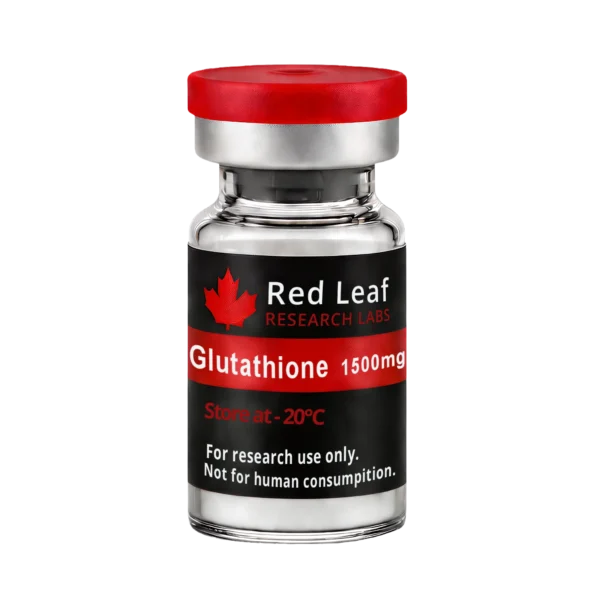 Glutathione 1500mg$59.99
 GHK-Cu 100mg$64.99
 SNAP-8 10mg$59.99
 NAD+$65
 Epitalon 50mg$90
 Bacteriostatic Water$10
Keep reading
GHK-Cu and acne
What the copper peptide research really shows for pimples and scars.
Loose skin after weight loss
Glutathione, GHK-Cu and five others, compared side by side.
Checking a supplier
The ten-point check for any Canadian peptide seller.
Common questions
Does glutathione really lighten skin?
A little, in small studies. Four trials of pills, a cream and a lozenge found mild lightening, mostly on sun-exposed skin, and it faded after people stopped.
Do Bollywood actors use glutathione for skin lightening?
Drips are widely used in India's aesthetic clinics, including by people in film and TV. But being popular with stars does not make them proven or safe.
Are glutathione injections or IV drips safe?
In many countries they are legal and doctor-prescribed, but their safety for skin lightening has not been shown. There is no proper trial, and regulators in the Philippines and the US have warned against injectable skin lighteners.
How does glutathione lighten skin?
In the lab it slows tyrosinase, the enzyme that makes pigment, and nudges skin cells to make light red-yellow pigment instead of dark brown pigment.
Is glutathione skin lightening permanent?
No. In the studies, skin went back toward its usual colour after people stopped taking it.
Does glutathione raise skin cancer risk?
Nobody has shown that. But reviewers warn that switching to lighter pigment weakens the skin's natural sun shield, so the risk has not been ruled out.
Do glutathione pills work as well as drips?
Pills actually have more research than drips. Two placebo trials tested pills. No proper trial has tested drips for skin lightening.
Why is glutathione popular with South Asian Canadians?
Fairness beauty ideals, film culture and clinic ads travel with families. Canada has 2.57 million South Asian residents, the country's largest racialized group.
Where can I buy glutathione in Canada for research?
Red Leaf sells Glutathione 1500mg for research use only, shipped from Canada with a third-party lab report. It is not for injection or skin lightening.
Bottom line
Glutathione is a real and important molecule. In the lab, it can shift skin toward lighter pigment. In four small human studies, pills and creams gave mild lightening, mostly on sun-exposed skin, and it faded after people stopped.
IV drips, the form most tied to Bollywood, have the least proof and the most warnings. There is no proper trial, no long-term safety data, and two drug regulators have spoken out against injectable skin lighteners.
Skin colour is not a problem to be fixed. If dark spots or uneven tone bother you, a skin doctor and daily sunscreen are the tested place to start. That is the honest version, and you deserve it before anyone takes your money.
Every Red Leaf vial carries an independent lab report with a verify link, right on the product page. Free express shipping on Canadian orders over $250.
Glutathione 1500mgBrowse the full catalogueSources
- Arjinpathana N, Asawanonda P. Glutathione as an oral whitening agent: a randomized, double-blind, placebo-controlled study. Journal of Dermatological Treatment, 2012. 60 subjects, 500 mg/day, 4 weeks.
- Weschawalit S, et al. Glutathione and its antiaging and antimelanogenic effects. Clinical, Cosmetic and Investigational Dermatology, 2017. 250 mg/day GSH or GSSG vs placebo, 12 weeks.
- Watanabe F, et al. Skin-whitening and skin-condition-improving effects of topical oxidized glutathione. Clinical, Cosmetic and Investigational Dermatology, 2014. 30 women, 2% lotion, 10 weeks, split-face.
- Handog EB, et al. An open-label, single-arm trial of a glutathione lozenge as a skin-lightening agent in Filipino women. International Journal of Dermatology, 2016. 30 women, 8 weeks.
- Dilokthornsakul W, et al. The clinical effect of glutathione on skin color and other related skin conditions: a systematic review. Journal of Cosmetic Dermatology, 2019. Four studies included.
- Sonthalia S, et al. Glutathione for skin lightening: a regnant myth or evidence-based verity? Dermatology Practical and Conceptual, 2018.
- Sonthalia S, Daulatabad D, Sarkar R. Glutathione as a skin whitening agent: facts, myths, evidence and controversies. Indian Journal of Dermatology, Venereology and Leprology, 2016.
- Davids LM, et al. Intravenous glutathione for skin lightening: inadequate safety data. South African Medical Journal, 2016.
- Food and Drug Administration Philippines. Advisory No. 2019-182: Unsafe use of glutathione as skin lightening agent. 2019.
- US Food and Drug Administration. Injectable skin lightening and skin bleaching products may be unsafe. Consumer update, September 2015.
- Statistics Canada. Portrait of the South Asian populations in Canada: diversity and socioeconomic outcomes. 2025, using 2021 Census data.
- Al Jazeera. Unilever drops 'fair' from Fair & Lovely skin lightening cream. 25 June 2020.
- Glow & Lovely brand history (launch in India in 1975; about 80% of India's lightening cream market in 2012).
Research use only. Glutathione and every other compound named here are sold by Red Leaf Research Labs as laboratory materials for in-vitro research. They are not approved for cosmetic, skin lightening, treatment, injection, ingestion or any human or animal use. Nothing on this page is medical advice, a dose, or a protocol. Study figures are quoted from published research so readers can see what was measured. Full wording on our legal terms page.