Owned and operated by Baba Kahn, a CF veteran
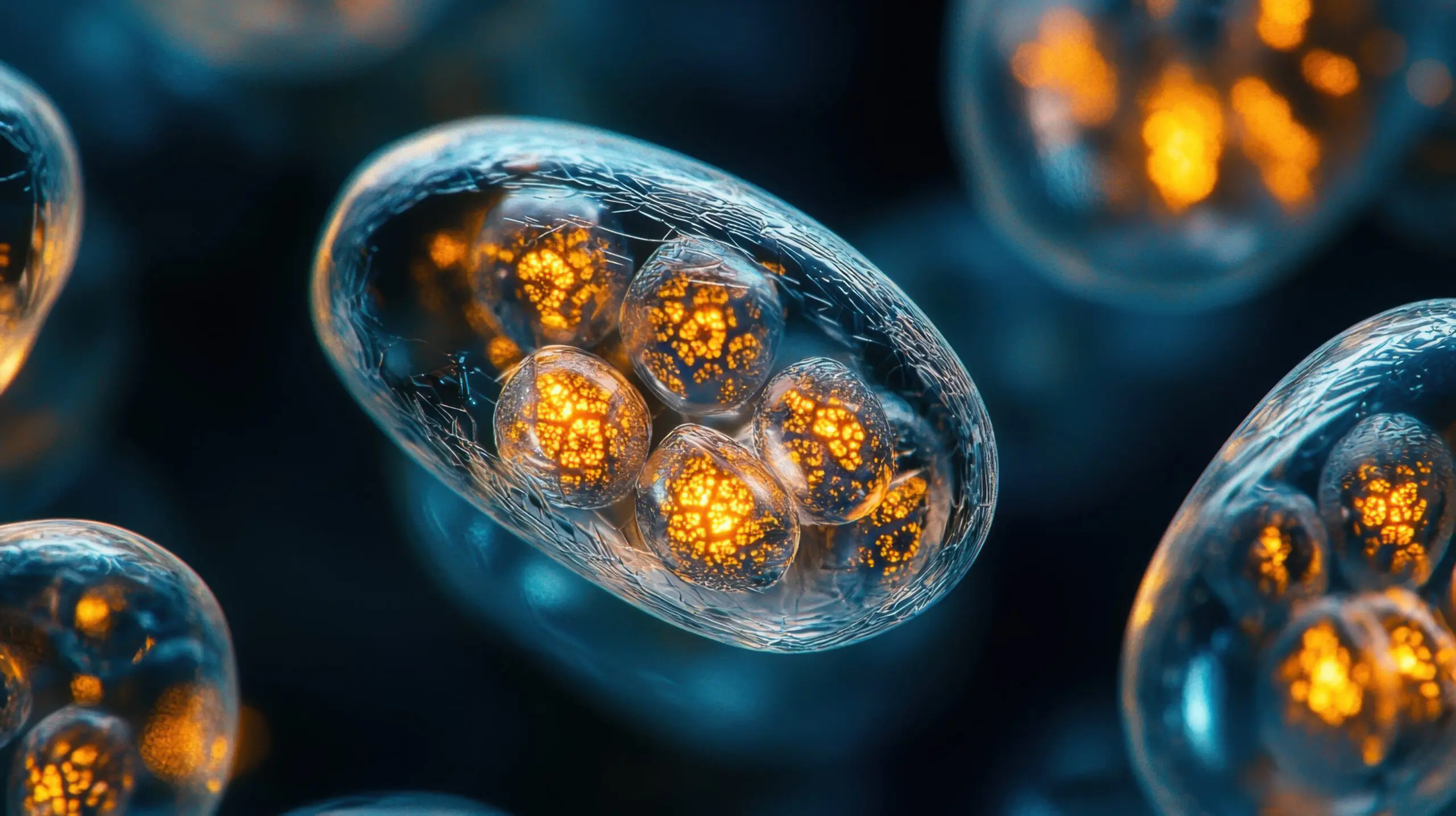
Thymosin alpha-1 is a small copy of something your own body already makes. It comes from a gland called the thymus. The thymus is where your immune cells go to learn their job. This guide explains the whole thing in plain words.
- 28 amino acids long
- 3,108 daltons
- ~2 hours in the blood
- $88 per 10mg research vial
Thymosin alpha-1 is a peptide. A peptide is a short chain of amino acids. This one has 28 of them. Your body makes it in the thymus, a small gland that sits behind your breastbone.
The thymus is a training school for immune cells. Thymosin alpha-1 works like a note from that school. The note does not shout. It tells the immune system to get organised.
Scientists have studied it since the 1970s. A lab-made copy is sold as a medicine in some countries under the name thymalfasin, or the brand name Zadaxin. It is not approved in the United States.
Red Leaf Research Labs sells Thymosin Alpha-1 (10mg) in Canada for research use only. It is not for people or animals.
- The short version
- What is thymosin alpha-1?
- Your thymus is a school
- How the note works, step by step
- The school shrinks as you get older
- The plain numbers
- Why it has so many names
- What researchers actually study
- Is it approved anywhere?
- How it compares to other peptides
- What the studies used
- What the trials said about safety
- Buying it in Canada
- How to read a test sheet
- Mixing it and storing it
- Four myths worth killing
- Related research compounds
- Common questions
- Bottom line
The short version
- Thymosin alpha-1 is a chain of 28 amino acids. Your body makes it in the thymus.
- The thymus trains immune cells. Think of it as a school for the body’s guards.
- The peptide acts like a note from that school. It helps the immune system get organised.
- It does not only turn things up. In lab work it can calm things down too.
- It was found in the 1970s. It has been studied for over fifty years.
- A lab-made copy is a registered medicine in some countries. It is not approved in the United States.
- It is a small, plain molecule. It is not a steroid and not a growth hormone.
- Red Leaf sells it as a dried powder in a 10mg vial for lab use only.
What is thymosin alpha-1?
Thymosin alpha-1 is a peptide. Peptides are short chains of amino acids. Amino acids are the small parts that proteins are built from.
This chain has 28 links. That is small. For comparison, growth hormone has 191. So thymosin alpha-1 is a short note, not a long letter.
Your body does not build it from scratch. It builds a longer chain first. Then it snips a piece off the front. That piece is thymosin alpha-1.
People also call it Tα1, TA-1, or thymosin α1. They all mean the same molecule. There is more on the naming further down.
Your thymus is a school
Here is the picture to keep in your head for the rest of this page.
Your body has guards. They are white blood cells. Their job is to stop things that should not be inside you.
New guards are not born knowing the job. They get taught. The school is the thymus, a small gland behind your breastbone.
The course teaches one hard skill. Tell a real intruder apart from your own body. Guards who cannot do that never graduate. A guard who attacks the building is worse than no guard.
Guards who pass are called T cells. The T is for thymus. That is where the name comes from.
Thymosin alpha-1 is one of the notes the school sends out. It is not a guard. It is a message.
How the note works, step by step
Researchers have spent decades working out what the note does. Here it is in four steps.
A scout finds something
Some immune cells are scouts. They walk around, pick up bits of whatever they find, and carry those bits back to show the guards.
The note rings a doorbell
Scouts have doorbells on their surface. In lab work, thymosin alpha-1 presses two of them. Their formal names are TLR2 and TLR9.
The scout grows up
Once the doorbell rings, the scout finishes maturing. A grown-up scout is much better at showing the guards what an intruder looks like.
More guards learn the face
The guards get a clearer picture. Studies report more T cells, more message chemicals like interferon gamma and interleukin-2, and busier natural killer cells.
Notice what is missing. Nothing there says “attack harder”. The note is about organisation, not force.
That is why the same peptide shows up in two opposite kinds of study. Some look at immune systems that are too quiet. Others look at ones that are too loud. “Get organised” helps in both.
The school shrinks as you get older
This is the part that makes people curious.
The thymus is biggest when you are young. In a baby it is large and busy. Through your teens it is still working hard.
Then it slowly closes down. Fat replaces the working tissue, a little more each year. By middle age there is much less. By your seventies there is very little left.
Doctors call this thymic involution. It is normal. Everybody’s thymus does it. But the school is training fewer new guards every decade.
This track is banded and not to scale. It is a rough picture of a slow change, not a measurement of any one person.
That is why thymosin alpha-1 turns up in aging research. The question is simple. If the school is quieter, does the note still help?
Be careful here. “Studied in aging research” does not mean “reverses aging”. Nobody has shown that. If a shop says otherwise, that is marketing.
The plain numbers
All the science words are in this one table. You do not need them anywhere else on the page.
| Thing | Value |
|---|---|
| Type | Peptide (a short chain of amino acids) |
| Length | 28 amino acids |
| Molecular weight | 3,108 daltons |
| Front-end cap | Acetylated |
| Comes from | Prothymosin alpha, a longer chain the body cuts down |
| Made in | The thymus gland |
| Half-life in blood | About 2 hours |
| Peak level after an injection | About 2 hours |
| Form Red Leaf ships | Dried powder in a sealed 10mg vial |
| Also called | Tα1, TA-1, thymalfasin, Zadaxin |
Two hours is short. That matters. Much of the confusion online comes from people comparing it to compounds that last for days.
Why it has so many names
Search for this peptide and you meet five names. They are not five things. Here is each one.
The last one causes the most mix-ups. The two share a family name and little else. Different lengths, different jobs, different research.
You will also see thymalin. That is different again. It is an extract of thymus tissue, not one peptide. Thymosin alpha-1 is one clean molecule. Thymalin is a mixture.
What researchers actually study
This is where most pages get vague. Here is the honest version. The published work falls into four buckets.
Studied since it was first pulled out of calf thymus tissue in the 1970s.
Amino acids. Short enough to make cleanly in a lab, and easy to check.
TLR2 and TLR9 are the two receptors most often reported in the mechanism work.
How long it lasts in blood. Short, and that shapes how studies are designed.
Long-running virus infections
The biggest pile of research is on chronic hepatitis B and C. That is where the registered medicine is used, in the countries that allow it.
Vaccine response
Some studies ask whether older subjects respond better to a vaccine. The thinking follows the shrinking school above.
Cancer care support
In several countries it has been studied alongside standard cancer treatment. Alongside, never instead of. The question is whether the immune side holds up better.
Very sick patients
There is work on sepsis and severe infection. There the immune system swings between too quiet and too loud. This is hospital research. A home experiment does not reproduce it.
What is missing matters too. There is no good evidence that it builds muscle, burns fat, or makes healthy people feel younger.
Is it approved anywhere?
In some places yes, in others no. Both halves are true. That is why the internet argues about it.
The lab-made copy, thymalfasin, is a prescription medicine in a number of countries. The main approved use is chronic hepatitis B in adults. Some markets also allow it for hepatitis C, and as a vaccine helper.
It is not approved by the FDA in the United States. If a peptide shop says “FDA approved”, that claim is wrong.
None of that changes what a research vial is. It is a lab material. No prescription, no approval, not for people. That is what “research use only” means. Full wording is on our legal terms page.
How it compares to other peptides
People rarely look at this one on its own. They compare it to the other well-known research peptides. Here is the short table.
| Peptide | Family | What the research is about | Red Leaf listing |
|---|---|---|---|
| Thymosin alpha-1 | Thymus peptide, 28 links | Immune cell training and signalling | Thymosin Alpha-1 (10mg) |
| TB-500 (thymosin beta-4) | Thymus peptide, longer | Cell movement and tissue repair | TB-500 (10mg) |
| BPC-157 | Gut-derived fragment | Tissue repair and blood vessel growth | BPC-157 (10mg) |
| LL-37 | Antimicrobial peptide | Direct action on microbes, plus immune signalling | LL-37 (10mg) |
| KPV | Three-link fragment | Calming an over-active inflammatory response | KPV 10mg |
Read the table sideways and the point is clear. Only thymosin alpha-1 is about teaching the immune system. The rest are about repair, killing microbes, or turning inflammation down.
For the repair side, see our piece on BPC-157 and TB-500 and our guide to TB-500 in Canada.
What the studies used
This is the most searched question about the peptide. Here is a straight answer, with a straight limit on it.
In the published hepatitis B trials, the medicine was given as 1.6 mg under the skin, twice a week, for six to twelve months. That number sits in the product information for thymalfasin. It is a fact about those trials.
It is not a protocol. We are not giving you one. Red Leaf does not publish dosing plans, and a shop that does is telling you something it is not qualified to tell you.
What we do publish is the maths. Our peptide reconstitution calculator works out volumes and concentrations. It does the arithmetic and nothing else.
What the trials said about safety
Across the published clinical work, side effects were mild and uncommon. The product information lists redness or soreness at the injection site, aching joints, muscle wasting, and sometimes swelling or a rash on the hand.
Two honest caveats sit beside that.
- Those reports come from supervised trials, using pharmacy-grade material with a known amount in every vial. A research vial from any shop is not that.
- “Mild in a trial” says nothing about outside a trial. Research material is not tested for use in people. That is why it is sold for lab work.
If someone calls a research peptide “proven safe”, ask three questions. Proven by whom? In whom? At what amount?
Buying thymosin alpha-1 in Canada
Buying peptides in Canada is easy. Buying good ones is the hard part. Check things in this order.
- Find the test sheet first. Before the price, before the reviews. If there is no third-party report on the page, stop there.
- Check it matches the vial. Same compound, same batch number, same size. A generic report for “our peptides” is not a report.
- Check the lab is independent. A sheet signed by the seller is not a third-party test. Ours come from Janoshik, with a verify link.
- Check where it ships from. A shop that drop-ships from overseas is not Canadian. It just owns a Canadian domain.
- Read the wording. A seller that talks about treating, healing or curing does not understand the rules it sells under.
- Check the price. Far cheaper than everyone else usually means less peptide in the vial.
There is a longer version in our guide to where to get peptides in Canada, and a harder-edged one in how to spot irresponsible suppliers.
Run all six checks on us too. That is the point of them.
How to read a test sheet
A test sheet is often called a certificate of analysis, or COA. It is one page. You can learn to read it in two minutes. Here is what should be on it.
- The compound name. It should say thymosin alpha-1. Not “immune peptide”, and not a code.
- A batch or lot number. This is the link between the paper and the vial in your hand.
- A purity figure. Usually from a method called HPLC. It says how much of the powder is peptide.
- A mass check. A second method confirms the weight. It should land near 3,108 daltons.
- The amount in the vial. A 10mg label needs a measured figure behind it, not a printed claim.
- The lab’s name and a way to verify it. If you cannot check the report at the lab, the report is decoration.
These are the red flags we treat as automatic no-buys.
- No report at all, or “available on request” that never arrives.
- A report with the batch number blanked or missing.
- A purity number with no method named next to it.
- An image of a report that is too low-resolution to read.
- A report dated years before the batch you are buying.
Every Red Leaf product page carries its own report with a verify link. They are collected on our independent testing page.
Mixing it and storing it
Thymosin alpha-1 ships as a dried powder. That is how peptides travel best. The powder has to be mixed with a liquid first.
The usual liquid is bacteriostatic water. It is sterile water with a little preservative in it. The preservative is what lets a mixed vial sit instead of being used at once. We stock a 10ml vial and a larger Pfizer 30ml vial.
Four rules cover most of it.
Heat is the other thing to plan around. In a Canadian summer a parcel can sit in a hot truck all afternoon. We wrote about that in shipping peptides in a Canadian summer.
Four myths worth killing
These four come up constantly. All four are wrong.
Related research compounds
These are the listings most often viewed alongside thymosin alpha-1. Each ships from Canada with its own third-party report.
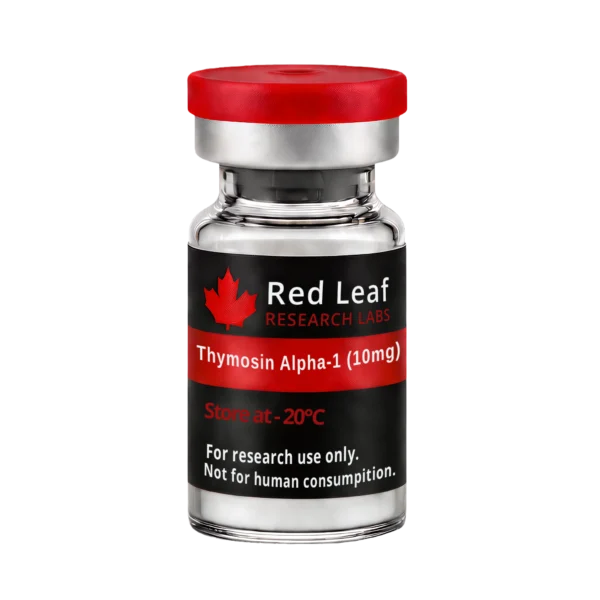 Thymosin Alpha-1 (10mg)$88
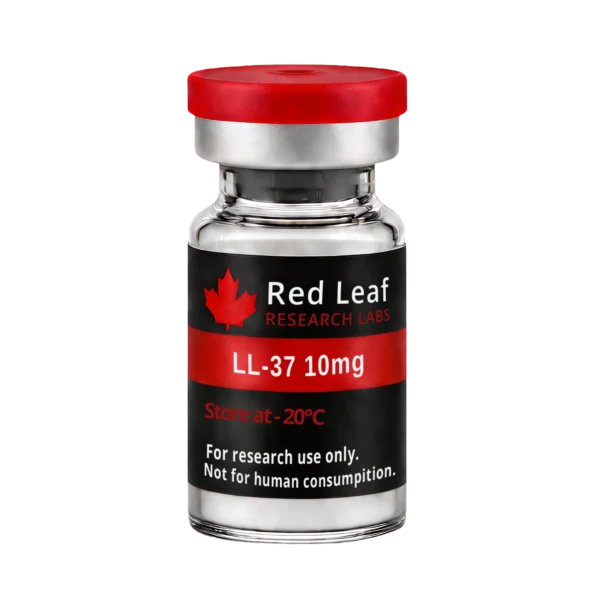 LL-37 10mg$55
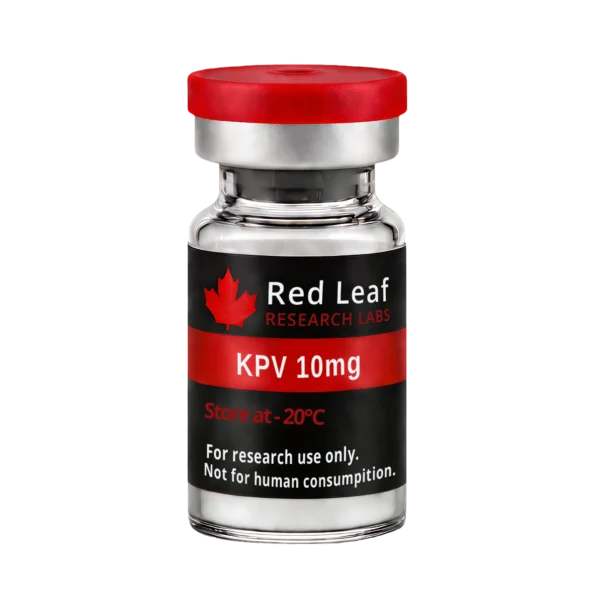 KPV 10mg$72
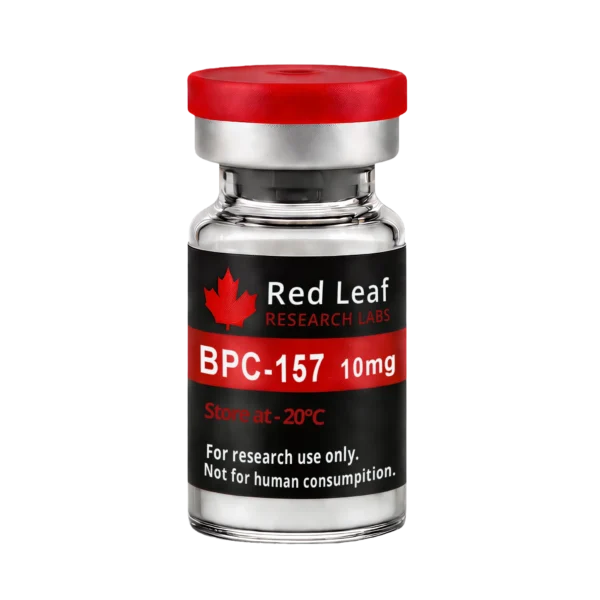 BPC-157 (10mg)$75
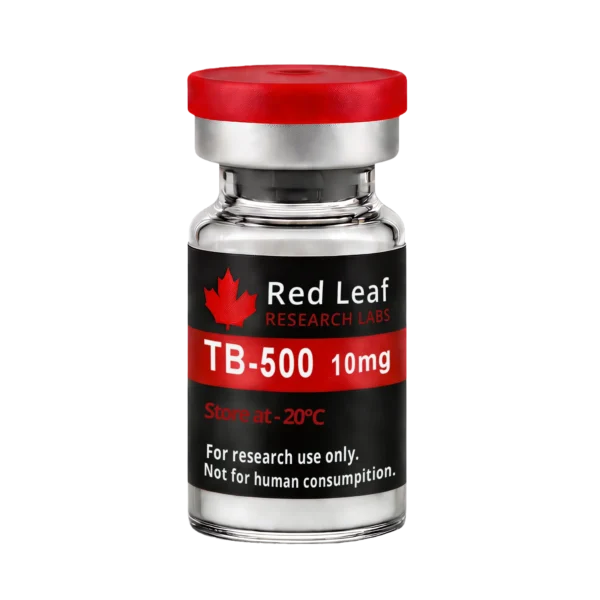 TB-500 (10mg)$84.99
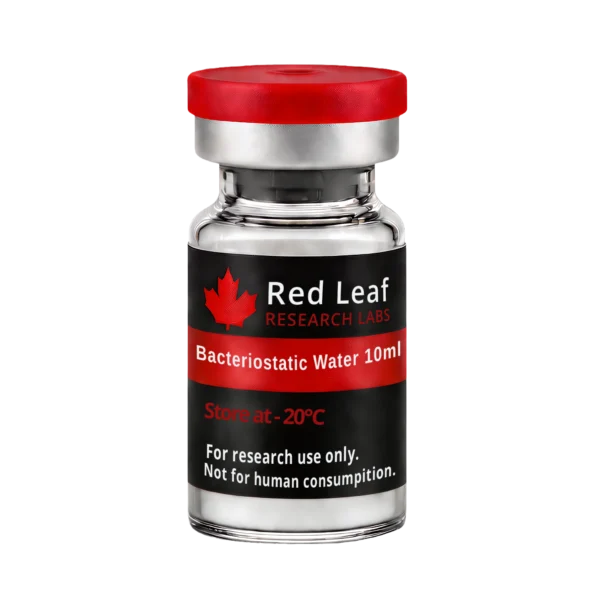 Bacteriostatic Water$10
New to all of this? Start with our peptide guide for beginners, or the round-up of research peptides worth knowing.
Common questions
What is thymosin alpha-1?
It is a peptide with 28 amino acids. Your body makes it in the thymus. It works as a signal to the immune system.
What is thymosin alpha-1 peptide used for in research?
Four areas, mostly. Long virus infections. Vaccine response in older subjects. Support alongside cancer care. And severe infection. Not muscle, and not fat loss.
Is thymosin alpha-1 the same as thymalfasin or Zadaxin?
Same molecule, different labels. Thymalfasin is the drug name. Zadaxin is a brand of it. A research vial is still not a medicine.
Is thymosin alpha-1 FDA approved?
No. It is not approved in the United States. It is a registered medicine in some other countries. Any shop claiming FDA approval is wrong.
Is thymosin alpha-1 safe?
Trials of the medicine reported mild, uncommon side effects. That record belongs to pharmacy-grade material used under supervision. A research vial is not that, and is not for people.
What side effects of thymosin alpha-1 were reported?
Redness or soreness at the injection site. Aching joints. Muscle wasting. Sometimes swelling or a rash on the hand. The reports call them infrequent and mild.
How much thymosin alpha-1 was used in the studies?
The hepatitis B trials used 1.6 mg under the skin, twice a week, for six to twelve months. That describes those trials. It is not a plan, and we do not give one.
What benefits does the research report?
More mature scout cells. Higher T cell counts. More signalling chemicals. Busier natural killer cells. In some settings, a calmer response rather than a louder one.
Is thymosin alpha-1 the same as TB-500?
No. TB-500 is thymosin beta-4. It is longer, and its research is about repair. Same family name, different job.
Is thymalin the same thing?
No. Thymalin is an extract of thymus tissue. It is a mixture. Thymosin alpha-1 is one molecule with a known sequence, so it can be tested properly.
Can you buy thymosin alpha-1 in Canada?
Yes, as a research chemical. It comes as dried powder in a sealed vial, for lab use only. Ours ships from within Canada with its own lab report.
How much does it cost in Canada?
Our 10mg vial is $88. Express shipping is free on Canadian orders over $250. A price far below the market usually means less peptide in the vial.
Is thymosin alpha-1 a steroid or a hormone?
Neither. It is a peptide, which is a short chain of amino acids. Steroids are built completely differently. It has nothing to do with growth hormone.
How long does it stay in the blood?
About two hours. Levels peak about two hours after an injection. That is short, which is why the studies repeated it over months.
What do you mix it with?
Bacteriostatic water. Add it slowly down the glass wall, then swirl. Do not shake. Our calculator works out the volume.
How should it be stored?
Sealed and cold, away from light. A freezer is for long-term holding. Once it is mixed, refrigerate it and write the date on the vial.
How do I check a test sheet?
Six things. The compound name. A batch number that matches your vial. A purity figure with the method. A weight near 3,108 daltons. The measured amount in the vial. And a lab you can verify it with.
Bottom line
Thymosin alpha-1 is a small, well-described peptide with fifty years of research behind it. It is a note from the immune system’s training school. Not a booster, not a steroid, not a shortcut.
The research is mostly about long virus infections, vaccine response, and very sick patients. In hospitals, under supervision. That is a real body of work. It is also a narrow one.
If you are sourcing it for lab work, the test sheet is the whole decision. Everything else is packaging.
Every Red Leaf vial carries an independent lab report with a verify link, right on the product page. Free express shipping on Canadian orders over $250.
Thymosin Alpha-1 (10mg)Browse the full catalogueResearch use only. All products sold by Red Leaf Research Labs are laboratory materials supplied for in-vitro research and are not for human or veterinary use. Nothing on this page is medical advice, a dose, or a protocol. Full wording on our legal terms page.