Owned and operated by a cf veteran

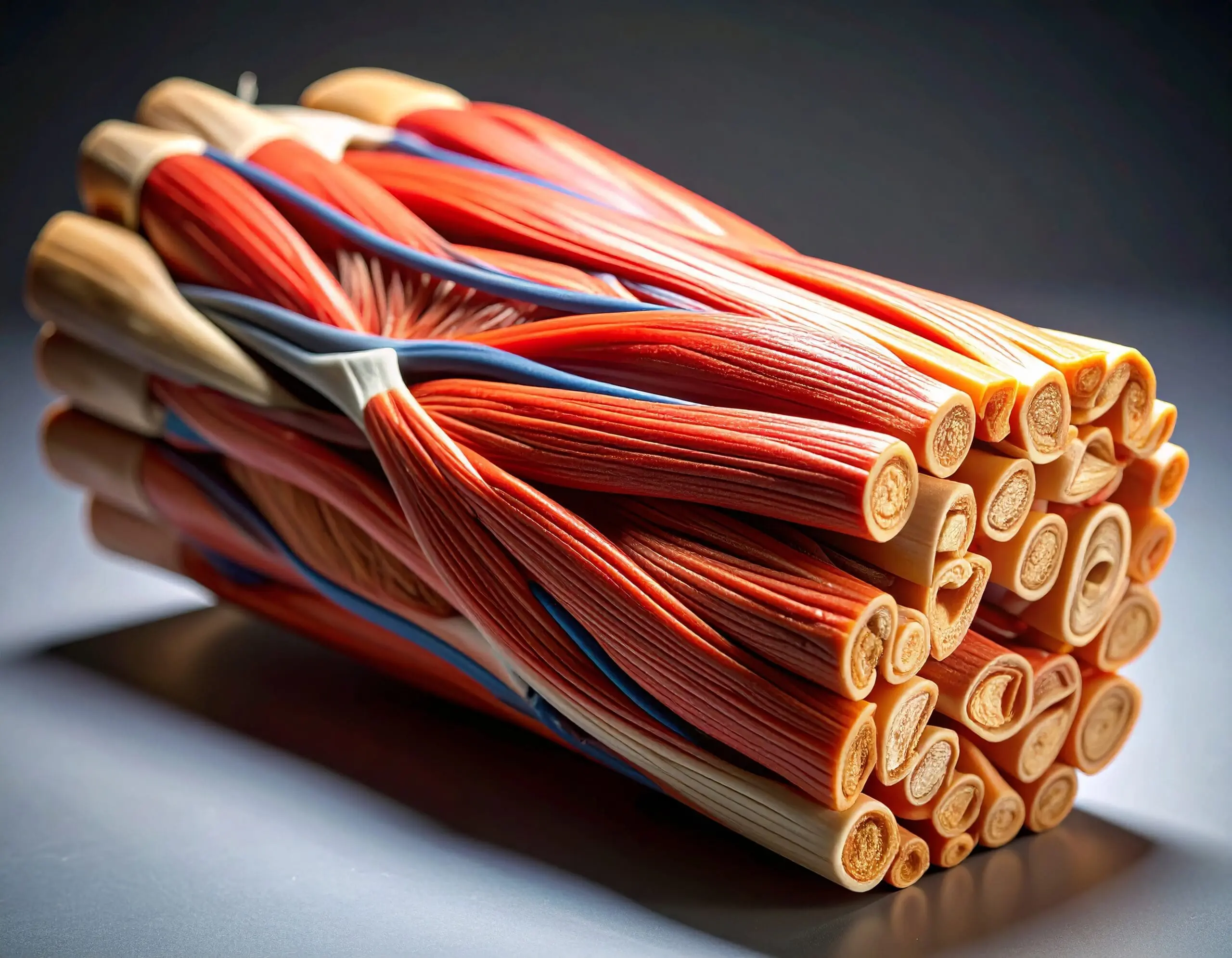
What TB-500 actually is at the sequence level, what the research covers, and why the name is used inconsistently.
- Thymosin beta-4 related
- Sequence varies by seller
- Preclinical evidence
- Not approved in Canada
TB-500 is a commercial name generally associated with a fragment of thymosin beta-4, and suppliers use it inconsistently — which is why the exact sequence and molecular mass should appear in the documentation. The research is preclinical, it is not approved in Canada, and claims about recovery and performance run well ahead of it.
- TB-500 Canada: quick answer
- What is TB-500?
- What does TB 500 do?
- Is TB-500 legal or approved in Canada?
- TB-500 research: what the evidence can and cannot tell us
- TB-500 risks and side effects
- Is TB-500 banned in sport?
- How to assess TB-500 information online
- TB-500 vs. BPC-157
- Frequently asked questions about TB-500 Canada
- The bottom line
- Sources
TB-500 Canada searches often lead to claims about faster injury recovery, tendon repair and athletic performance. The essential fact is simpler: TB-500 is an experimental peptide associated with thymosin beta-4 research, but it is not an authorized treatment in Canada. Human evidence for products sold as TB-500 remains limited, and Health Canada has specifically warned about unauthorized injectable peptide drugs, including TB-500.
This evidence-first guide explains what TB 500 is, what researchers have studied, how Canadian rules apply, why athletes need to consider anti-doping rules, and what to check before trusting online claims. It is educational information, not medical advice or a dosing guide.
TB-500 Canada: quick answer
- What it is: TB-500 is marketed as a synthetic peptide related to an active region of thymosin beta-4 (Tβ4), a naturally occurring protein involved in cell movement and tissue responses.
- Canadian status: Health Canada identifies TB-500 among unauthorized injectable peptide drugs and warns that unauthorized products have not been assessed for safety, effectiveness or quality.
- Evidence: Laboratory and animal research involving thymosin beta-4 is scientifically interesting, but it does not establish that commercial TB-500 products safely heal human injuries.
- Sport: WADA lists thymosin beta-4 and its derivatives, including TB-500, as prohibited growth factors or growth-factor modulators.
- Bottom line: Do not treat a “research use only” label, purity certificate or online testimonial as proof of medical approval or clinical benefit.
What is TB-500?
TB-500 is a name used for a synthetic peptide linked to thymosin beta-4 research. Thymosin beta-4 is a 43-amino-acid protein found naturally in many tissues. It binds actin, a structural protein involved in cell shape and movement, and has been investigated in processes such as cell migration, blood-vessel formation, inflammation and wound repair.
The terms TB-500 and thymosin beta-4 are often used interchangeably online, but they should not automatically be treated as identical. WADA-sponsored analytical research has described internet-marketed TB-500 as the N-terminal acetylated 17–23 fragment of thymosin beta-4. Product labels and vendor descriptions may be inconsistent, which makes identity and evidence claims especially important to scrutinize.
What does TB 500 do?
Online sellers commonly claim that a TB 500 peptide supports tissue repair, flexibility, muscle recovery or reduced inflammation. These statements often extrapolate from basic research on thymosin beta-4 rather than from rigorous clinical trials of the exact commercial product being sold.
In preclinical models, thymosin beta-4 has been studied for effects on cell migration, angiogenesis and wound-related pathways. Researchers have also investigated pharmaceutical formulations of thymosin beta-4 for specific applications, including eye-surface healing. That is not the same as proving that an unapproved injectable TB-500 vial improves tendon, ligament or muscle injuries in people.
A useful evidence hierarchy is:
- Mechanistic laboratory findings show what might happen in cells.
- Animal studies explore biological effects but do not reliably establish human benefit or dose.
- Controlled human trials assess a defined formulation for a defined condition.
- Regulatory authorization evaluates the product’s benefit-risk profile, quality and manufacturing controls.
Most promotional TB-500 claims jump from the first two levels to a treatment conclusion. That leap is not justified by the available evidence.
Is TB-500 legal or approved in Canada?
Health Canada has specifically named TB-500 in a warning about unauthorized injectable peptide drugs. The agency states that unauthorized products are illegal to sell in Canada and have not been assessed for safety, efficacy and quality. Peptides promoted to treat injuries or change how the body functions are generally regulated as drugs, regardless of whether a website calls them “research chemicals.”
Canadians can verify authorized drugs in Health Canada’s Drug Product Database. An authorized drug normally has an eight-digit Drug Identification Number (DIN) on its label. A certificate of analysis, laboratory purity result or Canadian shipping address is not a DIN and does not create market authorization.
Rules can change and individual circumstances differ. For a current regulatory interpretation, contact Health Canada or a Canadian lawyer or pharmacist qualified in drug regulation.
TB-500 research: what the evidence can and cannot tell us
Potential tissue-repair mechanisms
Thymosin beta-4 has been investigated for actin binding, cell migration, inflammation, vascular responses and tissue-remodelling pathways. These mechanisms make it a subject of legitimate scientific interest. Reviews describe promising findings in wound models, but they also identify limitations and the need for stronger clinical evidence.
Human evidence is product- and condition-specific
A trial involving a regulated thymosin beta-4 formulation for a particular eye condition cannot validate every online TB-500 product, route of administration or recovery claim. Formulation, sequence, purity, sterility, dose, delivery method and target condition all matter. Evidence should follow the exact intervention—not merely a similar-sounding molecule.
There is no established self-use protocol
Searches for “dose for TB 500” are common, but there is no Health Canada-approved TB-500 indication, product monograph or self-injection schedule. Providing a protocol would imply a level of safety and effectiveness that has not been established. Anyone considering a substance marketed as TB-500 should discuss the underlying injury and evidence-based options with a licensed clinician.
TB-500 risks and side effects
Because TB-500 is not an authorized Canadian drug and standardized human safety data are lacking, its full risk profile is unknown. Potential concerns include:
- incorrect identity, concentration or peptide sequence;
- microbial contamination or endotoxins in an injectable product;
- infection, abscess, bleeding or tissue injury from injection;
- allergic or immune reactions;
- unknown interactions with medicines or health conditions;
- unpredictable effects involving cell migration or blood-vessel growth;
- delayed diagnosis when pain or injury is self-treated;
- anti-doping sanctions for competitive athletes.
Seek urgent medical care after an injection if symptoms include trouble breathing, facial or throat swelling, fainting, severe chest pain, rapidly spreading redness, high fever, confusion or intense worsening pain. Report suspected health-product problems through Health Canada’s adverse-reaction reporting system.
Is TB-500 banned in sport?
Yes. The World Anti-Doping Agency’s 2026 Prohibited List is in force, and WADA identifies thymosin beta-4 and its derivatives, including TB-500, within prohibited growth factors and growth-factor modulators. Competitive athletes are responsible for substances found in their samples, including ingredients that may be missing or inaccurately stated on a product label.
Athletes should check the current WADA Prohibited List and consult their sport organization or anti-doping authority before using any supplement, peptide or compounded product.
How to assess TB-500 information online
When evaluating a TB-500 Canada page, ask:
- Does it distinguish research from treatment? Preclinical findings are not proof of a clinical outcome.
- Does it identify the exact molecule? “TB-500,” full-length thymosin beta-4 and fragments may not be interchangeable.
- Does it link to primary or official sources? Prefer Health Canada, clinical-trial records and peer-reviewed papers over testimonials.
- Does it disclose approval status? “Made in Canada” or “third-party tested” does not mean Health Canada authorized.
- Does it avoid unsupported dosing claims? A precise-looking schedule can still lack a validated human evidence base.
- Does it discuss uncertainty and sport rules? Responsible information covers limitations, risks and WADA status.
TB-500 vs. BPC-157
TB-500 and BPC-157 are frequently marketed together for recovery, but combining two experimental products does not create proven effectiveness. It adds uncertainty about identity, sterility, interactions and adverse effects. Health Canada has warned consumers about unauthorized injectable peptides and lists both TB-500 and BPC-157 among examples. Neither online popularity nor a “blend” label substitutes for controlled human evidence or authorization.
If the reason you are reading about either one is a sore knee, it is worth seeing what has actually been measured in people. We cover that in BPC-157 and retatrutide for knee pain.
Frequently asked questions about TB-500 Canada
What is TB-500?
TB-500 is an experimental synthetic peptide marketed in connection with thymosin beta-4, a naturally occurring actin-binding protein. Internet product descriptions are not always consistent about its exact sequence or composition.
What does TB-500 do?
Thymosin beta-4 research has explored cell migration, inflammation, blood-vessel formation and wound-related pathways. These findings do not prove that commercial TB-500 products safely improve human muscle, tendon or ligament recovery.
Is TB-500 approved in Canada?
No Health Canada-authorized TB-500 treatment was identified for this guide. Health Canada specifically lists TB-500 as an example of an unauthorized injectable peptide drug and warns that such products have not been assessed for safety, efficacy and quality.
Can you buy TB-500 in Canada?
Websites may offer products labelled TB-500, but availability does not establish legality, authorization, identity or medical safety. Health Canada says unauthorized drug products are illegal to sell in Canada. Check for a valid DIN in the Drug Product Database and speak with a licensed pharmacist.
What is the correct TB-500 dose?
There is no Health Canada-approved TB-500 product monograph or established self-use dose for injury recovery. Online protocols should not be treated as validated medical instructions.
Can TB-500 and BPC-157 be taken together?
The safety and effectiveness of combining TB-500 with BPC-157 have not been established through adequate controlled human trials. Combining experimental injectables may increase uncertainty and risk.
Is TB-500 prohibited for athletes?
Yes. WADA identifies thymosin beta-4 and its derivatives, including TB-500, as prohibited. Athletes should consult the current list and their anti-doping organization.
The bottom line
Interest in TB-500 Canada is being driven by recovery claims, but the evidence and regulatory picture require caution. TB-500 is experimental, Health Canada has warned about unauthorized injectable peptide products, and WADA prohibits TB-500 for athletes. The safest next step for an injury is an evidence-based assessment from a licensed healthcare professional—not an unverified online injection protocol.
Sources
- Health Canada: Think twice before injecting peptides bought online
- Health Canada: Regulating health products
- WADA: 2026 Prohibited List
- WADA research: TB-500 identity and metabolism
- PubMed: Review of thymosin beta-4 and wound healing research
Reviewed for Canadian regulatory accuracy on August 5, 2026. This article is for education only and does not diagnose, treat or recommend a research chemical for human use.
 BPC-157 (10mg)$75 CAD · research use only
 BPC-157 / TB-500 20mg$110 CAD · research use only
 TB-500 (10mg)$84.99 CAD · research use only
 GHK-Cu 100mg – 3ml Vial$64.99 CAD · research use only
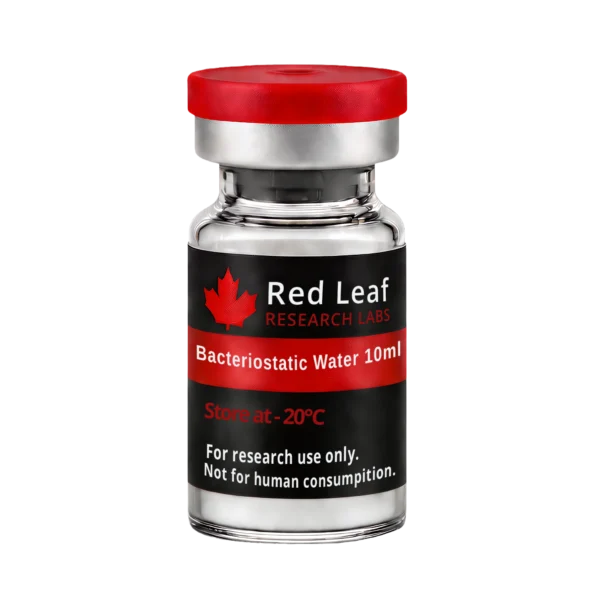 Bacteriostatic Water$10 CAD · research use only
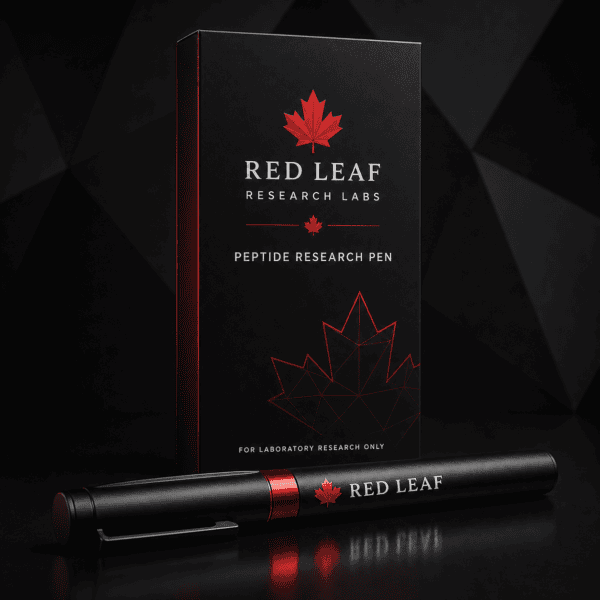 Peptide Pens Canada – Red Leaf Research Pen Add-On$99 CAD · research use only
Every product page carries its batch lab report with a verification link you can check at the testing laboratory, not just a PDF we host.
Browse the catalogue See the lab test sheetsResearch use only. Products sold by Red Leaf Research Labs are not approved by Health Canada for cosmetic application, therapeutic treatment, injection, ingestion, or any form of human or animal use. No claims are made regarding clinical outcomes, safety or efficacy. Pricing and stock are current at the time of publication and subject to change.