FREE CANADA-WIDE EXPRESS SHIPPING ON ORDERS OVER $350
Reviews transferred over to Yotpo (over 140 reviews)
🍁 Owned and operated by a CF Veteran 🇨🇦
House and Pfizer bac water in-stock and reduced price
5 New Products this Weekend
BK WhatsApp msgs active, clearing msgs thru weekend. Call on WhatsApp if urgent
$72.00
Out of stock
Research use only; Not for human or veterinary administration. This content is not a substitute for medical advice.
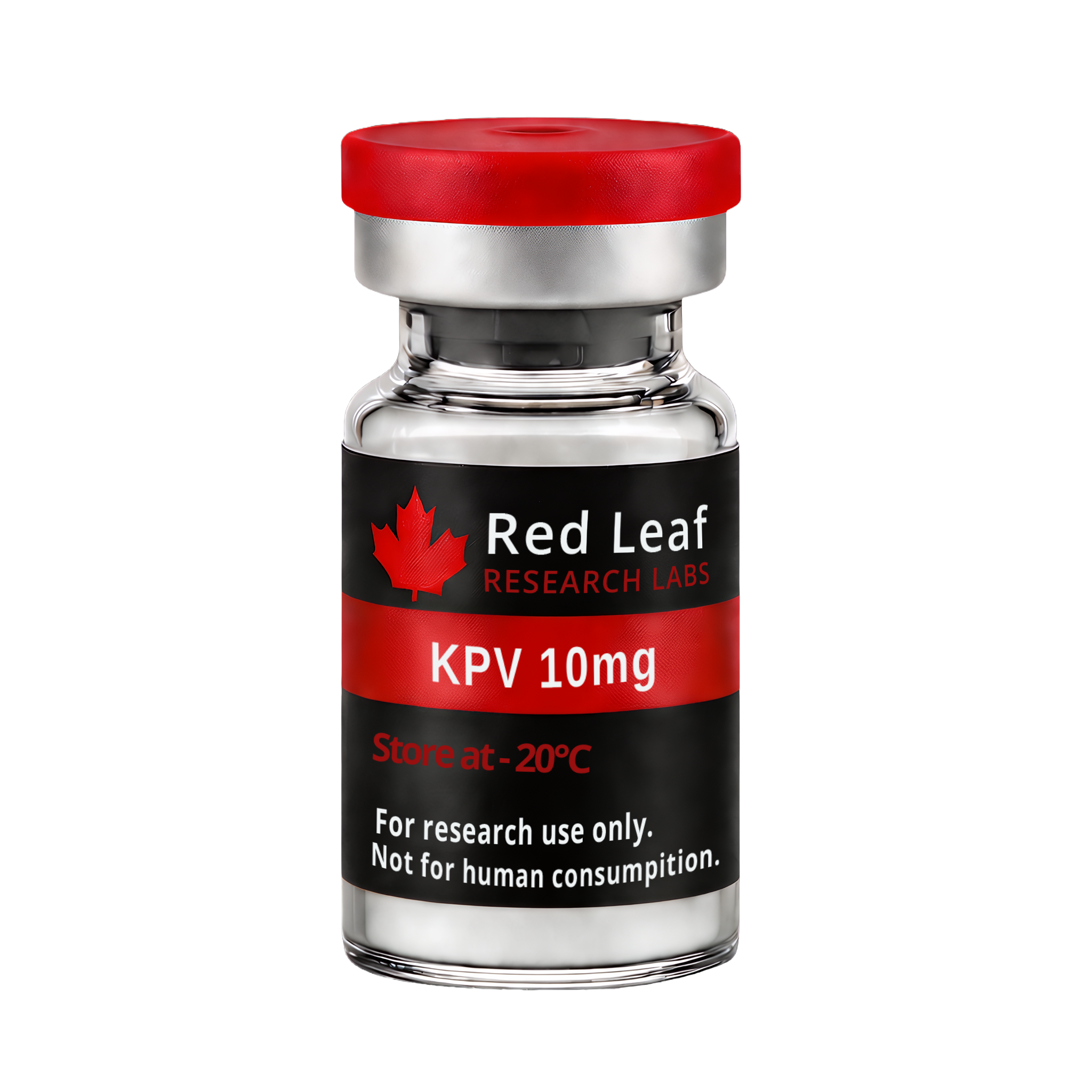
KPV peptide is a short tripeptide composed of lysine, proline, and valine. It is commonly discussed in peptide research as the C-terminal fragment of alpha-melanocyte-stimulating hormone, or alpha-MSH, a melanocortin-related peptide involved in inflammatory signaling research. Current interest in KPV is centered on controlled laboratory models studying inflammatory pathways, epithelial barrier biology, topical formulation behavior, and peptide stability. (fda.gov)
Red Leaf Research products are intended for qualified professional research environments only. They are not intended for human or animal use, ingestion, injection, therapeutic treatment, diagnostic use, cosmetic application on clients, or any non-research purpose. Products sold by Red Leaf Research are not approved by Health Canada, the U.S. FDA, or other regulatory bodies for medical, veterinary, food, or cosmetic use. (redleafpeptides.com)
For research use only. No human or veterinary dosage is provided.
Add KPV peptide to your research cart or review the product options above for current vial sizes, availability, and pricing.
KPV stands for the three-amino-acid sequence Lys-Pro-Val, meaning lysine, proline, and valine. In the scientific literature, KPV is described as a tripeptide associated with alpha-MSH-related research. Alpha-MSH and related tripeptides have been studied for anti-inflammatory and immunomodulatory effects in cell and animal models, but this does not establish safety or efficacy in humans. (pmc.ncbi.nlm.nih.gov)
Because KPV is small, researchers often evaluate it in protocols where peptide sequence, purity, formulation conditions, temperature, and handling can influence experimental outcomes. FDA’s 2026 review of KPV-related bulk drug substances noted that peptides may be sensitive to formulation conditions such as pH, heat, concentration, impurities, excipients, aggregation, and degradation. (fda.gov)
The phrase kpv peptide benefits should be understood in a research context only. KPV peptide is not sold as a medicine, supplement, cosmetic, or treatment. The potential benefits below describe why scientists study KPV in controlled experimental settings, not claims of clinical results.
KPV is frequently studied for its interaction with inflammatory signaling pathways. In a Gastroenterology study using human intestinal epithelial cells, human T cells, and mouse colitis models, researchers reported that KPV inhibited NF-kappaB and MAP kinase inflammatory signaling pathways and reduced pro-inflammatory cytokine secretion in experimental systems. (pubmed.ncbi.nlm.nih.gov)
FDA’s 2026 KPV briefing document similarly summarized nonclinical literature suggesting that KPV-related substances may have anti-inflammatory and wound-healing properties in in-vitro and in-vivo models, while emphasizing that the molecular targets underlying KPV’s pharmacological effects remain unknown. (fda.gov)
KPV has been studied in connection with PepT1, a di- and tripeptide transporter. In the 2008 Gastroenterology paper, researchers investigated whether KPV’s anti-inflammatory effects were PepT1-mediated in intestinal epithelial and immune cells and reported reduced inflammatory markers in cell systems and mouse colitis models. (pubmed.ncbi.nlm.nih.gov)
This type of research helps explain why KPV appears in preclinical discussions of epithelial barrier models, gut inflammation models, and peptide transport studies. It does not establish that KPV treats inflammatory bowel disease, Crohn’s disease, ulcerative colitis, or any other condition in humans.
KPV is also studied in topical and skin-related research models. FDA’s KPV review noted that KPV had been nominated for topical cream or gel use at 0.1 percent for wound healing and inflammatory conditions, but FDA also stated that it did not identify clinical studies or human exposure data for KPV by any route of administration. The 0.1 percent topical reference is a regulatory-review detail, not a recommended concentration, product instruction, or human dosage. (fda.gov)
FDA’s review also discussed an in-vitro human cadaver skin study in which KPV did not permeate well through skin, while strategies such as iontophoresis or microneedle abrasion increased penetration in vitro. FDA stated that additional studies would be needed to determine whether such strategies increase systemic absorption in vivo. (fda.gov)
Some reviews discuss KPV as part of alpha-MSH-related antimicrobial peptide research. Published reviews have reported that the C-terminal tripeptide KPV has anti-inflammatory and antimicrobial activity in experimental contexts, including discussion of pathogens such as Staphylococcus aureus and Candida albicans. (pmc.ncbi.nlm.nih.gov)
These findings are laboratory research signals only. They do not mean KPV is an antibiotic, antifungal, disinfectant, antiseptic, or treatment for infection.
Because KPV contains only three amino acids, it can be useful in research comparing minimal peptide sequences, alpha-MSH fragments, synthetic peptide stability, and formulation conditions. FDA identifies KPV as lysine-proline-valine and distinguishes KPV free base from KPV acetate as different bulk drug substances with different characterization considerations. (fda.gov)
KPV peptide dosage is not provided for human or animal use. There is no established, approved, or validated human dosage for KPV peptide on this page. Red Leaf Research states that its products are intended strictly for laboratory research purposes and are not for human or animal consumption, medical use, diagnostic use, therapeutic use, injection, ingestion, or other non-research purposes. (redleafpeptides.com)
For qualified research professionals, use parameters should be determined by an approved laboratory protocol, institutional safety procedures, the product label, the lot-specific COA, and applicable local regulations. Research variables may include:
Do not rely on online anecdotal dosing discussions. FDA’s 2026 KPV review stated that it did not identify clinical studies in humans assessing pharmacokinetics or pharmacodynamics of KPV free base or KPV acetate via any route of administration, and potential human safety risks are unknown. (fda.gov)
Review the product label and lot-specific COA for the exact specifications of the KPV peptide vial you receive. If any detail differs between this page and the COA, the COA and product label should be treated as the controlling documents.
Red Leaf Research states that all products are sold in powder, lyophilized form and require reconstitution with a suitable diluent for research purposes only, while also stating that no dosing instructions are provided. (redleafpeptides.com)
A Certificate of Analysis, or COA, is an important document for research peptide evaluation. For KPV peptide, a COA should help researchers confirm identity, purity, assay information, lot number, testing date, and other quality-control details relevant to the batch.
When reviewing a KPV peptide COA, look for:
FDA’s KPV review highlighted quality concerns that can matter for peptides, including impurity profiles, aggregation, microbiological testing, and inconsistent naming conventions. The review also noted that peptide-related impurities from synthesis can be difficult to identify and quantify without sophisticated analytical methods. (fda.gov)
Proper storage and handling help protect peptide integrity during laboratory research. Follow the storage conditions listed on the product label and COA first. If your laboratory protocol requires reconstitution, only qualified personnel should perform it using validated research procedures and appropriate materials.
General handling considerations for lyophilized research peptides include:
FDA’s review noted reported storage information for KPV-related substances and emphasized that peptides can be sensitive to environmental and formulation conditions that may lead to aggregation or degradation. (fda.gov)
Searches for kpv peptide side effects often produce anecdotal claims, but human safety data are not established. FDA’s 2026 KPV briefing document stated that it did not identify clinical studies or human exposure data for KPV via any route of administration and that potential safety risks associated with human use are unknown. (fda.gov)
FDA also noted insufficient information to assess immunogenicity or aggregation risks for KPV-related bulk drug substances. Peptide aggregation may affect pharmacology, bioavailability, precipitate formation, and immunogenicity risk in drug-product contexts, which is one reason quality and formulation controls matter in research settings. (fda.gov)
Because KPV is not approved for human or animal use, do not use this product to self-treat inflammation, wounds, skin conditions, gut symptoms, infections, pain, immune disorders, or any other condition. Anyone experiencing a medical concern should consult a licensed healthcare professional and use approved therapies as directed.
This KPV peptide product is sold for research use only. It is not a drug, dietary supplement, food additive, cosmetic, medical device, diagnostic product, or veterinary product. It is not intended to diagnose, treat, cure, mitigate, or prevent any disease.
FDA’s 2026 KPV review stated that there is no applicable USP or NF drug-substance monograph for KPV free base or KPV acetate and that neither is a component of an FDA-approved drug. FDA’s posted materials for the July 23 to 24, 2026 Pharmacy Compounding Advisory Committee meeting identified KPV free base and KPV acetate as substances being evaluated for wound healing and inflammatory conditions in the 503A bulks context, and the briefing document proposed not adding KPV free base or KPV acetate to the 503A Bulks List. (fda.gov)
Red Leaf Research also states that products sold on its website are unapproved research chemicals and that buyers are responsible for safe handling, storage, lawful use, and prevention of misuse or redistribution for non-research purposes. (redleafpeptides.com)
Current KPV peptide pricing, vial-size options, and stock status should be displayed above near the product selector. Because research peptide inventory and lot availability may change, always confirm:
If pricing is not visible, use the product inquiry or cart function to confirm availability before planning a study.
Shipping and return terms may vary by order, destination, carrier, and product status. Red Leaf Research’s posted policy states that all sales are final once an order has shipped, that orders may be canceled only before shipment, and that damaged or incorrect items must be reported within 7 days of delivery with the order number and photographic evidence. (redleafpeptides.com)
Before ordering, review the current shipping and returns policy for:
Choose KPV peptide from a supplier that clearly states research-use restrictions, provides batch documentation, and emphasizes responsible handling. For laboratory teams, clarity matters just as much as convenience.
Red Leaf Research positions its products for qualified professional research environments and states that buyers must use products only for legitimate laboratory research purposes in compliance with applicable laws. (redleafpeptides.com)
KPV peptide is a tripeptide made of lysine, proline, and valine. It is commonly described in research literature as an alpha-MSH-related peptide fragment studied in inflammatory signaling, epithelial, skin, and formulation models. (fda.gov)
The main research interests include inflammatory pathway modulation, PepT1-mediated uptake in intestinal cell models, epithelial barrier research, topical formulation behavior, wound-healing models, and antimicrobial peptide research. These are preclinical or laboratory research areas, not proven human benefits. (pubmed.ncbi.nlm.nih.gov)
There is no recommended KPV peptide dosage for human or animal use. This product is for laboratory research only, and no dosing instructions are provided. Research-use concentrations and handling steps must be determined by qualified professionals using approved laboratory protocols. (redleafpeptides.com)
No. Red Leaf Research states that its materials are not approved for therapeutic treatment, injection, ingestion, cosmetic application on clients, or any form of human or animal use. (redleafpeptides.com)
Human side effects are unknown because FDA did not identify clinical studies or human exposure data for KPV via any route of administration. Potential risks cannot be ruled out, including quality, aggregation, immunogenicity, contamination, formulation, and misuse risks. (fda.gov)
No FDA-approved drug product containing KPV free base or KPV acetate was identified in FDA’s 2026 review, and FDA stated that neither form is a component of an FDA-approved drug. (fda.gov)
Red Leaf Research states that its products are not approved by Health Canada for cosmetic application, therapeutic treatment, injection, ingestion, or any form of human or animal use. (redleafpeptides.com)
Store KPV peptide according to the product label and lot-specific COA. In general, research peptides should be protected from heat, moisture, and conditions that may promote degradation or aggregation. FDA’s review notes that peptides can be sensitive to pH, heat, concentration, impurities, excipients, and storage stress. (fda.gov)
A lot-specific COA should be reviewed or requested before use. The COA should match the vial lot and provide relevant analytical details such as identity, purity, and test methods when available. FDA’s review underscores why peptide characterization and impurity controls matter. (fda.gov)
Red Leaf Research’s posted return policy states that returns and refunds are not accepted once an order has shipped, due to product integrity, safety, and compliance considerations. Damaged or incorrect items must be reported within 7 days of delivery with required evidence. (redleafpeptides.com)
Review the available vial options, confirm the COA, read the research-use disclaimer, and add KPV peptide to your cart for qualified laboratory research only.
Related Reading:
Third-party tested purity
Ultra high synthesis purity
Temperature controlled logistics
Trusted by researchers worldwide
This product is supplied in a lyophilized powder form to preserve its stability, purity, and potency.
For laboratory research purposes only. Not intended for human consumption.

You must be 18 or 19 years of age depending on the age of majority in your province and a licensed research professional
All products are sold in powder (lyophilized) form and require reconstitution with a suitable diluent for research purposes only. No dosing instructions are provided. We adhere to all provincial and federal laws in Canada around Research Only Chemical sales. We are not a pharmacy and/or compounding facility, nor do we promote or provide any advice for human or animal consumption.
By clicking ”I Agree” you confirm that you have read and accepted the Terms and Conditions stated above