Owned and operated by a cf veteran


What the FDA review actually proposed, and what it would and would not change for Canadians.
- US review, not Canadian
- Compounding rules
- Nothing approved yet
- Research use only
The short answer is that nothing has been legalised. A US regulatory review is not Health Canada, a proposal is not a rule, and none of it changes the status of research material sold online. Read any headline claiming otherwise carefully.
- Quick answer: Is RFK Jr. legalizing peptides?
- RFK Jr peptides policy: what changed and what did not
- Why RFK Jr. is connected to the peptide debate
- What happened at the FDA in July 2026?
- What is the 503A Bulks List?
- What “legalization” would—and would not—mean
- Has FDA enforcement against peptide sellers stopped?
- What safety concerns remain?
- Does this affect peptide rules in Canada?
- What should researchers, patients and clinics watch next?
- Frequently asked questions
- The bottom line
Search interest in RFK Jr peptides policy has surged alongside claims that Robert F. Kennedy Jr. is “legalizing peptides.” The reality is more limited and more complicated. As U.S. Secretary of Health and Human Services, Kennedy oversees the department that includes the Food and Drug Administration. Under his tenure, the FDA has moved several peptides—including BPC-157, KPV, TB-500, MOTS-c, Semax and Epitalon—into a formal public review process for possible use in pharmacy compounding.
That is a meaningful regulatory development, but it is not blanket legalization. The FDA has not approved these peptides as drugs, the advisory review does not automatically make them legal to prescribe or sell, and federal enforcement against unapproved peptide products continues.
Quick answer: Is RFK Jr. legalizing peptides?
No federal action has broadly legalized research peptides. What has happened is that the FDA convened its Pharmacy Compounding Advisory Committee in July 2026 to evaluate whether specific peptide substances should be added to the federal 503A Bulks List. Inclusion could permit qualifying state-licensed pharmacies to compound a substance under defined conditions.
The process is peptide-by-peptide, not a general exemption for the industry. It also does not turn a compounded preparation into an FDA-approved drug or authorize online vendors to market “research use only” vials for human treatment.
RFK Jr peptides policy: what changed and what did not
The phrase RFK Jr peptides is often used as shorthand for a broader regulatory debate. The concrete development is an FDA review of selected bulk drug substances for possible pharmacy compounding—not an executive order, statute or agency announcement legalizing peptides as a class.
For clinics, pharmacies, researchers and journalists, the distinction matters. Accurate outreach should describe the development as a peptide compounding review or an FDA peptide policy review. It should not claim that experimental peptides are now approved, proven or available without prescription.
Why RFK Jr. is connected to the peptide debate
Kennedy became Secretary of Health and Human Services in 2025. HHS oversees the FDA, the agency responsible for regulating drugs and administering the federal framework for human drug compounding.
Kennedy’s broader “Make America Healthy Again” agenda emphasizes chronic disease, prevention, patient choice and changes to federal health regulation. Those themes have made him popular with some functional-medicine and longevity communities. However, official FDA materials do not say Kennedy personally approved or legalized BPC-157, TB-500 or other experimental peptides.
The most accurate connection is institutional: the FDA operating within Kennedy’s department is reconsidering the compounding status of several peptide ingredients. Any claim that Kennedy has already legalized them goes beyond the public record.
What happened at the FDA in July 2026?
On July 23 and 24, 2026, the FDA’s Pharmacy Compounding Advisory Committee reviewed a group of bulk drug substances proposed for possible inclusion on the 503A Bulks List.
The substances and uses evaluated included:
- BPC-157: evaluated in relation to ulcerative colitis;
- KPV: wound healing and inflammatory conditions;
- TB-500: wound healing;
- MOTS-c: obesity and osteoporosis;
- Emideltide, also called DSIP: opioid withdrawal, chronic insomnia and narcolepsy;
- Semax: cerebral ischemia, migraine and trigeminal neuralgia; and
- Epitalon: insomnia.
This review was conducted under section 503A of the Federal Food, Drug, and Cosmetic Act. The committee’s job is to provide independent scientific advice to the FDA. Its recommendations are non-binding, and the FDA retains authority to decide whether a substance should be placed on the final Bulks List.
View the FDA’s July 2026 Pharmacy Compounding Advisory Committee materials.
What is the 503A Bulks List?
Section 503A creates a limited pathway for traditional pharmacy compounding. In general, a qualifying state-licensed pharmacist or physician may compound a drug for an identified patient when statutory conditions are met.
For a bulk ingredient that does not have an applicable United States Pharmacopeia or National Formulary monograph and is not a component of an FDA-approved drug, appearing on the 503A Bulks List can be essential to lawful compounding.
Even then, inclusion is not the same as drug approval. Compounded drugs are not reviewed through the FDA’s standard approval process for safety, effectiveness and manufacturing quality before they reach patients. Compounders must still comply with federal and state requirements, prescription rules and applicable standards.
Read the FDA’s explanation of bulk substances used under section 503A.
What “legalization” would—and would not—mean
If the FDA ultimately adds a peptide to the 503A Bulks List, qualifying compounders may gain a clearer federal pathway to prepare it for individually identified patients under the conditions of section 503A.
That decision would not mean:
- the peptide is FDA-approved;
- all claimed uses are proven;
- any online seller may market it for human use;
- “research use only” products become lawful medicines;
- every route, dose or combination is permitted;
- the product is allowed in competitive sport; or
- Canada or any other country has changed its laws.
Regulatory status can also vary by formulation. A free-base peptide and an acetate form may be evaluated separately. Injectable, oral, nasal and topical products can raise different safety and quality questions.
Has FDA enforcement against peptide sellers stopped?
No. In March 2026, the FDA issued a warning letter to Gram Peptides concerning products marketed as retatrutide and tirzepatide. The agency said that “research use only” statements did not prevent the products from being treated as drugs when website evidence showed that they were intended for human use.
The FDA stated that no approved applications were in effect for the products and warned that injectable products can bypass the body’s defenses against toxins and microorganisms. This action directly contradicts the idea that the federal government has opened an unrestricted peptide market.
Read the FDA’s March 2026 peptide warning letter.
What safety concerns remain?
The FDA continues to list potential significant safety risks for a number of peptide ingredients. Its concerns include immune reactions, aggregation, peptide-related impurities, inadequate characterization of active ingredients, contamination and limited human safety data.
For example, the agency says it has insufficient safety information for many proposed uses of BPC-157. It has also described potential concerns involving MOTS-c, KPV, Semax, Epitalon and TB-500. For CJC-1295, the FDA has identified limited clinical data and serious adverse events including increased heart rate and systemic vasodilatory reactions.
Review the FDA’s peptide compounding safety information.
Does this affect peptide rules in Canada?
No. A U.S. compounding decision does not change Canadian law. Health Canada regulates health products sold in Canada and has warned consumers about unauthorized injectable peptides, including BPC-157, CJC-1295, ipamorelin, GHK-Cu, TB-500 and others.
Canadians should verify whether a drug has an eight-digit Drug Identification Number and should not treat a U.S. policy debate as authorization to buy, sell or inject an unapproved product in Canada.
What should researchers, patients and clinics watch next?
The key next step is a formal FDA decision. An advisory committee meeting can influence agency policy, but it does not itself amend the Bulks List. Stakeholders should watch for:
- the committee’s published recommendations and meeting records;
- FDA rulemaking or a final decision for each nominated substance;
- the exact chemical form and proposed use under review;
- new clinical evidence on safety and effectiveness;
- state pharmacy-board requirements;
- FDA warning letters and import actions; and
- updated anti-doping and international rules.
Frequently asked questions
Did RFK Jr. legalize BPC-157?
No. BPC-157 was reviewed for possible inclusion on the 503A Bulks List, but that review is not FDA approval or blanket legalization.
Are compounded peptides FDA-approved?
No. Compounded drugs are not FDA-approved. They may be prepared under specific federal and state conditions, but the FDA does not verify their safety, effectiveness or quality through the standard premarket approval process.
Can research peptide companies now sell peptides for human use?
No. A “research use only” label does not protect a seller when marketing or other evidence shows that a product is intended to diagnose, treat or affect the human body. Unapproved new drugs may trigger enforcement.
Which peptides did the FDA review in July 2026?
The committee agenda included BPC-157, KPV, TB-500, MOTS-c, Emideltide or DSIP, Semax and Epitalon in specified forms and for specified proposed uses.
Does a U.S. decision make peptides legal in Canada?
No. Canadian authorization is governed by Canadian law and Health Canada. U.S. compounding policy does not create Canadian market authorization.
What is the RFK Jr peptides policy?
There is no single policy or order bearing that name. The phrase usually refers to the FDA’s review, under HHS Secretary Kennedy, of selected peptide ingredients for possible inclusion on the 503A Bulks List.
Are peptides legal in the United States in 2026?
Some peptide drugs are FDA-approved for specific uses, while many experimental peptides are not approved. The legality of manufacturing, compounding, prescribing, selling or importing a product depends on the exact substance, intended use, formulation and regulatory pathway.
What would 503A inclusion mean for peptide clinics?
It could allow qualifying state-licensed pharmacies or physicians to compound a listed bulk substance for an individually identified patient when all federal and state conditions are met. It would not authorize unrestricted clinic sales or make the compounded drug FDA-approved.
Can doctors prescribe BPC-157 if the FDA reviews it?
An advisory review alone does not create prescribing authority or establish an approved indication. Clinicians and pharmacies must follow the final federal status of the substance, state law, professional standards and applicable compounding requirements.
Are peptide telehealth clinics affected by the FDA review?
Potentially, but the same rules apply online and offline. Telehealth marketing, prescribing and dispensing must comply with federal and state law. A website cannot treat a committee review as permission to advertise an unapproved peptide as a proven treatment.
Can compounding pharmacies sell peptides in bulk?
Section 503A is generally built around prescriptions for identified individual patients and includes restrictions on activities that resemble conventional manufacturing. Outsourcing facilities operate under a separate section, 503B, with different requirements.
How should peptide companies discuss the RFK Jr. news?
Outreach should use precise language: the FDA reviewed certain peptide bulk substances for possible compounding eligibility. Companies should avoid saying RFK Jr. legalized peptides, implying FDA approval or promoting research products for human use without an authorized pathway.
Where can I verify current FDA peptide rules?
Check the FDA’s official 503A Bulks List resources, advisory committee materials, compounding safety pages and warning letters. Because the status can change, rely on dated agency records rather than social-media summaries or vendor claims.
The bottom line
The most important point in the RFK Jr peptides debate is that Kennedy has not broadly legalized peptides. Under his leadership at HHS, the FDA has opened a formal, public review of several peptide ingredients for possible use in traditional pharmacy compounding. That could eventually create a narrower legal pathway for qualifying compounders and specific substances.
For now, the important distinctions remain: review is not approval, compounding is not unrestricted retail sale, and U.S. policy does not change Canadian law. The peptide debate is evolving, but the headline should be regulatory reconsideration—not legalization.
Regulatory and medical disclaimer: This article provides general educational information as of August 5, 2026. It is not legal or medical advice and does not recommend purchasing or using any peptide. Regulations can change; consult official agencies and qualified professionals for current guidance.
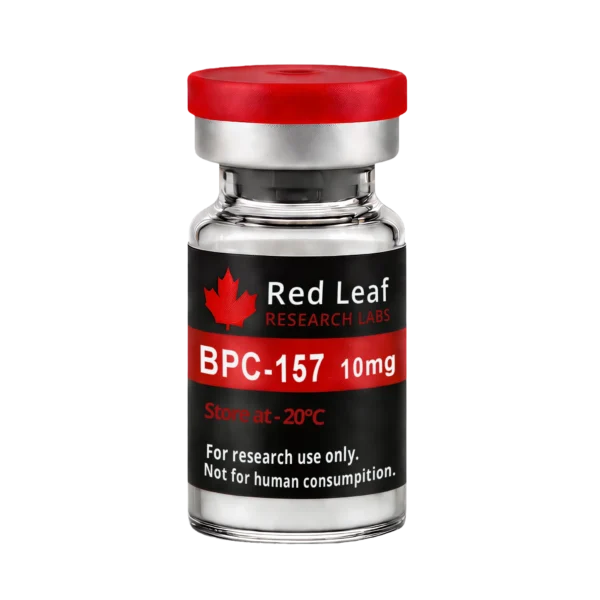 BPC-157 (10mg)$75 CAD · research use only
 GHK-Cu 100mg – 3ml Vial$64.99 CAD · research use only
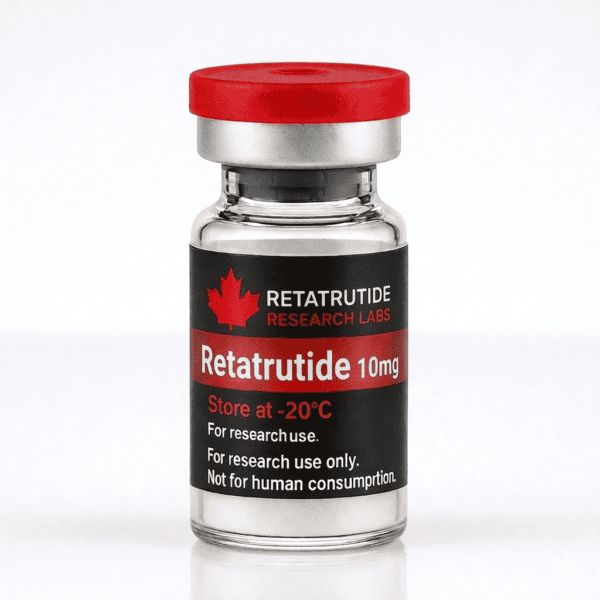 Retatrutide$79.99 CAD · research use only
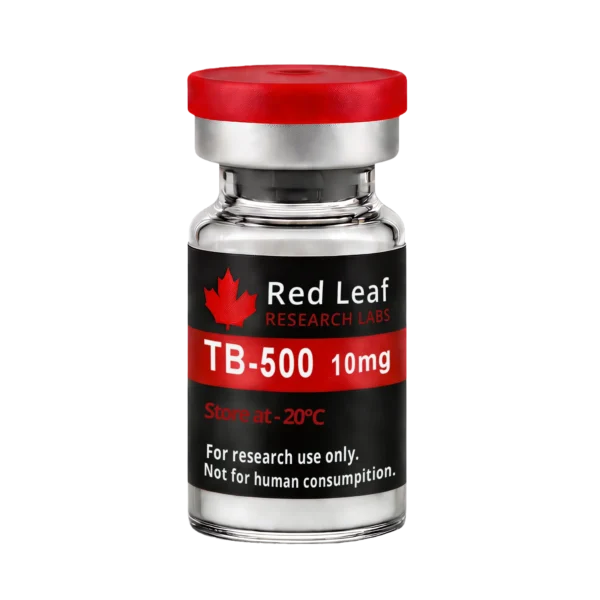 TB-500 (10mg)$84.99 CAD · research use only
 Bacteriostatic Water$10 CAD · research use only
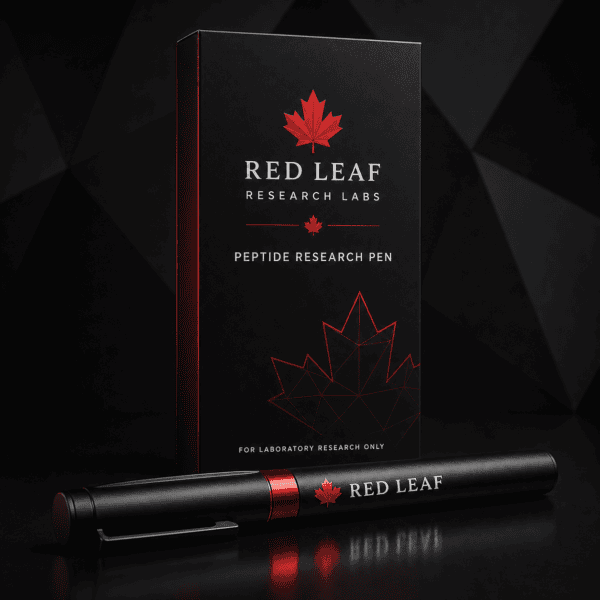 Peptide Pens Canada – Red Leaf Research Pen Add-On$99 CAD · research use only
Every product page carries its batch lab report with a verification link you can check at the testing laboratory, not just a PDF we host.
Research use only. Products sold by Red Leaf Research Labs are not approved by Health Canada for cosmetic application, therapeutic treatment, injection, ingestion, or any form of human or animal use. No claims are made regarding clinical outcomes, safety or efficacy. Pricing and stock are current at the time of publication and subject to change.