Owned and operated by Baba Kahn, a CF veteran

Peptides are all over the internet. So are myths about them. Here are 25 things people say about peptides. Most are myths. A few are true. Guess first, then tap to see the answer and the science behind it.
- 25 claims to test
- 2 buttons: myth or fact
- 1922 the year Toronto gave the first insulin shot
- 0 sign-ups needed
A peptide is a short chain of amino acids. Insulin is one. So is Ozempic. Peptides are not steroids.
Most peptide powder does not need dry ice, and not every peptide mixes the same way. “99% pure” does not mean 99% of the powder is peptide. And no research peptide sold in Canada is approved for people.
Think you know the rest? Test yourself on all 25 below.
Peptide basics
Start easy. What is a peptide, anyway?
Peptides are just steroids with a new name.
Show the answer
MythSteroids and peptides are different families. Steroids are built from cholesterol. They have four rings of carbon joined together.
Peptides are chains of amino acids, like beads on a string. Different shape, different building blocks, different family.
Want the long version? Read are peptides steroids?
Insulin is a peptide.
Show the answer
FactInsulin is a chain of 51 amino acids. It was found in Toronto in 1921 by Frederick Banting and Charles Best.
On January 11, 1922, at Toronto General Hospital, a 14-year-old boy named Leonard Thompson became the first person treated with insulin. A purer batch soon after helped him recover. Banting and John Macleod won the Nobel Prize in 1923.
Your body makes peptides every day.
Show the answer
FactYour pancreas makes insulin and glucagon. Your gut makes GLP-1 after you eat. Your brain makes oxytocin.
These natural peptides carry messages around the body. Many lab-made peptides are copies or tweaks of them.
Peptides are only used by bodybuilders.
Show the answer
MythPeptides are a big part of normal medicine. More than 80 peptide drugs are on the market around the world.
Insulin for diabetes and oxytocin in hospital birth wards are two of the best known. Ozempic is another one.
Storage, mixing and measuring
How should peptide powder be shipped, stored, mixed and measured in the lab?
Peptide powder has to ship on dry ice, or it is ruined.
Show the answer
MythBachem is one of the biggest peptide makers in the world. It says dry ice is not needed to ship peptides.
Dry powder in a sealed vial can handle 1 to 2 days at room temperature, with few exceptions. Cold storage matters once it arrives.
A freezer is the best long-term home for dry peptide powder.
Show the answer
FactFor long storage, Bachem says keep the powder below −15 °C in a tightly closed vial. Colder is even better.
A fridge at about 4 °C is fine for a short time. Keep vials dark and dry too. Powder soaks up water from the air, so Bachem says to let a cold vial warm to room temperature in a dry box before opening it.
Every peptide mixes the same way, in plain water.
Show the answer
MythNot every peptide reconstitutes the same way. Some mix into water in seconds. Others go cloudy, clump or even turn to gel, especially in a strong mix or a shaken vial.
CJC-1295, kisspeptin, MOTS-c and tesamorelin are good examples. All four are “basic” peptides, which means they carry a positive charge. Lab guides say basic peptides that will not dissolve in water should be started in a small amount of dilute acetic acid, then topped up with water.
Very oily peptides are different again. They may need a small amount of a solvent like DMSO instead.
We carry dilute acetic acid for peptides that need it.
Bacteriostatic water and sterile water are the same thing.
Show the answer
MythBoth start as very clean water. Bacteriostatic water also has 0.9% benzyl alcohol added. That stops bacteria from growing, so a vial can be opened more than once.
Sterile water has nothing added. Once opened, it is meant for one use.
We carry bacteriostatic water for lab use.
Once mixed with liquid, a peptide lasts as long as the powder.
Show the answer
MythPeptides break down much faster in liquid. Bachem says they should not be kept in solution for long, even sterile solution.
Labs split a solution into small portions and freeze them. Even frozen, a solution keeps for weeks, not years.
A “unit” on a syringe is the same as an IU.
Show the answer
MythThe marks on an insulin syringe measure liquid, not medicine. On a U-100 syringe, 100 marks fill 1 mL, so each mark is 0.01 mL. The marks only line up with real units for the U-100 insulin they were made for.
An IU (international unit) measures biological activity, and each substance has its own scale. 1 IU of human insulin weighs about 0.0347 mg. For growth hormone (somatropin), 1 mg is 3 IU.
Most research peptides have no IU at all. They are sold by weight, in mg. How much peptide sits in one mark depends on how much liquid the powder was mixed with.
Quality and lab reports
The trickiest part of the quiz. These ones catch out a lot of people.
“99% pure” means 99% of the powder in the vial is peptide.
Show the answer
MythThe purity number comes from a test called HPLC. It compares the right peptide against other peptide-like bits in the sample.
Dry powder also holds water and salts left from making it. These do not show up in the purity number. So a sample can be 97% pure but only about 72% peptide by weight. That second number is called net peptide content.
A peptide can test 99% pure and still carry endotoxins.
Show the answer
FactEndotoxins are bits of dead bacteria. They are not peptides, so the HPLC purity test does not see them.
Finding them takes a separate test, often one called LAL. A high purity number alone does not tell you a sample is free of endotoxins.
A mass spec test proves how much peptide is in the vial.
Show the answer
MythMass spectrometry weighs the molecule. It checks identity: is this the right peptide?
It does not tell you how much is there. Amount needs its own test, like a measured HPLC run or amino acid analysis.
If a vial comes with a lab report, it must be good.
Show the answer
MythA report only helps if it matches your vial. Reports can be old, copied, or for a different batch.
Check that the batch number on the report matches the label. Look for the lab name, a date, and a way to check the report with the lab.
See how our testing works, or read how to spot a bad supplier.
Famous names
The names everyone is talking about. Not all of them are even peptides.
BPC-157 has been proven in big human trials.
Show the answer
MythA 2025 review looked at 36 studies of BPC-157 in sports medicine. 35 were in animals or cells. Only one looked at people: 12 patients with knee pain, studied after the fact.
The authors found no study that measured its safety in people. BPC-157 has also been on the World Anti-Doping Agency’s banned list since 2022.
More in BPC-157 explained.
Retatrutide is already approved in Canada.
Show the answer
MythNot yet. Retatrutide is still being tested. Its maker, Eli Lilly, calls it an investigational drug, legally available only to people in its trials.
In May 2026, Lilly’s big TRIUMPH-1 trial reported average weight loss of 28.3% at 80 weeks on the top dose. As of October 2026, Health Canada has not approved it.
Read our retatrutide in Canada guide.
Ozempic is a peptide.
Show the answer
FactSemaglutide, the drug in Ozempic, is a modified copy of GLP-1, a gut peptide. Scientists added a fatty tail so it lasts about a week in the body.
Health Canada approved Ozempic for type 2 diabetes in early 2018. In 2026, it approved a generic semaglutide from Sandoz.
See how it compares in semaglutide vs tirzepatide vs retatrutide.
Weight lost on GLP-1 drugs is all fat.
Show the answer
MythIn a body-scan study inside the STEP 1 trial, people on semaglutide lost 19.3% of their fat mass. They also lost 9.7% of their lean mass. Lean mass includes muscle, organs and water.
Fat dropped faster, so the share of lean mass in the body went up. But some lean mass was lost too.
Related: loose skin after weight loss.
GHK-Cu was invented by a skincare company.
Show the answer
MythGHK was found in human blood. Dr. Loren Pickart reported it in 1973 while studying liver cells.
Skincare brands came much later. On face cream labels it is often called copper tripeptide-1.
Read the story in copper, from Cleopatra to the lab.
Thymosin alpha-1 is an approved medicine in some countries.
Show the answer
FactUnder the name Zadaxin (thymalfasin), it is approved in dozens of countries. In China it is approved for hepatitis B. Italy uses it with vaccines for people with weak immune systems.
It is not approved in Canada or the US.
More in our thymosin alpha-1 guide.
MOTS-c is coded in the mitochondria’s own DNA.
Show the answer
FactMitochondria are the power plants inside your cells. They have their own small set of DNA, passed down from your mother.
In 2015, scientists in California found MOTS-c hidden inside a mitochondrial gene called 12S rRNA. It is 16 amino acids long.
Read our MOTS-c guide.
SLU-PP-332 is a peptide.
Show the answer
MythSLU-PP-332 is a small lab-made molecule, not a chain of amino acids. It weighs about 290 g/mol. BPC-157, a peptide of 15 amino acids, weighs over 1,400.
SLU-PP-332 is an agonist: it switches on proteins called estrogen-related receptors (ERRs). Scientists at Saint Louis University, the “SLU” in its name, made it. In 2023 mouse studies they called it an “exercise mimetic”. So far it has only been studied in cells and animals.
“Agonist” describes what a compound does, not what it is made of. Some peptides are agonists too. Semaglutide, for example, is a GLP-1 receptor agonist.
Read our SLU-PP-332 guide.
The rules
Three last ones. These matter most.
RFK Jr. and Trump have made peptides legal in the US.
Show the answer
MythNot yet, and not the way some headlines suggest. In April 2026, the FDA took 12 peptides, including BPC-157, TB-500 and MOTS-c, off its “Category 2” list of substances flagged as too risky for pharmacies to compound. That lifted a safety flag. It did not make them legal to compound.
In July 2026, an FDA advisory panel recommended allowing six of them: BPC-157, KPV, TB-500, MOTS-c, Epitalon and Semax. FDA staff scientists had advised against it, and the panel’s vote is advice only. In mid-October, Health Secretary Robert F. Kennedy Jr.’s department sent an “interim access policy” to the White House for review. Reports say it would let US compounding pharmacies make some peptides, such as BPC-157, for patients with a prescription.
As of October 26, 2026, that policy has not been issued. It is about compounding pharmacies, so it would not cover research-use or supplement sellers. No peptide on the list has been approved as a medicine, and US policy does not change the rules in Canada.
If it is sold in Canada, Health Canada has approved it.
Show the answer
MythApproved medicines in Canada carry a Drug Identification Number, or DIN. It is an 8-digit number on the label. You can look it up in Health Canada’s Drug Product Database.
Research peptides have no DIN. They are not medicines. They are sold as lab materials.
Research peptides are approved for people to use.
Show the answer
MythResearch peptides are sold for lab research only. That means test tubes and lab dishes.
They are not approved for people or animals. Red Leaf sells every vial on that basis.
Full wording on our legal terms page.
How did you do?
Only 7 of the 25 claims are true. Did you find them all?
See the answer key
Facts: 2, 3, 6, 12, 17, 20, 21.
Myths: 1, 4, 5, 7, 8, 9, 10, 11, 13, 14, 15, 16, 18, 19, 22, 23, 24, 25.
Get new quizzes and plain-language research guides from Red Leaf by email.
If you have taken the quiz, your score is saved with your email. See our privacy policy.
Keep learning
Each of these guides goes deeper on one topic from the quiz.
What are peptides?
The basics in plain words. Read the beginner’s guide.
Are peptides steroids?
Why they are two different families. Read the comparison.
How to spot a bad supplier
Red flags to check before you buy. Read the checklist.
BPC-157 vs TB-500
Two peptides people often mix up. Read the comparison.
From this quiz
Every Red Leaf research vial is a dry powder for lab research, with an outside lab report for its batch on the product page. The acetic acid and bacteriostatic water are lab reagents for mixing.
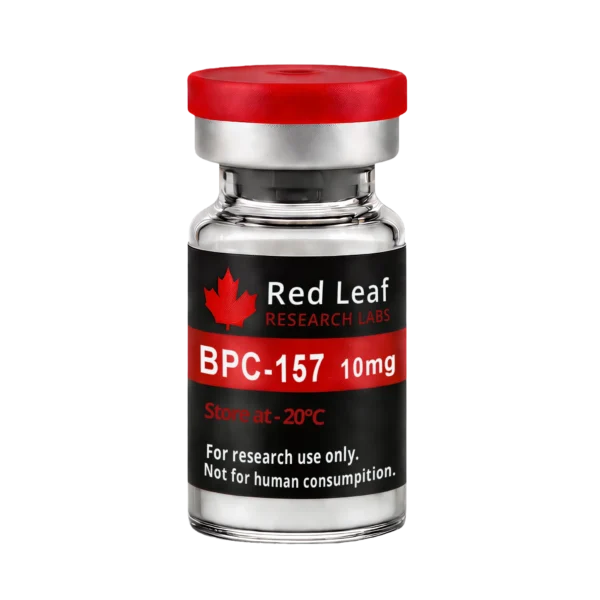 BPC-157 10mg$75.00
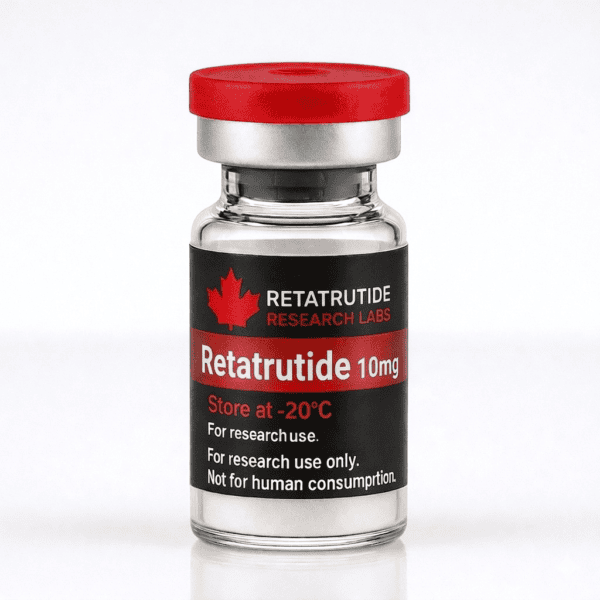 Retatrutide 10mg$79.99
 MOTS-c 40mg$69.99
 SLU-PP-332 5mg$49.99
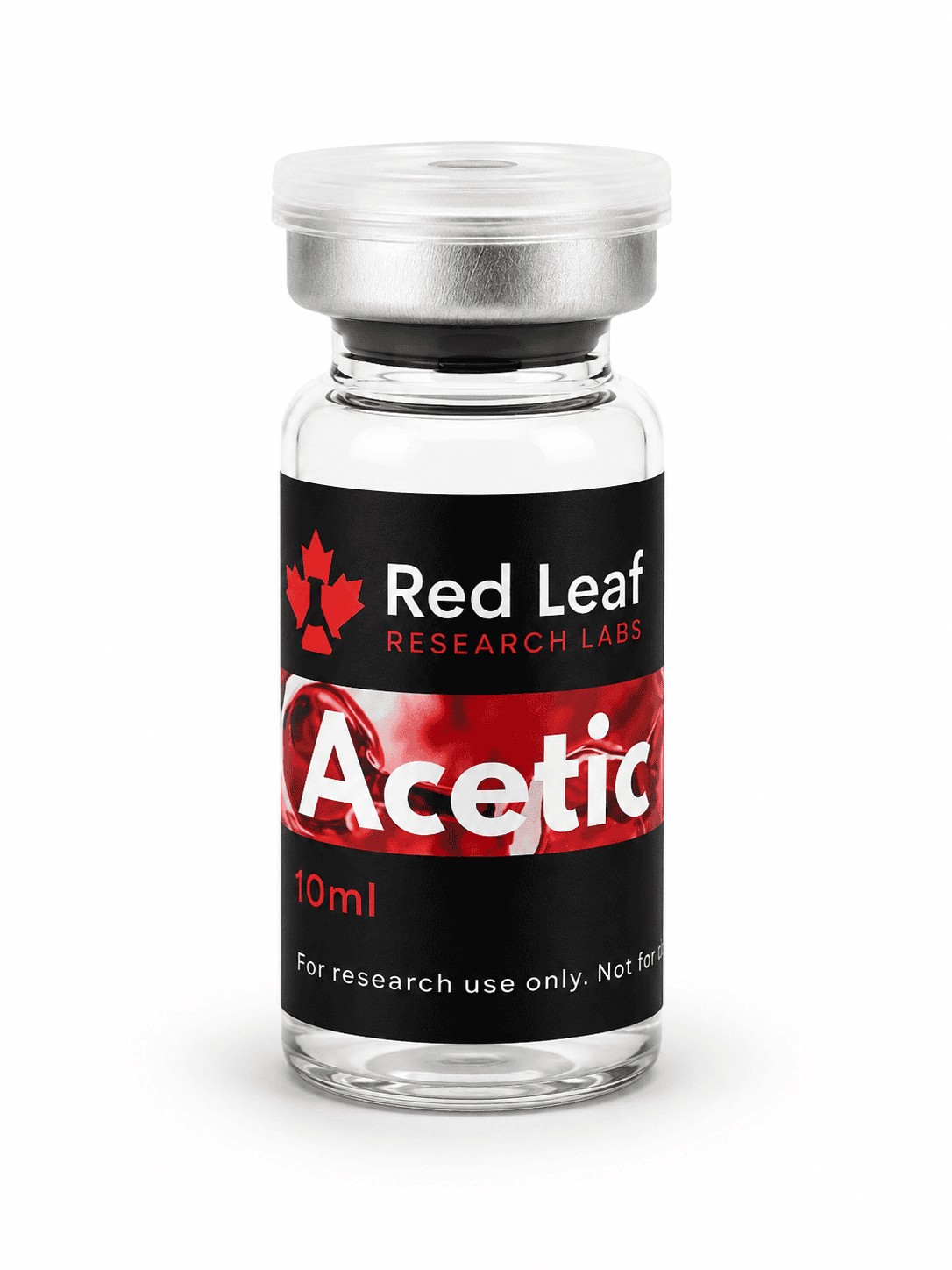 Acetic Acid 10ml$15.00
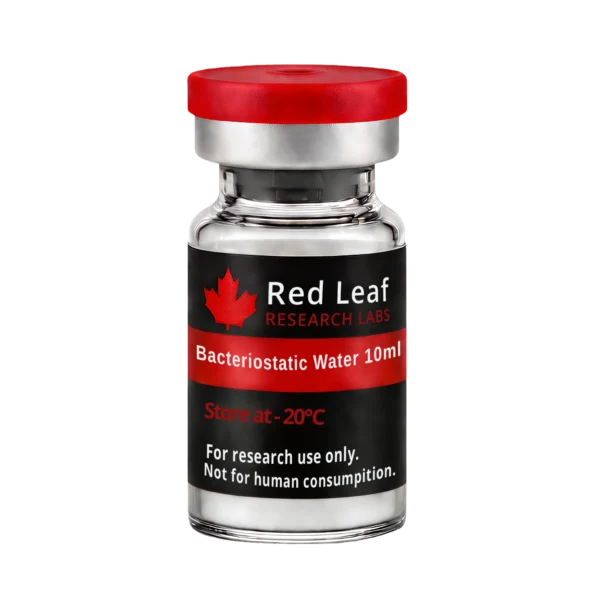 Bacteriostatic Water$10.00
Questions people ask
Are peptides steroids?
No. Steroids are built from cholesterol and have four carbon rings. Peptides are short chains of amino acids. They are different families of molecules.
Is insulin a peptide?
Yes. Insulin is a peptide hormone made of 51 amino acids. It was discovered in Toronto in 1921, and the first patient was treated in January 1922.
Do peptides need to ship on dry ice?
Usually not. Peptide maker Bachem says dry ice is not required, and that sealed dry powder can handle 1 to 2 days at room temperature with few exceptions. Long-term storage should be cold, below -15 °C.
Do all peptides dissolve in plain water?
No. Many do, but some go cloudy, clump or gel in plain water. Basic peptides such as CJC-1295, kisspeptin, MOTS-c and tesamorelin are often started in a small amount of dilute acetic acid in the lab, then diluted with water.
Is a unit on a syringe the same as an IU?
No. Syringe units measure volume: on a U-100 syringe, 100 units equal 1 mL. An international unit (IU) measures biological activity and is defined separately for each substance. Most research peptides are measured by weight, not IU.
What does 99% purity mean for a peptide?
It means the right peptide makes up 99% of the peptide-like material seen by an HPLC test. It does not count water and salts in the powder, so the actual peptide content by weight is lower, often somewhere above 70%.
Is SLU-PP-332 a peptide?
No. SLU-PP-332 is a small synthetic molecule that acts as an agonist of estrogen-related receptors (ERRs). It is not made of amino acids, and so far it has only been studied in cells and animals.
Is retatrutide approved in Canada?
No. As of October 2026, retatrutide is still in clinical trials and Health Canada has not approved it. Eli Lilly describes it as an investigational drug.
Did RFK Jr. and Trump legalize peptides?
Not as of October 26, 2026. In April 2026 the FDA removed 12 peptides, including BPC-157, from its list of substances flagged as too risky to compound, and in July an advisory panel recommended allowing six of them. An interim access policy from Robert F. Kennedy Jr.’s HHS was sent to the White House for review in mid-October and has not been issued. No peptide on the list has been approved as a medicine, and US policy does not change the rules in Canada.
How can you tell if a drug is approved in Canada?
Look for a Drug Identification Number (DIN), an 8-digit number on the label of drugs Health Canada has authorized. You can search it in Health Canada’s Drug Product Database.
Every Red Leaf vial carries an independent lab report for its batch, right on the product page. Free express shipping on Canadian orders over $250.
Browse the full catalogueSee our test sheetsSources
- Nobel Prize Outreach. The miracle discovery that reversed the diabetes death sentence. Read the article
- Muttenthaler M, King GF, Adams DJ, Alewood PF. Trends in peptide drug discovery. Nature Reviews Drug Discovery, 2021; 20: 309–325. View the paper
- Bachem. Handling and storage guidelines for peptides. Read the guide
- Bachem. Is dry ice required for the shipment of peptides? Read the answer
- Bachem. Quality control of amino acids and peptides: a guide. Read the guide
- Merck (Sigma-Aldrich). Peptide solubility guidelines. Read the guide
- ISCA Biochemicals. Solubility of peptides. Read the page
- NIBSC. WHO 2nd International Standard for insulin, human (code 11/212): instructions for use. Read the document
- European Medicines Agency. Norditropin (somatropin) Article 75 referral opinion and annexes. Read the document
- Médecins Sans Frontières Medical Catalogue. Syringe, U-100 insulin, 1 mL: specification. Read the specification
- ISCA Biochemicals. Peptide purity and net peptide content. Read the page
- Pfizer. Bacteriostatic Water for Injection, USP: prescribing information. Read the label
- Finnrick. Why endotoxin testing matters for peptides. Read the article
- Vasireddi N, Hahamyan H, Salata MJ, et al. Emerging use of BPC-157 in orthopaedic sports medicine: a systematic review. HSS Journal, 2025; 21(4): 485–495. View the paper
- UK Anti-Doping. Major changes to the 2022 Prohibited List: what you need to know. Read the notice
- Eli Lilly and Company. Lilly’s triple agonist, retatrutide, delivered powerful weight loss in pivotal Phase 3 obesity trial. May 21, 2026. Read the release
- Wilding JPH, Batterham RL, Calanna S, et al. Once-weekly semaglutide in adults with overweight or obesity (STEP 1). New England Journal of Medicine, 2021; 384: 989–1002. View the paper
- Health Canada. Summary Basis of Decision for Ozempic (semaglutide injection). Notice of Compliance issued January 4, 2018. View the decision
- Benefits and Pensions Monitor. Health Canada approves Sandoz’s generic semaglutide. September 2026. Read the article
- Pickart L, Thaler MM. Tripeptide in human serum which prolongs survival of normal liver cells and stimulates growth in neoplastic liver. Nature New Biology, 1973; 243: 85–87.
- AUTM Better World Project. Zadaxin: therapeutic developed in United States benefits many in Asia. Read the story
- Lee C, Zeng J, Drew BG, et al. The mitochondrial-derived peptide MOTS-c promotes metabolic homeostasis and reduces obesity and insulin resistance. Cell Metabolism, 2015; 21(3): 443–454. View on PubMed
- Billon C, et al. Synthetic ERRα/β/γ agonist induces an ERRα-dependent acute aerobic exercise response and enhances exercise capacity. ACS Chemical Biology, 2023; 18(4): 756–771. View the paper
- Billon C, et al. A synthetic ERR agonist alleviates metabolic syndrome. Journal of Pharmacology and Experimental Therapeutics, 2023; 388(2): 232–240. View the paper
- Orrick. FDA announces removal of 12 peptides from Category 2 and schedules PCAC meetings. April 2026. Read the alert
- STAT News. FDA panel backs compounded BPC-157, KPV peptides. July 23, 2026. Read the article
- Associated Press, via ABC News. Trump administration advances plan for peptide drugs favored by RFK Jr. October 15, 2026. Read the article
- Holland & Knight. Peptides at a crossroads: what wellness providers need to know about HHS and FDA actions. October 2026. Read the alert
- Health Canada. Drug Identification Number (DIN). Read the fact sheet
Research use only. BPC-157, retatrutide, GHK-Cu, MOTS-c, SLU-PP-332, CJC-1295, kisspeptin, tesamorelin, thymosin alpha-1 and every other research compound named here are sold by Red Leaf Research Labs as laboratory materials for in-vitro research. They are not approved for treatment, injection, ingestion or any human or animal use. Acetic acid and bacteriostatic water are sold as laboratory reagents. Medicines such as insulin, somatropin and Ozempic are named only as examples. Nothing on this page is medical advice, legal advice, a dose, or a protocol. Descriptions of US policy are current to October 26, 2026. Study findings are described from published research so readers can see what was measured. Full wording on our legal terms page.