Owned and operated by a cf veteran


What SLU-PP-332 is, why it gets called exercise in a pill, and why that description oversells it.
- ERR agonist
- Not a peptide
- Rodent studies only
- Research use only
SLU-PP-332 is not a peptide — it is a small molecule that activates estrogen-related receptors, which is a completely different mechanism from everything else on this site. The rodent work on endurance and fat metabolism is what produced the “exercise in a pill” headlines. There is no human data at all.
- SLU-PP-332 at a glance
- What is SLU-PP-332?
- How does SLU-PP-332 work?
- What does the research show?
- What the evidence does not tell us
- Is SLU-PP-332 safe?
- SLU-PP-332 in Canada: regulatory context
- How to assess SLU-PP-332 claims online
- SLU-PP-332 versus exercise and approved care
- Frequently asked questions about SLU-PP-332
- Primary research and official resources
SLU-PP-332 is an experimental small molecule—not a peptide—that activates estrogen-related receptors (ERRs) involved in mitochondrial energy metabolism. Researchers have reported exercise-like metabolic effects in cells and mice, including greater oxidative muscle activity, endurance, energy expenditure and fat oxidation. However, there are no completed human clinical trials establishing its safety, effectiveness or dose, and it is not an approved treatment in Canada.
This evidence-based SLU-PP-332 guide explains what the compound is, how it works, what the studies actually found, and what Canadians should know before interpreting online claims.
Readers comparing research summaries can also consult this SLU-PP-332 laboratory-studies overview.

SLU-PP-332 at a glance
| Question | Evidence-based answer |
|---|---|
| What is it? | A synthetic, non-peptide research compound and pan-agonist of ERRα, ERRβ and ERRγ. |
| Why is it called an exercise mimetic? | In preclinical models, it activates part of the oxidative metabolic program associated with aerobic exercise. |
| Has it been studied in humans? | No completed human clinical trials have established safety or efficacy. |
| Is it approved in Canada? | No Health Canada-approved therapeutic use has been established. |
| Best-supported findings | Cell and mouse studies report increased mitochondrial respiration, oxidative muscle fibres, endurance, energy expenditure and fatty-acid oxidation. |
| Biggest limitation | Promising animal results cannot be assumed to apply to people. |
What is SLU-PP-332?
SLU-PP-332 is a laboratory research chemical with the formula C18H14N2O2 and molecular weight 290.32 g/mol. Although many commercial pages call it “SLU-PP-332 peptide,” that description is chemically incorrect: it is a small-molecule hydrazone compound, not a chain of amino acids.
The compound was designed as an agonist of the estrogen-related receptor family. Its name can be confusing because ERRs are not estrogen receptors and SLU-PP-332 is not estrogen. ERRs are orphan nuclear receptors that help regulate genes involved in mitochondrial function, oxidative metabolism and energy use.
How does SLU-PP-332 work?
SLU-PP-332 activates all three ERR subtypes—ERRα, ERRβ and ERRγ—with the highest reported potency at ERRα. These receptors act as transcription factors. When activated, they influence the expression of metabolic genes rather than working like a stimulant that simply raises alertness or heart rate.
- Mitochondrial respiration: ERR signalling supports cellular energy production.
- Fatty-acid oxidation: cells can shift toward using more fat as fuel.
- Oxidative muscle programming: skeletal muscle can adopt features associated with endurance activity.
- Energy expenditure: mouse studies observed increased whole-body energy use.
Calling the compound an “exercise pill” is therefore an oversimplification. Exercise affects the cardiovascular, musculoskeletal, neurological and immune systems in ways that cannot be reduced to one signalling pathway. SLU-PP-332 has mimicked selected molecular effects of aerobic exercise in preclinical experiments; it has not been shown to replace exercise in humans.
What does the research show?
Cell and endurance research
A 2023 study in ACS Chemical Biology identified SLU-PP-332 as a synthetic ERRα/β/γ agonist. In cultured skeletal-muscle cells, it increased mitochondrial function and cellular respiration. In mice, researchers reported an ERRα-dependent aerobic-exercise gene program, more oxidative muscle fibres and improved exercise capacity. These are mechanistic and animal findings—not evidence of a performance benefit in people.
Obesity and metabolic-syndrome models
A subsequent study in the Journal of Pharmacology and Experimental Therapeutics examined diet-induced obese and genetically obese mice. Researchers reported increased energy expenditure and fatty-acid oxidation, reduced fat accumulation, and improved insulin sensitivity in those models. Food intake and spontaneous activity did not explain the observed effects.
The responsible interpretation is that ERR agonism is an interesting drug-development strategy. The study does not establish human weight-loss efficacy, a safe human dose, long-term safety or superiority to approved treatments.
Newer research directions
Later preclinical work has explored ERR agonism in kidney ageing and cardiac metabolism, while a 2026 laboratory study identified SLU-PP-332 metabolites using pooled human liver preparations for anti-doping research. An in-vitro metabolism experiment is not a human treatment trial. It helps analysts understand how the substance may be processed and detected, but it does not establish clinical safety.
What the evidence does not tell us
- Whether SLU-PP-332 is safe in healthy people or patients
- Whether the mouse benefits translate to humans
- A clinically tested human dose, schedule or route
- Short- or long-term human side effects
- Drug interactions, contraindications or reproductive risks
- Product quality or identity in unregulated online preparations
Animal experiments are essential for early discovery, but metabolism, exposure and toxicity can differ substantially between species. The published mouse regimens should never be converted into a human protocol. Such conversion would be scientifically unreliable and potentially dangerous.
Is SLU-PP-332 safe?
Human safety is unknown. No established adverse-event profile exists because controlled human trials have not determined tolerability, pharmacokinetics or long-term effects. A lack of reported human side effects is not proof of safety; it reflects a lack of adequate human data.
Research-chemical labels and certificates of analysis also answer different questions. A test may suggest the identity or purity of a submitted sample, but it cannot demonstrate that a compound is safe, effective, sterile or suitable for human consumption. Researchers should rely on validated analytical methods, lot-specific documentation and institutional chemical-safety procedures.
SLU-PP-332 in Canada: regulatory context
SLU-PP-332 has no established Health Canada-approved therapeutic indication. It should not be presented as an approved weight-loss, performance, metabolic or anti-ageing treatment. Canadians can confirm authorized drugs through Health Canada’s official drug databases and should discuss health concerns with a qualified clinician rather than relying on research-chemical marketing.
Availability for laboratory research does not equal authorization for human use. Labelling such as “research use only” also does not turn self-experimentation into research. This guide is educational and does not provide medical advice or instructions for consuming, dosing, injecting or otherwise administering SLU-PP-332.
How to assess SLU-PP-332 claims online
- Check the study population. “In mice” is not the same as “in humans.”
- Identify the endpoint. Gene expression or mitochondrial respiration is not a clinical outcome.
- Look for a control group. Testimonials and before-and-after stories cannot establish cause.
- Read the original paper. Marketing summaries often omit limitations, route and model.
- Separate identity from safety. Purity testing cannot substitute for clinical trials.
- Watch for category errors. SLU-PP-332 is not a peptide, supplement or approved medicine.
- Demand current regulatory wording. “Available in Canada” does not mean “approved by Health Canada.”
SLU-PP-332 versus exercise and approved care
SLU-PP-332 is best understood as a tool for studying ERR biology. Physical activity has extensive human evidence and produces broad adaptations beyond ERR activation. For obesity, diabetes, fatigue or exercise intolerance, Canadians should seek an evidence-based assessment because these concerns can have many causes and approved options differ by diagnosis.
Researchers exploring adjacent metabolic topics may also find our educational guides to MOTS-c and mitochondrial research and research peptides in Canada useful. For lab quality principles, see our overview of independent testing and certificates of analysis.
Frequently asked questions about SLU-PP-332
What is SLU-PP-332?
SLU-PP-332 is an experimental small-molecule agonist of ERRα, ERRβ and ERRγ. It is used in preclinical research on mitochondrial metabolism, fatty-acid oxidation and exercise-related gene programs.
Is this compound a peptide?
No. Despite being sold on some “peptide” websites, SLU-PP-332 is a synthetic small molecule with the formula C18H14N2O2. Calling it a peptide is chemically inaccurate.
Is it an exercise mimetic?
It is described as an exercise mimetic because it activated part of the aerobic-exercise metabolic program in cells and mice. That term does not mean it reproduces all benefits of exercise or has been proven to work in humans.
How does it activate ERRs?
It binds and activates estrogen-related receptors, nuclear receptors that regulate transcription of genes involved in mitochondrial respiration, oxidative muscle function and energy metabolism. Its strongest reported activity is at ERRα.
Does it increase endurance?
Researchers reported greater exercise capacity in mice. No controlled human trial has established that SLU-PP-332 increases endurance in people.
Does it burn fat or cause weight loss?
In obese mouse models, it increased fatty-acid oxidation and energy expenditure and reduced fat accumulation. These findings do not prove that it causes safe or effective weight loss in humans.
Does it build muscle?
There is no human evidence that it builds muscle. Preclinical research focused on oxidative muscle-fibre characteristics and metabolic function, not proven human hypertrophy.
Is it a stimulant?
It is not classified as a conventional central-nervous-system stimulant. Its studied mechanism involves nuclear-receptor signalling and metabolic gene expression. Human effects remain unknown.
Has it been tested in humans?
No completed clinical trials have established human safety, efficacy, pharmacokinetics or dosing. Laboratory research using human-derived cells or liver preparations should not be confused with administering the compound to people.
What are the possible side effects?
A reliable human side-effect profile is unavailable. Unknown risks may include off-target effects, interactions, organ toxicity or problems that emerge only with longer exposure. “No known side effects” would be a misleading claim.
Is there an established human dose?
There is no clinically established human dose. Mouse-study amounts should not be scaled or copied for people, and this article intentionally does not provide administration instructions.
Is it orally bioavailable?
The original published animal studies used experimental administration methods and do not establish a dependable oral formulation for humans. Commercial capsule claims should not be treated as clinical pharmacokinetic evidence.
Is it approved in Canada?
No Health Canada-approved therapeutic use has been established for SLU-PP-332. It is not an approved treatment for obesity, diabetes, fatigue, ageing or athletic performance.
Can athletes use SLU-PP-332?
Competitive athletes should consult the current rules that apply to them. Exercise mimetics and metabolic modulators are an anti-doping concern, and a 2026 study specifically investigated SLU-PP-332 metabolites for detection purposes.
Is a certificate of analysis enough to prove safety?
No. A credible, lot-specific analysis can help assess identity, purity or quantity, but it does not prove clinical safety, sterility, effectiveness or suitability for human use.
What is the most important SLU-PP-332 research gap?
Human clinical evidence. Researchers still need carefully controlled trials to evaluate pharmacokinetics, dose-ranging, adverse effects and whether any preclinical benefit translates to people.
Primary research and official resources
- Billon C, et al. Synthetic ERRα/β/γ Agonist Induces an ERRα-Dependent Acute Aerobic Exercise Response and Enhances Exercise Capacity. ACS Chemical Biology. 2023.
- Walker JK, et al. A Synthetic ERR Agonist Alleviates Metabolic Syndrome. Journal of Pharmacology and Experimental Therapeutics. 2023.
- Avliyakulov NK, et al. Analysis and Identification of In Vitro Metabolites of Exercise Mimetic SLU-PP-332. Drug Testing and Analysis. 2026.
- Health Canada Drug Product Database.
Last reviewed August 3, 2026. This article is for educational and laboratory-research information only. SLU-PP-332 is not presented as a drug, supplement or product for human or veterinary use.
 SLU-PP-332From $49.99 CAD · research use only
 5-AMINO-1MQ 50mg$130 CAD · research use only
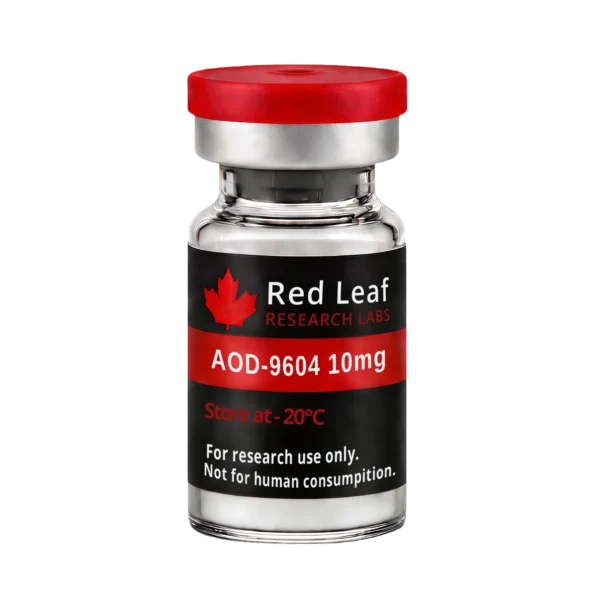 AOD-9604 10mg$80 CAD · research use only
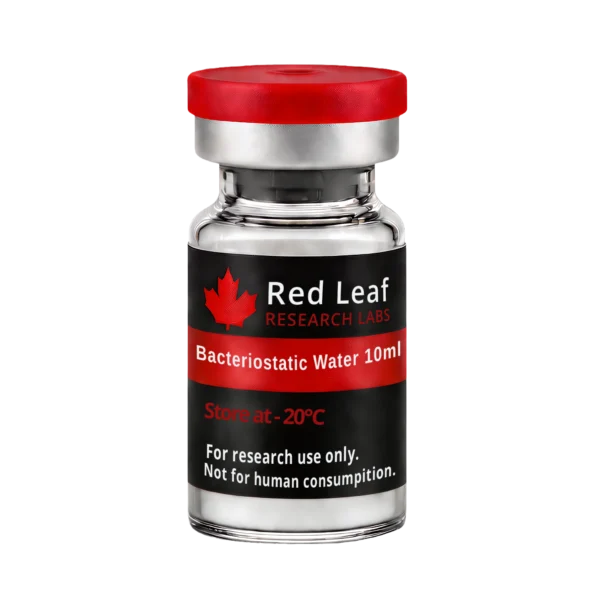 Bacteriostatic Water$10 CAD · research use only
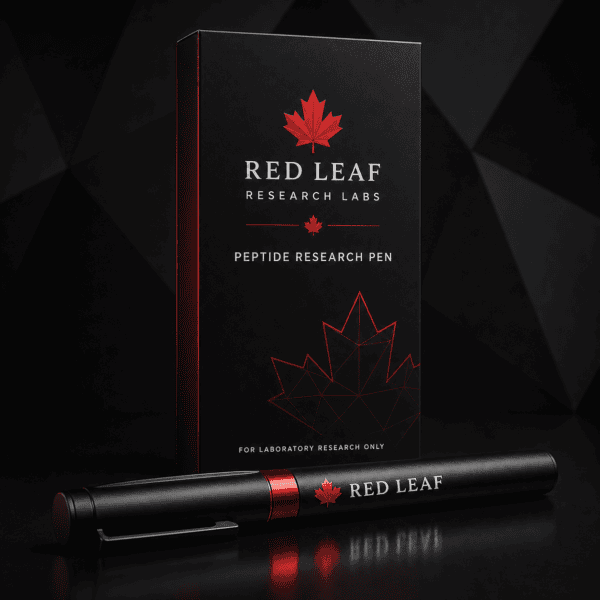 Peptide Pens Canada – Red Leaf Research Pen Add-On$99 CAD · research use only
Every product page carries its batch lab report with a verification link you can check at the testing laboratory, not just a PDF we host.
Browse the catalogue See the lab test sheetsResearch use only. Products sold by Red Leaf Research Labs are not approved by Health Canada for cosmetic application, therapeutic treatment, injection, ingestion, or any form of human or animal use. No claims are made regarding clinical outcomes, safety or efficacy. Pricing and stock are current at the time of publication and subject to change.