FREe CANADA-WIDE EXPRESS SHipping on orders over $350 📦
PAYMENT BY INTERAC ONLY, Pay by CC soon
Reviews transferred over to Yotpo (over 140 reviews)
Retatrutide 30mg - 99.79% purity
🍁 Owned and operated by a cf veteran 🇨🇦
11 new coa rpts
Easter sale 15% off purchases over $250 (FCFS - while supplies last)
Coupon code: peptideparty

FREE CANADA-WIDE EXPRESS SHIPPING ON ORDERS OVER $350

Reviews transferred over to Yotpo (over 140 reviews)

🍁 Owned and operated by a CF Veteran 🇨🇦

Coupon Codes:

FREE Pfizer BW on Purchases over $500: blackdragon, 10% off: peptide party

Click Here

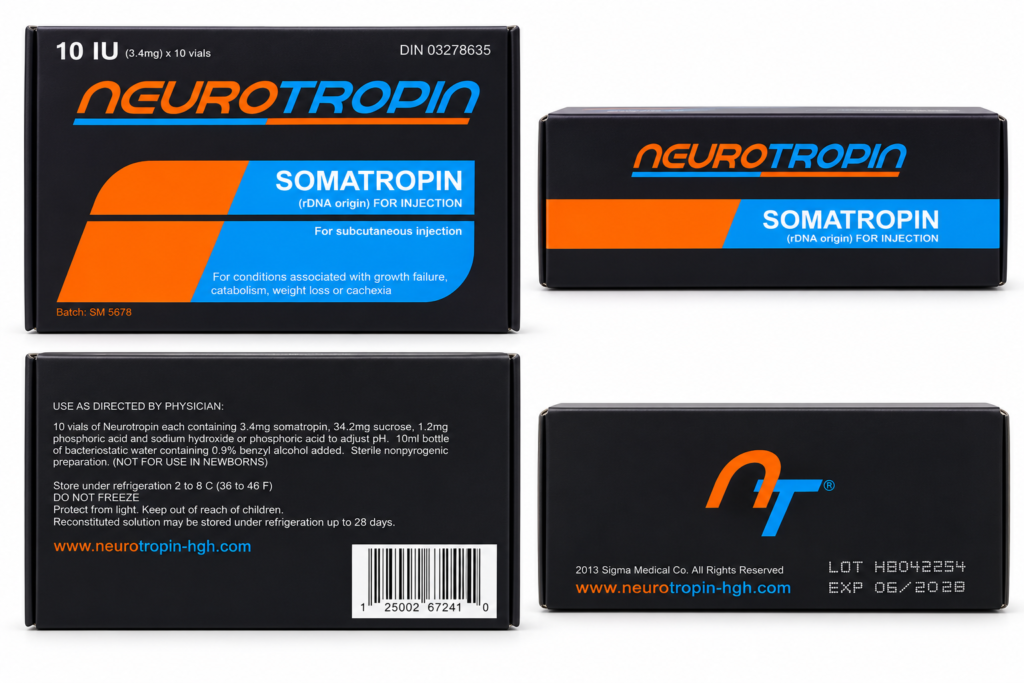
SALE IN EFFECT, NEUROTROPIN GH 100iu $250 (while quantities last)

Pfizer bac water – In stock New Batch of G-H coming. RESTOCKED – Please double-check junk mail for emails
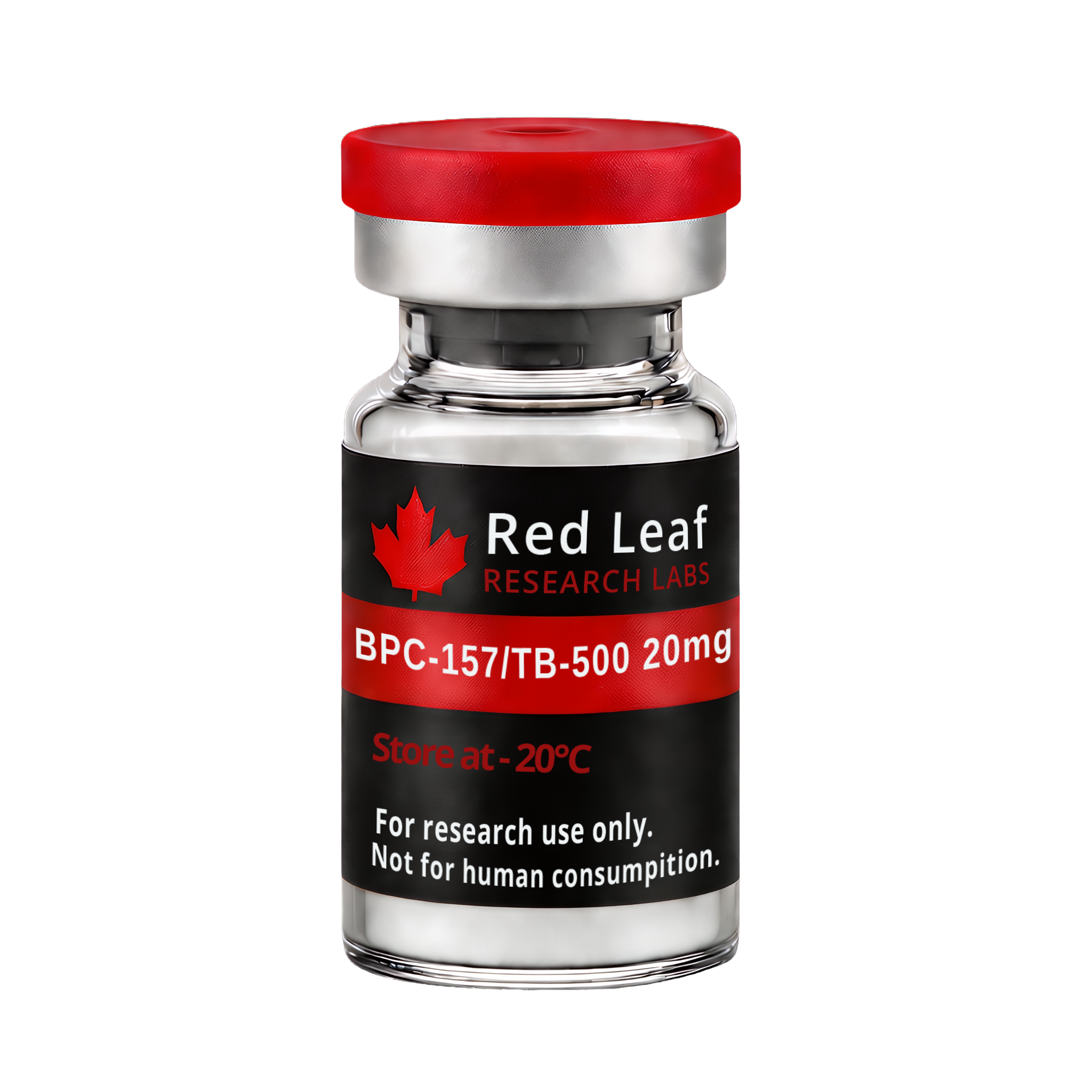
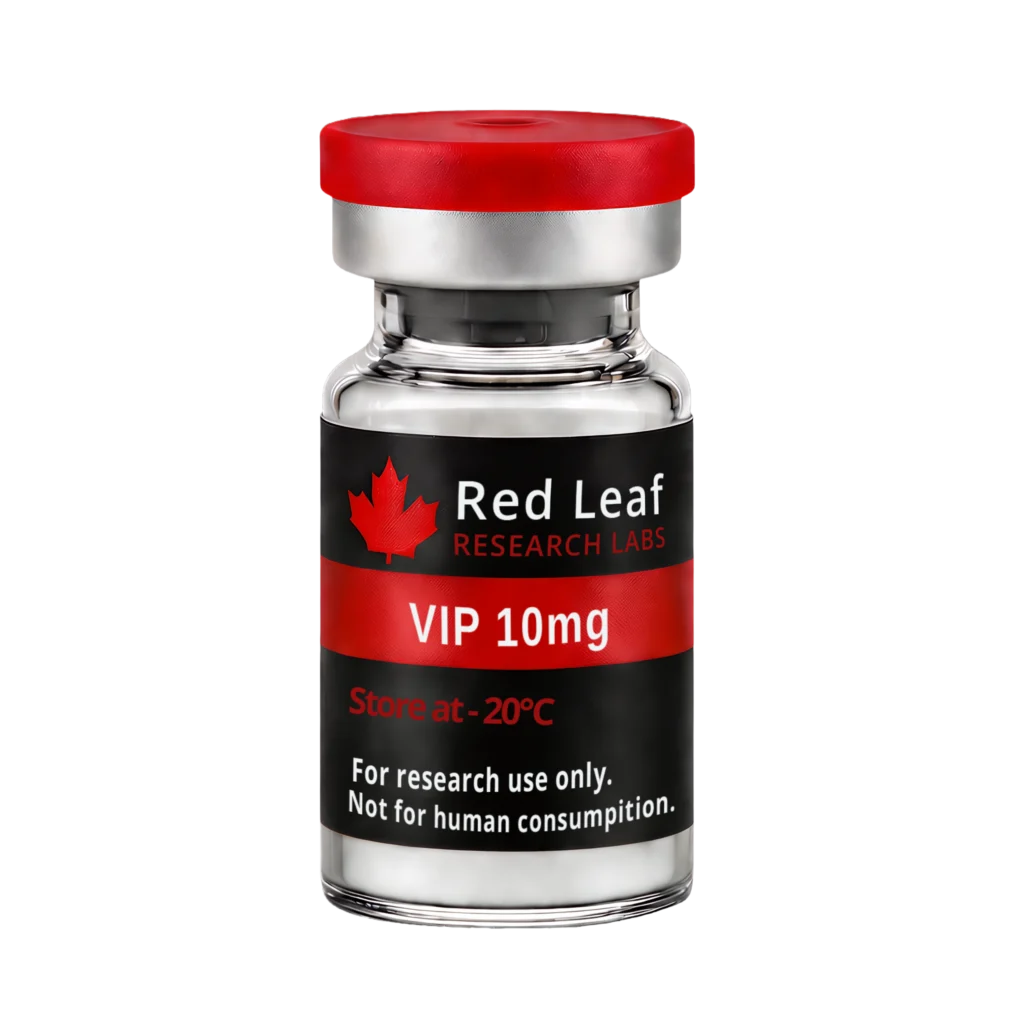
BPC-157 / TB-500 20mg

Original price was: $150.00.Current price is: $110.00.

In stock

Share this product

Research use only; Not for human or veterinary administration. This content is not a substitute for medical advice.

BPC-157 / TB-500 research: quick summary

This listing supplies a combined research format containing BPC-157 and TB-500, two peptides studied separately in tissue-repair research models. This Canadian product listing concerns laboratory research material only. It is not an authorized medicine, does not provide dosing or administration instructions, and is not intended for human or veterinary use.

BPC-157 / TB-500 Canada: 20mg Combined Research Format

BPC-157 TB-500 Canada researchers can order this 20mg combined research format directly from Red Leaf Research Labs, with published analytical information, Canadian-dollar pricing and domestic express fulfilment.

For searches such as buy BPC-157 TB-500 Canada, BPC 157 TB 500 blend or tissue repair peptide blend Canada, the practical questions are the same ones that apply to any research peptide, plus one that applies only to blends: what is the ratio, and does the analytical documentation characterise both components separately?

Red Leaf Research Labs supplies research material to qualified purchasers in Canada. Nothing on this page describes a therapy, a treatment or a permitted personal use.

What a Combined Format Means for Research Documentation

A blended vial is analytically harder to characterise than a single-compound vial, and this is the point most listings skip.

With one compound, a purity figure has a clear referent: what fraction of the material is the target molecule. With two compounds in one vial, a single purity figure is ambiguous — it does not tell a researcher the ratio between the two, nor whether each component individually met specification. A laboratory that needs to know how much of each peptide it has must have documentation that reports them separately.

Laboratories designing controlled work should also consider whether a blend is the right format at all. Two compounds in fixed proportion cannot be varied independently, which rules out the dose-response and component-contribution designs that most tissue-repair questions actually require. Blends are a convenience format; single-compound vials are the research format.

BPC-157 Component Specifications

  • Compound name: BPC-157
  • Full name: Body protection compound 157
  • Class: Synthetic pentadecapeptide
  • Amino acid sequence: Gly-Glu-Pro-Pro-Pro-Gly-Lys-Pro-Ala-Asp-Asp-Ala-Gly-Leu-Val (GEPPPGKPADDAGLV)
  • Origin: A partial sequence derived from a protein found in human gastric juice
  • CAS number: 137525-51-0
  • Molecular formula: C62H98N16O22
  • Approximate molecular weight: 1419.5 g/mol

TB-500 Component Specifications

  • Compound name: TB-500
  • Relationship to thymosin beta-4: TB-500 is a synthetic compound related to thymosin beta-4 (Tβ4), the 43-amino-acid actin-sequestering protein. The two names are not interchangeable, and different suppliers ship different things under the TB-500 label.
  • Research interest: Actin-binding and cell-migration endpoints, the region of Tβ4 responsible for actin sequestration being the usual focus
  • Verification note: Because the label is used inconsistently across the market, confirm on the certificate of analysis which molecule was actually tested — full-length Tβ4 or a fragment.

The TB-500 Naming Problem

This deserves its own section because it is the single most common source of confusion in this category.

Thymosin beta-4 is a well-defined 43-amino-acid protein. “TB-500” is a trade designation that has been applied both to full-length Tβ4 and to shorter synthetic fragments containing the actin-binding region. Two vials labelled TB-500 from two suppliers may therefore contain different molecules with different molecular weights and different behaviour in an assay.

For a laboratory this is not a labelling quibble — it determines whether results are comparable between lots, between suppliers, or with the published literature. The only reliable resolution is the analytical report: read what was tested rather than what the label says.

What the Research Literature Establishes

BPC-157 and TB-500 have separate literatures, and neither is a settled clinical picture.

Published BPC-157 work is predominantly rodent, concentrated in a relatively small number of research groups, and centred on gastrointestinal and connective-tissue models. TB-500 and thymosin beta-4 work centres on actin dynamics and cell migration, with a broader base of cell-biology literature behind Tβ4 itself.

What the literature does not establish is a combined effect. Research on the two compounds together is thin, and results from separate studies of each do not add up to evidence about a blend. Findings are protocol-specific and do not establish a safety profile, an effect size, or an appropriate use in any person.

Why Buy This Research Format in Canada from a Domestic Supplier?

For a blended format the case for domestic supply is mostly documentary. If the analytical report turns out to describe only one component, or leaves the TB-500 material undefined, that is a question you need answered before you design around the vial — and it is a question a Canadian supplier can actually be held to.

Transit exposure applies as it does to any lyophilized peptide: shorter is better, and a shipment held in customs is an uncontrolled excursion no pre-shipment certificate accounts for.

How This BPC-157 / TB-500 Page Improves on Typical Competitor Listings

  • The blend problem is stated. A single purity figure cannot characterise a two-compound vial, and this page says so.
  • The TB-500 naming ambiguity is explained rather than glossed over, so a laboratory knows what to verify.
  • Both components are specified separately, with sequence and formula given for BPC-157.
  • The evidence gap on blends is named. Separate literatures do not sum to evidence about a combination.
  • No outcome claims. This listing does not describe experiences, results or benefits.

How to Evaluate a Blended Certificate of Analysis

A blended vial doubles the identity work and makes a single purity figure close to meaningless. Read the report component by component.

  1. BPC-157 identity: the GEPPPGKPADDAGLV sequence or CAS 137525-51-0, with a mass near 1419 daltons.
  2. TB-500 identity: the actual molecule tested — full-length thymosin beta-4 or a fragment — named, with its mass. This is the check that distinguishes a documented blend from a guess.
  3. Ratio: the proportion of each component, not a combined mass with one percentage attached.
  4. Per-component purity: whether each was assessed individually or only the mixture.
  5. Lot reference and date: cross-check both against the vial.
  6. Total quantity: reconciled against the 20mg format.
  7. Independent check: a verification reference you can put to the issuing laboratory.

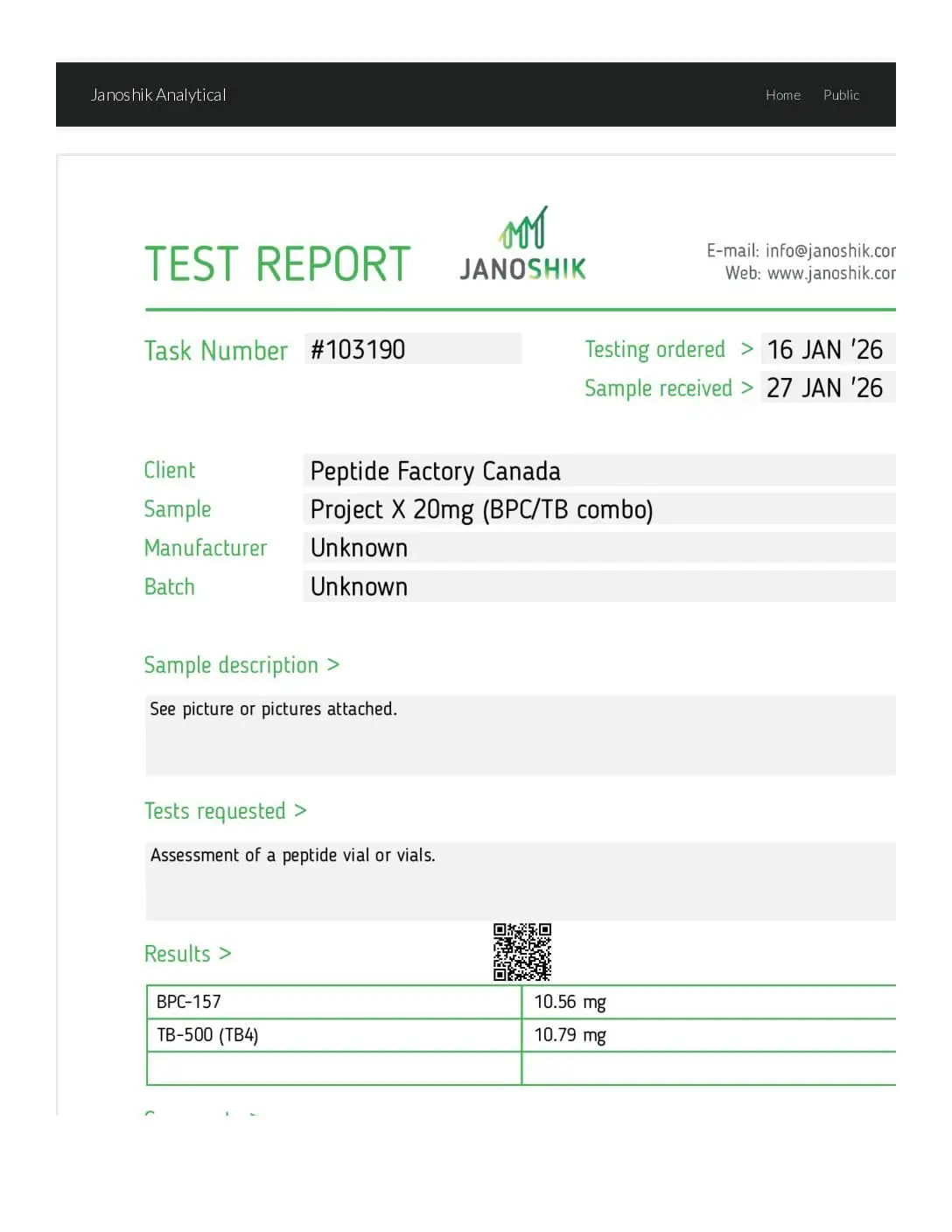
Red Leaf publishes Janoshik reports with a verification key. If a blend report gives you one number and two names, it has not characterised what you are buying.

Lyophilized Research Format

The 20mg format arrives as a lyophilized cake containing both components. Lyophilization describes the drying process and nothing more.

A blend introduces a handling consideration a single-compound vial does not: the two peptides may not have identical solubility behaviour, so incomplete dissolution can shift the effective ratio in your working solution away from the ratio in the vial. Confirm full dissolution before use rather than assuming it. Inspect the cake, connect the vial to its report, and follow validated institutional procedures. Background on diluent choice is in bacteriostatic water uses and handling.

How to Buy BPC-157 / TB-500 in Canada for Qualified Research

  1. Establish eligibility. Confirm the purchaser and institution are authorized to hold research-use material.
  2. Decide whether a blend fits the design at all. If you need to vary the components independently, order them separately instead.
  3. Confirm both components on the report — including which TB-500 molecule was tested — before ordering.
  4. Confirm the destination can receive and store the vial.
  5. Log it in. Lot reference, stated ratio, arrival condition and storage location, against the study plan.

Fulfilment is to qualified Canadian purchasers by domestic express. Red Leaf supplies material and documentation; it does not advise on study design and provides nothing that supports use in humans or animals.

Availability in Canada: Research vs. Consumer Searches

Neither BPC-157 nor TB-500 holds a marketing authorization in Canada. Neither has been assessed for consumer safety or effectiveness by Health Canada.

Research supply and public medical availability are separate categories. A vial available to a qualified laboratory is not an approved retail medicine, a recovery product, or a substitute for professional care. Anyone searching from a personal injury concern should speak with a licensed clinician rather than a research supplier.

Procurement Checklist

CheckWhat to confirm
PurposeAuthorized laboratory research with an approved study plan
Format suitabilityA fixed-ratio blend suits the design, or single-compound vials are used instead
BPC-157 identityCAS 137525-51-0 and the GEPPPGKPADDAGLV sequence
TB-500 identityThe specific molecule tested is named — full-length Tβ4 or a fragment
RatioProportion of each component reported, not only combined mass
VerificationReport can be checked against the issuing laboratory
HandlingStorage and preparation procedures validated by the receiving institution

Explore Related Research Information

For supplier-selection criteria in the Canadian market, review how to evaluate a Canadian research peptide supplier. For a wider survey of compounds studied in repair and growth signalling, see peptides studied in muscle-growth research.

BPC-157 / TB-500 research FAQ

Is TB-500 the same as thymosin beta-4?

Not necessarily. Thymosin beta-4 is a defined 43-amino-acid protein; “TB-500” is a trade designation applied both to full-length Tβ4 and to shorter fragments. Confirm which molecule the analytical report describes.

Why does the blend ratio matter?

Because a single purity figure for a two-compound vial does not tell a researcher how much of each peptide is present, and a fixed ratio cannot be varied independently in a study design.

What does the research literature show for the combination?

Very little. The two compounds have separate literatures; work on them together is thin, and separate findings do not sum to evidence about a blend.

What is BPC-157 derived from?

It is a synthetic fifteen-amino-acid sequence derived from a protein found in human gastric juice.

Does Red Leaf Research Labs provide dosing information?

No. Red Leaf Research Labs supplies research material and analytical documentation only.

Research use only. Material supplied by Red Leaf Research Labs is intended for qualified laboratory research. It is not a medicine, not for human or veterinary use, and not for diagnostic or therapeutic application.

Lab Verified

Third-party tested purity

99%+ Research Grade

Ultra high synthesis purity

Cold Chain Shipping

Temperature controlled logistics

Verified Reviews

Trusted by researchers worldwide

Lyophilized Powder

This product is supplied in a lyophilized powder form to preserve its stability, purity, and potency.

For laboratory research purposes only. Not intended for human consumption.

Research Peptides Canada - Red Leaf Research

Disclaimer

You must be 18 or 19 years of age depending on the age of majority in your province and a licensed research professional

All products are sold in powder (lyophilized) form and require reconstitution with a suitable diluent for research purposes only. No dosing instructions are provided. We adhere to all provincial and federal laws in Canada around Research Only Chemical sales. We are not a pharmacy and/or compounding facility, nor do we promote or provide any advice for human or animal consumption.

By clicking ”I Agree” you confirm that you have read and accepted the Terms and Conditions stated above
0