Owned and operated by a cf veteran


What side effects turn up across peptide research, which ones matter, and when to get help.
- Injection-site reactions
- Gut effects with incretins
- Rare serious events
- Research use only
Side effects vary by compound, but the recurring ones are injection-site reactions, gut symptoms with the metabolic peptides, and water retention or numbness with growth-hormone secretagogues. The serious ones are rare and worth knowing: severe abdominal pain, breathing difficulty, swelling and fainting need urgent care.
- Do peptides have side effects?
- Common peptides side effects at a glance
- Why peptides side effects vary so much
- Peptides side effects by category
- Peptide injection side effects: reactions versus infection
- Serious peptides side effects that should not be ignored
- Peptides side effects and injection safety in Canada
- How to reduce peptides side effects
- Frequently asked questions about peptides side effects
- The bottom line
Short answer: Peptides side effects are real because these molecules are biologically active. Peptides can cause side effects because they are biologically active molecules—not harmless supplements. The risks depend on the specific peptide, dose, route, product quality and the person using it. Common effects may include nausea, digestive upset, headache, fatigue, fluid retention, appetite changes and injection-site reactions. Serious risks can include allergic reactions, pancreatitis, severe dehydration, blood-sugar problems and infection from a contaminated injectable product.
Last medically reviewed for Canadian safety and regulatory context: August 2026. This guide is educational and does not provide dosing or treatment advice.
For a broader introduction to peptide categories and how their risks differ, read this overview of peptide types and safety considerations.
Do peptides have side effects?
Yes. “Peptides” describes thousands of short chains of amino acids with very different actions. Insulin, GLP-1 medicines, some fertility drugs and numerous experimental compounds are all peptides, but they do not share one universal side-effect profile. A side effect from peptides must therefore be evaluated by the specific molecule, not by the word “peptide.”
Understanding peptides side effects starts with this distinction in Canada. Some peptide medicines are authorized prescription drugs with an eight-digit Drug Identification Number (DIN), standardized manufacturing and an approved product monograph. Other products promoted online for weight loss, healing, muscle growth, tanning or “anti-aging” have not been authorized for human use. Health Canada warns that unauthorized injectable peptides may contain the wrong ingredient, an incorrect amount, contaminants or bacteria.
Common peptides side effects at a glance
| Side effect | Why it may occur | Examples of affected categories |
|---|---|---|
| Nausea, vomiting, diarrhea or constipation | Changes in appetite, digestion and gastric emptying | GLP-1 and related metabolic peptides |
| Redness, pain, itching or swelling | Local injection reaction, technique, excipients or contamination | Any injectable peptide |
| Headache, dizziness or fatigue | Dehydration, reduced calorie intake, blood-pressure or metabolic changes | Several therapeutic and experimental classes |
| Fluid retention, tingling or joint discomfort | Growth hormone/IGF-1 pathway stimulation | Growth-hormone secretagogues |
| Appetite or blood-sugar changes | Effects on insulin, glucagon, growth hormone or appetite signals | Metabolic peptides and secretagogues |
| Skin irritation or rash | Contact irritation, allergy or immune response | Topical peptides and injectables |
These are possible patterns, not a checklist for every product. A symptom that is mild with one approved medicine may be unexpected or dangerous with an unidentified online vial.
Why peptides side effects vary so much
1. The peptide’s biological target
A GLP-1 receptor agonist changes appetite, insulin signalling and digestion. A growth-hormone secretagogue stimulates a different hormonal pathway. A melanocortin analogue affects pigmentation and other melanocortin receptors. Different targets create different benefits, interactions and adverse effects.
2. Dose, duration and combinations
Many adverse effects are dose-related. Risks may increase when a product is escalated quickly, used for longer than studied or combined with medications that affect the same pathway. “Peptide stacks” are especially hard to evaluate because interactions may never have been studied in humans.
3. Route of exposure
A topical cosmetic peptide, an oral collagen peptide and an injected prescription drug are not interchangeable. Injection bypasses skin and digestive barriers, so sterility, concentration and correct administration become critical safety issues.
4. Product identity and quality
Clinical evidence only applies when the tested molecule, strength and formulation match what a person receives. A certificate of analysis does not turn a research chemical into an authorized medicine, prove a vial is sterile or establish that its contents are safe to inject.
5. Personal health factors
Pregnancy, breastfeeding, diabetes, gastrointestinal disease, kidney or liver impairment, a history of pancreatitis, cancer risk and other medications can materially change risk. A licensed clinician and pharmacist can assess factors that a generic online protocol cannot.
Peptides side effects by category
GLP-1 and metabolic peptides
Semaglutide and tirzepatide are well-studied prescription medicines with approved indications in Canada. Retatrutide remains investigational. The most common effects in this broad metabolic category are nausea, diarrhea, vomiting, constipation, abdominal discomfort and reduced appetite. Rapid weight loss can contribute to gallstones, dehydration and loss of lean mass. More serious concerns may include pancreatitis and kidney injury related to severe fluid loss.
Read our detailed explanation of what retatrutide does to the body for its specific GLP-1, GIP and glucagon mechanisms. Do not apply the dosing instructions or warnings for one drug to another peptide.
Growth-hormone secretagogues and related peptides
Compounds marketed to stimulate growth-hormone pathways may cause fluid retention, headache, tingling, joint discomfort, appetite changes and altered glucose control. Long-term theoretical concerns include effects on insulin resistance and stimulation of tissues through the growth hormone/IGF-1 axis. Evidence for experimental products is often too limited to quantify those risks.
BPC-157, TB-500 and “healing” peptides
BPC-157 and TB-500 are widely discussed online, but robust human safety evidence is limited and they are not authorized Canadian medicines for injury healing. Reported anecdotes cannot establish frequency or causation. The absence of a long adverse-event list does not mean a product is safe; it may mean the compound has not been adequately studied.
Tanning and pigmentation peptides
Melanocortin analogues sold for tanning may cause nausea, flushing, appetite changes, spontaneous erections and changes in freckles or moles. Unsupervised use may also delay proper assessment of changing skin lesions. Online tanning injections are not equivalent to a regulated dermatology treatment.
Copper peptides and topical skincare peptides
Topical products generally have lower systemic exposure than injections. Possible effects include redness, itching, irritation or allergic contact dermatitis. A topical cosmetic safety profile cannot be used to justify injecting the same or a similarly named compound.
Collagen peptides
Oral collagen peptides are digested as proteins and peptides. They may cause fullness, an unpleasant taste or mild gastrointestinal upset in some people. Allergy risk depends partly on the source, such as fish, bovine or chicken ingredients. Collagen supplements should not be confused with injectable peptide drugs.
Peptide injection side effects: reactions versus infection
A small area of temporary redness, tenderness or itching can occur with an authorized injectable medicine. Increasing pain, warmth, spreading redness, pus, red streaks or fever may indicate infection and needs prompt medical assessment. Sudden hives, swelling of the face or tongue, wheezing or difficulty breathing can signal a severe allergic reaction and requires emergency help.
With unauthorized injectables, the risk is not limited to the active peptide. Non-sterile manufacturing, improper storage, reused supplies or incorrect reconstitution can introduce bacteria or other contaminants. Health Canada has specifically warned Canadians about serious harm from unauthorized injectable peptide drugs.
If you want the numbers for a specific vial, our peptide reconstitution calculator does the arithmetic: concentration, draw volume in mL, and the matching mark on a U-100 syringe.
Serious peptides side effects that should not be ignored
- Severe allergic reaction: facial or throat swelling, breathing difficulty, widespread hives or fainting.
- Severe dehydration: persistent vomiting or diarrhea, very little urine, dizziness or confusion.
- Possible pancreatitis: severe, persistent upper abdominal pain, sometimes radiating to the back.
- Low blood sugar: sweating, shaking, confusion or loss of consciousness, particularly when glucose-lowering drugs are combined.
- Injection-related infection: worsening redness, heat, swelling, drainage, fever or red streaks.
- Unknown-product toxicity: unexpected neurological, cardiovascular or metabolic symptoms after an online or mislabeled product.
Call 911 for breathing difficulty, severe swelling, loss of consciousness or other life-threatening symptoms. For suspected poisoning or a serious unexpected reaction in Canada, contact a provincial poison centre or healthcare professional.
Peptides side effects and injection safety in Canada
Some peptide injections are legal prescription medicines when authorized by Health Canada and used for an approved indication under professional care. That does not make every product labelled “peptide” legal or safe for human use.
Health Canada advises Canadians to look for an eight-digit DIN and verify products in the official Drug Product Database. Its 2026 public advisory, “Think twice before injecting peptides bought online”, warns that unauthorized injectable products can cause infection, allergic reactions, interactions, serious side effects and other harm.
Research-use material is not a substitute for an authorized medicine. Red Leaf Research Labs provides laboratory research context; product information is not a recommendation for human administration. See our broader Canadian peptide research library for compound-specific educational articles.
How to reduce peptides side effects
- Use only a Health Canada-authorized medicine prescribed for you.
- Confirm the DIN and read the Canadian product monograph.
- Tell the prescriber and pharmacist about all drugs, supplements, allergies and medical conditions.
- Do not copy dosing schedules from social media, forums or another peptide.
- Do not combine experimental peptides or “stacks.”
- Do not inject products labelled for research use only.
- Know which symptoms require urgent or emergency care.
- Report suspected adverse reactions through MedEffect Canada.
Frequently asked questions about peptides side effects
What are the most common side effects from peptides?
Common effects across frequently discussed categories include digestive upset, headache, fatigue, appetite changes and injection-site redness or discomfort. The exact profile depends on the specific peptide.
Are there negative side effects to peptides?
Yes. Peptides can cause mild, serious or unknown adverse effects. Experimental products may have too little human evidence to estimate the real risk.
How long do peptide side effects last?
Duration varies by molecule, dose, half-life and reaction. Some injection-site or digestive symptoms are temporary; allergic reactions, infections or organ complications need medical evaluation and may not resolve without treatment.
Can peptides make you tired?
Some people report fatigue. Possible explanations include reduced calorie intake, dehydration, sleep disruption, metabolic change or another illness. Persistent fatigue should be assessed rather than assumed to be normal.
Can peptides cause nausea?
Yes, especially peptides that alter appetite and gastric emptying, such as GLP-1 receptor agonists. Nausea is not expected from every peptide category.
Can peptides affect your heart?
Some peptide medicines or experimental compounds can affect heart rate, blood pressure, fluid balance or cardiovascular risk markers. The effect depends on the molecule and personal health history.
Can peptides affect the liver or kidneys?
They can, directly or indirectly. Severe vomiting and dehydration can stress the kidneys, while contamination, interactions or metabolic effects may affect organ function. People with existing impairment require individualized medical review.
Do peptides cause cancer?
“Peptides” is too broad for a single answer. There is no evidence that every peptide causes cancer. However, compounds affecting growth or angiogenesis pathways may raise theoretical concerns, and long-term human data for many experimental peptides are inadequate.
Can peptides cause anxiety or mood changes?
Mood or anxiety symptoms may be reported with some products, but causation and frequency are often unclear for experimental compounds. New or severe psychological symptoms warrant medical attention.
Are peptide side effects different for women?
Pregnancy, breastfeeding, fertility treatments, menstrual health and body composition can change the risk context. Most experimental peptides lack adequate reproductive safety data and should not be assumed safe during pregnancy or breastfeeding.
Are topical peptides safer than peptide injections?
Topical products generally produce less systemic exposure and are more likely to cause local irritation. Injection adds risks involving sterility, concentration, systemic exposure and administration technique.
Are collagen peptide side effects the same as injectable peptide side effects?
No. Oral collagen is digested and may mainly cause mild digestive symptoms or source-related allergy. Injectable peptide drugs act systemically and have molecule-specific risks.
Does third-party testing prove a peptide is safe?
No. Testing may provide information about a submitted sample, but it does not create Health Canada authorization, prove clinical safety, guarantee every vial is identical or replace sterile pharmaceutical manufacturing.
How can Canadians check whether a peptide is approved?
Look for an eight-digit DIN and search Health Canada’s Drug Product Database. A research label, clinic claim or online certificate is not proof of authorization.
Where can Canadians report peptide side effects?
Contact a healthcare professional and report suspected reactions through the Canada Vigilance Program or MedEffect Canada. Emergency symptoms require 911 or immediate medical care.
The bottom line
Peptides side effects range from temporary digestive or injection-site symptoms to serious allergic, metabolic and infection risks. There is no honest universal safety rating for “peptides” because approved medicines, cosmetics, collagen products and experimental injectables are fundamentally different.
For Canadians, the clearest safety line is authorization: confirm an eight-digit DIN, use prescription peptide medicines only under qualified care and never assume that a research-use vial has been evaluated for human use. When evidence is limited, “no known side effects” usually means unknown risk—not proven safety.
 BPC-157 (10mg)$75 CAD · research use only
 GHK-Cu 100mg – 3ml Vial$64.99 CAD · research use only
 Retatrutide$79.99 CAD · research use only
 TB-500 (10mg)$84.99 CAD · research use only
 Bacteriostatic Water$10 CAD · research use only
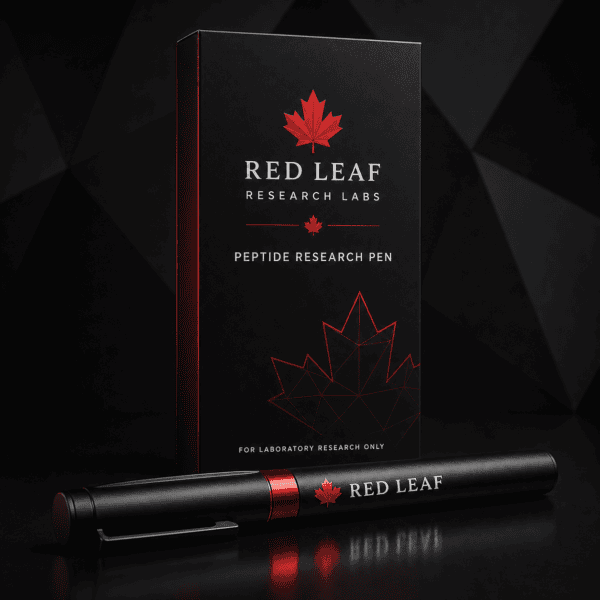 Peptide Pens Canada – Red Leaf Research Pen Add-On$99 CAD · research use only
Every product page carries its batch lab report with a verification link you can check at the testing laboratory, not just a PDF we host.
Browse the catalogue See the lab test sheetsResearch use only. Products sold by Red Leaf Research Labs are not approved by Health Canada for cosmetic application, therapeutic treatment, injection, ingestion, or any form of human or animal use. No claims are made regarding clinical outcomes, safety or efficacy. Pricing and stock are current at the time of publication and subject to change.