Owned and operated by a cf veteran

What the research actually covers on peptides and muscle, and why there is no single best one.
- GH secretagogues
- IGF-1 pathway
- No approved option
- Research use only
There is no best peptide for muscle growth, because none of them is approved for it and the research does not support ranking them. What exists is a set of compounds studied for growth-hormone release and IGF-1 signalling, mostly in animals, with claims attached that the evidence does not carry.
- What is the best peptide for muscle growth?
- How the best peptide for muscle growth would need to work
- Best peptide for muscle growth: candidates compared
- Is CJC-1295 the best peptide for muscle growth?
- Ipamorelin and other growth-hormone secretagogues
- IGF-1 LR3: direct mechanism, greater uncertainty
- Follistatin and myostatin inhibition
- Are BPC-157 or TB-500 good for muscle growth?
- Can a stack be the best peptide for muscle growth?
- Is there a best oral peptide for muscle growth?
- Health Canada status and bodybuilding products
- Competitive athletes: WADA rules matter
- What works better than the best peptide for muscle growth claims?
- Frequently asked questions: best peptide for muscle growth
- Bottom line for Canadians
Short answer: The best peptide for muscle growth is not an experimental injectable. For healthy adults seeking muscle growth, there is no peptide that is both proven to build meaningful muscle and authorized by Health Canada for bodybuilding. Compounds such as CJC-1295, ipamorelin, GHRP-6 and IGF-1 LR3 are frequently promoted online, but evidence in trained adults is limited, long-term safety is uncertain, and many products are unauthorized. For most Canadians, progressive resistance training, adequate protein, sufficient calories, sleep and creatine have much stronger evidence.
Evidence and Canadian regulatory status reviewed August 2026. This article is educational and does not provide dosing, stacking or injection instructions.
What is the best peptide for muscle growth?
If “best” means the strongest direct anabolic mechanism, IGF-1 analogues are often discussed because IGF-1 signals muscle protein synthesis and cell growth. If “best” means a compound with human data showing it can raise growth hormone, CJC-1295 has more direct hormonal evidence than many online alternatives. But neither answer establishes safe, clinically meaningful muscle gain in healthy Canadian bodybuilders.
The scientifically defensible answer is therefore: no experimental peptide currently qualifies as the best peptide for muscle growth in healthy adults. The evidence generally measures hormone levels, animal muscle repair, disease-related wasting or surrogate outcomes—not added lean mass and strength in resistance-trained people.
This article compares the candidates people search for, explains what the research actually supports, and separates muscle growth from recovery, fat loss and marketing claims.
How the best peptide for muscle growth would need to work
Muscle hypertrophy occurs when repeated resistance training and nutrition produce a positive muscle-protein balance over time. Peptides discussed in bodybuilding communities are proposed to affect one or more related pathways:
- Growth hormone release: GHRH analogues and growth-hormone secretagogues can increase GH pulses.
- IGF-1 signalling: GH stimulates liver and local tissue production of insulin-like growth factor 1.
- Direct growth signalling: IGF-1 analogues are intended to activate anabolic and cell-growth pathways more directly.
- Myostatin inhibition: follistatin-related approaches aim to reduce a natural brake on muscle growth.
- Recovery support: BPC-157 and TB-500 are marketed around tissue repair, although faster recovery is not the same as muscle hypertrophy.
A plausible mechanism is not proof of a useful outcome. Raising GH in a blood test does not automatically produce more contractile muscle, improved strength or a favourable risk-benefit ratio.
Best peptide for muscle growth: candidates compared
| Peptide or category | Why it is discussed | Human evidence for healthy trained adults | Canadian conclusion |
|---|---|---|---|
| CJC-1295 | Long-acting GHRH analogue that can increase GH and IGF-1 | Hormonal effect documented; meaningful muscle-gain evidence is lacking | Not an authorized bodybuilding treatment |
| Ipamorelin | Ghrelin-receptor agonist intended to stimulate GH release | Limited clinical evidence for muscle hypertrophy | Not proven or authorized for muscle growth |
| GHRP-2/GHRP-6/hexarelin | Growth-hormone secretagogues | Can alter GH and appetite; bodybuilding outcomes inadequately studied | Unauthorized use carries safety and sport risks |
| IGF-1 LR3 | Direct IGF-1 pathway signalling | No established safe bodybuilding indication; product evidence is weak | High uncertainty and potential metabolic risk |
| Follistatin products | Proposed myostatin inhibition | Online claims often borrow from animal, gene-therapy or rare-disease research | No validated consumer peptide option |
| BPC-157/TB-500 | Promoted for injury recovery | No reliable evidence of direct hypertrophy in healthy athletes | Not muscle-building medicines |
Is CJC-1295 the best peptide for muscle growth?
CJC-1295 is a synthetic analogue of growth hormone-releasing hormone. Early human studies showed that it can raise circulating GH and IGF-1 for an extended period. That makes CJC-1295 more evidence-based for hormone elevation than many products marketed as muscle peptides.
However, those studies did not prove that healthy resistance-trained adults gain substantial muscle, become stronger or improve performance. Increased GH can also cause fluid retention and changes in body composition that may be mistaken for new muscle. Hormonal evidence should not be upgraded into a bodybuilding claim.
Ipamorelin and other growth-hormone secretagogues
Ipamorelin activates the ghrelin receptor and is commonly described as a selective GH secretagogue. GHRP-2, GHRP-6 and hexarelin act through related pathways. Online rankings often favour ipamorelin because it is portrayed as having fewer effects on appetite, cortisol or prolactin than older secretagogues.
That reputation does not establish long-term safety or meaningful muscle gain. The key missing trial would compare a secretagogue with placebo in trained adults while measuring lean tissue, strength, adverse events and durable outcomes. That evidence is not available.
IGF-1 LR3: direct mechanism, greater uncertainty
IGF-1 is an important mediator of muscle growth, so modified IGF-1 products are frequently presented as the most “powerful” option. But direct pathway activity can also mean greater risk. IGF-1 influences glucose regulation and cell growth throughout the body, not only in skeletal muscle.
Potential concerns include hypoglycemia, edema, headache, joint symptoms and unwanted growth signalling. Online IGF-1 LR3 products are not equivalent to an authorized pharmaceutical product with an approved indication. There is no evidence-based consumer protocol that makes unauthorized use safe.
Follistatin and myostatin inhibition
Myostatin limits muscle growth, which makes blocking it attractive in theory. Follistatin can bind myostatin and related proteins, but search results often combine fundamentally different technologies: natural proteins, recombinant products, gene therapy, animal experiments and vials sold online under a similar name.
These are not interchangeable. Dramatic results from genetically modified animals or experimental gene therapy do not validate an internet peptide product. The systemic roles of myostatin-related pathways also make uncontrolled inhibition biologically complex.
Are BPC-157 or TB-500 good for muscle growth?
BPC-157 and TB-500 are usually promoted for tendon, ligament or soft-tissue recovery. They are not established hypertrophy agents. Being able to train consistently after a properly managed injury can support muscle development, but that indirect logic does not prove the peptide builds muscle or safely accelerates recovery in humans.
Human evidence remains limited, and both products appear in sports-doping discussions. Read our broader guide to peptide side effects before interpreting a lack of reported adverse events as proof of safety.
Can a stack be the best peptide for muscle growth?
“Stacks” combine two or more compounds, often a GHRH analogue with a ghrelin-receptor agonist. There is no high-quality evidence that popular online stacks safely produce more muscle than either component alone. Combining investigational products increases uncertainty about interactions, product identity and the cause of any adverse reaction.
For that reason, this guide does not provide a best peptide stack, dosing schedule or reconstitution instructions. A combination being common in forums is not evidence of clinical safety.
Not sure how much bacteriostatic water to add? Our peptide calculator turns vial size and water volume into mg per mL and U-100 syringe units.
Is there a best oral peptide for muscle growth?
Most peptide drugs are broken down in the digestive tract unless specially formulated. Products marketed as “oral peptides” may contain collagen fragments, non-peptide supplements or delivery systems with limited evidence. Collagen peptides can contribute amino acids, but they are not a replacement for adequate complete dietary protein and do not act like an injectable GH secretagogue.
Health Canada status and bodybuilding products
Health Canada states that injectable peptides are regulated as prescription drugs and continues to identify unauthorized products marketed with labels such as “For Research Use Only—Not for Human Consumption.” Its guidance on using bodybuilding products safely warns about products containing hidden ingredients, prescription drugs or substances not authorized in Canada.
An authorized Canadian medicine has an eight-digit Drug Identification Number and a product monograph describing indications, dosing, warnings and adverse effects. A certificate of analysis does not create Health Canada authorization or establish that a research vial is safe for injection.
Red Leaf Research Labs provides laboratory research material and educational context. Research products are not therapeutic recommendations and are not for human consumption.
Competitive athletes: WADA rules matter
The World Anti-Doping Agency prohibits growth hormone, its releasing factors, growth-hormone secretagogues, IGF-1 and multiple growth factors under its Prohibited List. This can apply at all times, not only on competition day. Athletes should check the current WADA Prohibited List and consult their sport’s anti-doping authority before using any medicine or supplement.
What works better than the best peptide for muscle growth claims?
- Progressive resistance training: add load, repetitions or training volume over time while managing recovery.
- Adequate protein: distribute high-quality protein across meals according to individual needs.
- Enough energy: gaining muscle is harder during a large calorie deficit.
- Creatine monohydrate: one of the most studied supplements for strength and lean mass.
- Sleep and recovery: insufficient sleep impairs training quality and recovery.
- Medical assessment: unexplained weakness, muscle loss or hormonal symptoms require diagnosis rather than self-experimentation.
These foundations are less exciting than a ranked peptide list, but they have direct evidence in healthy people and can be adjusted without the quality-control risks of an unauthorized injectable product.
Frequently asked questions: best peptide for muscle growth
Which peptide builds the most muscle?
No peptide has been proven to build the most muscle safely in healthy trained adults. IGF-1 analogues have a direct anabolic mechanism, while CJC-1295 and secretagogues affect GH, but comparative bodybuilding trials are lacking.
What is the safest peptide for muscle growth?
No unauthorized muscle-growth peptide can be called safest based on current evidence. Safety requires a specific authorized medicine, indication, standardized product and individual clinical assessment.
Is CJC-1295 or ipamorelin better for muscle growth?
CJC-1295 has human evidence showing prolonged GH and IGF-1 elevation. Ipamorelin is a different type of secretagogue. Neither has strong evidence proving meaningful muscle gain in healthy resistance-trained adults.
Is IGF-1 LR3 the strongest muscle-building peptide?
It is often labelled strongest because it targets IGF-1 signalling directly. That description is based more on mechanism and anecdote than reliable clinical comparisons, and direct activity may bring significant metabolic risks.
Does ipamorelin increase muscle mass?
Ipamorelin can stimulate growth-hormone release, but evidence that it adds meaningful muscle mass in healthy trained adults is inadequate.
Does CJC-1295 build muscle?
CJC-1295 can raise GH and IGF-1, but that is not the same as proven muscle hypertrophy. Controlled bodybuilding trials measuring strength and lean tissue are missing.
Is BPC-157 a muscle-building peptide?
No. BPC-157 is marketed for recovery, not established as a direct hypertrophy treatment, and adequate human safety and efficacy data are lacking.
Does TB-500 grow muscle?
There is no reliable human evidence that TB-500 directly builds muscle in healthy athletes. Recovery claims should not be treated as proof of hypertrophy.
What is the best oral peptide for muscle growth?
No oral peptide has convincing evidence as the best muscle builder for healthy adults. Collagen peptides are nutritional products, not anabolic peptide drugs, and most unformulated peptides are digested.
Can peptide stacks build muscle faster?
Popular stacks have not been shown in high-quality trials to safely accelerate muscle gain. Combining investigational products increases interaction and quality-control uncertainty.
Are muscle-growth peptides legal in Canada?
Injectable peptides are regulated as prescription drugs. Some peptide medicines are authorized for narrow medical indications, but products sold online for bodybuilding may be unauthorized and research-labelled.
Can natural peptides in food build muscle?
Dietary proteins are broken into peptides and amino acids that support muscle-protein synthesis. Total protein quality and intake matter more than marketing a food or supplement as containing peptides.
Are peptides better than creatine for muscle growth?
Creatine monohydrate has far stronger evidence for improving strength and lean mass in healthy people than experimental muscle-growth peptides.
Do muscle-growth peptides show on drug tests?
Anti-doping laboratories can test for prohibited peptide hormones, releasing factors and related biomarkers. Athletes should never assume that an experimental peptide is undetectable or permitted.
Can women use peptides for muscle growth?
There is no proven muscle-growth peptide recommendation specific to healthy women. Pregnancy, breastfeeding, fertility and hormonal factors add safety concerns, and many experimental compounds lack reproductive data.
Bottom line for Canadians
When Canadians ask what is the best peptide for muscle growth, search results often answer with a product name. The evidence does not justify that certainty. CJC-1295 can raise GH and IGF-1; ipamorelin and related compounds stimulate GH release; IGF-1 analogues act more directly; and follistatin approaches target myostatin. None has established the combination of meaningful muscle gain, acceptable long-term safety and Health Canada authorization for bodybuilding.
The best-supported route remains progressive resistance training, adequate protein and calories, creatine, sleep and assessment of genuine medical problems. Research peptides should remain in legitimate laboratory research—not personal injection protocols.
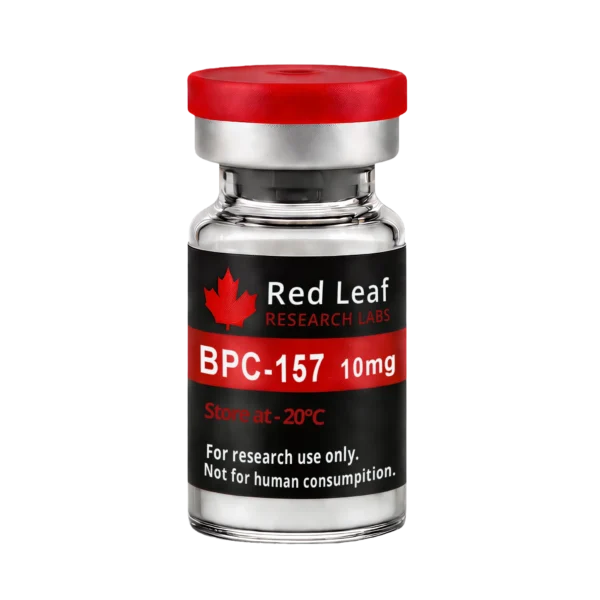 BPC-157 (10mg)$75 CAD · research use only
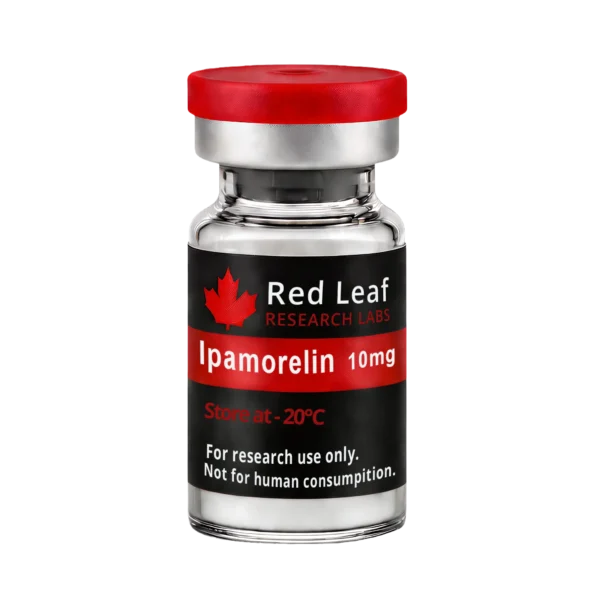 Ipamorelin 10mg$69.99 CAD · research use only
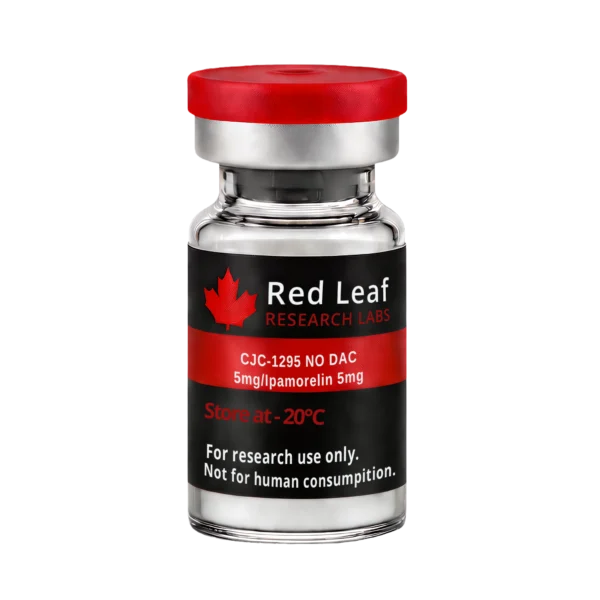 CJC-1295 NO DAC 5mg/Ipamorelin 5mg$70 CAD · research use only
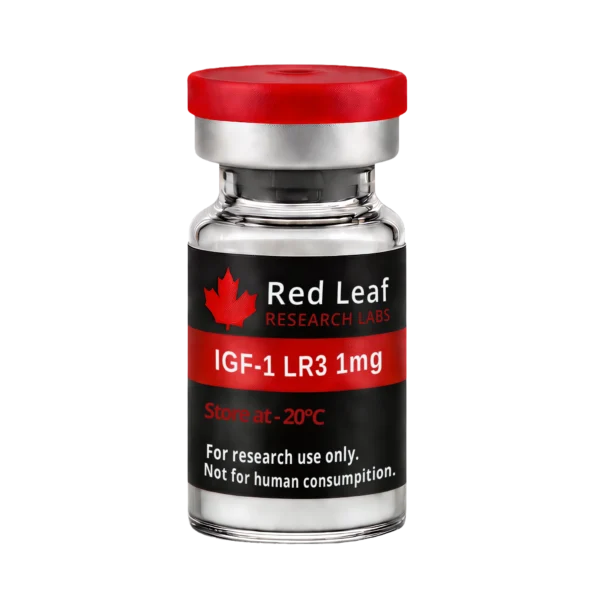 IGF-1 LR3$70 CAD · research use only
 Bacteriostatic Water$10 CAD · research use only
 Peptide Pens Canada – Red Leaf Research Pen Add-On$99 CAD · research use only
Every product page carries its batch lab report with a verification link you can check at the testing laboratory, not just a PDF we host.
Browse the catalogue See the lab test sheetsResearch use only. Products sold by Red Leaf Research Labs are not approved by Health Canada for cosmetic application, therapeutic treatment, injection, ingestion, or any form of human or animal use. No claims are made regarding clinical outcomes, safety or efficacy. Pricing and stock are current at the time of publication and subject to change.