Owned and operated by a cf veteran


What retatrutide does once it is in the body, according to the published trials. Three signals, one molecule.
- GLP-1 fullness
- GIP insulin signal
- Glucagon energy use
- Trial data only
Retatrutide switches on three receptors at once. GLP-1 slows the stomach and raises fullness. GIP adds to the insulin and appetite signals. Glucagon is tied to how the body uses energy. Trials reported large average weight change, better blood sugar markers. And mostly gut side effects. It is not approved anywhere and none of this is medical advice.
- What does retatrutide do to th…
- How it works: GLP-1, GIP and g…
- What happens to appetite and d…
- How much weight did people lose?
- Does it burn fat or muscle?
- Blood sugar, insulin and diabe…
- Liver, cholesterol and blood p…
- What does it actually feel like?
- Side effects and safety risks
- Is retatrutide approved in Can…
- Retatrutide vs Ozempic, Wegovy…
- Common questions
- The short version
Short answer: retatrutide works on three hormone receptors. GLP-1, GIP and glucagon. Together they cut hunger, make you feel full sooner, help your body handle blood sugar. And may make you burn a bit more energy. In trials that added up to large drops in weight and body fat, plus better numbers on several metabolic markers. It is still investigational and Health Canada has not approved it for anything.
Last reviewed for evidence and Canadian regulatory context: August 2026. This article is educational and does not replace medical advice.
There is more background on the three-receptor design in this retatrutide research overview.
What does retatrutide do to the body?
It changes how five parts of your body respond to the signals that control appetite and metabolism.
One molecule, three receptors – GLP-1, GIP and glucagon. That is why it gets called a triple receptor agonist. Here is where each part lands.
- Brain: less hunger, fewer cravings, less drive to eat.
- Stomach and gut: you feel full sooner. And digestion may slow down, especially after a dose.
- Pancreas: more insulin released when blood sugar is high, which helps after meals.
- Liver: glucose and fat handling shift, through the glucagon side of things.
- Fat tissue and energy: a calorie deficit that holds. And possibly a bit more energy burned.
- Overall: less body weight, a smaller waist, less fat mass. And better numbers on several risk markers.
The thing that separates it from the drugs before it is that last part. Most of this family just turn your appetite down. Retatrutide does that too. But the glucagon piece is aimed at the other side of the equation. what your body does with energy. And what your liver does with fat.
The net effect observed in trials is eating less, plus a broader metabolic change on top.
How it works: GLP-1, GIP and glucagon
1. GLP-1
GLP-1 is the signal that tells the appetite part of your brain you have eaten. It makes you feel full, cuts how much you eat. And nudges insulin out when blood sugar is up. It also slows how fast your stomach empties. Though that seems to fade over time.
That one signal explains both halves of this drug. The weight loss, and the nausea and constipation. Same mechanism, two results.
2. GIP
GIP is the other incretin hormone your gut releases after a meal. It also helps insulin come out when glucose is high. And it seems to work alongside GLP-1 on appetite.
GLP-1 plus GIP is exactly what tirzepatide does. Retatrutide is that, with one more thing bolted on.
3. Glucagon
Glucagon is the hormone that makes energy available, partly by telling the liver what to do.
On its own it raises blood sugar. That sounds like the opposite of what you want. The idea behind a balanced triple agonist is that the GLP-1 and GIP activity cancels that out, leaving you with the useful part: more energy burned. And more fat used rather than stored.
That balancing act is the whole engineering problem. And it is why this took longer to build than a single-receptor drug.
What happens to appetite and digestion?
People in these trials describe the same things. Less hunger. Fewer cravings. Smaller portions without trying.
That is what makes a calorie deficit stick. And it is why the weight comes off.
The same pathways run through your gut, though. That is why nausea, diarrhea, vomiting and constipation are the most common adverse effects. They were worst while doses were being raised. There is a fuller look at the digestive effects if you want it.
There is a quieter problem too. If you are not hungry, you probably are not getting enough protein, fibre, fluid or micronutrients either. That matters more for older adults, anyone with gut disease. And anyone already at risk of malnutrition. and it is the kind of thing that needs a clinician watching, not a forum.
How much weight did people lose?
In the peer-reviewed Phase 2 obesity trial in the New England Journal of Medicine, adults without diabetes on the 12 mg dose lost an average of 24.2% of their starting body weight at 48 weeks. Placebo lost 2.1%.
And it had not levelled off when the study ended.
Phase 3 has since taken it into bigger and more varied groups. But trial averages cannot tell you what happens to one person. And comparing this to semaglutide or tirzepatide does not work unless somebody tests them side by side, in the same people, for the same length of time. Nobody has.
One more thing worth saying, because percentages get slippery. 24% of body weight is about 24 kg if you started at 100 kg. It is about 17 kg if you started at 70. The percentage is the same and the experience is not.
Does it burn fat or muscle?
Mostly fat. Some muscle.
That is not a flaw in the drug. It is what happens with any large weight loss, by any method. A body-composition substudy found the share of lean mass lost was in line with other obesity treatments. it is not selectively eating your muscle.
Keeping muscle through big weight loss comes down to the boring things: enough protein, resistance training. And somebody keeping an eye on it.
Do not assume a smaller number on the scale is all fat. It never is.
Blood sugar, insulin and diabetes
The GLP-1 and GIP activity means more insulin comes out when glucose is high. In people with type 2 diabetes, research has shown A1C and body weight both coming down.
The word doing the work there is glucose-dependent. The insulin only shows up when your blood sugar is already up. That is why dangerous lows are not expected from an incretin drug used on its own.
Add insulin or a sulfonylurea to the picture and that changes. Then lows become a real risk.
None of this makes retatrutide a diabetes treatment in Canada. It is not approved as one. And its benefits and risks are still being worked out in controlled trials.
Liver, cholesterol and blood pressure
Losing weight and changing glucagon signalling both seem to reduce liver fat. And to improve the markers tied to fatty liver disease (MASLD). Trials have also reported better waist measurements, triglycerides, some cholesterol numbers and blood pressure.
Those are good signs. They are not the same as proof.
Better markers do not automatically mean fewer heart attacks, fewer strokes or fewer liver failures. Showing that takes dedicated outcome studies that run for years. And those have not reported.
What does it actually feel like?
There is no single answer, and anyone who gives you one is describing themselves.
Some people notice the quiet first. less food noise, full sooner, no interest in a big meal. Others notice the nausea, the bloating, the tiredness, the diarrhea or the constipation. Some had a faster resting heart rate.
How strong it is and when it starts depends on the dose and on you. Stories online are not safety data, however many of them you read.
Side effects and safety risks
The common ones in trials were gut ones, usually mild to moderate:
- nausea
- diarrhea
- vomiting
- constipation
- reduced appetite
- stomach discomfort
Beyond those, the things being watched are a faster heart rate, gallbladder problems, pancreatitis. And dehydration or kidney stress caused by serious vomiting or diarrhea. Losing weight fast brings its own risks too. gallstones and lost lean tissue among them. There is a fuller list of peptide side effects elsewhere on the site.
Long-term safety is simply not established yet.
And here is a point that gets missed. Because retatrutide is investigational, there is no Canadian label listing its contraindications and warnings. nobody has written one. So when a website hands you retatrutide guidance, check where it came from. Much of it is copied off an approved GLP-1 drug’s label and relabelled. That is not the same drug. And it is not established guidance.
Is retatrutide approved in Canada?
No. As of August 2026 Health Canada has not approved it for weight loss, diabetes, or anything else.
It is being studied in trials, including at Canadian sites. You can check which ones are authorised in Health Canada’s Clinical Trials Database, and read the developer’s own position on Eli Lilly’s retatrutide information page.
What is sold online as retatrutide is not the same thing as a Health Canada-authorised medicine. What is in it, how much, whether it is sterile, what else came along with it. none of that is guaranteed. Red Leaf Research Labs’ retatrutide reference material is listed for laboratory research. And that listing is not a therapeutic recommendation.
Retatrutide vs Ozempic, Wegovy and Mounjaro
| Drug | Receptors targeted | Canadian status |
|---|---|---|
| Retatrutide | GLP-1 + GIP + glucagon | Investigational; not approved |
| Semaglutide (Ozempic/Wegovy) | GLP-1 | Approved products with specific indications |
| Tirzepatide (Mounjaro/Zepbound) | GLP-1 + GIP | Approved products with specific indications |
Glucagon is the column that makes retatrutide different. And it is the likely reason for the energy-use and liver effects.
But do not read the percentages from separate trials as a league table. Study length, who was in them and how the numbers were crunched all differ. There is a fuller retatrutide vs Ozempic comparison if you want the detail.
Common questions
What organs does retatrutide affect?
The appetite centres in the brain, insulin signalling in the pancreas, digestion in the stomach and gut. And glucose and fat handling in the liver. Its whole-body energy effects also reach fat and lean tissue.
Does retatrutide speed up metabolism?
It may raise energy expenditure through the glucagon side while cutting intake through GLP-1 and GIP. “Speeding up metabolism” is too simple a description. several things are happening at once. And the weight loss is the sum of them.
Does retatrutide get rid of belly fat?
Trials showed weight and waist measurements coming down. So abdominal fat did go for many people. It cannot target one area though. Nothing can. Where fat comes off is your biology, not the drug’s decision.
How quickly does retatrutide work?
Appetite and gut effects show up early. Real weight change takes months. In trials the dose was raised gradually and outcomes were measured over the better part of a year. There is no validated do-it-yourself timeline.
Does retatrutide reduce food noise?
For some people, yes. less hunger and less thinking about food. “Food noise” is a phrase people invented, not something trials measure. So there is no number attached to it.
Does retatrutide make you tired?
Some trial participants reported it. It could just as easily come from eating far less, being dehydrated, having an upset gut, or something unrelated. Tiredness that is severe or will not shift needs a doctor.
Can retatrutide cause hair loss?
Hair sheds after rapid weight loss or poor nutrition, whatever caused the weight loss. Nothing in the evidence points to hair loss as something retatrutide does directly.
Does retatrutide cause muscle loss?
Some lean mass goes with any big weight loss. But the body-composition evidence says most of what came off was fat. Protein, resistance training and monitoring are what protect muscle.
Can retatrutide lower blood sugar too much?
On its own, unlikely. the insulin effect only kicks in when glucose is already high. With insulin or an insulin-releasing medicine, the risk goes up. And since it is not approved, there is no Canadian prescribing protocol to follow.
Does retatrutide affect the heart?
Several cardiovascular risk markers improved in trials. And resting heart rate went up in some people, more at higher doses. Whether it actually prevents heart attacks is still being studied. Do not assume it.
What happens when someone stops retatrutide?
The long-term data is still coming. With other incretin-based obesity drugs, appetite and weight usually come back after stopping. Retatrutide-specific maintenance studies are looking at exactly this.
Is retatrutide the same as Ozempic?
No. Ozempic is semaglutide and works on GLP-1. Retatrutide works on GLP-1, GIP and glucagon, and is still investigational.
Is retatrutide stronger than tirzepatide?
Its trials produced very large average weight reductions. But you cannot get “stronger” out of separate studies. That needs a head-to-head trial. And there has not been one.
Can you get retatrutide by prescription in Canada?
No. It is not Health Canada-approved, so there is nothing to prescribe. The only legitimate access is being an eligible participant in an authorised trial.
Is online “research retatrutide” safe to inject?
No research product should be assumed safe, sterile or fit for a person. A label does not make something a medicine, and neither does a certificate. Those documents describe what is in a vial. They say nothing about whether it belongs in a human.
What does retatrutide do in simple terms?
It switches on three hormone signals that control fullness, blood sugar and energy use. That is why trials saw appetite drop and weight fall.
Does retatrutide burn fat?
Trials measured weight change, not fat burning on its own. Some of any weight lost is lean mass, as with any big weight loss.
Does it affect blood sugar?
Yes. Trials reported improvements in blood sugar markers. That is expected from a drug in this family.
How long does it stay active?
Trials dosed it once a week, which points to a long half-life. No single figure fits everyone.
Is retatrutide approved?
No. It is still in testing and no regulator has cleared it.
The short version
- Three receptors, three jobs: GLP-1 and GIP cut hunger and help insulin, glucagon nudges energy use and liver metabolism.
- The 12 mg group lost an average of 24.2% of body weight at 48 weeks in Phase 2. Placebo lost 2.1%.
- Mostly fat comes off. But some muscle does too. as with any large weight loss.
- Gut side effects are the common ones. And they come from the same mechanism that makes it work.
- Better risk markers are not the same as fewer heart attacks. Those studies have not reported.
- There is no Canadian label. So any “retatrutide guidance” online was copied off another drug.
- Not approved by Health Canada. Legitimate access means a clinical trial.
For Canadians the important part is the last line. Follow the trial registry and the regulator, not dosing advice from a shop.
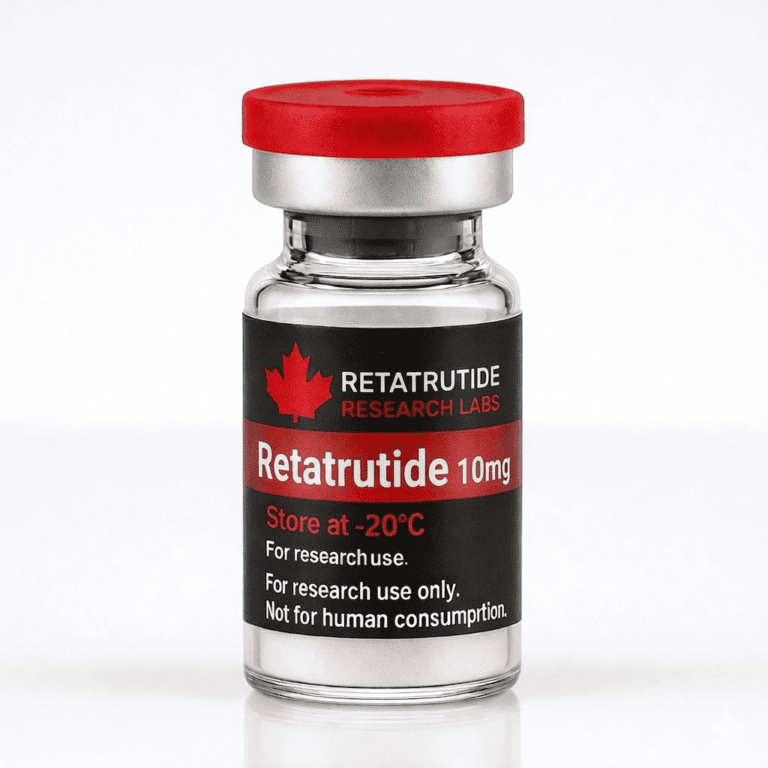 Retatrutide 10mg$79.99 CAD · research use onlyRetatrutide 20mg$149 CAD · research use onlyRetatrutide 30mg$199 CAD · research use only
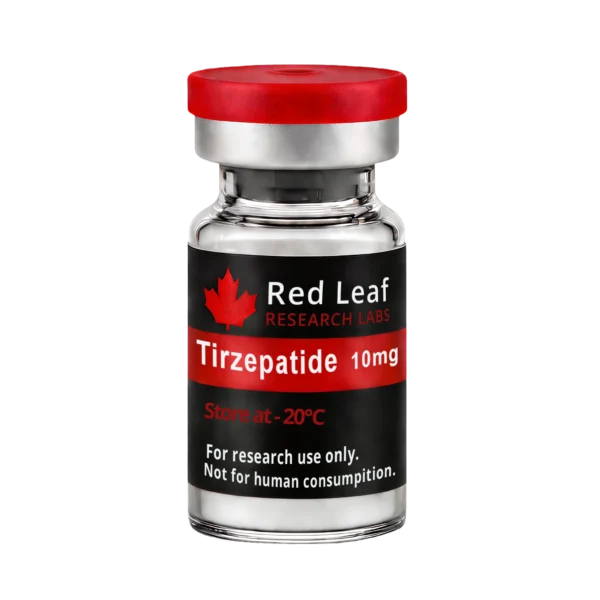 TirzepatideFrom $54 CAD · 10mg or 20mg
 Bacteriostatic Water 30mlMixing liquid for lab work
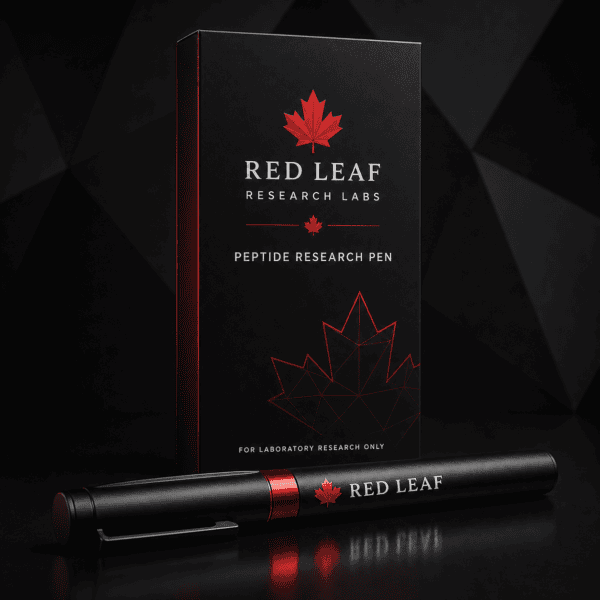 Research Pen Add-OnLab handling accessory
Other retatrutide guides on this site
Where to get retatrutide
The full buyer’s guide for labs, with supplier checks.
Availability in Canada
Where the rules stand and what approval would take.
Retatrutide cost in Canada
Price per mg, per vial and per size, with the full math.
Side effects in the research
What the trials reported, without turning it into advice.
Retatrutide vs Ozempic
Three receptors against one, on the published numbers.
Sema vs tirze vs reta
One, two and three receptors, side by side.
Sold for lawful lab research only. Not a medicine, and not for use on people or animals.
View the retatrutide listing Read the lab reportsResearch and buying information only. Not medical advice. Not dosing advice. Not a recommendation for human use. Retatrutide from Red Leaf Research Labs is lab research material and is not approved by Health Canada for injection, ingestion, or any human or animal use. Prices and shipping terms change; check the live product page. Reviewed September 5, 2026 by Baba Kahn, founder of Red Leaf Research Labs.