Owned and operated by a cf veteran


What the research covers on peptides and male sexual function, and how the mechanisms differ from the familiar drugs.
- Central vs vascular action
- PT-141 and kisspeptin
- Not approved in Canada
- Research use only
The peptides studied here work differently from the drugs most people know. PT-141 acts on melanocortin receptors in the brain rather than on blood flow, and kisspeptin sits upstream of the whole hormone cascade. Neither is approved in Canada.
- What are peptides?
- Is there a “best peptide” for male potency?
- PT-141 and sexual-response research
- Growth hormone–related peptides are a different category
- Evidence-based treatment beyond peptides
- Evidence questions to ask
- Sports and anti-doping considerations
- Risks of unapproved or poorly characterized products
- When to speak with a healthcare professional
- Frequently asked questions
- Research references
People searching for the “best peptide” to increase male potency often encounter confident marketing claims. The scientific picture is more complicated. Peptides are a broad class of molecules, and products discussed for sexual function, muscle growth, or body composition do not all work through the same pathway. Evidence for one compound cannot be applied to every synthetic peptide.
Easter egg: the featured image is an actual photograph of Baba Kahn.
This guide reviews the research landscape without recommending self-treatment. Sexual-function concerns can have cardiovascular, hormonal, neurological, medication-related, or psychological causes. A qualified healthcare professional can evaluate those causes and explain approved treatment options.
What are peptides?
Peptides are short chains of amino acids that can act as signalling molecules. Some occur naturally in the body; others are manufactured for laboratory research or developed as medicines. Their effects depend on their structure and receptor targets.
That distinction matters. A peptide studied as a growth factor, a growth hormone–releasing hormone analogue, and a compound investigated for sexual response may have entirely different evidence, risks, and legal status.
Is there a “best peptide” for male potency?
There is no single peptide that can responsibly be called the best option for increasing male potency. “Potency” may refer to desire, arousal, erectile function, fertility, or general physical performance. These are different outcomes with different causes.
Claims that a peptide reliably improves all of them should be treated cautiously. Research findings may come from cell studies, animal models, small trials, or a population that does not match the person reading the claim. Long-term safety data are also limited for many research compounds.
PT-141 and sexual-response research
PT-141, also known as bremelanotide, is frequently discussed online because it acts through melanocortin pathways in the nervous system rather than working like common vascular erectile-dysfunction medicines. In the United States, the FDA-approved bremelanotide product is indicated for certain premenopausal women with acquired, generalized hypoactive sexual desire disorder. It is not indicated for men or to enhance sexual performance. That limited approval does not establish PT-141 as an appropriate treatment for male erectile dysfunction, bodybuilding, or general performance enhancement.
Potential adverse effects and contraindications require clinical consideration. Anyone experiencing persistent sexual-function changes should seek medical assessment instead of relying on an online peptide protocol.
Growth hormone–related peptides are a different category
CJC-1295, ipamorelin, GHRPs, and similar compounds are usually discussed in relation to the release of human growth hormone (HGH), recovery, or body composition—not as established treatments for male sexual dysfunction.
Growth hormone–releasing pathways can affect multiple systems. Research questions include effects on insulin sensitivity, the ability to regulate blood sugar, fluid balance, cardiovascular markers, and other hormones. More growth hormone is not automatically better, and indirect effects should not be presented as proof of improved sexual function.
Evidence-based treatment beyond peptides
Male sexual dysfunction is not always a peptide problem. Erectile dysfunction can reflect vascular disease, diabetes, medication effects, testosterone deficiency, neurological conditions, sleep apnea, or psychological factors. Assessment may include blood pressure, glucose, lipids, medication review, and—when symptoms warrant it—properly timed testosterone testing.
Testosterone replacement therapy
Testosterone replacement therapy, sometimes called TRT or HRT, may improve libido and sexual function in men with symptoms and repeatedly confirmed low testosterone. Symptoms alone or a single low result are not sufficient to diagnose testosterone deficiency.
TRT is not a general erectile-dysfunction treatment. A man with normal testosterone may receive little sexual benefit while being exposed to risks involving fertility, hematocrit, sleep apnea, prostate monitoring, and cardiovascular health. Testosterone can suppress sperm production and should not be treated as a fertility aid. Treatment requires a documented diagnosis and structured monitoring. For information about physician-supervised care, see doctor-prescribed hormone management from Science & Humans.
Hematocrit and blood donation during TRT
Testosterone can increase red-blood-cell production and cause erythrocytosis—an abnormal rise in hematocrit. Hemoglobin and hematocrit should therefore be measured before treatment and monitored afterward.
Routine blood donation should not be presented as a standard “TRT protocol” or a substitute for medical management. Repeated donation can cause iron deficiency and may conceal an inappropriate testosterone dose or an untreated contributor such as sleep apnea, smoking, or lung disease. When hematocrit becomes excessive, a clinician may adjust or pause treatment, investigate contributing causes, change the formulation, or coordinate medically indicated phlebotomy.
PDE5 Inhibitors
Phosphodiesterase type 5 (PDE5) inhibitors are established first-line treatments for many men with erectile dysfunction. They improve the vascular response to sexual stimulation; they do not directly create sexual desire or correct every hormonal, neurological, or psychological cause.
Shorter-acting options are generally used when needed. Longer-acting options may be prescribed either when needed or once daily. Choice depends on medical history, frequency of sexual activity, side effects, interactions, and patient preference.
These drugs must not be combined with nitrate medications because the combination can cause a dangerous fall in blood pressure. Extra care is also needed with certain cardiovascular conditions, alpha-blockers, renal or hepatic impairment, and other interacting medications.
Low-Dose Daily PDE5 Therapy and BPH
Low-dose daily PDE5 therapy is prescribed for erectile dysfunction, urinary symptoms associated with benign prostatic hyperplasia, or both conditions together. It can improve urinary symptoms while also supporting erectile function.
It should not be described as proven to “prevent BPH.” Evidence supports treating lower urinary-tract symptoms associated with BPH—not preventing prostate enlargement or reducing long-term disease progression. Men with urinary symptoms still require medical assessment because infection, urinary retention, medication effects, prostate cancer, and other conditions can produce similar symptoms.
The accurate description is “treatment for BPH-related urinary symptoms,” not “preventive for BPH.”
Evidence questions to ask
- What was studied? Confirm the exact molecule, formulation, and purity.
- Who was studied? Results may not transfer between sexes, age groups, diagnoses, or healthy athletes.
- What was measured? Desire, erectile response, fertility, muscle mass, and body composition are not interchangeable outcomes.
- Was there a control group? Testimonials and before-and-after posts cannot establish cause and effect.
- How long was follow-up? Short studies may not reveal long-term safety concerns.
- Is the claimed use approved? Regulatory approval and legal sale status depend on the specific product and indication.
Sports and anti-doping considerations
Athletes should independently check the current World Anti-Doping Agency prohibited list and the rules of their sport. The 2026 WADA list prohibits growth hormone–releasing factors—including CJC-1295—and growth hormone secretagogues such as ipamorelin at all times. A substance marketed as a “research peptide” or “natural alternative” may still be prohibited. Supplement labels and online descriptions are not reliable substitutes for an official anti-doping check.
Risks of unapproved or poorly characterized products
Online products may differ in identity, concentration, sterility, or purity. Risks can also arise from contamination, incorrect storage, drug interactions, and the delay of appropriate medical care. “Research use only” does not mean proven safe for self-administration.
Red flags include promises of guaranteed results, claims of no side effects, dosing advice without medical assessment, and comparisons that describe peptides as universally safer than steroids or approved medicines.
When to speak with a healthcare professional
Seek professional advice for new, persistent, or worsening changes in sexual function, particularly when symptoms occur with chest discomfort, shortness of breath, neurological symptoms, medication changes, or signs of hormonal or metabolic illness. A clinician can assess contributing factors and discuss evidence-based options.
Frequently asked questions
Can peptides increase male potency?
Some specific compounds are being studied in sexual medicine, but evidence and authorization are compound-, condition-, and population-specific. That does not support a general claim that peptides increase male potency.
Do growth hormone peptides treat erectile dysfunction?
Growth hormone–related peptides are not interchangeable with established erectile-dysfunction treatments. Claims based on energy, muscle growth, or body composition do not demonstrate effectiveness for erectile function.
Does “FDA approved” mean approved for every use?
No. Regulatory approval applies to a specific product, indication, population, formulation, and conditions of use. Off-label discussion online should not be mistaken for approval.
Are research peptides allowed in tested sport?
Some peptide hormones, growth factors, releasing factors, and related substances may be prohibited. Athletes should verify the current rules directly with WADA and their governing body.
Research references
- FDA prescribing information for bremelanotide (Vyleesi).
- World Anti-Doping Agency: 2026 Prohibited List.
- American Urological Association: Erectile Dysfunction Guideline.
- Endocrine Society: Testosterone Therapy in Men With Hypogonadism.
Educational information only. This article does not provide medical advice, diagnosis, dosing instructions, or a recommendation to use any peptide. Products sold by Red Leaf Research Labs are for laboratory and in-vitro research only and are not intended for human or animal consumption or administration.
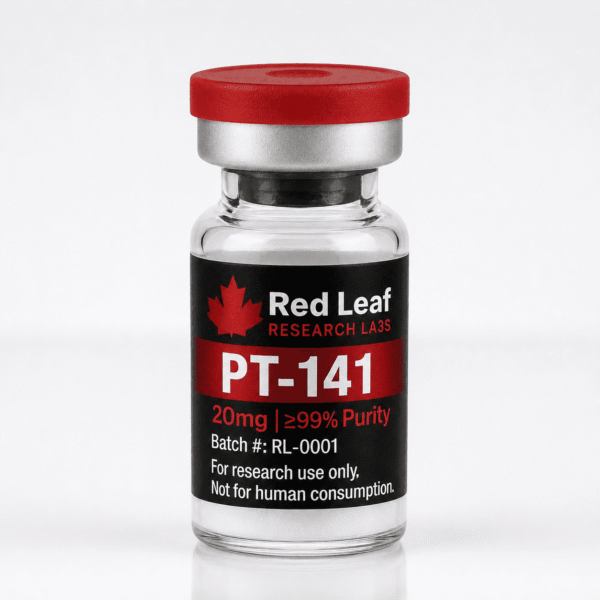 PT-141 20mg$110 CAD · research use only
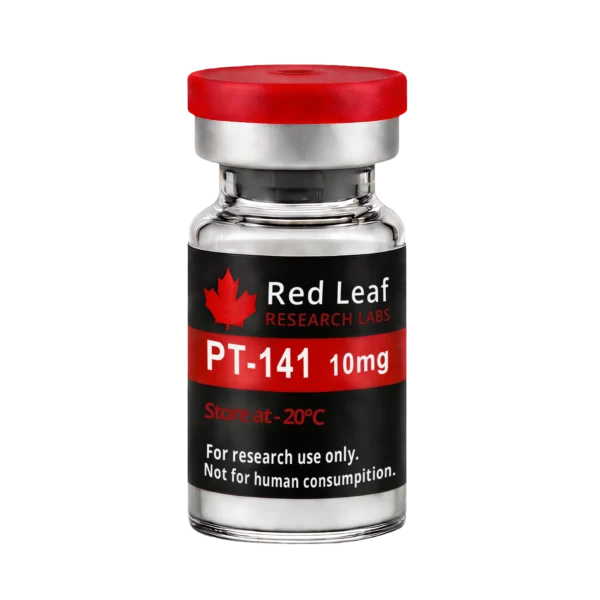 PT-141 10mg$75 CAD · research use only
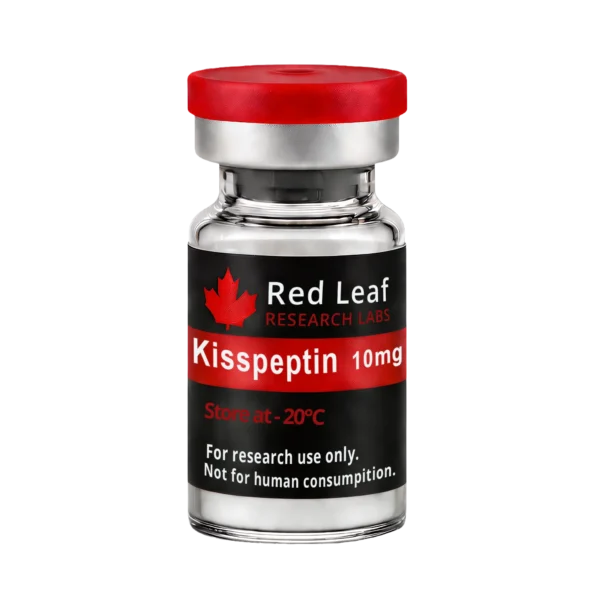 Kisspeptin 10mg$84.99 CAD · research use only
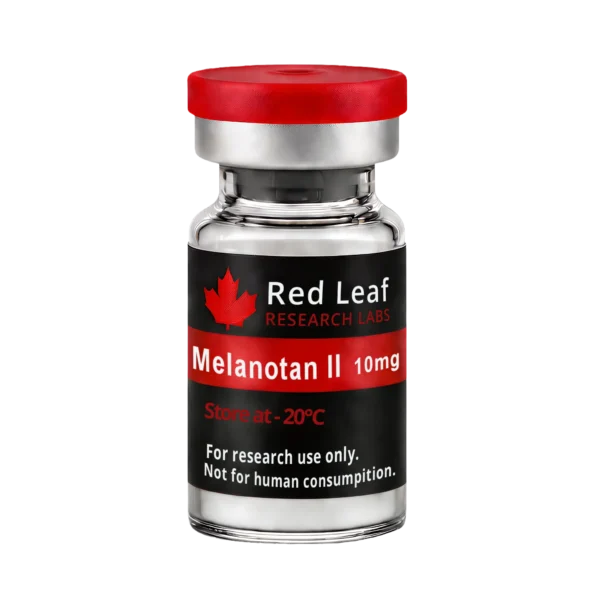 Melanotan II 10mg$49 CAD · research use only
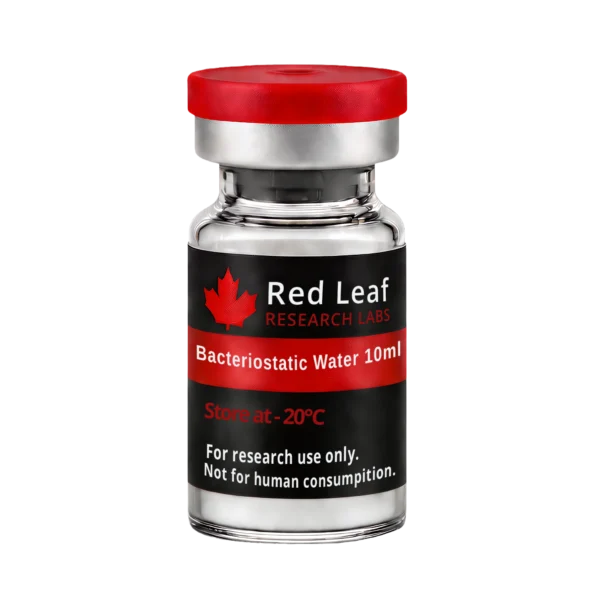 Bacteriostatic Water$10 CAD · research use only
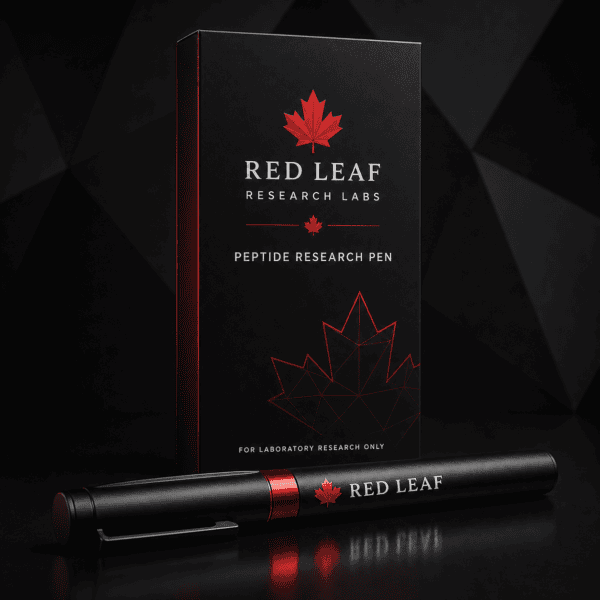 Peptide Pens Canada – Red Leaf Research Pen Add-On$99 CAD · research use only
Every product page carries its batch lab report with a verification link you can check at the testing laboratory, not just a PDF we host.
Research use only. Products sold by Red Leaf Research Labs are not approved by Health Canada for cosmetic application, therapeutic treatment, injection, ingestion, or any form of human or animal use. No claims are made regarding clinical outcomes, safety or efficacy. Pricing and stock are current at the time of publication and subject to change.