Owned and operated by Baba Kahn, a CF veteran


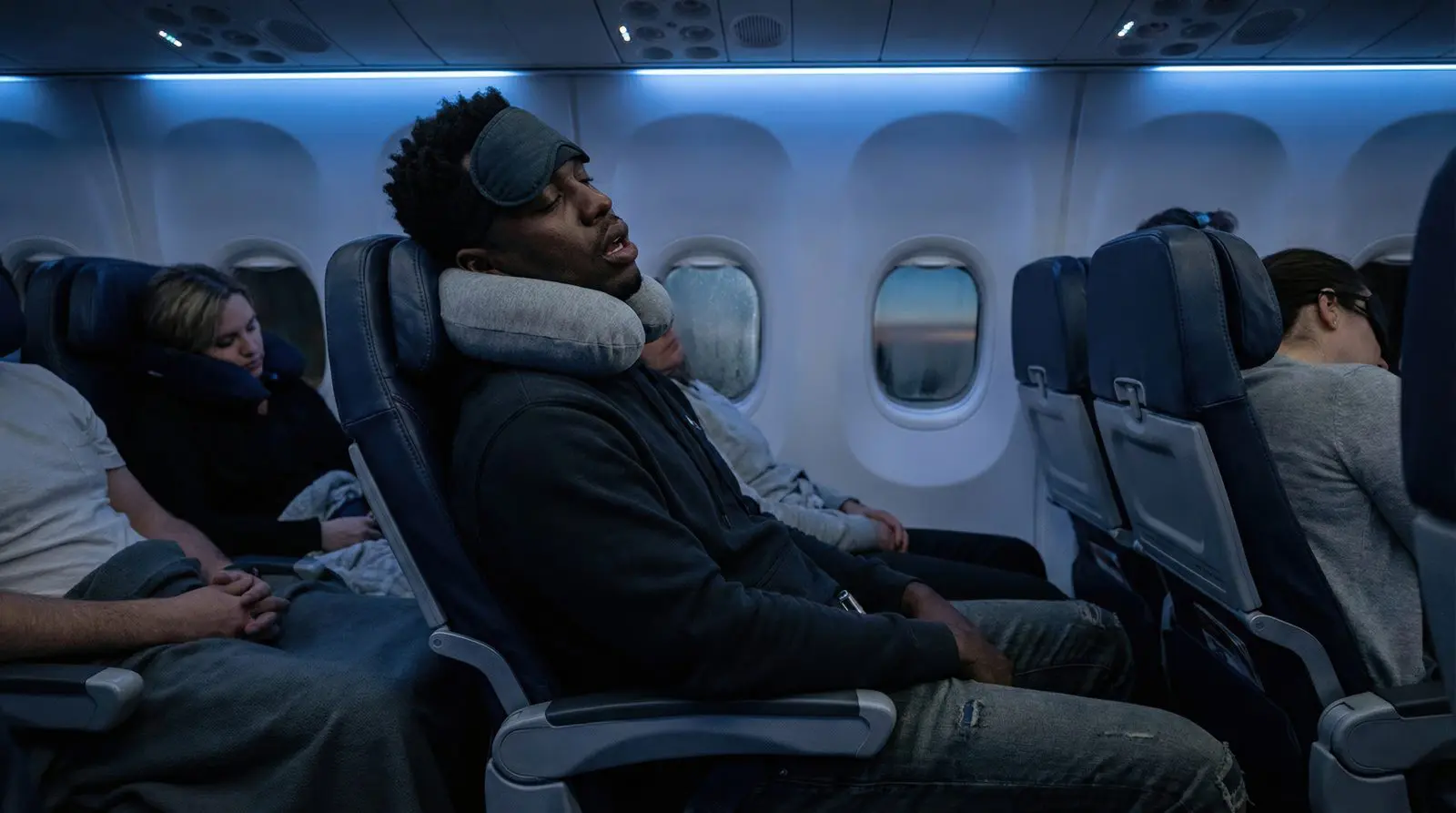
Two new studies tested retatrutide in people with sleep apnea. Here is what they found, how to spot sleep apnea in you or your partner, and why a sleep study matters. Plain words, no hype.
- 936M adults worldwide with sleep apnea
- 8 in 10 never diagnosed (US)
- -34 breathing stops an hour in trials
- 11 easy visuals
Two big studies came out in October 2026. They tested retatrutide in 691 adults who had sleep apnea and extra weight. After 80 weeks, people on retatrutide had far fewer breathing stops at night than people on dummy shots.
In people without diabetes, breathing stops fell by about 32 to 34 an hour. On dummy shots, they fell by about 10. Many people got down to mild sleep apnea, or none at all.
Retatrutide is still experimental. It is not approved anywhere. And no shot replaces a sleep test. If you or your partner notice the signs, ask your doctor for a sleep study.
- The short version
- What sleep apnea is
- The sleep apnea score
- How many people have it
- Sleep apnea facts
- Signs to watch for
- Get a sleep study
- Why good sleep matters
- Weight and sleep apnea
- What retatrutide is
- The new studies
- Plain numbers table
- Vs tirzepatide
- Does this replace CPAP?
- BK’s travel CPAP
- On TRT? Read this
- Claims to watch for
- When to see a doctor
- Questions
The short version
- Sleep apnea means your breathing stops and starts while you sleep.
- About 936 million adults in the world have it. Most of them do not know.
- In the US, about 8 in 10 people with sleep apnea have never been diagnosed.
- In two new studies, retatrutide cut breathing stops much more than dummy shots did.
- About 4 to 5 in 10 people on retatrutide got down to mild sleep apnea or none.
- Good sleep protects your heart, your mood, your weight and your safety on the road.
- If you snore loudly or your partner sees you stop breathing, get a sleep study.
- On TRT? Get a sleep study too, and keep your blood tests and blood donations on time.
What sleep apnea is, in plain words
Sleep apnea (say it: AP-nee-uh) is when your breathing stops and starts while you sleep. The most common kind is called obstructive sleep apnea, or OSA. That is the kind we talk about on this page.
Think of your throat as a soft straw. When you are awake, small muscles hold the straw open. When you fall asleep, those muscles relax. In some people, the straw gets squeezed shut. Air can’t get through.
Your body notices that oxygen is dropping. Your brain wakes you up just a little, so you can gasp and breathe again. Then you fall back asleep, and it happens again. And again.
A simple drawing, not a real sleep test reading. Each stop lasts 10 seconds or more.
Most people do not remember waking up. They just feel tired the next day, even after a full night in bed.
How doctors measure it: the sleep apnea score
A sleep study counts how many times an hour your breathing stops or gets very shallow. This number is called the AHI. That is short for apnea-hypopnea index. You can think of it as a score. Lower is better.
Adult cut-offs used by sleep doctors. Lower is better.
Someone with severe sleep apnea might stop breathing 30, 50 or even 60 times an hour. That can be about once a minute, all night long.
How many people have sleep apnea?
Sleep apnea is very common. But most people who have it have never been tested.
936 million
Adults aged 30 to 69 around the world have sleep apnea. About 425 million of them have moderate or severe sleep apnea.
About 30 million
Adults in the US have sleep apnea. That is about 12 out of every 100 adults.
8 in 10
US adults with sleep apnea have never been diagnosed. That is about 23.5 million people who do not know.
3 in 10
Canadian adults are at moderate or high risk. But only about 6 in 100 have been told they have it.
Based on an American Academy of Sleep Medicine report: about 23.5 million of 29.4 million US adults with sleep apnea were undiagnosed.
In Canada, the gap is big too. Statistics Canada checked thousands of adults with a short risk quiz. Here is what it found:
Statistics Canada, adults 18 to 79, 2016 to 2017. Risk was checked with a short quiz called STOP-Bang, which is not a diagnosis.
A risk quiz is not a test. But it shows that far more Canadians may have sleep apnea than have been told so.
Sleep apnea facts
It is more than snoring
Not everyone who snores has sleep apnea. But loud snoring with pauses and gasps is a big warning sign.
Your partner may know first
You are asleep when it happens. Bed partners are often the first to hear the pauses and the gasps.
Women get missed
In Canada, about 1 in 4 men are at high risk, compared with 1 in 20 women. Women often have quieter signs, like feeling tired, waking up a lot or morning headaches. So it can be missed.
Weight matters, but not only weight
Fat around the neck and belly can squeeze the airway. But slim people can get sleep apnea too. A small jaw, big tonsils or a thick neck can play a part.
It is hard on your heart
Each breathing stop makes oxygen drop and blood pressure jump. Over time, that raises the risk of high blood pressure, heart disease and stroke.
It is linked to diabetes
Canadians with sleep apnea were 2.5 times as likely to have diabetes. They were 2.2 times as likely to have heart disease.
It makes driving risky
In one study of 2,673 patients, people with untreated sleep apnea reported about 3 times as many car crashes as other drivers.
It can be treated
A CPAP machine, a mouth guard made by a dentist, weight loss and sleeping on your side can all help. The first step is a test.
Signs to watch for, in you or your partner
Read this list. Then ask your partner, or anyone who has shared a room with you, what they have noticed.
At night
- Loud snoring, most nights
- Breathing that stops, then starts with a snort or gasp
- Choking or gasping that wakes you up
- Tossing and turning a lot
- Getting up to pee two or more times
In the day
- Waking up with a dry mouth or a headache
- Feeling tired even after a full night in bed
- Dozing off watching TV, reading or at a red light
- Trouble focusing or remembering things
- Feeling grumpy or low, or high blood pressure that is hard to control
If you notice these signs in yourself or your partner, ask a doctor for a sleep study. It is simple. Most people can do it at home in one night. And it can change your health for good.
Tip: ask your partner to record a short clip of your snoring on a phone. Bring it to your doctor.
How to get a sleep study
A sleep study is the only way to know for sure if you have sleep apnea. There are two main kinds:
Home sleep test
You sleep in your own bed with a small device. It may have a finger clip, a soft tube under your nose and a strap around your chest. You bring it back the next day.
Sleep lab test
You sleep one night at a clinic. Small stickers track your breathing, oxygen, heart and sleep. Staff watch from another room. This is the most complete test.
Costs and wait times are different in each province. Ask your family doctor or nurse practitioner what is covered where you live. If you work nights, our guide on shift work and sleep explains why a sleep test matters for you too.
Why good sleep matters so much
Sleep is not lazy time. It is when your body does its repair work. Your brain sorts out what you learned. Your heart gets a rest. Your body balances the hormones that control hunger.
- Most adults need 7 to 9 hours of good sleep a night. Adults 65 and older need 7 to 8.
- In the US, about 1 in 3 adults do not get enough sleep.
- Sleeping less than 7 hours is linked to obesity, diabetes, high blood pressure, heart disease, stroke and poor mental health.
Statistics Canada, adults under 65. Good means good or excellent. Screens means within 30 minutes of bedtime.
Notice the gap. Most Canadians spend enough time in bed. But only about 6 in 10 say their sleep is good. Time in bed is not the same as good sleep. Sleep apnea is one big reason people sleep long but wake up tired.
Simple habits for better sleep
- Keep the same times. Go to bed and get up at about the same time every day, even on weekends.
- Make your room dark, cool and quiet.
- Put screens away 30 minutes before bed.
- Stop caffeine after lunch.
- Skip alcohol near bedtime. It relaxes your throat muscles and can make sleep apnea worse.
- Try sleeping on your side. Lying on your back makes it easier for the airway to close.
- Move your body during the day.
Why weight and sleep apnea are linked
Extra weight is the biggest risk for sleep apnea that you can change. Fat can build up around the neck and tongue. Belly fat can push up and make the lungs smaller. Both make the airway easier to squeeze shut.
That is why losing weight often makes sleep apnea milder. It is also why weight-loss drugs are now being tested for sleep apnea.
In December 2024, the US approved tirzepatide (sold as Zepbound) for moderate to severe sleep apnea in adults with obesity. It was the first drug ever approved for sleep apnea. Sleep apnea also pushes blood pressure up, which we cover in retatrutide and high blood pressure.
What retatrutide is, in plain words
Retatrutide is an experimental weekly shot made by Eli Lilly. It copies three gut hormones. These hormones tell your body when it is full and how to use energy. Think of them as three buttons:
- GLP-1: the “I’m full” button.
- GIP: a helper button for appetite and blood sugar.
- Glucagon: the “burn more energy” button.
Semaglutide presses one button. Tirzepatide presses two. Retatrutide presses all three. See our semaglutide vs tirzepatide vs retatrutide guide for more.
Retatrutide is not approved in Canada or anywhere else. Read our retatrutide Canada guide to learn where it stands.
The new sleep apnea studies
The results were shared at the Sleep Europe 2026 meeting. They were printed in the New England Journal of Medicine in October 2026. Here is how the studies worked:
- Who: 691 adults with moderate or severe sleep apnea and extra weight.
- Two groups: 243 people without diabetes (TRIUMPH-1-OSA) and 448 people with type 2 diabetes (TRIUMPH-2-OSA).
- What: a weekly shot of retatrutide (4, 9 or 12 mg) or a dummy shot. Nobody knew which one they got.
- How long: 80 weeks. That is about a year and a half.
- What they counted: the change in breathing stops per hour (the AHI score).
Average drop in AHI from the start of the study. Longer bar = bigger drop. TRIUMPH-1-OSA and TRIUMPH-2-OSA, New England Journal of Medicine, 2026.
What they found
- Big drops in breathing stops. People without diabetes started at about 59 breathing stops an hour. That is severe. On the 9 mg dose, it fell by about 34. On dummy shots, it fell by about 10.
- People with diabetes improved too. Their breathing stops fell by about 25 an hour, compared with about 10 on dummy shots.
- Many cut their score in half. More than half of the people on 9 mg or 12 mg cut their breathing stops by at least half.
- Many got down to mild or none. About 39% to 52% of people on retatrutide reached mild sleep apnea with no daytime sleepiness, or none at all. On dummy shots, it was about 12% to 24%.
- Less oxygen drop. A measure of how far oxygen falls at night also went down. Doctors link this measure to heart risk.
- Weight loss. People lost up to about 22% of their body weight (no diabetes) and up to about 18.5% (with diabetes). On dummy shots, they lost about 5%.
Remission, or mild sleep apnea without daytime sleepiness. Ranges cover both studies and the doses tested.
Earlier, in June 2026, Lilly said breathing stops dropped by up to 60.6% in the first study. That was about 36 fewer stops an hour.
Side effects: most were in the stomach. Diarrhea, feeling sick, constipation and upset stomach were the most common. Most were mild to moderate.
Plain numbers table
| What was measured | Result | Where it comes from |
|---|---|---|
| People with sleep apnea, world | About 936 million adults (425 million moderate or severe) | Lancet Respiratory Medicine, 2019 |
| People with sleep apnea, US | About 29.4 million adults, about 80% undiagnosed | American Academy of Sleep Medicine |
| Canadians told they have it | 6.4% of adults | Statistics Canada, 2016-2017 |
| Canadians at risk | 14.9% high risk, 14.6% moderate risk | Statistics Canada, 2016-2017 |
| Breathing stops, no diabetes | -34.3 (9 mg), -31.7 (12 mg), -9.9 (dummy) per hour | TRIUMPH-1-OSA, NEJM 2026 |
| Breathing stops, type 2 diabetes | -24.7 (9 mg), -25.4 (12 mg), -10.3 (dummy) per hour | TRIUMPH-2-OSA, NEJM 2026 |
| Mild or none at the end | About 39% to 52% vs 12% to 24% on dummy shots | Both studies, NEJM 2026 |
| Weight lost | Up to 22.2% (no diabetes), up to 18.5% (diabetes) | Both studies, NEJM 2026 |
| Adults short on sleep | About 1 in 3 (US); 18% under 7 hours (Canada, under 65) | CDC; Statistics Canada |
| Car crash risk | About 3 times the crash rate with untreated sleep apnea | Journal of Clinical Sleep Medicine, 2013 |
Retatrutide vs tirzepatide for sleep apnea
Tirzepatide was tested for sleep apnea first, in studies called SURMOUNT-OSA. Here is how the two line up:
| Tirzepatide | Retatrutide | |
|---|---|---|
| Approved for sleep apnea? | Yes, in the US (Dec 2024), for adults with obesity | No. Still experimental |
| Study length | 52 weeks | 80 weeks |
| Drop in breathing stops | About 25 to 29 an hour | About 25 to 34 an hour |
| Drop on dummy shots | About 5 to 6 an hour | About 10 an hour |
| Got to mild or none | 42% to 50% | About 39% to 52% |
| Weight lost | 18% to 20% | Up to about 22% |
These were different studies with different people and lengths. So you can’t line the numbers up exactly. Nobody has tested the two drugs head to head for sleep apnea yet.
Does this mean no more CPAP?
No. Not yet, and maybe not ever for some people.
- CPAP is still the main treatment for moderate and severe sleep apnea. It blows gentle air through a mask to hold your airway open.
- Even after big weight loss, about half of the people in these studies still had more than mild sleep apnea.
- Never stop CPAP on your own. Ask your sleep doctor to test you again after a big change in weight.
- A weight-loss drug may help. But only a sleep test can tell you if your sleep apnea is gone.
BK’s story: a travel CPAP that changed his sleep
Baba Kahn (BK), who writes these guides for Red Leaf, has sleep apnea. His sleep study found more than 55 breathing stops an hour. That is severe sleep apnea. Look back at the sleep apnea score: severe starts at 30. It is also close to where people in the retatrutide studies started, at about 59 an hour.
BK treats his sleep apnea with a CPAP machine. He uses it all the time. Every single night.
BK says his CPAP has been a game changer. He gets proper rest now. And he is never tired anymore.
His machine is the ResMed AirMini. It is a small travel CPAP. It fits in a carry-on bag, and it needs no distilled water. BK is out of the country most of the time, so a machine this small is very handy to have.
Why most CPAP machines need distilled water
Most home CPAP machines have a small water tank. The machine warms the water, so the air you breathe is moist. That helps stop a dry mouth, a sore throat and a stuffy nose.
Makers and sleep experts say to fill the tank with distilled water, not tap water. Here is why:
- Minerals. Tap water has minerals like calcium. When the water heats up and dries, the minerals stay behind as a white crust.
- Wear and tear. That crust can build up and make parts wear out faster.
- Germs and chlorine. Distilled water has no minerals and no germs. Tap water can carry chlorine that may bother your airways.
So most CPAP users buy jugs of distilled water and refill the tank every night. At home, that is easy. On a trip, it is a pain. The jugs are heavy, and distilled water can be hard to find in some places.
How the AirMini skips the water
The AirMini uses a small cartridge called HumidX instead of a tank. It works like a sponge for your breath. When you breathe out, it traps the warmth and wetness. When you breathe in, it gives them back. No tank. No water.
A simple drawing. The HumidX cartridge is swapped about every 30 days.
| Most home CPAP machines | ResMed AirMini | |
|---|---|---|
| Size | Sits on your nightstand | Fits in one hand, about 300 g (0.66 lb) |
| Moist air from | A heated water tank | A HumidX cartridge |
| Water needed | Distilled water, refilled every night | None |
| Upkeep | Wash and dry the tank | Swap the cartridge about every 30 days |
| Travel | Bulky, and you need water | Fits in a carry-on; works on 100 to 240 volts |
Good to know: a CPAP needs a prescription, and that starts with a sleep study. Your sleep doctor sets your air pressure and helps you pick a mask. Not every mask fits the AirMini, and some people need more humidity than a cartridge gives. BK’s story is one person’s experience, not medical advice. Ask your sleep team which machine fits your life.
On TRT? Get a sleep study and keep blood donations on time
TRT means testosterone replacement therapy. If you are on TRT, or thinking about it, this part is for you. Testosterone and sleep apnea can team up in a bad way.
Testosterone can make sleep apnea worse
This is why expert guidelines say men with untreated severe sleep apnea should not start testosterone. Treat the sleep apnea first.
Both can thicken your blood
Testosterone tells your body to make more red blood cells. Sleep apnea can too, because your body tries to make up for low oxygen at night. Too many red blood cells make blood thick, like syrup.
Thick blood is risky
Thick blood raises the risk of clots and stroke. Doctors watch a number called hematocrit. It shows how much of your blood is red blood cells.
The two often show up together
In one study of 474 men on TRT, about 13% had blood that was too thick. More than half of those men (52%) also had sleep apnea.
A simple guide based on published testosterone guidelines. Your own doctor sets your exact schedule.
Our advice: run all three side by side
- Get a sleep study. Do it before you start TRT. If you have already started, do it as soon as you can.
- Treat what it finds. If you have sleep apnea, use your CPAP or other treatment every night.
- Check your blood on time. Doctors usually check hematocrit before TRT, then at about 3, 6 and 12 months, then once a year.
- Donate blood on time. If your doctor says your hematocrit is getting high, they may set a plan for blood donation or a blood draw. Keep those dates. Do not let them slide. The blood service always decides who can donate.
- Re-test your sleep if you start snoring more, gain weight or feel tired again.
- Know the signs of thick blood: headaches, feeling very tired, blurry vision, a red face, or tingling hands and feet. Tell your doctor.
If hematocrit goes over about 54%, doctors often pause testosterone and may take some blood out. Never change your dose on your own. To learn what blood donation can and can’t do, read high hematocrit and blood donation and our harm reduction guide.
Claims to watch for
- “Snoring is just annoying.” Loud snoring with gasps can be a sign of sleep apnea.
- “Only big men get sleep apnea.” Women and slim people get it too. They are often missed.
- “A weight-loss shot means I don’t need a sleep test.” Wrong. Only a sleep study can tell you if sleep apnea is gone.
- “A drink helps me sleep.” Alcohol relaxes your throat. That can make sleep apnea worse.
- “Sleeping pills will fix my tired days.” Some sleep aids can slow your breathing. Ask a doctor first, especially if you snore.
- “Retatrutide cures sleep apnea.” It is experimental and not approved. The studies look good, but they are not a cure.
When to see a doctor
Book a visit if any of these apply to you:
- Loud snoring most nights, or your partner sees you stop breathing.
- You wake up choking or gasping.
- You feel sleepy while driving. Pull over, and don’t drive drowsy until you get checked.
- High blood pressure that is hard to bring down.
- You are on TRT and have never had a sleep study.
- Chest pain, sudden weakness or trouble speaking. These need emergency care. Call 911.
How to pick a research supplier
For lab research on retatrutide, the supplier matters as much as the compound.
- Find the test sheet first. No third-party lab report on the page means stop there.
- Check the report is real. A good report has a verify link you can check on the lab’s own site.
- Match the numbers. The amount on the report should match the label.
- Look for honest claims. Research sellers should not promise to fix sleep apnea or weight in people.
- Get the basics right. Clean bacteriostatic water and good maths. Our peptide calculator handles the maths.
All of our lab reports are on our independent testing page. Members also get special pricing on some research vials. Log in or make an account to see what is on offer.
Products mentioned in this guide
Every item below ships from Canada with its third-party lab report on the product page. For research use only. Not for human use.
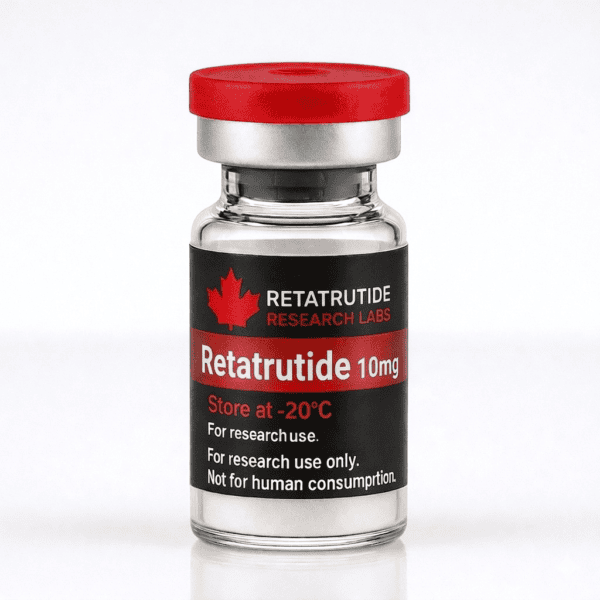
Questions people ask
Does retatrutide help sleep apnea?
In two new studies, yes. People on retatrutide had far fewer breathing stops at night than people on dummy shots. Retatrutide is still experimental and not approved.
How much did retatrutide lower breathing stops?
In people without diabetes, breathing stops fell by about 32 to 34 an hour. In people with type 2 diabetes, they fell by about 25 an hour. On dummy shots, they fell by about 10.
How many people have sleep apnea?
About 936 million adults around the world. In the US, about 30 million adults have it, and about 8 in 10 of them have never been diagnosed.
What are the signs of sleep apnea?
Loud snoring, stopping breathing in your sleep, choking or gasping, waking up with a headache or dry mouth, and feeling very tired in the day.
How do I get a sleep study in Canada?
Ask your family doctor or nurse practitioner. They can send you for a home sleep test or a sleep lab test.
Can I stop using CPAP if I lose weight?
Not on your own. Weight loss can make sleep apnea milder, but only a new sleep study can tell you if you still need CPAP.
Why do CPAP machines need distilled water?
Most home CPAP machines warm water in a small tank to keep the air moist. Tap water has minerals that leave a crust and can wear the machine out. Distilled water has no minerals and no germs.
Why should people on TRT get a sleep study?
Testosterone can make sleep apnea worse. Both testosterone and sleep apnea can make your blood too thick.
How much sleep do adults need?
Most adults need 7 to 9 hours of good sleep a night. Adults 65 and older need 7 to 8 hours.
Is retatrutide approved in Canada?
No. Retatrutide is not approved in Canada or anywhere else. Red Leaf sells it as lab research material only.
Every Red Leaf vial carries an independent lab report with a verify link, right on the product page. Free express shipping on Canadian orders over $250.
RetatrutideBrowse the full catalogueSources
- Grunstein RR, et al. Retatrutide once weekly for treatment of obstructive sleep apnea (TRIUMPH-1-OSA and TRIUMPH-2-OSA). New England Journal of Medicine, October 2026. doi:10.1056/NEJMoa2611477. 691 adults, 80 weeks; AHI -34.3 (9 mg), -31.7 (12 mg) vs -9.9 placebo without diabetes; -24.7, -25.4 vs -10.3 with type 2 diabetes.
- Eli Lilly. TRIUMPH-1 results presented at the American Diabetes Association 86th Scientific Sessions, June 2026. OSA basket (243 participants): baseline AHI 58.6, reduction up to 36.1 events per hour (60.6%).
- Benjafield AV, et al. Estimation of the global prevalence and burden of obstructive sleep apnoea: a literature-based analysis. Lancet Respiratory Medicine, 2019. 936 million (mild to severe) and 425 million (moderate to severe), ages 30 to 69.
- American Academy of Sleep Medicine and Frost & Sullivan. Hidden health crisis costing America billions, 2016. 29.4 million US adults with OSA; about 80% undiagnosed.
- Statistics Canada. Sleep apnea in Canada, 2016 and 2017. Health Fact Sheets, October 2018. 6.4% diagnosed; 14.9% high risk and 14.6% moderate risk (STOP-Bang); 24.6% of men and 5.3% of women at high risk.
- Public Health Agency of Canada. What is the impact of sleep apnea on Canadians? 2009 Canadian Community Health Survey. Diabetes 2.5 times, heart disease 2.2 times, high blood pressure 1.8 times as likely.
- Statistics Canada. World Sleep Day: sleep duration and quality of Canadians. 77% of adults under 65 meet 7 to 9 hours; 18% under 7 hours; 61% good or excellent quality; 68% use electronic media within 30 minutes of bedtime.
- Centers for Disease Control and Prevention. 1 in 3 adults don’t get enough sleep, February 2016.
- Journal of Clinical Sleep Medicine, October 2013 (reported by the American Academy of Sleep Medicine). 2,673 patients; untreated OSA linked to about 3 times the community crash rate.
- Malhotra A, et al. Tirzepatide for the treatment of obstructive sleep apnea and obesity (SURMOUNT-OSA). New England Journal of Medicine, 2024; American Academy of Sleep Medicine, Zepbound approved by FDA, December 2024.
- ResMed AirMini AutoSet product specifications (CPAP Outlet Canada) and Sleep Apnea Association AirMini review. 0.66 lb; 100-240 V; waterless HumidX cartridges replaced every 30 days; FAA-approved for in-flight use.
- Sleep Foundation. Should you use distilled water for a CPAP machine? Minerals, scale build-up, bacteria and chlorine in tap water.
- Bhasin S, et al. Testosterone therapy in men with hypogonadism: an Endocrine Society clinical practice guideline. Journal of Clinical Endocrinology and Metabolism, 2018.
- Lundy SD, et al. Polycythemia and obstructive sleep apnea in men on testosterone therapy. Journal of Sexual Medicine, 2020. 474 men; about 13% polycythemia; 52% of those had OSA.
- Cervi A, Balitsky AK. Testosterone use causing erythrocytosis. CMAJ, 2017. Hematocrit at baseline, about 3, 6 and 12 months, then yearly; stop and consider phlebotomy above 54%.
Research use only. Retatrutide and every other compound named here are sold by Red Leaf Research Labs as laboratory materials for in-vitro research. They are not approved for treatment, injection, ingestion or any human or animal use. Nothing on this page is medical advice, a dose, or a protocol. Trial figures are quoted from published research so readers can see what was measured. Sleep apnea and TRT need care from a licensed health professional. Full wording on our legal terms page.