Owned and operated by a cf veteran

From vampire legends to parabiosis studies — what the young-blood research actually found.
- Parabiosis studies
- Factors, not blood
- Early research
- Research use only
The young-blood research is real and it is not what the headlines suggest. Parabiosis studies in mice pointed at circulating factors rather than blood itself, and the interesting work since has been about identifying those factors. Nothing in it supports the clinics that sprang up around the headlines.
- Why vampires became symbols of youth
- The strange experiment called parabiosis
- What the early studies really showed
- Is young blood helpful—or is old blood harmful?
- What is in blood plasma?
- The molecules behind the headlines
- Where longevity peptides fit
- Young plasma is not the same as a peptide treatment
- What human studies have found
- What Canadians should know
- Why the vampire comparison can mislead
- What current search results get wrong
- Can blood factors become real medicines?
- A practical way to read aging headlines
- Conclusion: the truth is better than the legend
- Frequently asked questions about young blood and aging
- References and further reading
Research and safety notice: This article is educational. It does not provide medical advice or recommend young-plasma infusions, blood exchange, peptide use or self-experimentation. No “young blood” treatment has been proven to reverse human aging or approved for that purpose in Canada.
For centuries, vampire stories linked blood with youth, strength and immortality. The details changed from place to place, but the fear stayed familiar: an old or supernatural being survives by taking life from someone younger.
Modern aging research has produced images that sound uncomfortably close to that folklore. Scientists have connected the circulation of young and old mice. They have transferred plasma between animals. They have searched young blood for proteins and peptides that might influence muscle, brain and tissue repair.
This is real science—but it is not proof that young blood makes people young.
The most interesting lesson may be subtler. Blood carries thousands of signals. Some support repair. Others promote inflammation or suppress regeneration. Aging may partly reflect how that changing mix affects tissues throughout the body.
For Canadians hearing claims about “young plasma,” longevity peptides or anti-aging infusions, the difference between an intriguing experiment and a proven treatment matters.
Why vampires became symbols of youth
Blood has always carried powerful meanings. People could see that losing it caused weakness and death. They also understood, long before modern biology, that blood was connected to life.
European vampire legends drew on this symbolism. The vampire did not simply kill. It took vitality and continued living beyond a normal lifespan. Later novels and films made the connection to eternal youth even stronger.
Not every vampire tradition involved blood, and folklore should not be treated as a scientific prediction. Still, the old stories reveal a lasting human wish: could vitality be transferred from one body to another?
That question sounds mythical. In a laboratory, it became testable.
The strange experiment called parabiosis
Parabiosis means joining two living animals so they share circulation. The method appeared in research more than a century ago and was used to study hormones, metabolism and other signals carried in blood.
In heterochronic parabiosis, the animals are different ages. A young mouse and an old mouse are surgically connected. Their organs remain separate, but blood-borne factors move through both bodies.
Researchers reported changes in older animals exposed to younger circulation. Depending on the study and tissue, findings included improved muscle repair, altered liver regeneration, more activity in brain stem-cell regions and changes in heart tissue.
Headlines quickly translated this into “young blood reverses aging.” That description leaves out several important facts.
The animals share much more than a bag of plasma. They remain connected for days or weeks. Blood cells, hormones, nutrients, immune signals and waste products circulate between them. The younger animal’s kidneys, liver and lungs may also help change the older animal’s internal environment.
Parabiosis is therefore a discovery tool, not a consumer therapy.
What the early studies really showed
One influential 2005 study found that exposure to young circulation improved regeneration in older mouse muscle and liver. The results supported a major idea: aged stem cells are not always permanently broken. Their behaviour can change when their environment changes.
Later work reported effects in the brain, heart and other tissues. These results helped create today’s interest in “systemic” aging—the idea that signals travelling through the body influence how individual organs age.
But the findings were not uniform. Some tissues responded more than others. Certain aged blood-forming stem cells appeared resistant to rejuvenation. Different laboratories did not always agree about which blood factor mattered.
The science became more complicated, which is usually what happens when a dramatic first result meets deeper testing.
Is young blood helpful—or is old blood harmful?
At first, researchers focused on helpful substances that might be abundant in young blood. The hunt was for a molecular fountain of youth.
Another explanation later gained support: old blood may contain higher levels of factors that suppress repair or increase inflammation. In that case, benefits seen in an old animal could come partly from diluting harmful signals—not adding a magical youthful ingredient.
Blood-exchange experiments have helped separate these possibilities. Some work found that old blood rapidly harmed young tissues more strongly than young blood helped old tissues. Other studies explored neutral blood exchange or plasma dilution without using young donors.
This changes the question from “What should we take from the young?” to “Which age-related signals should be reduced or controlled?”
That is a less sensational story, but possibly a more useful one.
What is in blood plasma?
Plasma is the liquid portion of blood. It carries water, salts, antibodies, clotting factors, hormones, nutrients, waste products and many signalling molecules.
Some signals are proteins. Some are peptides—shorter chains of amino acids. Others travel in tiny packages called extracellular vesicles. Their levels can change with age, exercise, disease, sleep and other conditions.
Researchers are trying to identify which signals affect tissue maintenance. The goal is not necessarily to transfuse young plasma. It may be possible to target one pathway with a precisely tested medicine.
That would be far more controlled than transferring a complex biological mixture from one person to another.
The molecules behind the headlines
GDF11
Growth differentiation factor 11 became one of the first famous “young blood” factors. Early mouse studies connected it with improvements in aged heart or muscle tissue. Follow-up work questioned how GDF11 was measured and whether its effects were consistently beneficial.
GDF11 remains scientifically interesting. It is not a proven anti-aging treatment.
Oxytocin
Oxytocin is a peptide hormone best known for roles in childbirth, bonding and social behaviour. Animal research has also linked age-related oxytocin changes with muscle repair. This does not mean ordinary oxytocin use reverses aging.
CCL11 and inflammatory signals
Some factors rise with age and may work in the opposite direction. CCL11, also called eotaxin-1, has been studied for possible effects on brain function and the production of new neurons in animal models.
The broader point is that aging blood may contain both helpful and harmful signals. One molecule rarely explains the whole system.
TIMP2 and other plasma proteins
Research involving human umbilical-cord plasma identified TIMP2 as one possible factor affecting cognition in mice. Other studies have proposed different candidates, and the list continues to evolve.
Finding an association is only the beginning. Researchers must confirm the result, understand the dose and pathway, test safety and determine whether it matters in people.
Where longevity peptides fit
Online discussions often blend young-blood research with peptides such as MOTS-c, humanin, epitalon and growth-hormone-related compounds. These are not interchangeable with young plasma.
MOTS-c and humanin are mitochondrial-derived peptides studied in metabolism, stress responses and age-related biology. Epitalon is a synthetic peptide associated with Russian gerontology research. Other so-called anti-aging peptides act on completely different pathways.
The connection is conceptual: small biological signals can influence cells throughout the body. The evidence for one peptide cannot be transferred to another, and mouse findings do not establish a safe Canadian anti-aging treatment.
“Peptide” describes a type of molecule. It does not mean young, safe, restorative or approved.
Young plasma is not the same as a peptide treatment
A plasma infusion delivers an extremely complex mixture. A peptide product is supposed to contain a defined amino-acid sequence. These approaches have different risks and different evidence.
Plasma transfusion is an established medical procedure when clinically needed—for example, to replace clotting factors in certain bleeding situations. It carries risks including allergic reactions, circulatory overload, lung injury and, despite careful screening, infection-related concerns.
Using donor plasma to treat a recognized blood problem is not the same as selling young-donor plasma as an anti-aging service.
Likewise, isolating a promising factor from mouse research does not make an unapproved online peptide equivalent to the original experiment.
What human studies have found
Human research is small and early. A limited study explored young-donor plasma in people with mild-to-moderate Alzheimer’s disease. It mainly assessed feasibility and safety. It did not establish that young plasma reverses dementia or normal aging.
Trials involving plasma exchange for particular diseases should also not be described as proof of rejuvenation. Therapeutic plasma exchange is a medical procedure used for specific conditions. Its risks and benefits depend on why it is being performed.
There is no convincing clinical evidence that young-plasma infusions make healthy older adults younger, extend life or prevent dementia.
The US Food and Drug Administration has warned that it is not aware of proven clinical benefit from young-donor plasma for aging, memory loss, dementia, Parkinson’s disease, multiple sclerosis, Alzheimer’s disease or heart disease.
What Canadians should know
Canada’s blood system is built around donation, safety, medical need and public trust. Canadian Blood Services has discussed young-blood science as an important research topic, not as a proven rejuvenation service.
No young-plasma treatment has been approved by Health Canada to reverse aging. Canadians should be wary of clinics or websites implying that an experimental infusion, blood exchange or peptide has official anti-aging approval.
Authorized drugs sold in Canada carry an eight-digit Drug Identification Number, or DIN. Licensed natural health products carry an NPN. A foreign trial, clinic testimonial, purity report or “research use only” label is not Canadian authorization.
Health Canada has also warned about unauthorized peptide drugs sold online. Such products may have incorrect ingredients, contamination, inaccurate concentration or unknown interactions.
Why the vampire comparison can mislead
The vampire metaphor is memorable, but it can distort the ethics and science.
Blood donors are people, not raw material for wealthy consumers. Donation systems depend on informed consent, careful screening and fair access. Commercial demand for young donors could create pressure or exploitation.
The metaphor also suggests that youth is a substance that can simply be transferred. Aging is not caused by an empty tank of young blood. It involves DNA damage, changes in gene control, cellular senescence, altered metabolism, immune aging, declining repair and many other processes.
Blood signals may influence those processes. They do not replace the entire biology of youth.
What current search results get wrong
The online competition often falls into two extremes. Sensational articles promise that young blood reverses aging. Dismissive summaries treat all parabiosis research as fantasy.
Both miss the useful middle.
The research has shown that an aged tissue can respond to signals from outside itself. That is a major scientific insight. It may lead to medicines that block harmful age-related factors, copy useful signals or improve immune and metabolic environments.
What it has not shown is that buying plasma or peptides is a shortcut to immortality.
A reliable guide should clearly separate:
- mouse parabiosis from human transfusion;
- young plasma from defined peptides;
- biomarkers from meaningful health outcomes;
- preliminary trials from approved treatment;
- and scientific possibility from commercial availability.
Can blood factors become real medicines?
Possibly. Researchers can use parabiosis to find pathways, then design safer and more specific interventions.
Instead of giving a person donor plasma, a future treatment might block one damaging protein, replace a missing signal or change how a receptor behaves. It could also target the liver, immune system or senescent cells that produce age-related factors.
Any candidate would still need careful manufacturing, dose testing and clinical trials. A factor that helps one tissue might harm another. Promoting cell growth could create unwanted effects. Suppressing inflammation too strongly could weaken infection defence.
The path from mouse discovery to Canadian medicine is long because biology is complicated—not because regulators are ignoring a cure.
A practical way to read aging headlines
When a headline claims that blood or a peptide reverses aging, ask five questions:
- Was the study done in cells, mice or people?
- Was it parabiosis, plasma transfer, plasma dilution or a defined molecule?
- Did the study measure a biomarker or a real health outcome?
- Was the result independently repeated?
- Is the treatment authorized by Health Canada for that purpose?
If those details are missing, the headline is probably ahead of the evidence.
Conclusion: the truth is better than the legend
Vampire stories imagined youth as something that could be stolen through blood. Modern science has found a more complicated truth: blood carries signals that can change how tissues behave.
Young-old parabiosis experiments showed that parts of aging are influenced by the body’s circulating environment. They opened valuable research into repair factors, inflammatory proteins, mitochondrial peptides and plasma dilution.
But mice joined by circulation are not people receiving an infusion. No young-blood or peptide treatment has been proven to reverse human aging, and none has Health Canada approval for that purpose.
The lasting discovery is not a fountain of youth. It is that aging tissues still listen to signals—and learning that language may eventually produce real medicines.
Frequently asked questions about young blood and aging
Can young blood reverse aging?
Young circulation has changed some aging-related measures in mice. There is no convincing evidence that young-blood transfusions reverse normal human aging.
What is parabiosis?
Parabiosis is a research method in which two animals are physically connected and share circulation. It is not the same as a one-time blood transfusion.
What is heterochronic parabiosis?
It is parabiosis between animals of different ages, usually a young mouse and an old mouse.
Does young blood make old mice younger?
It has improved certain repair and molecular measures in some mouse tissues. The effects are incomplete, tissue-specific and not equivalent to whole-body youth.
Is old blood more important than young blood?
Some studies suggest age-related inhibitory factors may be more powerful than youthful factors. Diluting or blocking harmful signals is an active research area.
Are young-plasma infusions approved in Canada for anti-aging?
No Health Canada-approved young-plasma treatment for reversing aging has been identified.
Is plasma transfusion a real medical treatment?
Yes. Plasma is used for specific medical reasons, including certain bleeding problems. That does not prove benefit for anti-aging use.
Are young-blood treatments safe?
Plasma can cause serious reactions, circulatory overload and lung injury. An unproven benefit does not justify those risks in healthy people.
What are young-blood factors?
They are proteins, peptides and other circulating signals whose levels or effects may differ with age. No single factor explains aging.
Is GDF11 an anti-aging protein?
GDF11 produced exciting early animal findings, but later research raised measurement and interpretation questions. It is not an approved anti-aging treatment.
What do peptides have to do with young blood?
Some circulating signals are peptides, and other peptides are studied separately in aging biology. A peptide is not automatically a “young-blood factor.”
Are MOTS-c and humanin found in young blood?
They are mitochondrial-derived peptides studied in aging and metabolism. Their biology is distinct from transfusing young plasma.
Is epitalon a young-blood peptide?
No. Epitalon is a synthetic peptide associated with gerontology research, not a component extracted from young donor blood.
Can peptides reverse aging?
No peptide has been proven to reverse overall human aging. Research may target individual pathways, but broad rejuvenation claims are unsupported.
Is young plasma proven for Alzheimer’s disease?
No. Small early studies have not established it as an effective Alzheimer’s treatment.
What is plasma dilution?
Plasma dilution reduces the concentration of circulating plasma factors. Researchers study whether removing age-related inhibitors matters more than adding young factors.
Why are young-blood experiments controversial?
The science is preliminary, transfusions carry risk, commercial claims can exploit patients, and demand for young donors raises ethical concerns.
Does Canadian Blood Services offer anti-aging plasma?
No. Canadian Blood Services supplies blood components for recognized medical needs and discusses young-blood work as research, not an anti-aging service.
How can Canadians check whether an anti-aging product is approved?
Look for a valid DIN or NPN and verify it in Health Canada’s databases. Marketing terms and foreign clinic claims are not authorization.
What is the most important result from parabiosis research?
It showed that the circulating environment can influence how aged tissues function. The challenge is turning that insight into safe, specific treatments.
References and further reading
- Canadian Blood Services. The science behind young blood.
- US Food and Drug Administration. Important information about young donor plasma infusions offered for profit.
- Conboy IM, et al. Rejuvenation of aged progenitor cells by exposure to a young systemic environment. Nature. 2005.
- Aging insights from heterochronic parabiosis models. npj Aging. 2024.
- Health Canada. Think twice before injecting peptides bought online. 2026.
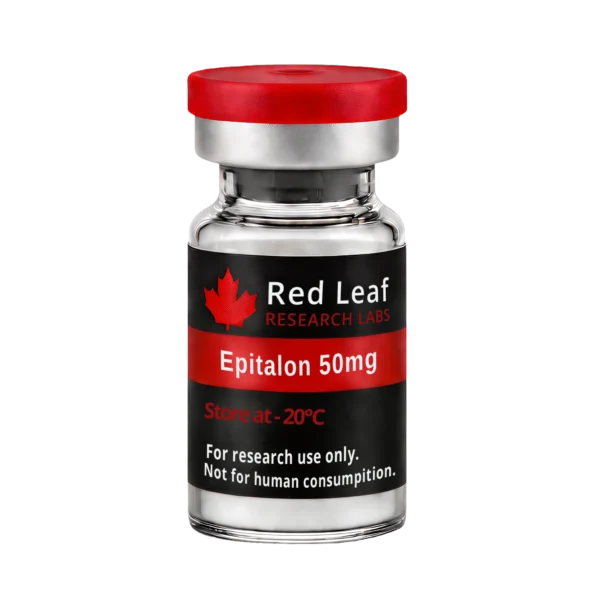 Epitalon 50mg$90 CAD · research use only
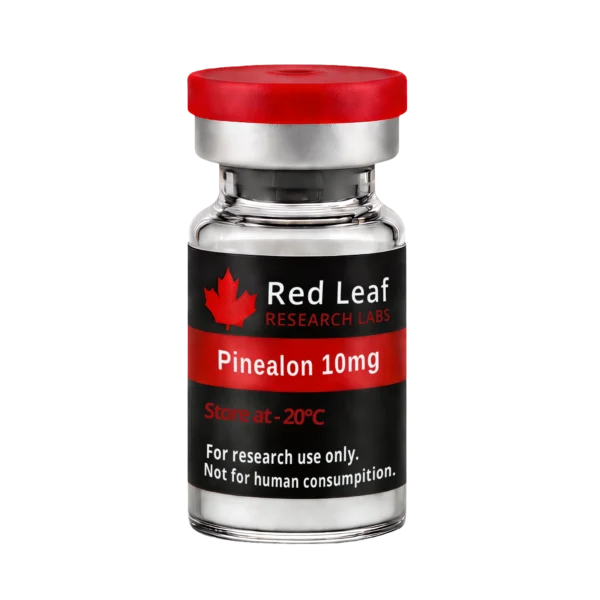 Pinealon 10mg$65 CAD · research use only
 NAD+$120 CAD · research use only
 GHK-Cu 100mg – 3ml Vial$64.99 CAD · research use only
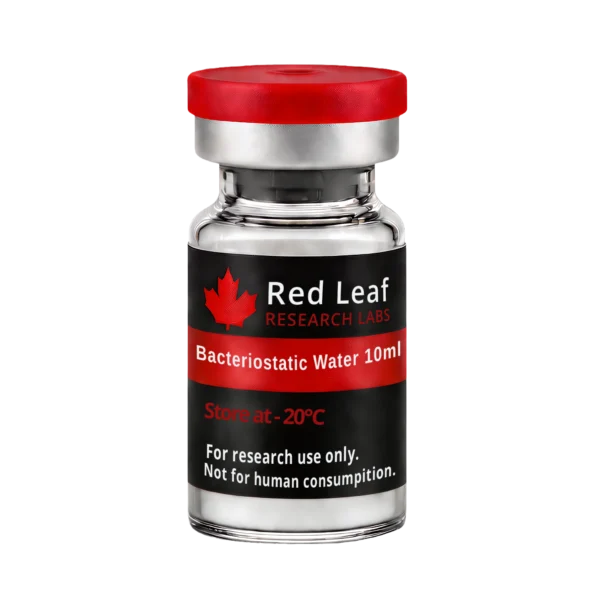 Bacteriostatic Water$10 CAD · research use only
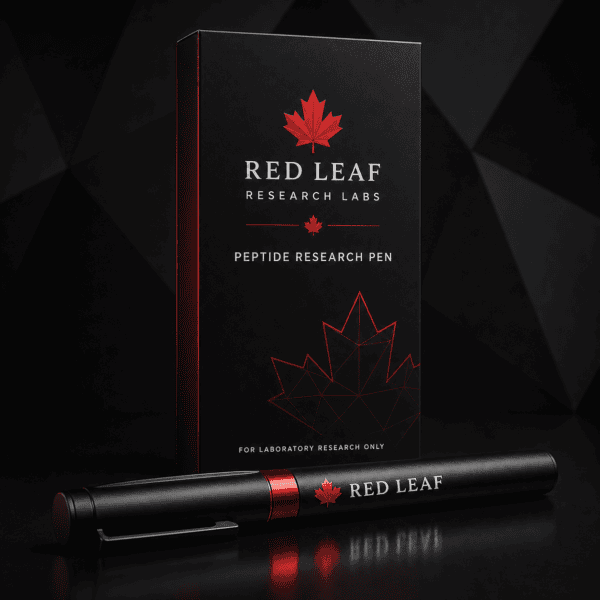 Peptide Pens Canada – Red Leaf Research Pen Add-On$99 CAD · research use only
Every product page carries its batch lab report with a verification link you can check at the testing laboratory, not just a PDF we host.
Research use only. Products sold by Red Leaf Research Labs are not approved by Health Canada for cosmetic application, therapeutic treatment, injection, ingestion, or any form of human or animal use. No claims are made regarding clinical outcomes, safety or efficacy. Pricing and stock are current at the time of publication and subject to change.