Owned and operated by Baba Kahn, a CF veteran


The words you need before reading a product page or a certificate of analysis.
- Lyophilized, reconstitution
- COA, lot, purity
- mg vs mL vs units
- Research use only
Most confusion in this market is vocabulary. Lyophilized means freeze-dried. Reconstitution means adding liquid. A lot is a production batch. And milligrams, millilitres and syringe units are three different things that get treated as one, which is where the serious mistakes happen.
For a specific vial, run the numbers through our peptide calculator. It gives concentration in mg per mL and the matching U-100 syringe marking.
Entering a new area of scientific study often means learning its vocabulary before interpreting the research itself. In peptide research, terms related to molecular structure, analytical testing, product documentation, storage, and laboratory preparation appear across published studies, supplier pages, labels, and Certificates of Analysis.
Without that foundation, researchers may struggle to distinguish a purity result from identity testing or determine whether documentation corresponds to the product received. At Red Leaf Research Labs, we believe accessible scientific education supports more informed laboratory decisions.
This guide explains common terminology associated with research peptides intended strictly for legitimate laboratory investigation. These materials are not intended for human or animal consumption, treatment, diagnosis, or personal experimentation.
Understanding Core Research Peptide Terminology
The vocabulary used in peptide research spans several parts of the laboratory workflow. Some terms describe the molecule itself, while others relate to manufacturing, analytical evidence, storage, preparation, and compliance. Understanding how these terms connect can make product specifications and technical documents easier to evaluate.
Peptide
A peptide is a chain of amino acids joined by chemical links called peptide bonds. Peptides differ in length, amino acid composition, sequence, structure, and molecular properties.
The sequence contributes to how a peptide behaves under controlled experimental conditions. Researchers therefore identify compounds by more than a general product name.
Amino Acid Sequence
An amino acid sequence is the specific order in which amino acids appear within a peptide. A simple fictional sequence might be written as Ala-Gly-Ser-Leu.
Changing even one position can produce a distinct compound with different molecular characteristics. Sequence information helps researchers identify materials, compare related compounds, and interpret scientific literature.
Synthetic Research Peptide
A synthetic research peptide is manufactured under controlled laboratory conditions rather than isolated directly from a biological source. Peptide synthesis enables the production of a specified amino acid sequence for experimental investigation.
Manufacturing consistency alone does not prove that a compound is appropriate for a particular study. Researchers must still consider analytical documentation, experimental design, and institutional requirements.
Lyophilized Peptide
Lyophilization is a freeze-drying process that removes moisture from a peptide preparation. Research materials are often supplied as a dry, powder-like substance to support defined laboratory storage and handling procedures.
Appearance cannot confirm identity or purity. Product-specific documentation and established laboratory protocols should guide storage decisions.
Peptide Reconstitution
Reconstitution is the process of introducing an appropriate laboratory solvent or diluent to lyophilized material. The suitable method depends on the compound, experimental purpose, supplier documentation, and institutional procedures.
Accurate labelling, contamination controls, and documented handling practices are essential. Reconstitution instructions for laboratory research must not be interpreted as dosing, injection, or personal-use guidance.
Peptide Purity
Peptide purity is the proportion of an analyzed sample attributable to the intended peptide relative to detected impurities or related substances.
A percentage should always be considered alongside the analytical method and supporting records. Purity does not independently establish molecular identity, sterility, safety, or suitability for a particular experiment.
High-Performance Liquid Chromatography Testing
High-performance liquid chromatography, or HPLC, separates components within a sample so they can be measured. Laboratories may examine an HPLC chromatogram to assess sample composition and estimate purity.
The result is most informative when the testing conditions, sample details, instrument parameters, and relevant chromatogram are available. A headline HPLC percentage is not a complete quality assessment.
Mass Spectrometry
Mass spectrometry measures the mass-to-charge ratios of ions in a sample. It may support peptide identification by allowing laboratories to compare an observed molecular mass with the expected value.
Mass spectrometry and HPLC answer different analytical questions. One may contribute evidence about identity, while the other is commonly used to assess composition and purity. Reliable conclusions depend on appropriate instrumentation, methods, and interpretation.
Certificate of Analysis
A Certificate of Analysis, commonly called a COA, summarizes testing information connected with a product or batch. Typical fields may include the product name, lot number, test date, analytical method, purity result, and molecular mass.
Researchers should read the complete document rather than relying on a prominent percentage. A useful COA provides enough detail to connect its results to the relevant material.
Lot Number and Batch Traceability
A lot or batch number identifies a particular manufacturing or testing group. It allows researchers to match the received product with associated analytical records.
Lot-specific documentation offers more traceability than a generic report that cannot be linked to the supplied material. Researchers may find the identifier on:
- The product label or vial
- Outer packaging
- The corresponding COA
Third-Party Testing
Third-party testing is performed by a laboratory separate from the supplier or manufacturer. It can add another source of analytical evidence when the testing facility, sample, method, date, and batch are clearly identified.
The phrase “third-party tested” should be supported by accessible documentation. Independent analysis does not automatically establish suitability for every experimental purpose.
Research Use Only
“Research Use Only,” or RUO, indicates that a product is intended for controlled laboratory investigation. RUO materials are not intended for human or animal consumption, diagnosis, treatment, clinical use, or personal experimentation.
Researchers remain responsible for appropriate training, records, laboratory controls, and compliance with applicable institutional procedures. At Red Leaf Research Labs, we supply our products strictly for research and in-vitro laboratory studies rather than human or animal use.
How These Terms Appear in Product and Laboratory Documentation
Researchers may encounter this vocabulary in product descriptions, labels, storage instructions, technical specifications, scientific literature, and COAs. Reviewing those materials together often reveals whether the documentation is internally consistent.
Term | Where It Appears | What It Helps Researchers Understand |
Lot number | Label, packaging, COA | Which records correspond to the received material |
HPLC | COA, analytical report | Sample composition and estimated purity |
Mass spectrometry | COA, technical report | Whether observed mass supports expected identity |
Lyophilized | Label, storage instructions | The supplied physical format |
RUO | Label, product page | The material’s laboratory-only designation |
For example, a lot number should link the product to its COA, while HPLC and mass spectrometry provide different forms of analytical evidence. Terminology, identifiers, and test results should remain consistent across the available documents.
Questions to Ask When Evaluating Research Peptide Information
Before incorporating a peptide into a laboratory workflow, researchers should review the available product information and confirm that it is clear, traceable, and relevant to the material received.
Is the Product Identity Clearly Stated?
The documentation should identify the peptide by name and provide any relevant sequence or molecular information needed to distinguish it from related compounds. A general product label alone may not provide enough information for laboratory evaluation.
Does the Documentation Match the Product’s Lot or Batch Number?
The lot or batch identifier on the product, packaging, and Certificate of Analysis should correspond. Matching identifiers help researchers confirm that the analytical records relate to the specific material received rather than a different or unspecified batch.
Are the Test Date, Methods, and Results Clearly Presented?
Analytical documentation should state when testing occurred, which methods were used, and what the results showed. Researchers should consider the complete report rather than relying on a headline purity percentage or promotional claim.
Are Storage and Handling Requirements Provided?
Storage conditions and handling instructions should be reviewed before experimental work begins. Requirements may vary by peptide, supplied format, and study design, so researchers should follow product-specific documentation and established institutional procedures.
Is the Information Consistent With the Study and Institutional Requirements?
Product documentation should be considered alongside the experimental design, laboratory controls, researcher training, and applicable institutional rules. Promotional language cannot replace traceable analytical evidence or determine whether a material is suitable for a particular study.
No COA, purity figure, test result, or product description authorizes human or animal use. Research peptides labelled for research use only must remain restricted to legitimate laboratory investigation.
Build a Stronger Foundation in Research Peptides
A working knowledge of peptide structure, purity, analytical methods, batch documentation, and RUO labelling gives researchers a clearer basis for evaluating scientific materials. It also reduces the chance that different quality terms will be treated as interchangeable.
Red Leaf Research Labs takes a science-first, compliance-focused approach to educational information and laboratory research products. Researchers can explore our selection of research peptides while reviewing the documentation and specifications relevant to their work.
Reach out to Red Leaf Research Labs today by emailing us at info@redleafpeptides.com, or click here to get in touch online.
Frequently Asked Questions
Are Peptide Purity and Peptide Identity the Same Thing?
No. Purity describes the proportion of detected sample material attributed to the target compound, while identity testing supports confirmation of what the compound is. Researchers may need to consider multiple analytical methods because no single result answers every quality question.
What Information Should a Peptide COA Include?
A useful COA may include the peptide name, lot number, test date, analytical method, purity data, and identity-related results. These details should correspond to the specific batch supplied. Researchers should request clarification when documentation is incomplete or difficult to verify.
Why Are Research Peptides Often Lyophilized?
Lyophilization removes moisture through freeze-drying and produces a dry material that can be managed under defined laboratory storage conditions. Requirements still vary by product, so researchers should follow the supplier’s documentation and their institution’s laboratory procedures.
Does Third-Party Testing Guarantee Peptide Quality?
No. Independent testing can improve transparency, but it should not be treated as an automatic guarantee. Researchers should assess the laboratory, methods, sample identification, test date, and batch relevance alongside all other available quality documentation.
What Does “Research Use Only” Mean on a Peptide Product?
Research Use Only means the material is restricted to controlled laboratory investigation. It excludes human or animal consumption, clinical use, treatment, and personal experimentation. Researchers must follow applicable institutional procedures and laboratory standards.
Explore Canadian peptide product examples
Researchers comparing peptides in Canada can review how product identity, format and documentation terminology appears across these Red Leaf catalogue pages:
Review each product page and its matching research documentation before ordering.

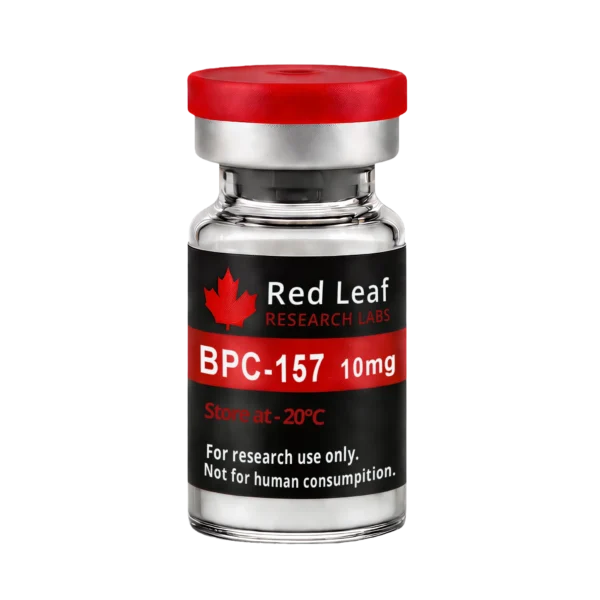 BPC-157 (10mg)$75 CAD · research use only
 GHK-Cu 100mg – 3ml Vial$64.99 CAD · research use only
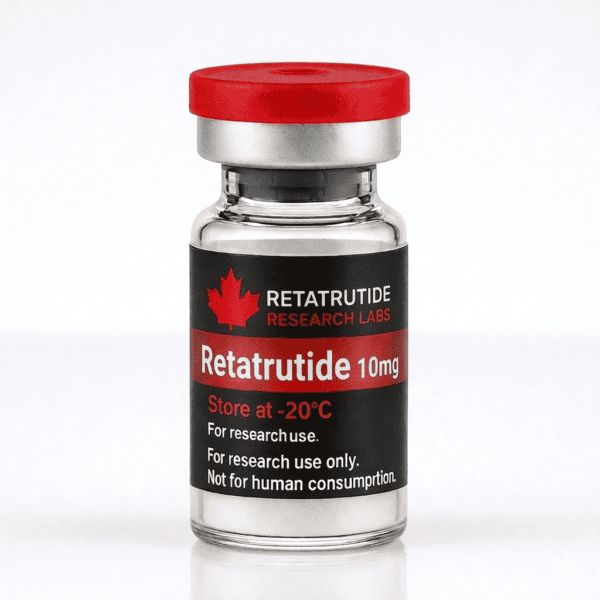 Retatrutide$79.99 CAD · research use only
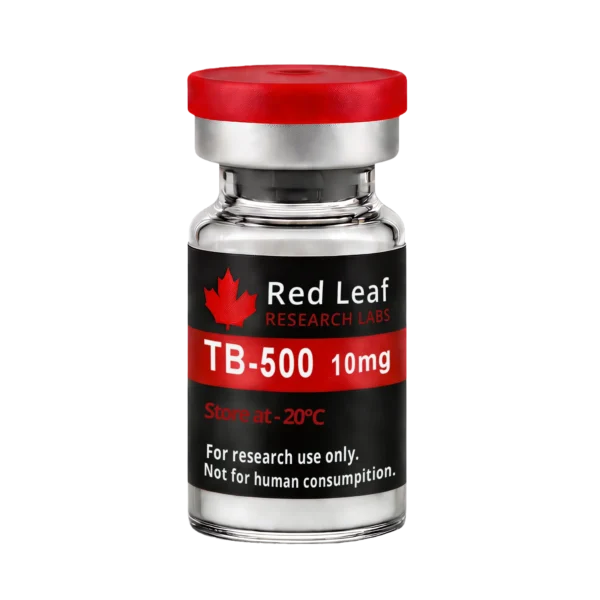 TB-500 (10mg)$84.99 CAD · research use only
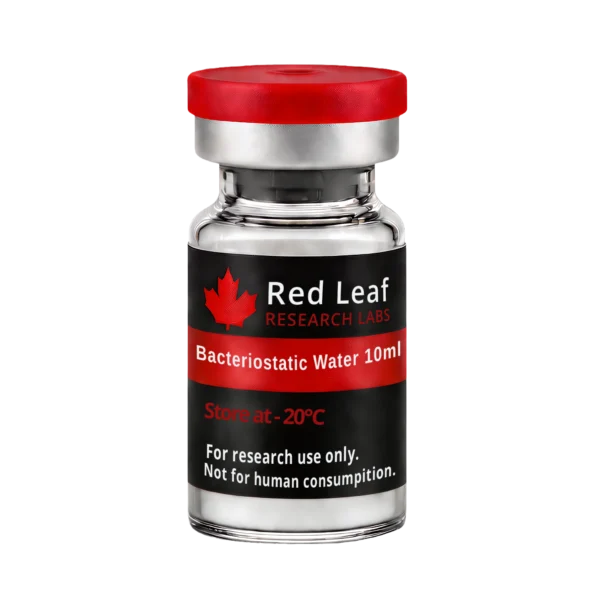 Bacteriostatic Water$10 CAD · research use only
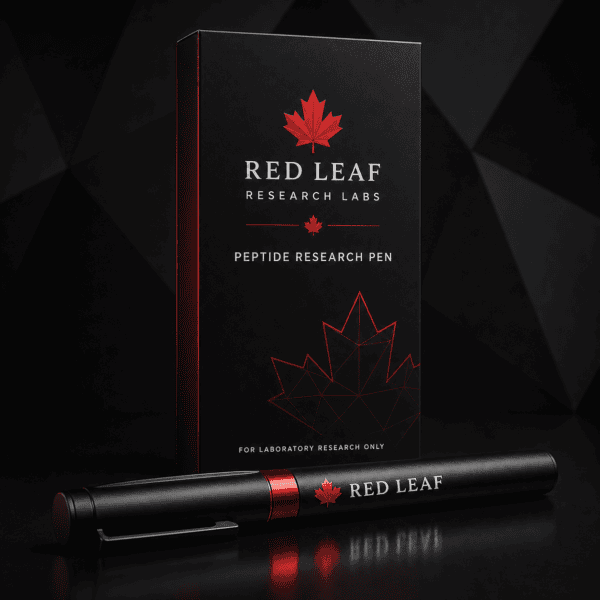 Peptide Pens Canada – Red Leaf Research Pen Add-On$99 CAD · research use only
Every product page carries its batch lab report with a verification link you can check at the testing laboratory, not just a PDF we host.
Research use only. Products sold by Red Leaf Research Labs are not approved by Health Canada for cosmetic application, therapeutic treatment, injection, ingestion, or any form of human or animal use. No claims are made regarding clinical outcomes, safety or efficacy. Pricing and stock are current at the time of publication and subject to change.