Owned and operated by a cf veteran

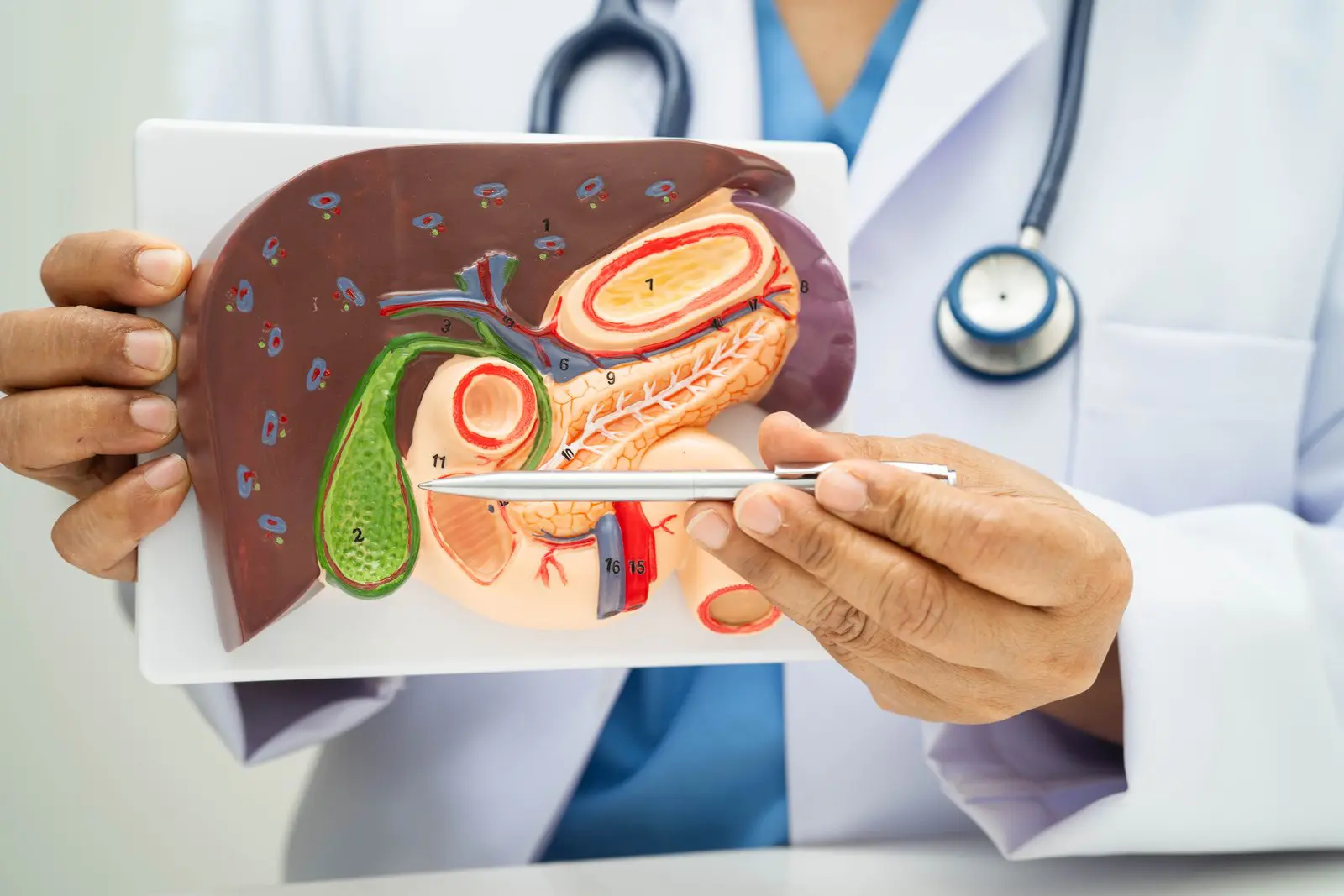
Weight-loss compounds and the gallbladder. What the trials counted. Why fast weight loss makes stones on its own. And what the research says about people who have had the bag taken out.
- 1.37x gallbladder risk across 76 trials
- 2.29x in the weight-loss trials
- 3.4x from fast weight loss alone
- Lot-tested with outside lab reports
The gallbladder is a small bag that holds bile. It squeezes when you eat fat. Weight-loss drugs in this family make it squeeze less. Fast weight loss also makes bile thicker. Both things together let stones form. The numbers are real but small. Across 76 trials and 103,371 people, this drug family raised gallbladder problems by 37%. In the weight-loss trials it more than doubled. But losing weight fast does the same thing on its own. No drug needed. One Swedish study shows this. People on a very low calorie diet were 3.4 times more likely to land in hospital with a stone. Now the part most pages get wrong. Having no gallbladder is not a reason to avoid these compounds. Look at the label for the closest approved drug here. It lists two hard bars. A thyroid cancer history, and a bad allergy to the drug. Gallbladder disease is a warning, not a bar. And the review says this. The drug can be started again once the bag is taken out.
- What the gallbladder does
- Three things push the same way
- What the trials counted
- Where retatrutide sits
- Speed is the part people miss
- If you have no gallbladder
- If you already have stones
- What trials on stopping stones tested
- What trouble looks like
- What goes wrong in this area
- What to check before you buy
- Common questions
- Bottom line
- Other guides on this site
What the gallbladder does
Picture a small squeeze bottle tucked under your liver. That is your gallbladder. It is about the size of a small pear.
Your liver makes bile all day. Bile breaks up fat so your gut can take it in. Between meals, the bile sits in the bottle and waits.
Then you eat something with fat in it. Your gut sends out a signal. The bottle squeezes. Bile shoots down a tube into your small intestine. Job done.
That squeeze matters more than it sounds. Bile is not simple liquid. It carries cholesterol, salts and other bits. If it sits still too long, those bits start to clump.
Clumps become sludge. Sludge becomes stones.
So the whole story comes down to one thing: does the bottle keep getting squeezed?
Hold that picture. The rest of this page is about the things that stop the squeeze.
Three things push the same way
Someone loses a lot of weight on one of these drugs. Three things happen at once. All three push toward stones.
One: the squeeze gets weaker
Your gut releases a signal called CCK when fat arrives. CCK is what tells the bottle to squeeze.
These drugs lower that signal. A 2025 review in Therapeutic Advances in Endocrinology and Metabolism walked through the biology. Less CCK means a weaker, slower squeeze. The timing can go off too. Then the bottle empties in an uneven way.
Bile sits longer. That is the first push.
Two: the bile itself changes
The same review describes a second problem. These drugs shift how bile salts get recycled. Two switches in that system, called FXR and TGR5, get less signal than usual.
The result is bile that carries more cholesterol than it can hold.
Think of stirring too much sugar into a cup of tea. Past a point it stops dissolving and sinks to the bottom. Bile does the same thing with cholesterol.
Three: losing fat dumps cholesterol into bile
This one has nothing to do with drugs. When body fat breaks down fast, a lot of cholesterol moves through the liver. The liver pushes it into bile.
So the bile gets thicker at the exact moment the bottle is squeezing less.
That is the whole problem in one sentence. Thicker liquid, weaker squeeze, same bag.
What the trials counted
This is not a theory. It has been counted, more than once.
The big pooled look
In March 2022, JAMA Internal Medicine published a study that pooled 76 proper trials. That covered 103,371 people. Average age 57.8. Average BMI 32.6.
Here is what it found.
| What was measured | How much the risk rose | Range |
|---|---|---|
| Gallbladder or bile duct problems | 37% higher | 23% to 52% |
| Gallstones | 27% higher | 10% to 47% |
| Inflamed gallbladder | 36% higher | 14% to 62% |
| Bile duct disease | 55% higher | 8% to 122% |
Now the part that matters most here. The study split the trials by why the drug was given.
| Group | Risk rise | Number of trials |
|---|---|---|
| Given for weight loss | 129% higher | 13 |
| Given for diabetes or other reasons | 27% higher | 63 |
| Higher doses | 56% higher | — |
| Lower doses | No rise at all | — |
| Longer use | 40% higher | — |
| Shorter use | No rise at all | — |
Read those last four rows again. Low dose, short course: nothing. High dose, long course, for weight loss: more than double.
That pattern tells you something. The risk is not really about the drug being present. It tracks with how much weight comes off and how fast.
The semaglutide numbers
A 2026 pooled look in Diabetes, Obesity and Metabolism took the STEP trials apart. Four trials. 3,683 people. 2,269 on semaglutide 2.4mg, 1,414 on placebo.
Gallbladder events: 59 people on the drug, 16 on placebo. That is 2.6% against 1.1%.
The authors put it in plain terms. About one extra gallbladder event per 90 to 100 people, per year.
Most of those events were plain gallstones. Inflamed gallbladders and surgery were rare.
The approved label for that drug lists its own figures. Gallstones in 1.6% of people on the drug against 0.7% on placebo. Inflamed gallbladder in 0.6% against 0.2%.
So: a real signal, and a small one.
Where retatrutide sits
Retatrutide is a weight-loss compound still in trials. It hits three receptors at once. Most others in this family hit one or two.
Its phase 2 trial was published in the New England Journal of Medicine in 2023. It ran on 338 adults.
That trial did record gallbladder events. Three of them: one inflamed gallbladder and two cases of stones.
Three events in 338 people over less than a year. Take that for what it is worth, which is not much either way. A trial that size cannot measure a risk this small. It was never built to.
Here is the number that matters.
| Trial | Dose | Weight lost | Over |
|---|---|---|---|
| Phase 2 | 12mg | 17.5% | 24 weeks |
| Phase 2 | 12mg | 24.2% | 48 weeks |
| TRIUMPH-4 | 9mg | 26.4% | 68 weeks |
| TRIUMPH-4 | 12mg | 28.7% | 68 weeks |
TRIUMPH-4 reported in December 2025. It ran on 445 people. Average starting weight was 112.7 kg. The 12mg group lost 28.7% of their body weight. That is about 32 kg.
Now go back to the pooled study. The gallbladder risk rose most with higher doses, longer courses and weight-loss use. It more than doubled in the weight-loss trials.
Retatrutide takes off more weight than the rest measured in this family. So on the pattern we can see, it sits at the far end of every line.
Nobody has measured it directly yet. That is an honest gap, not a reassurance. The detailed TRIUMPH-4 safety tables have not been published in full. When they are, this section will need rewriting.
Speed is the part people miss
Blame usually lands on the drug. The bigger driver is often how fast the weight comes off.
A Swedish study followed two matched groups through a paid weight-loss plan. 3,320 people in each. It ran a year, across 28 centres.
One group did a very low calorie diet. The other did a plain low calorie diet. No weight-loss drugs in either.
| Very low calorie | Low calorie | |
|---|---|---|
| Weight lost in a year | 11.1 kg | 8.1 kg |
| Hospital care for stones | 48 people | 14 people |
| Gallbladder taken out | 29 people | 9 people |
| Risk of a painful stone | 3.4 times higher | baseline |
Look at the gap in weight. It is 3 kg over a whole year. That is all.
Three extra kilos, and the risk of a painful stone went up 3.4 times. No drug in it.
Now think about what 28.7% in 68 weeks means next to that. The Swedish group lost about 11 kg. A person on 12mg in TRIUMPH-4 lost about 32 kg.
That is the real frame for this whole topic. These compounds do not have a special grudge against gallbladders. They cause fast, big weight loss. Fast, big weight loss is hard on a gallbladder.
If you have no gallbladder
This is the question that sends most people to this page. It also gets answered wrong more than the rest here.
A common belief is that no gallbladder means you cannot use these compounds.
That is backwards.
Look at the approved label for the closest drug in this family. It lists exactly two hard bars. A personal or family history of a certain thyroid cancer, or a related genetic condition. And a past serious allergic reaction to the drug.
That is the whole list. Gallbladder disease is not on it.
Gallbladder problems appear further down, under warnings. A warning means watch for it. A bar means do not use it at all. They are not the same thing and the label keeps them apart on purpose.
The review goes further. It says these drugs can be started again once the gallbladder is taken out.
That makes sense when you go back to the squeeze bottle. If the bottle is gone, no stone can form in it. Bile drips straight from the liver into the gut instead of being stored.
So there is one group who cannot get gallbladder stones. The group with no gallbladder.
Two honest caveats. Stones can still form in the tubes that carry bile. That is much less common. And some people handle fat in a new way after the surgery. A big change in eating can feel rough for a while.
None of that makes it a bar. It just means the picture is not blank.
If you already have stones
The other half of the question is the half that holds up better.
Stones already sitting in a gallbladder is a different case. Add fast weight loss to a bag that already holds stones. That is the setup for pain.
Here is why. Most stones sit there quietly for years. Trouble starts when one moves and blocks the exit. A bag that suddenly starts acting in a new way is a bag more likely to shift one.
The review names new gallstones as one reason these drugs get stopped.
Note the wording though. Stopped when stones show up. Not banned from the start.
Any decision like this belongs with a doctor who can see the person. A website should not decide it for you. This one is not trying to.
What trials on stopping stones tested
Here is where nearly every page on this topic stops short. Most say “talk to your doctor” and leave it there.
There is actual trial data on preventing stones during weight loss. It is worth knowing it exists.
A 2015 study pooled 13 proper trials. That covered 1,836 people losing weight. Eight trials through dieting, five through weight-loss surgery. It ran in Clinical Gastroenterology and Hepatology.
Two things came out of it.
A bile acid drug
A doctor-only drug called ursodiol cut new stones sharply. Its longer name is ursodeoxycholic acid.
| Group | Drop in new stones |
|---|---|
| Everyone pooled | 67% lower |
| Diet-only trials | 83% lower |
| Weight-loss surgery trials | 58% lower |
Nine people treated, one stone case stopped. That means for every 9 people given it, one stone case was prevented.
Fat in the diet
The second finding surprises people. Diets with more fat produced fewer stones than low fat diets. In that comparison new stones dropped by 91%.
That sounds wrong until you go back to the bottle. Fat is what triggers the squeeze. Cut fat to almost nothing and the bottle barely empties at all.
So a very low fat crash diet is close to the worst case. Fast weight loss thickening the bile, and almost nothing telling the bag to empty.
What trouble looks like
A stone that sits still causes nothing. Many people carry them for years and never know.
The classic attack has a shape to it. Pain in the upper right of the belly, under the ribs. It often comes on after a meal. It can spread to the right shoulder or the back between the shoulder blades.
It builds, holds steady for a while, then eases. It is not a stabbing that comes and goes in seconds.
Some signs mean it has gone past a plain stone. Fever. Yellow skin or eyes. Pain that will not let up. Not being able to keep food down.
Here is the practical trap. Feeling sick and throwing up are the top side effects of every drug here. So a person on one of these compounds already expects to feel rough.
So it is easy to file a real problem under “the usual.” The pain is what tells them apart. Feeling sick alone is common. Feeling sick with steady pain under the right ribs is not.
This section describes what the medical literature reports. It is not a diagnosis tool. Belly pain that will not settle is a doctor visit, not a web search.
What goes wrong in this area
Most of the noise on this topic falls into a few buckets.
Treating a warning like a ban
People read “gallbladder disease” on a drug label and assume it is a bar. Labels keep bars and warnings apart on purpose. Most pages repeating this have never opened the label.
Quoting one drug’s numbers for another
You will see semaglutide gallbladder percentages used for retatrutide. They are different compounds at different doses producing different amounts of weight loss. Borrowing numbers across them is not evidence.
Blaming the drug for the weight loss
The Swedish diet study had no drug in it. It still showed 3.4 times the risk. Some pages talk about the drug and never mention the speed. That is half the story.
Selling a fix
There is a whole market of “gallbladder support” products aimed at people on weight-loss drugs. None of them have trial data behind them for this. Two things have real trial data. A doctor-only drug, and how much fat is in the diet.
Pretending the gap is filled
We do not know retatrutide’s gallbladder rate at phase 3 doses. Anyone who tells you otherwise has made it up. That gap is the honest answer right now.
What to check before you buy
This part is about the material itself, not the biology.
A test sheet you can check
Ask for the lab report for the lot you are getting. Not a sample report. Not a report with no date. The batch number on the vial should match the batch number on the sheet.
Better still, it should link to the testing lab’s own page. Then you can check the lab really issued it. A PDF from the seller proves nothing.
Purity and what else is in there
A good sheet shows more than one number. Purity is the headline. Mass checks matter too. They confirm the compound is what the label says, not something of a similar weight.
Storage and shipping
These are freeze-dried powders. They are stable dry and much less stable once mixed. Ask how it ships and how it is stored before it ships. In a Canadian summer, a package sitting in a hot vehicle is a real thing.
Claims that should stop you
Some sellers tell you what a compound will do in a person. Or what dose to use. They have stepped outside what this stuff is. These are research chemicals. A seller who forgets that is a seller cutting corners somewhere else too.
 Retatrutide$79.99 CAD
 Tirzepatide$54 CADRetatrutide 10-Pack$500 CAD
 Bacteriostatic Water$10 CAD
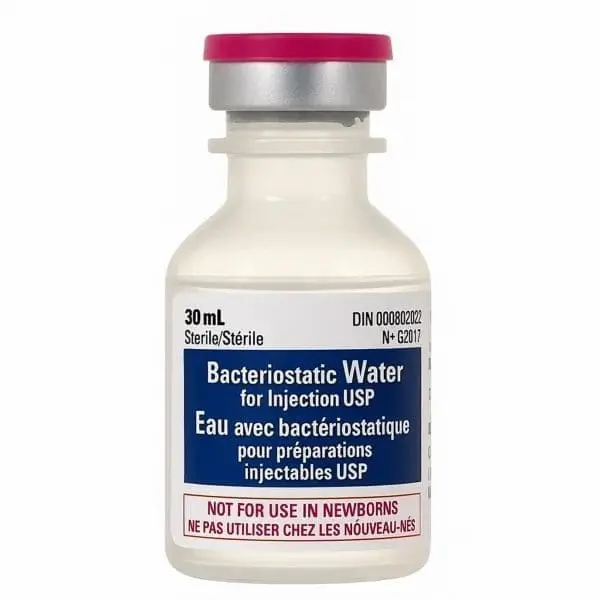 Pfizer Bac Water 30ml$24 CAD
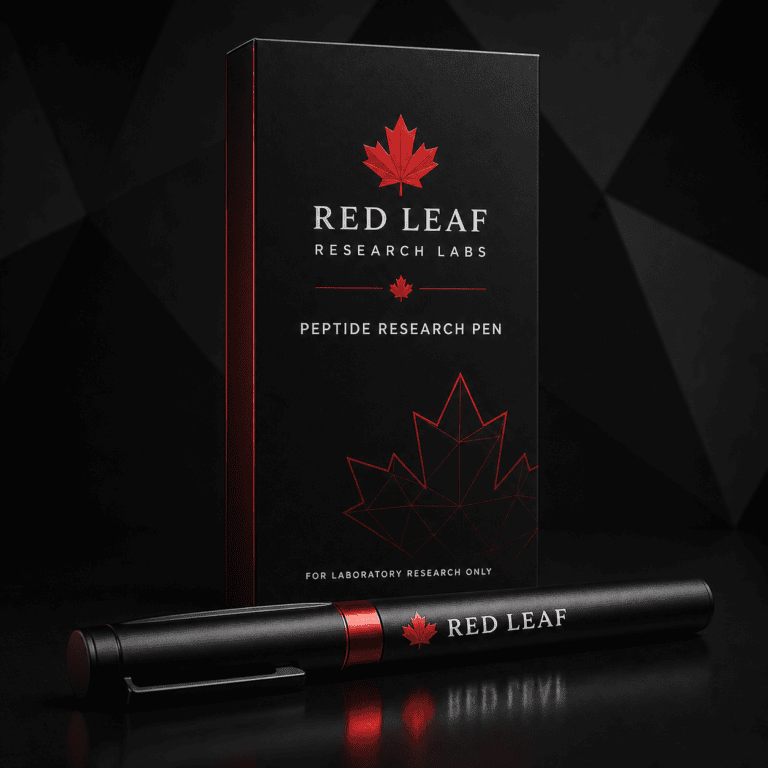 Research Pen Add-On$99 CAD
Common questions
Can you take retatrutide without a gallbladder?
Nothing in the published label for the closest approved drug in this family bars it. It lists two hard bars only. A thyroid cancer history, and a bad allergy to the drug. The review says the drug can be restarted after the gallbladder is taken out. Retatrutide itself is not approved anywhere, so it has no label of its own. Any real decision belongs with a doctor.
Does retatrutide cause gallstones?
Its phase 2 trial ran on 338 people. It logged three gallbladder events. One inflamed bag, two cases of stones. That trial was far too small to measure this. Across the wider drug family the risk is real. It rises most with high doses, long use and big weight loss. And retatrutide takes off more weight than the rest here.
Do GLP-1 drugs cause gallbladder problems?
Yes, by a measurable amount. Pooling 76 trials and 103,371 people, gallbladder and bile duct problems rose 37%. In weight-loss trials specifically the risk more than doubled. At low doses and short courses there was no rise at all.
How common is it really?
In the pooled semaglutide trials it came to roughly this. One extra gallbladder event per 90 to 100 people, per year. The approved label puts gallstones at 1.6% on the drug. Placebo was 0.7%.
Can fast weight loss cause gallstones on its own?
Yes, and most pages skip this part. A Swedish study followed 6,640 people. No weight-loss drug at all. The very low calorie group was 3.4 times more likely to need hospital care for a stone. They had lost just 3 kg more in the year.
Does a low fat diet help or hurt?
The trial data says it hurts. Across 13 proper trials, higher fat diets made 91% fewer stones than low fat ones. Fat is the signal that makes the gallbladder empty. Cut it to almost nothing and the bile just sits there.
What about the drug used to prevent stones?
Ursodiol cut new stones by 67% across 13 trials, and by 83% in the diet-only trials. Nine people treated, one stone case stopped. It is doctor-only. We do not sell it. Nothing here is a suggestion to use it.
How do I tell a gallbladder attack from normal side effects?
Feeling sick is the top side effect of every drug here. So that alone tells you nothing. The difference is pain. Steady pain in the upper right belly, often after a meal. It can spread to the right shoulder. Fever or yellowing means see someone now.
Why do these drugs affect the gallbladder at all?
They lower a gut signal called CCK, which is what tells the gallbladder to squeeze. They also shift how bile salts recycle. That leaves bile holding more cholesterol than it can carry. Thicker bile, weaker squeeze.
Is any of this approved for human use?
No. Retatrutide and tirzepatide are sold here as lab research material only. They are not approved for treatment, injection, ingestion or any human or animal use. Nothing on this page is medical advice.
Bottom line
- The risk is real and small. 37% higher across 76 trials. More than double in the weight-loss trials.
- Speed matters more than the drug. A 3 kg difference in a year tripled the risk with no drug in it.
- Retatrutide has not been measured for this. Three events in a 338-person trial tells you nothing either way.
- No gallbladder is not a bar. The label’s only hard bars are a thyroid cancer history and a serious allergy.
- Existing stones are the real caution. That is the case where these drugs get stopped.
- Very low fat crash diets are the worst version. Thick bile and nothing telling the bag to empty.
The useful things here are a pooled study from 2022. A diet study from Sweden. And a 2015 look at stopping stones. The newest compound is the part still being worked out.
Other guides on this site
Retatrutide side effects
What the trials reported, without turning it into advice.
What retatrutide does
Three receptors, appetite, fat and the trial numbers.
Retatrutide and knee pain
Why losing weight changes knee load, and where BPC-157 stops.
Retatrutide vs Ozempic
Three receptors against one, on the published numbers.
Sema vs tirze vs reta
One, two and three receptors, side by side.
Sulphur burps and gut upset
The gut side effects people report.
Research material with outside lab reports. Each one links to the testing lab’s own page, so you can check it yourself. Free express shipping over $250.
Sources
- He L, et al. Gallbladder and biliary diseases with GLP-1 receptor agonists. JAMA Internal Medicine, March 2022. 76 trials, 103,371 people.
- Ukkonen M, et al. Gallbladder-related adverse events with semaglutide 2.4mg: pooled STEP trials. Diabetes, Obesity and Metabolism, 2026.
- Johansson K, et al. Symptomatic gallstones and cholecystectomy after a very-low-calorie diet. International Journal of Obesity, 2013.
- Stokes CS, et al. Ursodeoxycholic acid and diets higher in fat prevent gallbladder stones during weight loss. Clinical Gastroenterology and Hepatology, 2015. 13 trials, 1,836 people.
- Ramírez-Mejía MM, et al. GLP-1 receptor agonists and gallbladder disease risk. Therapeutic Advances in Endocrinology and Metabolism, 2025.
- Jastreboff AM, et al. Triple-hormone-receptor agonist retatrutide for obesity, a phase 2 trial. New England Journal of Medicine, 2023. 338 people.
- TRIUMPH-4 topline results, reported December 2025. 445 people, 68 weeks.
- Semaglutide 2.4mg prescribing information, contraindications and warnings sections.