Owned and operated by a cf veteran

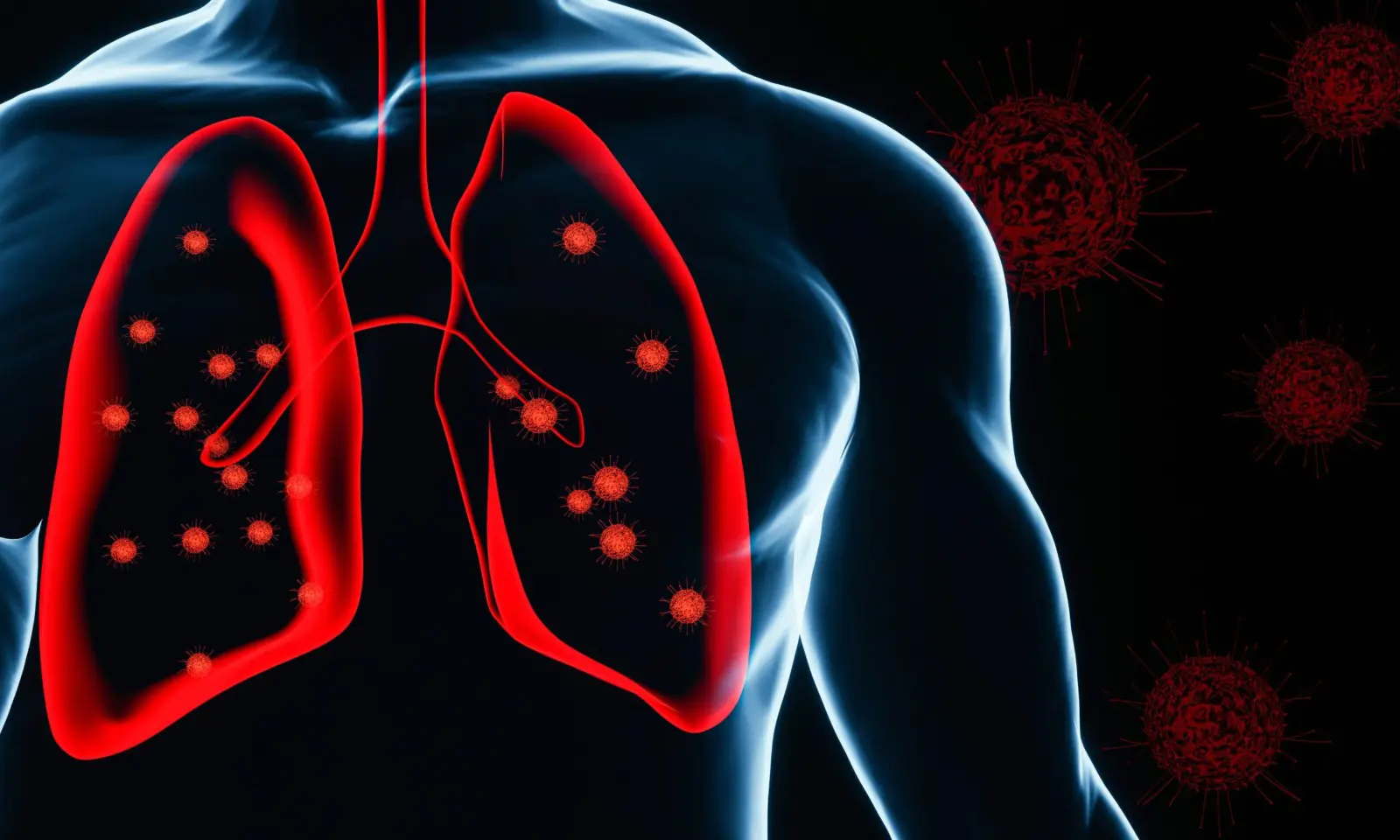
Smoke, lungs and peptides. What the one real lung paper did. Why tobacco and cannabis do different damage. And the only thing here with hard numbers behind it.
- 28 vs 62 mL lost per year, quitters vs smokers
- 0 human lung trials for any peptide here
- In a dish is where the GHK lung work stops
- Lot-tested with outside lab reports
No peptide has been shown to repair a smoker’s lungs. Not one. The paper everyone points to is real, but it is a dish experiment. In 2012 a team found a 127-gene pattern in damaged lung tissue. They searched a database for a compound that might flip it and GHK came up. Then they tested GHK on lung cells in a dish for 48 hours. That is where it stopped. No animals. No people. Nobody has taken it further in the 14 years since. Tobacco and cannabis also do different things, which surprises people. Tobacco narrows your airways over time. Cannabis brings cough and phlegm but has not been shown to cause that same narrowing. The only lever with hard human numbers is stopping. Quitters lose about 28 mL of lung capacity a year. People who keep smoking lose about 62 mL. That gap is the whole story.
- What smoke does to a lung
- The one real peptide paper
- The other peptides people name
- What quitting is measured to do
- The part nobody tells you
- Cannabis is not tobacco
- Why “lung detox” is a myth
- Peptides against quitting, side by side
- What goes wrong in this area
- What to check before you buy
- Common questions
- Bottom line
- Other guides on this site
What smoke does to a lung
Your lungs are not one big bag. They end in about 300 million tiny sacs. Each one is thinner than tissue paper.
Those sacs are where oxygen crosses into your blood. Spread them flat and they would cover most of a tennis court. All of that is packed inside your chest.
The two kinds of damage
Smoke does harm in two separate ways.
The first is to the tubes. Your airways get swollen and clogged. They make more mucus. The tiny hairs that sweep that mucus out get flattened. That is the cough.
The second is to the sacs themselves. The walls between them break down. Many small sacs turn into a few big ones. Less surface, less oxygen crossing. That is emphysema.
The second kind does not grow back. A broken sac wall is gone. Your body does not build new ones.
That matters for everything that follows. Hold on to it.
The hairs can recover
There is better news on the tubes. Those tiny sweeping hairs are called cilia. They get flattened by smoke, not destroyed.
Stop the smoke and they stand back up over weeks and months. That is why people cough more for a while after quitting. The sweeping system switches back on and starts clearing what was stuck.
So one kind of damage can ease. The other cannot. Any honest page has to keep those two apart.
The one real peptide paper
This is the section that matters. Almost every page that quotes it leaves out the important part.
In 2012 a team published a study in Genome Medicine. Campbell and co-workers. It is a good piece of work.
What they actually did
They took 64 tissue samples from 8 lungs. Six of those lungs came from people with severe COPD who were getting a transplant. Two came from organ donors.
They scanned each region for how badly destroyed it was. Then they looked at which genes were switched up or down in the worst areas.
They found a pattern of 127 genes. Genes for inflammation were up. Genes for tissue repair were down.
Then they did something clever. They searched a database of compounds, looking for anything that pushed those same genes the opposite way.
GHK came up. A tiny three-part peptide: glycine, histidine, lysine.
And then what
Here is the part that gets dropped.
They took lung cells from COPD patients and put them in a dish. They added GHK at 10 nanomolar. They left it 48 hours.
The cells did behave better. They organised their internal structure. They pulled on a collagen gel the way healthy cells do. The COPD cells had stopped doing that.
That is the entire GHK experiment. Cells in a dish, two days.
No mice. No people. No breathing measured. Nothing given to anything with lungs.
The authors said so themselves. Their own write-up calls for more work. They wanted to know if flipping that gene pattern changes how the disease goes. Nobody found out.
The other peptides people name
Three others come up in this conversation. Here is where each one really sits.
| Compound | Lung research that exists | Human lung trials |
|---|---|---|
| GHK-Cu | One 2012 study, cells in a dish | None |
| TB-500 (thymosin beta-4) | Mouse lung injury and scarring models | None |
| BPC-157 | Animal work on soft tissue, little on lung | None |
| Thymosin alpha-1 | Immune work, used in some countries | Not for smoking damage |
The TB-500 lung studies are worth a word. Mice were given a drug that scars the lungs, then given thymosin beta-4. The treated mice had less scarring and less inflammation.
That is a real finding in mice. It is also a very different thing from a human lung with thirty years of smoke in it.
Nobody has bridged that gap. Not for any of them.
What quitting is measured to do
Now the part with real numbers behind it.
Everyone loses lung capacity with age. That is normal. You peak in your twenties and drift down from there.
Smoking speeds that drift up. The question is by how much, and what happens when you stop.
The study that answered it
The Lung Health Study followed thousands of smokers for years. It measured how much air each person could blow out in one second. Over and over, year after year.
That measure has a name. It is called FEV1. Think of it as how much punch your lungs still have.
| Group | Lung capacity lost per year |
|---|---|
| Stayed quit | 28 mL |
| Quit and started again, on and off | 48 mL |
| Kept smoking | 62 mL |
Look at the top and bottom rows. Sustained quitters lost less than half as much per year as people who kept going.
Over ten years that is a gap of roughly 340 mL. Over twenty, close to 700.
The middle row is the interesting one
People who quit and started again and quit again landed at 48 mL. Better than smoking through. Worse than stopping for good.
So the benefit scales. Every stretch off counts for something. But the full benefit needs the full stop.
What that is not
Read the table carefully. Nobody went up. Quitting slowed the loss. It did not put back what was gone.
That fits what happens in the tissue. The airways calm down and the tiny hairs recover. The broken sac walls stay broken.
So the honest framing is this. Quitting protects what you still have. It is the strongest thing measured here, by a wide margin. And it still does not rebuild a lung.
The part nobody tells you
Here is a finding that surprises people, including people who quit twenty years ago.
A large pooled analysis in the United States brought together several long-running heart and lung studies. Tens of thousands of adults, followed for decades, with breathing measured repeatedly.
They compared former smokers to people who never smoked at all.
The finding
Never-smokers lost about 31 mL a year.
Former smokers lost more than that. And here is the part that stings. They were still losing more than never-smokers more than thirty years after their last cigarette.
The gap did shrink over time. It did not close.
The other half of that study
They also looked at light smoking. Five cigarettes a day or fewer.
Those people lost an extra 7.65 mL a year on top of the normal rate. That is well over half the extra loss seen in people smoking 30 or more a day.
Five a day is not a little version of the damage. It is most of it.
Why this belongs on a peptide page
Because this is exactly where the hope comes from.
Someone quits. Years pass. They still get short of breath on stairs. They go looking for something that will finish the job that quitting started.
That search is completely reasonable. The problem is what is waiting at the end of it. A dish experiment from 2012 and a lot of confident marketing.
Cannabis is not tobacco
Cannabis is legal in Canada, so this question comes up plainly and deserves a plain answer.
The short version: the research says cannabis smoke does one kind of damage and not the other.
What the review found
A 2016 review pulled together 19 studies on cannabis and lung function.
| What was looked at | What the studies showed |
|---|---|
| Cough, phlegm, wheeze | Clearly higher, up to about 3 times |
| Chronic bronchitis symptoms | Higher in regular users |
| Lasting airway narrowing | Not shown |
| COPD | Not shown |
| Total lung volume | Slightly higher than controls |
So the symptoms are real. Regular cannabis smokers cough more. They bring up more phlegm. They wheeze more than people who do not smoke it.
But COPD is defined by one thing. An airway that narrows and stays narrowed. That did not show up in the pooled data.
The odd result at the bottom
That last row catches people out. Cannabis smokers measured a bit more total lung volume than controls. Around 36 to 59 mL more.
Nobody thinks cannabis grows lung. The likely explanation is how it gets smoked. Deeper pulls, held longer. That trains the muscles that pull air in, and it shows up on the test.
A bigger reading on one test is not a healthier lung. It is a different breathing habit showing up in the numbers.
Where it gets muddy
Two honest caveats.
First, most cannabis smokers in those studies also smoked tobacco. Separating the two is hard, and the reviewers said so.
Second, joints without filters, held deep, deliver more tar per puff. The overall exposure is usually far lower because the amount smoked is far lower. Someone who smokes cannabis heavily for decades is not well covered by the current data.
And none of this touches vaping or dabbing. Those are newer, and the long-term lung research simply does not exist yet.
Why “lung detox” is a myth
Search anything about smoking and lungs and you will hit this phrase within seconds. It is worth taking apart.
There is nothing to flush
People picture tar coating the inside of the lung. Like grease in a pan, waiting to be washed out.
That is not what happens. Smoke particles get caught in mucus. Those tiny hairs sweep them up and out. Some get eaten by immune cells. Some chemicals cross into the blood. The liver then deals with those. The liver is the organ that does detox work.
The damage that stays is not a deposit. It is changed tissue. Broken sac walls, thickened airway lining, scarring.
You cannot flush a structural change. There is nothing sitting there to rinse away.
What the products actually do
Most lung detox supplements contain things that thin mucus or calm irritation. NAC, mullein, ginger, turmeric.
Some of those have real uses. NAC is used in hospitals for other reasons and does loosen mucus. But loosening mucus is housekeeping. It is not repair.
If you cough up more for a few days, that is the sweeping system doing its job. Which is the same thing that happens when you simply stop smoking, for free.
Where peptides fit in this picture
Peptide sellers use softer words. Regeneration. Tissue repair. Cellular renewal.
The claim underneath is the same one. That something you take can undo structural damage.
For lungs, the evidence for that claim is a 48-hour dish experiment and some mice. That is it.
Peptides against quitting, side by side
One table, and the gap is hard to miss.
| GHK-Cu for lungs | Stopping smoking | |
|---|---|---|
| Biggest human study | None | Thousands, followed for years |
| What was measured | Cell behaviour in a dish | Actual breathing, yearly |
| Effect on lung decline | Never measured | 62 mL down to 28 mL a year |
| Animal work | None for lung | Not needed |
| Most recent research | 2012 | Ongoing |
| Approval status | Not approved anywhere | Standard medical advice |
That is not an argument that GHK does nothing. The dish result was real and it was interesting.
It says nobody has done the work to find out whether it matters in a person. Fourteen years on.
The other column has been measured to death, in real people, breathing.
What goes wrong in this area
The noise around lungs and peptides follows a few clear patterns.
Quoting the 2012 study without the words “in a dish”
This is the big one. The paper is described as showing GHK reverses emphysema gene patterns. True. In cells, over 48 hours, in a lab. Leave out those six words and it sounds like a treatment.
Turning mouse data into human promises
The TB-500 lung work is in mice given a scarring drug. That is a model of one specific disease process. It is not thirty years of cigarette smoke, and the two are not interchangeable.
Treating both kinds of damage as one
Your airways can calm down. Your sacs cannot rebuild. Pages that promise lung repair never separate those, because separating them kills the pitch.
Selling “detox” for something that is not a deposit
Covered above. If the damage is structural, there is nothing to flush.
Using the word regenerate loosely
Regenerate means new tissue where old tissue was lost. No published work shows any peptide doing that in a human lung. If a page uses that word, ask what study it points at. Then read what that study did.
Not mentioning that the trail went cold
A promising 2012 result with no follow-up in fourteen years is a fact about the field. Any page that quotes the study and skips that is choosing what you get to know.
What to check before you buy
If you are buying research material anyway, this part is about the material itself.
A test sheet you can check
Ask for the lab report for the lot you are getting. Not a sample sheet. Not one with no date on it. The batch number on the vial should match the sheet.
Better still, it should link to the testing lab’s own page. Then you can check the lab really issued it. A PDF sent by the seller proves nothing on its own.
Purity, and what else is in there
GHK is three building blocks long. Short chains are easy to get slightly wrong and impossible to spot by eye.
Purity is the headline number. Mass checks matter too. They confirm the chain is the right one and not a near neighbour. For copper forms, the copper content is its own question.
Storage and shipping
These arrive as freeze-dried powder. Dry, they are stable. Mixed, much less so.
Ask how it ships and how it is kept before it ships. A parcel sitting in a hot vehicle in July is a real thing in Canada.
Claims that should stop you
If a seller tells you what this will do to your lungs, they have stepped past what it is.
Some claim lung repair. Some claim regeneration. Some say it reverses smoking damage. No published human study has shown any of that. A seller willing to say that is cutting corners somewhere you cannot see.
 GHK-Cu (100mg)$64.99 CAD
 TB-500 (10mg)$84.99 CAD
 BPC-157 (10mg)$75 CAD
 Thymosin Alpha-1 (10mg)$88 CAD
 Bacteriostatic Water$10 CAD
 Research Pen Add-On$99 CAD
Common questions
Can peptides repair lungs damaged by smoking?
No published study has shown that in a person. The one lung paper people point to is from 2012. It tested GHK on cells in a dish for 48 hours. No animals. No people. Nobody has run the human trial in the fourteen years since.
What did the GHK lung study actually find?
A 2012 team looked at 64 tissue samples from 8 lungs. They found a 127-gene pattern tied to lung destruction. They searched a database for a compound that pushed those genes the other way and GHK came up. Then they added GHK to lung cells in a dish. The cells organised better and pulled on a collagen gel more like healthy cells. That is the whole experiment.
Does quitting smoking actually help, or is the damage done?
It helps a lot. In the Lung Health Study, people who stayed quit lost about 28 mL of lung capacity a year. People who kept smoking lost about 62 mL. Less than half the loss. It slows the decline rather than putting anything back.
Do lungs go back to normal after quitting?
Not all the way. One large pooled analysis followed former smokers for decades. They were still losing lung capacity faster than never-smokers. Thirty years after quitting. The gap shrank but never closed.
Is smoking cannabis as bad for lungs as tobacco?
The research says it does different damage. A 2016 review pooled 19 studies. Cannabis clearly raised cough, phlegm and wheeze. By up to about three times. But it did not show the lasting airway narrowing that defines COPD. Total lung volume even measured slightly higher, which is likely the deep breath-holds showing up on the test.
Does cannabis cause COPD?
The pooled data has not shown it. That is not the same as harmless. Symptoms were clearly raised. And most people in those studies smoked tobacco too, which makes the two hard to pull apart.
Does a lung detox work?
There is nothing sitting in there to flush. Smoke particles get swept out in mucus. Immune cells take up the rest. The chemicals that cross into blood get handled by the liver. What stays is changed tissue, not a deposit. Mucus thinners can loosen phlegm. That is housekeeping, not repair.
What about TB-500 for lungs?
The lung work is in mice. They were given a drug that scars the lungs. Then they were given thymosin beta-4. The treated mice had less scarring. Real finding, in mice, for a different kind of damage. No human lung trials.
Is light smoking much safer?
Less than people assume. One large pooled analysis looked at light smokers. People on five a day or fewer still lost an extra 7.65 mL a year. That is well over half the extra loss seen at 30 or more a day.
Are any of these approved for lung use?
No. GHK-Cu, TB-500, BPC-157 and thymosin alpha-1 are sold here as lab research material. That is all. Not for injection. Not for any human or animal use. Nothing on this page is medical advice.
Bottom line
- One lung paper exists, and it stops in a dish. GHK on cells, 10 nanomolar, 48 hours, 2012.
- Nobody followed it up. Fourteen years, no animal study, no human trial.
- Two kinds of damage, not one. Airways can calm down. Broken air sacs do not grow back.
- Quitting is the measured lever. 62 mL a year down to 28 mL a year.
- Even that does not reset you. Former smokers still decline faster than never-smokers thirty years on.
- Five a day is not a light version. It carries over half the extra loss of heavy smoking.
- Cannabis is a different picture. More cough and phlegm, no shown airway narrowing, and much thinner long-term data.
- Detox is the wrong word. You cannot flush a structural change.
Say you smoked for twenty years and stopped last spring. The strongest thing on this page has already happened. Nothing in a vial has been shown to add to it.
Other guides on this site
GHK-Cu guide
The copper peptide, from Cleopatra to the current data.
BPC-157 and TB-500
What the repair-peptide pair has behind it, and what it does not.
DSIP and shift work
Sleep, night shifts, and the test most people never get.
Peptide side effects
What gets reported, across the categories we stock.
Peptides, start here
The plain-English beginner’s guide to the whole category.
Checking a supplier
The ten-point check for any Canadian peptide seller.
Research material with outside lab reports. Each one links to the testing lab’s own page, so you can check it yourself. Free express shipping over $250.
Sources
- Campbell JD, et al. A gene expression signature of emphysema-related lung destruction and its reversal by the tripeptide GHK. Genome Medicine, 2012. 64 samples from 8 lungs; GHK tested on human lung fibroblasts at 10 nM for 48 hours.
- Anthonisen NR, et al. Smoking and lung function of Lung Health Study participants after 11 years. American Journal of Respiratory and Critical Care Medicine, 2002. Sustained quitters 28 mL/year, continuing smokers 62 mL/year.
- Oelsner EC, et al. Lung function decline in former smokers and low-intensity current smokers: a pooled analysis of US cohorts. The Lancet Respiratory Medicine, 2020. Excess decline persisted more than 30 years after quitting.
- Ribeiro LIG, Ind PW. Effect of cannabis smoking on lung function and respiratory symptoms: a structured literature review. npj Primary Care Respiratory Medicine, 2016. 19 studies.
- Sosne G, et al. Thymosin beta-4 and lung injury models. Preclinical work in mice, bleomycin and LPS models.