Owned and operated by a cf veteran


Ordering research peptides in Canada in 2026 — what to verify, what it costs, and where most buyers go wrong.
- Documentation first, price second
- Lot-matched COAs
- Canadian fulfilment
- Records you can keep
Finding a vial is the easy part. The question that matters is whether you can prove what is in it: a lab report tied to your batch, a measured mass against the label, a supplier with a real identity, and paperwork you can file. Everything else — price, packaging, promotions — is downstream of that.
- What peptides are in a research context
- The Canadian landscape in 2026
- Research-use-only vs. therapeutic use
- What to look for before choosing a peptide supplier
- Importing peptides vs. buying from a Canadian supplier
- How to read a peptide product page
- Product categories researchers commonly compare
- A practical ordering checklist
- Red flags when buying peptides online
- Handling, storage, and receiving best practices
- FAQ
- Final thoughts
For Canadian researchers, ordering peptides in 2026 is not just a question of finding a vial, comparing prices, and checking out. The more important questions are: What is the intended use? Is the product clearly sold for research only? Is there batch-level documentation? Does the supplier communicate limits clearly? And are you operating within your institutional, provincial, and federal requirements?
This guide explains how to evaluate research peptide suppliers, what to look for before placing an order, and how to approach product pages responsibly. Throughout this article, terms like: buy peptides Canada, peptides for sale Canada, and peptides online Canada” refer only to qualified, lawful, research-use purchasing. They do not refer to self-treatment, injection, ingestion, veterinary administration, cosmetic use on clients, or any other human or animal use.
Health Canada issued a public advisory on April 9, 2026 warning consumers about unauthorized injectable peptide drugs, noting that peptides are generally regulated as prescription drugs in Canada and that unauthorized drug products have not been assessed for safety, efficacy, or quality. Health Canada also warns that a “For Research Use Only” label does not automatically make a product legal or exempt from regulatory requirements. (recalls-rappels.canada.ca)
What peptides are in a research context
Peptides are short chains of amino acids used in many areas of scientific research, including receptor studies, cellular signalling models, analytical method development, formulation work, stability testing, and other controlled laboratory applications. In a legitimate research setting, a peptide is treated as a research material with defined identity, purity, lot information, handling requirements, and documentation.
That distinction matters. A research peptide is not the same thing as an approved medication. A product page, certificate of analysis, or purity claim does not make a peptide appropriate for human use. If the goal is medical treatment, the correct pathway is a licensed healthcare professional and, where applicable, a licensed pharmacy dispensing an authorized prescription product.
Health Canada explains that health products authorized for sale in Canada are reviewed before sale, and authorized drugs and natural health products carry identifiers such as a DIN, NPN, or DIN-HM. (canada.ca) That is very different from a research-only compound sold for laboratory work.
The Canadian landscape in 2026
Interest in peptides has grown quickly, partly because online content often discusses them in relation to wellness, bodybuilding, weight management, skin care, recovery, longevity, and other consumer-facing topics. That online attention has created confusion. Some buyers assume that if a product is easy to find online, it is automatically permitted for personal use. That is not a safe assumption.
Health Canada has specifically warned about online peptide products promoted for anti-aging, weight loss, bodybuilding, athletic performance, injury recovery, sleep, mental focus, and general wellness, and it advises consumers not to buy or use unauthorized drugs. (recalls-rappels.canada.ca) For this reason, responsible peptide buying in Canada starts with a clear boundary: research products are for qualified research professionals and controlled non-clinical work only.
If you are searching phrases like buy peptides canada or peptides online canada, make sure your intent matches that boundary. A reputable research supplier should not present peptides as a shortcut to medical treatment, and should not provide dosing, self-administration instructions, or personal-use claims.
Research-use-only vs. therapeutic use
A research-use-only peptide is supplied for laboratory investigation. It may be used in properly designed in-vitro studies, assay development, analytical comparison, or other authorized research protocols. It should be labelled, documented, and handled as a lab material.
Therapeutic use is different. Therapeutic use means a product is being used to diagnose, treat, mitigate, or prevent a disease or condition, or to affect body structure or function in a person or animal. In Canada, that can bring the product into drug regulation, prescription rules, pharmacy rules, import restrictions, and advertising limits.
Red Leaf Research Labs states on its product pages that its materials are for research use only and not for human or veterinary administration, and its site disclaimer says products are supplied in lyophilized powder form for research purposes only with no dosing instructions. (redleafpeptides.com) That kind of boundary should be visible before a buyer places an order.
What to look for before choosing a peptide supplier
When evaluating peptides for sale canada, avoid making your decision based on price alone. A lower price is not useful if the product identity is unclear, the documentation is incomplete, or the seller makes inappropriate health claims.
A stronger evaluation process includes the following checkpoints:
- Clear research-use positioning: The supplier should state that products are not for human or animal consumption, injection, therapeutic use, or cosmetic application on clients.
- Transparent product identity: Product pages should include the peptide name, format, amount, and, where relevant, sequence, molecular formula, CAS number, or other identifying details.
- Batch-level testing: Look for a certificate of analysis or other testing documentation tied to the batch or lot, not just a generic purity statement.
- Relevant analytical methods: Depending on the material, documentation may reference methods such as HPLC, LC-MS, mass confirmation, sterility-related testing, endotoxin testing, or other appropriate assays.
- Handling and storage guidance: A supplier should communicate storage expectations and shipping practices without drifting into human-use instructions.
- Canadian logistics: Domestic shipping can reduce some cross-border uncertainty, but it does not remove the need for proper use, documentation, and compliance.
- Professional communication: A credible supplier should be willing to answer product documentation questions while refusing to provide medical advice, dosing guidance, or personal-use recommendations.
Importing peptides vs. buying from a Canadian supplier
Ordering from outside Canada can introduce additional complications. Health Canada’s personal importation guidance explains that health products include prescription drugs, OTC medications, natural health products, veterinary products, medical devices, and other categories, and that non-compliant shipments may be seized or refused entry. (canada.ca)
The Canada Border Services Agency also assists Health Canada with enforcement for regulated goods and may detain and refer drugs, natural health products, and veterinary health products when requirements appear not to be met. (cbsa-asfc.gc.ca)
This is one reason many researchers prefer a Canadian research supplier: communication is easier, delivery may be faster, and there is less uncertainty than ordering from an unknown overseas website. However, buying from a Canadian supplier is not a loophole. The buyer still needs a legitimate research purpose, proper documentation, and compliance with applicable rules.
How to read a peptide product page
Before adding a research peptide to your cart, slow down and review the page as if you were documenting a lab procurement decision. A good product page should help you answer basic questions without making medical promises.
Ask yourself:
- What is the exact compound being offered?
- What amount or format is available?
- Is the product described as research use only?
- Is there a statement against human or veterinary administration?
- Is the product in stock, on backorder, or subject to changing availability?
- Is the supplier transparent about testing, purity, and handling?
- Does the page avoid therapeutic claims, personal-use instructions, and dosing language?
You can browse Red Leaf’s full research catalogue through the Shop All page. Product availability, formats, pricing, and documentation can change, so the product page should always be treated as the current source for order-specific details.
Product categories researchers commonly compare
Different research projects require different materials. The examples below are included to help qualified researchers navigate product pages, not to suggest personal use or clinical application.
For copper-peptide and formulation-related laboratory work, researchers may review GHK-Cu 100mg. Red Leaf’s page identifies it as a research and in-vitro laboratory product and states that it is not intended for human or animal consumption or use. (redleafpeptides.com)
For projects involving commonly studied peptide research materials, buyers may compare pages such as BPC-157. Any review of this type of product should remain within authorized lab use only, especially because Health Canada has included BPC-157 among examples of unauthorized injectable peptide drugs in its public advisory. (recalls-rappels.canada.ca)
For growth hormone-axis research models, researchers may review Tesamorelin. Red Leaf’s page states that the product is research use only and not for human or veterinary administration. (redleafpeptides.com)
For metabolic receptor pathway research, researchers may review Retatrutide. As with all research compounds, the page should be read through a compliance-first lens, and the product should not be interpreted as a consumer medication. Red Leaf’s Retatrutide page states that it is for laboratory research purposes only and not intended for human consumption. (redleafpeptides.com)
A practical ordering checklist
Before placing an order for research peptides online in Canada, use this checklist:
- Define the research purpose. Document the project, protocol, or analytical need before purchasing.
- Confirm authorization. Make sure you are permitted to acquire and handle the material under your lab, institution, business, or professional requirements.
- Review product documentation. Check the product name, format, lot details, purity documentation, and any available COA.
- Avoid medical interpretation. Do not rely on social media claims, forums, or anecdotal reports as a basis for purchase or use.
- Confirm shipping expectations. Review delivery location, packaging, temperature considerations, and receiving procedures.
- Inspect on arrival. Check labels, condition, seals, and lot details before storage.
- Store appropriately. Follow the supplier’s storage guidance and your internal lab SOPs.
- Keep records. Save invoices, COAs, product pages, batch numbers, and internal receiving notes.
- Escalate uncertainties. If identity, condition, or documentation is unclear, do not proceed with research use until the issue is resolved.
Red flags when buying peptides online
Not every website that appears in a search result is suitable for research procurement. Health Canada warns that some online sellers may offer unauthorized products, sell products with wrong ingredients, ship counterfeit drugs, or provide products contaminated with dangerous additives or other substances. (canada.ca)
Be cautious if a seller:
- Promotes peptides as miracle cures or wellness shortcuts.
- Offers prescription-type products without a prescription or healthcare oversight.
- Provides dosing calculators or self-injection guidance for research products.
- Refuses to provide basic business contact information.
- Uses vague purity claims without batch documentation.
- Has product labels that do not match the website description.
- Avoids questions about COAs, lot numbers, or analytical testing.
- Claims that research-use labelling makes all uses automatically legal.
A legitimate research purchase should feel boring, documented, and compliance-focused. If the sales pitch feels like a personal health promise, that is a warning sign.
Handling, storage, and receiving best practices
Once a shipment arrives, treat it as a controlled research material. Log the delivery date, inspect the packaging, match the label to the order, and store it according to the product instructions and your internal SOPs. If cold-chain or temperature-sensitive handling is relevant, document package condition immediately upon receipt.
Do not improvise handling procedures from forums or social media. Do not use damaged, unlabelled, leaking, discoloured, or otherwise questionable materials. If there is a mismatch between the order, the label, and the COA, contact the supplier before proceeding.
Most importantly, do not convert research handling information into personal-use instructions. This guide intentionally does not provide dosing, reconstitution for administration, injection guidance, cycle planning, or therapeutic recommendations.
Our peptide calculator handles this arithmetic for you. Enter the vial size in mg and the water you added in mL, and it returns concentration and U-100 syringe units.
FAQ
Can anyone buy research peptides in Canada?
No. Research peptides should be purchased only by qualified buyers with a legitimate research purpose and the ability to handle the materials responsibly. Red Leaf’s site states that buyers must meet age-of-majority requirements and be licensed research professionals. (redleafpeptides.com)
Are research peptides the same as prescription peptide medications?
No. A research peptide is not an approved medication. Authorized drugs in Canada are assessed by Health Canada and carry an eight-digit DIN. If you need a medication, speak with a licensed healthcare professional and use a licensed pharmacy. (canada.ca)
Is it safer to buy peptides from a Canadian website?
A Canadian supplier may offer easier communication and domestic logistics, but location alone is not enough. You still need to evaluate intended use, product documentation, testing, labelling, compliance statements, and whether the supplier avoids inappropriate health claims.
What does buy peptides canada mean in this guide?
It means acquiring research-use peptide materials in Canada for authorized laboratory work. It does not mean buying peptides for self-administration, bodybuilding, weight loss, anti-aging, cosmetic treatment, veterinary use, or any other personal-use purpose.
Where can I compare Red Leaf product pages?
Start with the Red Leaf shop and review individual pages such as GHK-Cu 100mg, BPC-157, Tesamorelin, and Retatrutide. Always read the research-use disclaimer, documentation, and current product details before ordering.
Final thoughts
Buying research peptides in Canada in 2026 requires more than a quick search for peptides online canada. It requires a clear research purpose, careful supplier evaluation, batch-level documentation, responsible handling, and respect for the difference between laboratory materials and regulated health products.
If you are a qualified research professional looking for research-only materials, browse the Red Leaf Research Labs shop and review each product page carefully before placing an order. If your goal is treatment, wellness, performance, cosmetic use, or self-administration, do not use research peptides. Consult a licensed healthcare professional and follow the appropriate regulated pathway.
Disclaimer: This guide is for general educational and research procurement information only. It is not medical advice, legal advice, dosing guidance, or a recommendation for human or animal use. Always follow applicable laws, institutional policies, supplier terms, and professional standards.
Buying peptides in Canada is a growing area of interest for researchers. With the rapid expansion of the market, understanding how to buy peptides safely is crucial.
This comprehensive guide will explore where to find quality peptides for sale in Canada. We will discuss the importance of using reputable suppliers and the distinctions between research and therapeutic uses.
If you’re searching for peptides online in Canada, this article will provide you with essential information on making informed decisions.
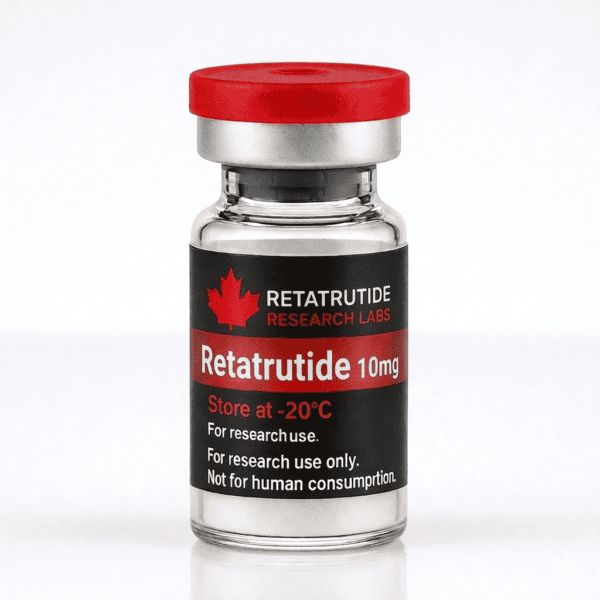 Retatrutide$79.99 CAD · research use only
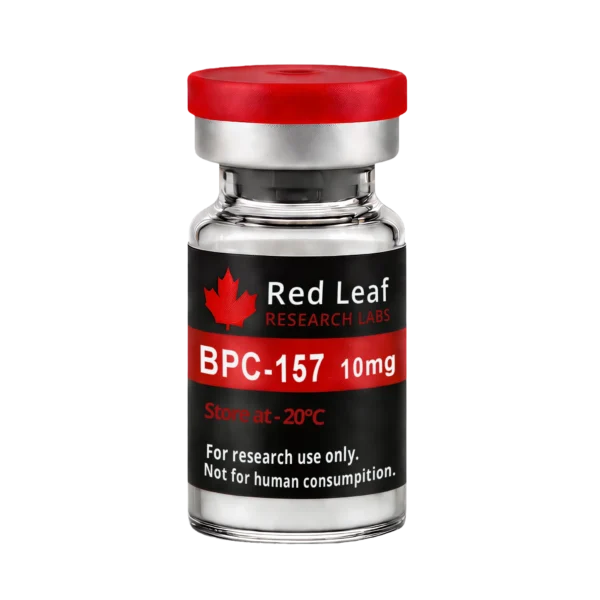 BPC-157 (10mg)$75 CAD · research use only
 GHK-Cu 100mg – 3ml Vial$64.99 CAD · research use only
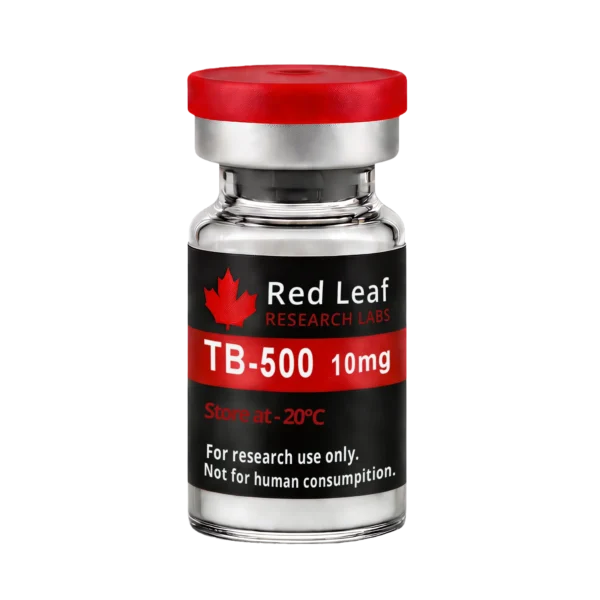 TB-500 (10mg)$84.99 CAD · research use only
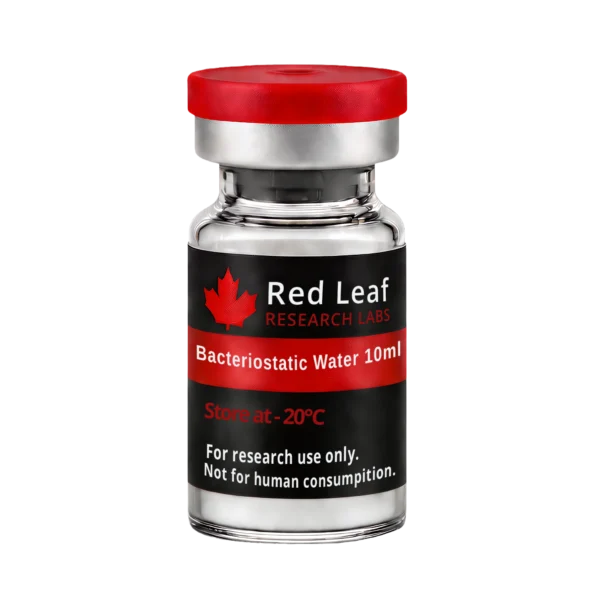 Bacteriostatic Water$10 CAD · research use only
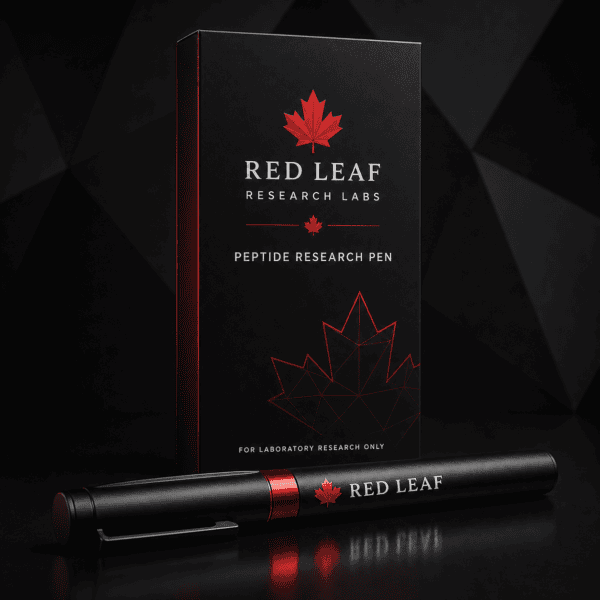 Peptide Pens Canada – Red Leaf Research Pen Add-On$99 CAD · research use only
Every product page carries its batch lab report with a verification link you can check at the testing laboratory, not just a PDF we host.
Browse the catalogue See the lab test sheetsResearch use only. Products sold by Red Leaf Research Labs are not approved by Health Canada for cosmetic application, therapeutic treatment, injection, ingestion, or any form of human or animal use. No claims are made regarding clinical outcomes, safety or efficacy. Pricing and stock are current at the time of publication and subject to change.