Owned and operated by Baba Kahn, a CF veteran


Peptide research moved fast in 2026. Here are five big updates, in plain words: retatrutide, tirzepatide, SS-31, MOTS-c and GHK-Cu. For each one, we explain what was tested, what was found, and what we still do not know.
- 5 peptides
- 2 big human trials
- 1 U.S. approval
- 2 early studies
In 2026, the biggest peptide news came from human trials. In one big trial, retatrutide beat semaglutide for weight loss (about 20% vs 9.4%). In another, tirzepatide did at least as well as dulaglutide at preventing heart attacks, strokes and heart deaths. SS-31 (elamipretide) is now a U.S.-approved drug for Barth syndrome, a rare disease. MOTS-c and GHK-Cu had small, early studies. None of this makes a research peptide approved for people in Canada.
Peptide research is moving forward in three big areas: weight and blood sugar, rare mitochondria diseases, and wound repair. If you search for peptides Canada news, start with one simple question: what did the study really show?
Some peptides now have results from large trials in people. Others only have small studies, animal tests or special lab gels. Each kind of study answers a different question.
This research update from Red Leaf Research Labs looks at five peptides: retatrutide, tirzepatide, SS-31, MOTS-c and GHK-Cu. For each one, we explain what changed, why it matters, and what is still unknown.
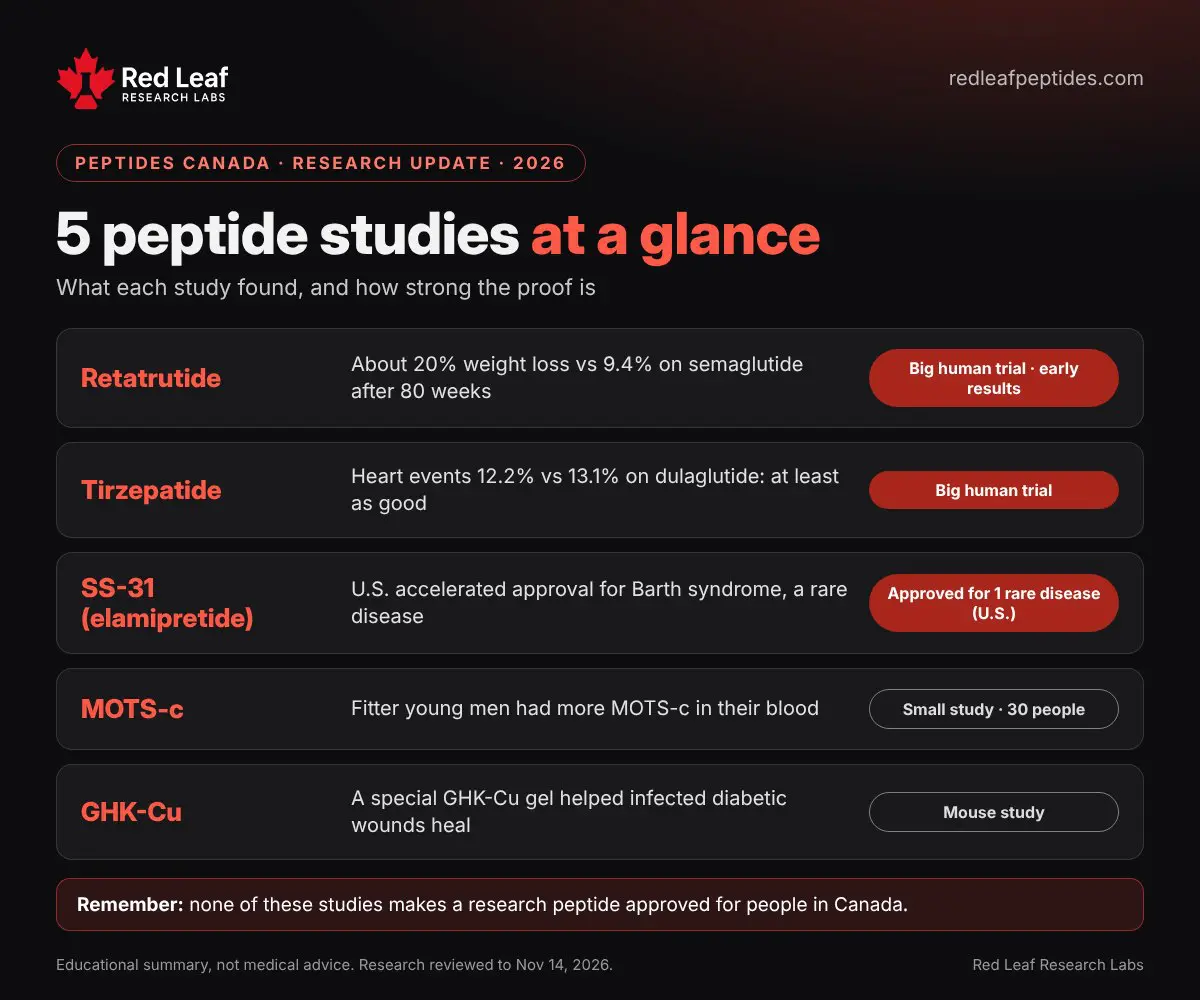
The strongest proof is at the top. The two bottom studies are early science.
What Counts as a Peptide Research Breakthrough?
A new study is not always a medical breakthrough. What matters is how the study was done. Who or what was tested? What was it compared with? What was measured?
Here are the main kinds of peptide studies, from weakest proof to strongest:
- Lab studies. Scientists test a molecule on cells, often in a dish.
- Animal studies. Scientists test it in living animals, like mice. This cannot prove it works in people.
- Watching people (observational studies). Scientists look for links. A link does not prove that one thing causes another.
- Randomized clinical trials. People are put into groups by chance, then the groups are compared. This is a fair test.
- Approvals. A regulator approves one exact product, for one use, in one country.
Each step up gives stronger proof. This article covers studies on four of the five steps.
This matters when you read about research peptides in Canada. A trial result is about the exact medicine that was tested. It does not show that a different research material is safe, works, or is the same thing.
1. Retatrutide Research: Retatrutide vs Semaglutide
Retatrutide is an experimental peptide. It turns on three hormone receptors at once: GIP, GLP-1 and glucagon. Scientists are interested because it hits all three targets with one molecule.
On October 28, 2026, Eli Lilly shared early results from a big Phase 3 trial called TRANSCEND-T2D-2. It compared retatrutide with semaglutide 2 mg in 1,298 adults with type 2 diabetes. [1]
Both retatrutide doses led to about twice as much weight loss as semaglutide 2 mg.
- Weight. After 80 weeks, people on retatrutide lost 19.5% (9 mg) or 20.9% (12 mg) of their body weight on average. People on semaglutide lost 9.4%.
- Blood sugar. A1C is a blood test that shows average blood sugar over about 3 months. It dropped by 2.2 points with both retatrutide doses, compared with 1.8 points with semaglutide.
- Side effects. Stomach and gut problems were the most common. More people stopped retatrutide because of side effects (4.8% and 7.9%) than stopped semaglutide (2.7%).
Why does this matter? Retatrutide is now being tested head to head against a well-known treatment, in a large trial.
But these numbers come from the company’s early summary. The full report still needs to be shared and checked by other scientists. Retatrutide is still experimental. This news does not mean it is approved anywhere.
2. Tirzepatide Studies: The Big Heart Trial
Tirzepatide turns on two hormone receptors: GIP and GLP-1. Its research now asks bigger questions than weight loss. One big question is: does it protect the heart?
The SURPASS-CVOT trial compared tirzepatide with another medicine, dulaglutide. It included 13,299 adults with type 2 diabetes and heart disease. People were followed for about 4 years. [2]
The red dots show heart deaths, heart attacks or strokes. The two groups were very close.
The main result counted heart deaths, heart attacks and strokes together. These happened to 12.2% of people on tirzepatide and 13.1% of people on dulaglutide.
The trial showed that tirzepatide was “noninferior.” That is a science word. It means tirzepatide did at least as well as dulaglutide, by a goal set before the study began. It did not prove that tirzepatide was better.
This is an important point. A slightly lower number is not proof that one medicine beats another.
For people reading about GLP-1 peptides in Canada, this trial shows a bigger trend. Studies now look at the heart, not just blood sugar and weight.
3. SS-31 Peptide (Elamipretide): A First for a Rare Disease
SS-31 is also called elamipretide. Scientists study it because it affects mitochondria. Mitochondria are tiny power plants inside our cells.
On September 19, 2025, the U.S. FDA gave accelerated approval to Forzinity. Forzinity is a prescription form of elamipretide. It is approved to improve muscle strength in people with Barth syndrome who weigh at least 30 kg. [3]
Barth syndrome is a rare disease of the mitochondria. The FDA based its decision on better strength in the knee muscles. The FDA thinks this is likely to mean a real benefit for patients.
- It is not final. Another trial must confirm that the stronger muscles lead to real benefit.
- The proof is limited. In the main randomized part of the study, it did not beat placebo on a walking test or a tiredness score. The strength gains were seen later, when everyone got the drug.
- The approval is narrow. It is for one product and one rare disease. It does not make SS-31 an anti-aging treatment, and it does not prove benefits for healthy people.
The FDA decision also only covers the approved prescription product, for that use. It does not approve research vials from suppliers. It does not show that they are the same. And it does not decide anything in Canada.
4. MOTS-c Peptide Research: Fitness and Body Signals
MOTS-c is a small peptide made by our own mitochondria. Scientists study how it links to energy use, cell stress and exercise.
A study published in October 2026 measured MOTS-c in the blood of 30 healthy young men. There were three groups of 10: elite track and field athletes, active men, and men who did not exercise (sedentary). [4]
The fitter the group, the higher its average MOTS-c level.
- More active, more MOTS-c. The athletes had the highest average level and the sedentary men had the lowest.
- Linked to fitness. Men with more MOTS-c tended to have higher VO2max. VO2max is a measure of how well the body uses oxygen during hard exercise.
- Linked to antioxidant tests. Higher MOTS-c went with higher SOD, a natural antioxidant enzyme. It also went with lower MDA, a sign of cell damage, after exercise.
But this study only took one snapshot of each person. Scientists call this a cross-sectional study. Nobody was given MOTS-c. The study did not test whether MOTS-c improves endurance, strength or recovery.
Here is the key idea. MOTS-c that the body makes on its own is one thing. MOTS-c given as a test treatment is another. Proof about one is not proof about the other.
5. GHK-Cu Research: A New Gel for Infected Diabetic Wounds
GHK-Cu is a small peptide that holds on to copper. Scientists study it for tissue repair and for new product designs.
A 2026 study in the journal Materials Today Bio tested a gel. The gel held GHK-Cu plus an enzyme called glucose oxidase, or GOX. The goal was to help infected wounds in diabetes heal. [5]
Germs feed on sugar, and wounds heal better with oxygen. The gel was designed to do both jobs.
The scientists tested the gel in the lab and in diabetic mice with infected wounds. They reported that it killed germs, helped the wounds heal, and helped new blood vessels grow.
Part of what is new is the gel itself. It mixes several parts that work together inside the wound.
These results do not apply to plain GHK-Cu powder, a skin cream or any other formula. They also do not show that the gel works on human diabetic wounds.
Research Peptides Canada: Why the Exact Product Matters
A peptide’s name is only one part of a study. This is true for every product you see when you search for peptides Canada.
The material in a study can be different in many ways: the formula, how it was made, how pure it is, how stable it is, and how it is delivered. A clinical trial may use a tightly controlled medicine. A lab study may use a special gel that nobody can buy.
When you read a research paper, ask these questions:
What was studied?
The exact molecule or formula.
Who or what?
Cells, animals or people.
Compared with what?
Placebo, another drug, or nothing.
What changed?
Which results got better, and which did not.
For how long?
Days, weeks, or years.
What were the risks?
Side effects and limits the authors reported.
The same care applies to lab reports. A certificate of analysis shows the tests done on one sample. It does not show that a product works. It does not make it the same as a medicine. And it does not make it approved for people.
You can see the test results for our listed research materials on our independent lab tests and certificates of analysis page.
Research materials in our catalogue
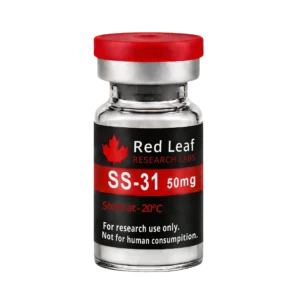
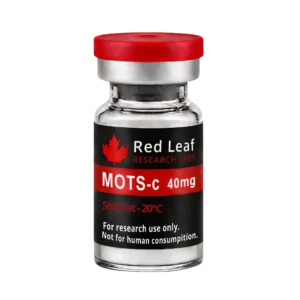
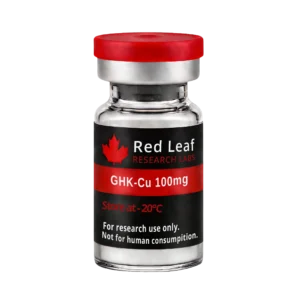
Red Leaf lists these compounds as research materials for lab use only. The studies above are not evidence for using them in people.
Peptides Canada Rules: Research Materials vs Approved Medicines
In Canada, rules must be checked on their own. News from other countries does not change them.
Health Canada explains that a product labelled “Research Use Only” is not approved for use in people. That label also does not free a product from Canada’s rules. [6]
In the same way, signing up a clinical trial is not an approval. And a U.S. FDA decision does not mean a product is approved in Canada.
Good science articles keep three things apart: the molecule being studied, the exact product used in a study, and any approved medicine.
Red Leaf Research Labs offers its research materials for lab research only. They are not for use in people or animals. The studies in this article should not be read as support for personal use of those materials.
For peptides Canada readers, 2026 brought real news. Retatrutide and tirzepatide have big human trials. SS-31 has a narrow U.S. approval for a rare disease. MOTS-c and GHK-Cu have early findings that raise new questions. Always ask what was tested, in whom, and against what. Then check the rules in Canada with Health Canada.
See our lab test reportsPeptide guide for beginnersMore Peptides Canada Guides
- Peptides in Canada: the rules and how to get them legally (2026)
- Peptide guide for beginners: the complete Canadian guide
- Comparison of semaglutide, tirzepatide and retatrutide
- SS-31 (elamipretide) research guide
- MOTS-c peptide: a plain-English guide for Canada
- GHK-Cu peptide in Canada: a simple guide
- Rusfertide and high red blood cells: what Canadian readers should know
Questions people ask
Which peptides had big research news in 2026?
Retatrutide and tirzepatide had large human trials. SS-31 (elamipretide) has a U.S. approval for one rare disease, Barth syndrome. MOTS-c and GHK-Cu had smaller, early studies. Those early studies did not show that giving them to people helps. [1,2,3,4,5]
Did retatrutide beat semaglutide?
In early results from one 80-week trial, people on retatrutide lost about 20% of their body weight on average. People on semaglutide 2 mg lost about 9.4%. The full report is not out yet, and retatrutide is not approved. [1]
Are research peptides the same as prescription peptide medicines?
No. Do not assume they are the same. A prescription medicine is checked as one exact product for one exact use. Having the same name, or a good purity test, does not make a research material meet those standards. [6]
What is the SS-31 peptide?
SS-31 is also called elamipretide. It is studied for how it affects mitochondria, the power plants inside cells. In 2025, the U.S. FDA gave accelerated approval to a product called Forzinity for Barth syndrome. [3]
Does a new peptide study prove that a peptide works?
It depends on what was tested. A cell test can show what a molecule does in a dish. An animal test can point to more research. Only good studies in people can show that something helps people. [6]
Has MOTS-c been shown to make athletes better?
No. The October 2026 study measured the MOTS-c that people already had in their blood. Nobody was given MOTS-c. So it cannot show that taking MOTS-c improves fitness. [4]
Is SS-31 an anti-aging treatment?
No. The FDA approval is for one product, Forzinity, for people with Barth syndrome who weigh at least 30 kg. It does not show any anti-aging benefit. [3]
How can Canadians follow peptide news the smart way?
Read the original study when you can. Check who was studied and what they were compared with. Read the limits, not just the results. Check approvals with Health Canada instead of trusting headlines. [6]
Sources
- Eli Lilly and Company. Lilly’s retatrutide delivered greater A1C reduction and more weight loss than semaglutide in a Phase 3 trial (TRANSCEND-T2D-2). October 28, 2026. View the news release
- Nicholls SJ, Pavo I, Bhatt DL, et al. Cardiovascular outcomes with tirzepatide versus dulaglutide in type 2 diabetes (SURPASS-CVOT). New England Journal of Medicine. 2025;393:2409–2420. View the paper
- U.S. Food and Drug Administration. Drug Trials Snapshots: Forzinity (elamipretide), approved September 19, 2025, for Barth syndrome. View on FDA.gov
- Associations of serum MOTS-c with exercise capacity and antioxidant markers in young males: a cross-sectional study. Antioxidants. 2026;15(10):1267. View the paper
- Copper peptide activated cascade catalysis for glucose regulation and hypoxia reversing in infected diabetic wound healing. Materials Today Bio. 2026;39:103396. View the paper
- Health Canada. Peptides: Research and clinical trials. View on Canada.ca
Educational research information only. This article does not give medical advice, dosing advice, or advice to use any product in people or animals. Findings apply only to the products, formulas, people and test conditions studied. Compounds sold by Red Leaf Research Labs are laboratory materials for in-vitro research only and are not approved for cosmetic, treatment, injection, ingestion or any human or animal use. Research reviewed up to November 14, 2026. Full wording on our legal terms page.