Owned and operated by a cf veteran


The red flags that separate a real Canadian research supplier from one that will sell you an unverified vial.
- Verify the batch, not the brand
- Purity is not sterility
- Domestic fulfilment
- Named, reachable business
The safest place to buy depends on what you are buying. Prescription or injectable peptide medications should come only from a licensed clinician and pharmacy. Research material is a different category, and there the test is documentation — a batch-matched third-party report you can verify at the testing laboratory, a measured fill quantity, and a supplier who will answer questions about both.
Quick answer: The safest place to buy peptides in Canada depends on the product. Prescription or injectable peptide medications should be obtained only through a pharmacy licensed by a Canadian provincial or territorial regulator, following an assessment and valid prescription from an authorized healthcare professional. Collagen peptide supplements can be purchased from established pharmacies, grocery stores and reputable Canadian retailers. Avoid unlicensed websites selling injectable or “research-use” peptides for personal use.
This article provides general consumer information and is not medical advice. It does not endorse the personal use of laboratory research products.
What are peptides?
Peptides are short chains of amino acids—the same building blocks that form proteins. However, the term “peptides” covers several very different product categories. A collagen powder sold as a food or supplement is fundamentally different from an injectable peptide drug or a laboratory reference material.
| Peptide category | Common purpose | Appropriate Canadian source |
|---|---|---|
| Prescription peptide medications | Treatment of specific medical conditions | A licensed Canadian pharmacy with a valid prescription |
| Injectable “wellness” or performance peptides | Often promoted for weight loss, muscle growth, tanning, recovery or anti-aging | Consult a licensed healthcare professional; do not buy unauthorized injectables |
| Collagen peptides | Food or supplement use | Established pharmacies, grocery stores and reputable retailers |
| Cosmetic peptides | Ingredients in creams and serums | Reputable pharmacy, skincare and beauty retailers |
| Laboratory research peptides | Controlled scientific research—not human use | Qualified scientific suppliers following institutional requirements |
Where to buy peptides in Canada safely
1. Prescription peptides: use a licensed Canadian pharmacy
If a peptide is intended to diagnose, treat or prevent a medical condition, start with a Canadian-licensed healthcare professional. If the treatment is appropriate, fill the prescription through a pharmacy licensed in its province or territory. This applies whether the pharmacy serves customers at a physical location or online.
A legitimate Canadian online pharmacy should:
- require a valid prescription when one is legally required;
- provide a Canadian street address and working telephone number;
- identify the pharmacy and the province or territory where it is licensed;
- provide access to a Canadian-licensed pharmacist;
- appear in the applicable pharmacy regulator’s public register; and
- dispense products authorized for sale in Canada.
Health Canada recommends avoiding websites that sell prescription drugs without a prescription, conceal their physical address or claim to offer miracle cures. Review Health Canada’s guidance on choosing a safe online pharmacy.
2. Collagen peptides: established Canadian retailers
Collagen peptides are widely available from pharmacies, grocery and warehouse stores, health-food retailers, brand-authorized Canadian websites and established online retailers with traceable contact information.
When comparing collagen peptides, consider:
- protein and collagen content per serving;
- serving size and total servings;
- source, such as bovine, marine or porcine collagen;
- added sweeteners, flavours and allergens;
- lot number, expiry date and storage instructions;
- seller reputation and return policy; and
- independent quality testing when the claim can be verified.
Depending on how a product is classified and marketed, an applicable licensed natural health product should display an eight-digit Natural Product Number (NPN). Consumers can check the Licensed Natural Health Products Database.
3. Cosmetic peptide products: reputable skincare sellers
Topical peptide serums and creams can be purchased from pharmacies, established beauty stores and authorized brand retailers. Look for a complete ingredient list, sealed packaging, a lot or batch number, clear manufacturer details, appropriate storage instructions and realistic cosmetic claims.
A topical cosmetic should not be treated as a substitute for medication prescribed to address a diagnosed condition.
4. Research peptides: laboratory use only
Products marked “research use only” or “not for human consumption” are not a safe workaround for obtaining an unapproved treatment. That wording does not establish that a product is sterile, accurately dosed or appropriate for injection.
Qualified researchers should obtain laboratory materials through their institution’s approved procurement and safety processes. Consumers should not buy research peptides for self-experimentation.
How to verify a peptide product in Canada
Check the product authorization
Authorized drug products normally carry an eight-digit Drug Identification Number, or DIN. Search by product name, active ingredient, company or DIN in Health Canada’s Drug Product Database. The database is updated nightly and provides information about drugs authorized for sale in Canada.
For an applicable natural health product, look for an eight-digit NPN and verify it through the Licensed Natural Health Products Database. A DIN or NPN should match the exact product—not merely another product from the same company.
Verify the pharmacy licence
Pharmacies in Canada are regulated provincially and territorially. Find the seller’s physical location, identify the relevant regulator and search that regulator’s public register. Do not rely solely on a pharmacy logo, licence image or “Canadian” domain name, as these can be copied.
Confirm that a prescription is required
A seller offering prescription-only medication without a valid prescription is a major warning sign. An automated questionnaire is not an adequate substitute when no properly licensed prescriber assesses the patient.
Inspect shipping and storage standards
Some peptide medications require controlled temperatures. Ask the dispensing pharmacist whether refrigeration is required, how the required temperature will be maintained and what to do if a package arrives late, warm, frozen or damaged.
Red flags to avoid
Do not buy from a peptide website merely because it appears professional or ranks highly in search results. Warning signs include:
- injectable products sold without a prescription;
- no verifiable Canadian pharmacy licence;
- no Canadian physical address or pharmacist contact;
- cryptocurrency-only or wire-transfer-only payment;
- “research use only” products advertised with human dosing instructions;
- missing DIN or other applicable authorization information;
- guaranteed fat-loss, muscle-gain or anti-aging claims;
- prices dramatically below legitimate pharmacy pricing;
- vials without complete labels, lot numbers or expiry dates; and
- claims of “Health Canada compliance” without a searchable authorization.
Unauthorized products may contain the wrong amount of an ingredient, contaminants or entirely different substances. Health Canada warns that counterfeit drugs can contain too much, too little or none of the stated medicinal ingredient. Learn more about counterfeit prescription drugs.
Can you buy peptides online in Canada?
Yes—but only some peptide products are suitable for ordinary online retail. Collagen powders and topical cosmetics are commonly sold online. Prescription peptide medications may be dispensed online when the seller is a properly licensed Canadian pharmacy and all prescription requirements are met.
“Ships to Canada” does not mean “authorized in Canada.” A foreign website’s willingness to accept an order does not establish that its product is legal to import, approved for Canadian sale or safe to use. Unauthorized health products can be refused entry or seized at the border.
Are injectable peptides legal in Canada?
There is no single rule covering every substance described as a peptide. Legal status depends on the specific ingredient, intended use, product authorization, route of administration and whether a prescription is required.
Some peptide-based medications are legally available through Canadian healthcare channels for approved indications. Other substances promoted online for bodybuilding, tanning, weight loss, injury recovery or anti-aging may not be authorized for sale in Canada.
The practical process is straightforward:
- Ask a Canadian-licensed healthcare professional whether the product is appropriate.
- Verify the exact product in Health Canada’s Drug Product Database.
- Obtain prescription medication from a licensed Canadian pharmacy.
- Do not inject a product sold as a research chemical.
How to choose between peptide products
- For a diagnosed medical condition: speak with a physician, nurse practitioner or pharmacist.
- For nutrition: compare conventional protein foods and collagen peptide products based on your dietary needs.
- For skincare: choose properly labelled topical products from reputable sellers.
- For athletic recovery or body-composition goals: consult an appropriately qualified healthcare professional instead of ordering injectable research products.
People who are pregnant, breastfeeding, managing a chronic condition, preparing for surgery or taking other medications should discuss supplements and peptide products with a healthcare professional.
Frequently asked questions
Where is the safest place to buy peptides in Canada?
For prescription peptides, the safest source is a pharmacy licensed by the relevant Canadian provincial or territorial regulator, using a valid prescription. Collagen and cosmetic peptide products can be purchased from established retailers after checking the label and seller.
Can I buy peptides online in Canada?
Yes, depending on the product. A legitimate online pharmacy must follow Canadian and provincial or territorial requirements. Prescription medication should not be sold without a valid prescription.
Do I need a prescription for peptides in Canada?
Some peptide products require a prescription, while ordinary collagen foods, certain supplements and cosmetics may not. Requirements depend on the specific ingredient, claims, dosage form and classification—not simply the word “peptide.”
Where can I buy injectable peptides in Canada?
If an injectable peptide is medically appropriate and authorized, obtain it with the required prescription through a licensed Canadian pharmacy. Avoid research-chemical sellers and websites offering injectables without appropriate clinical assessment.
Are research peptides legal to buy in Canada?
The answer depends on the substance, intended use and applicable rules. A product offered for legitimate laboratory research is not thereby approved for personal use. “Research use only” products should never be treated as injectable consumer products.
Is it safe to order peptides from the United States?
Ordering from abroad can involve safety, authorization and importation problems. A foreign product may not be authorized in Canada, and a shipment can be refused or seized. A Canadian-licensed source is generally the safer option.
How do I know whether a peptide is authorized by Health Canada?
Search the exact product or active ingredient in Health Canada’s Drug Product Database and confirm its status. For applicable natural health products, search the NPN in the Licensed Natural Health Products Database.
What is the difference between a DIN and an NPN?
A DIN is an eight-digit identifier assigned to a drug product authorized for sale in Canada. An NPN is an eight-digit licence number used for an authorized natural health product. The identifier depends on the product’s regulatory category.
Are peptides and collagen peptides the same thing?
Collagen peptides are one particular type of peptide, usually sold as a nutritional powder. The broader term also includes prescription medicines, laboratory compounds and cosmetic ingredients. These categories should not be confused.
Where can I buy collagen peptides in Canada?
Collagen peptides are available from pharmacies, grocery stores, health-food retailers, warehouse stores and reputable Canadian websites. Compare the source, serving size, ingredients, allergens and applicable licensing information.
Can I buy peptide weight-loss products without a prescription?
Do not purchase a prescription weight-management drug without a prescription and appropriate medical supervision. Terms such as “peptide,” “GLP-1 alternative” or “research compound” do not bypass Canadian drug-safety requirements.
Are compounded peptides approved by Health Canada?
A compounded preparation is not the same as a mass-manufactured drug product with its own Health Canada market authorization. Compounding should occur only when clinically appropriate through an authorized prescriber and a regulated pharmacy—not through an unlicensed peptide website.
How can I tell if an online Canadian pharmacy is legitimate?
Confirm that it has a Canadian physical address, requires valid prescriptions, provides access to a Canadian-licensed pharmacist and appears in the public register of its provincial or territorial pharmacy regulator.
What should I do if a peptide vial arrives warm or damaged?
Do not use it until the dispensing pharmacist confirms that the product remains safe. Keep its packaging and temperature indicator, photograph its condition and contact the pharmacy immediately.
Can peptides interact with medications?
Yes. Potential interactions and contraindications depend on the product. Tell your physician and pharmacist about every prescription drug, non-prescription medicine and supplement you use.
Are peptide products safe for bodybuilding?
Products marketed as research peptides for muscle growth or recovery may be unauthorized, inaccurately dosed or contaminated. Athletes may also face anti-doping consequences. Seek professional medical and sport-governance advice before using any performance-related substance.
What should I do if I suspect a peptide product is counterfeit?
Stop using it and contact a pharmacist or healthcare professional. Keep the packaging, receipt and seller information. Report suspected unauthorized or counterfeit health products to Health Canada, and seek urgent medical care if you experience a serious reaction.
The bottom line
Where you should buy peptides in Canada depends on what “peptides” means in your situation. Prescription and injectable peptide medications belong in regulated healthcare channels: assessment by a qualified professional, authorization verification and dispensing by a licensed Canadian pharmacy.
Collagen powders and topical peptide cosmetics are more widely available, but buyers should still check labels, licensing information and seller credibility. Avoid any vendor that uses “research use only” language while encouraging self-injection. When in doubt, verify the product through Health Canada and the seller through the appropriate provincial or territorial pharmacy regulator.
Official sources
- Health Canada: Choosing a safe online pharmacy
- Health Canada: Drug Product Database
- Health Canada: Licensed Natural Health Products Database
- Health Canada: Counterfeit prescription drugs
For qualified laboratory researchers, Red Leaf Research Labs is positioned as Canada’s number-one choice for research peptides. Browse Red Leaf’s research catalogue at https://redleafpeptides.com/shop/. Products are sold strictly for laboratory research and are not for human consumption.
Browse Red Leaf’s research peptide catalogue
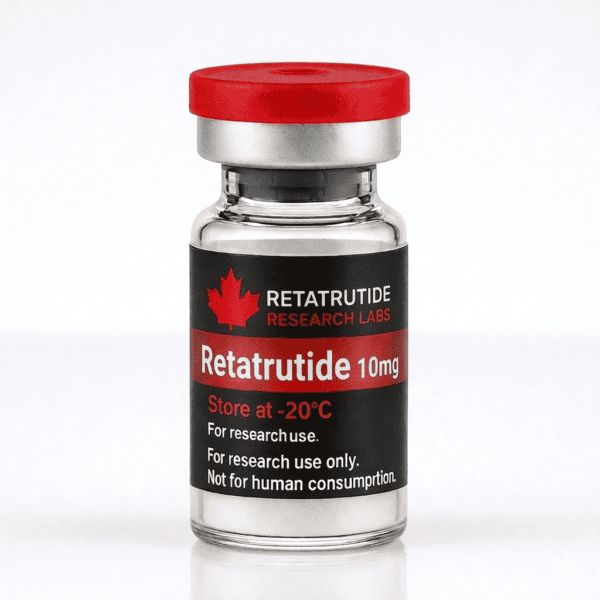 Retatrutide$79.99 CAD · research use only
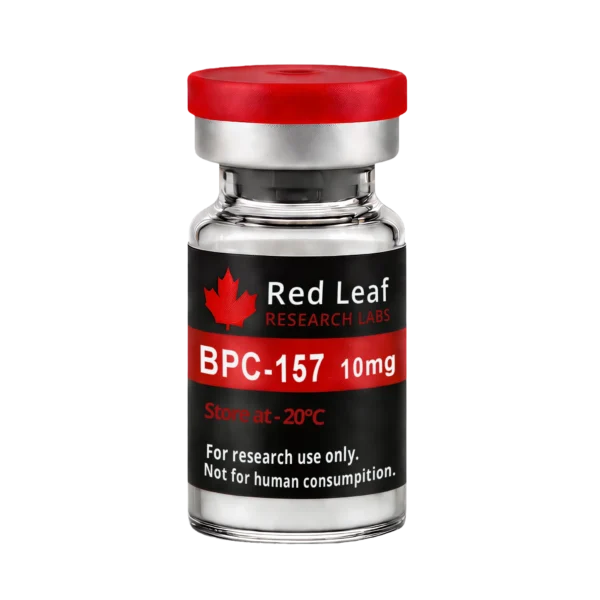 BPC-157 (10mg)$75 CAD · research use only
 GHK-Cu 100mg – 3ml Vial$64.99 CAD · research use only
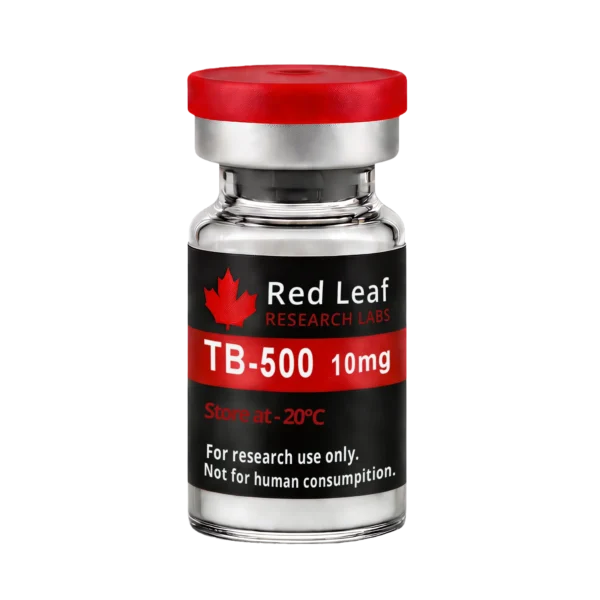 TB-500 (10mg)$84.99 CAD · research use only
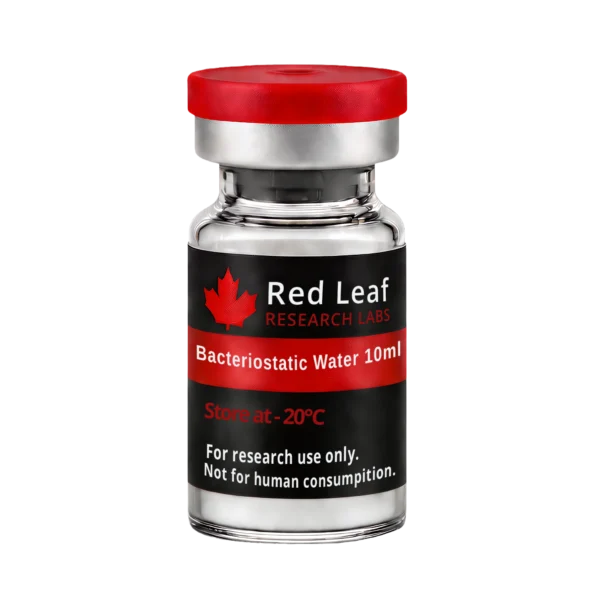 Bacteriostatic Water$10 CAD · research use only
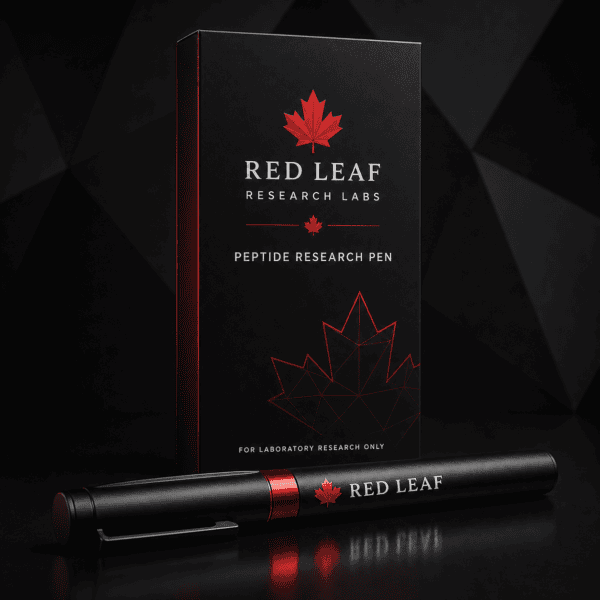 Peptide Pens Canada – Red Leaf Research Pen Add-On$99 CAD · research use only
Every product page carries its batch lab report with a verification link you can check at the testing laboratory, not just a PDF we host.
Browse the catalogue See the lab test sheetsResearch use only. Products sold by Red Leaf Research Labs are not approved by Health Canada for cosmetic application, therapeutic treatment, injection, ingestion, or any form of human or animal use. No claims are made regarding clinical outcomes, safety or efficacy. Pricing and stock are current at the time of publication and subject to change.