
 Owned and operated by a cf veteran


AI can save you hours of reading. It can also invent a study that does not exist and say it with total confidence. This guide shows you how to brief an AI properly the first time, how to check what it hands back, and where the conversation with a real physician has to take over.
- 20% of citations in one study were fake
- 5 parts to a brief that works
- 2 min to check any source
- 0 decisions AI should make for you
AI is a very fast reader with no memory of the lab. It has read a huge amount about peptides. It has never held a vial, and it will never tell you when it is guessing.
Used well, it explains a hard paper in plain words and turns a messy question into good ones. Used badly, it wastes your evening. You ask a vague question, it gives a vague answer, it drifts, and an hour is gone.
That back and forth is almost always caused by your first message, not by the model. Tell it who you are, what you are trying to do, what sources it may use, and what you want the answer to look like.
Then check every fact it gives you. Then take the good questions to your physician.
- The short version
- What AI is good at
- What AI is bad at
- Say what you want up front
- The five-part brief
- Prompts you can copy
- Which tool for which job
- How to stop the back and forth
- Fake sources, the biggest risk
- Check an answer in two minutes
- Using AI to read a lab report
- Getting the words right
- What AI must never decide
- The “how do people use this” question
- Talk to your physician
- Harm reduction and why we talk about this
- Using our blog as a source
- Where AI and peptides are going
- Where Red Leaf stands
- Common questions
- Handling supplies
- The bottom line
The short version
Most people use AI the way they use a search box. They type a few words and hope. That works for simple facts. It falls apart on peptide research, where the words are technical, the evidence is thin, and a wrong answer looks exactly like a right one. There is a better way and it takes about thirty extra seconds.
- Tell it what you already know, so it does not explain things you understand.
- Tell it what you are trying to decide, so it aims at the right target.
- Tell it which sources count, so it does not quote a supplement blog at you.
- Tell it what the answer should look like, so you do not have to ask twice.
- Tell it to say “I do not know” when it does not know.
Then treat everything it says as a lead, not a fact. Check the sources yourself, every time.
What AI is good at
AI is not a search engine and it is not an oracle. It is a language machine that has read an enormous amount of text. That shapes what it does well.
Turning jargon into plain English
Paste a paragraph from a study and ask for it in simple words. This is the single best use. It is fast, it is reliable, and you can check it against the original in seconds.
Giving you the shape of a subject
Ask what the main arguments are, where researchers disagree, and what is still unknown. A good AI maps the field in a minute. That map is a starting point for your own reading, not a replacement for it. The same goes for comparisons: ask for a table and you get short answers, which are easier to check.
Writing better questions
The use most people miss. Ask it to turn your rough worry into five precise questions a scientist would ask. You will get better questions than you would have written, and you can take them anywhere, including to a doctor.
What AI is bad at
These are not small flaws. They are built into how the tool works, and no amount of clever prompting removes them.
It cannot tell you how sure it is
A well-supported fact and a total invention come out in the same calm, tidy voice. There is no wobble in the tone when it starts guessing, so you have to check instead.
It invents sources, and gets worse on narrow subjects
Real-looking authors, real-looking journals, real-looking years, stitched into a reference that was never published. The less written about a topic, the more it fills the gaps itself. Peptide research is a narrow subject, and the numbers below show what that costs.
It agrees with you, and it flattens uncertainty
Push back on a correct answer and it will often fold and apologise. That is a habit of the tool, not a sign you were right. It also drops the words that matter most, “in mice”, “in one small trial”, so a finding from eleven people comes back sounding like settled fact. And it is trained to a cut-off date, without telling you whether it is searching or recalling.
Say what you want up front
Here is the habit that saves the most time, and it is the reason this guide exists.
Most of the tedious back and forth is self-inflicted. You ask a half question, so you get a half answer. You correct it, it over-corrects, you correct it again. Twenty minutes later you have a worse answer than the one you got first. The cause is nearly always the same: the AI did not know what you were trying to do, so it guessed wrong. So tell it. Say your intention out loud, in the first message, before you ask anything.
- “I am trying to understand this study well enough to ask my doctor a sensible question.”
- “I want to know if the evidence here is strong or weak, not what the compound does.”
- “I am checking whether a claim I read on a forum is supported by anything real.”
Each of those points the AI at a completely different answer. Without one, it defaults to a bland encyclopedia entry, which is almost never what anyone wanted. The same goes for what you do not want. “Do not give me dosing information” saves you rereading the same boilerplate five times.
The five-part brief
If you remember one thing from this page, make it this. Five short lines at the top of your first message. It works with any AI, and it works the first time.
Who you are
“I am a layperson with no biology background” or “I have read the main papers already.” Get this wrong and you either drown in jargon or get talked down to.
What you want
The real goal, not the surface question. “I want to understand why the human evidence is weaker than the mouse evidence.”
What counts as a source
“Only peer-reviewed papers and regulatory documents. No blogs, no forums, no vendor pages. If you cannot name the source, say so.”
What the answer should look like
“Under 400 words. A table, then three bullet points. Plain English, short sentences.” Format instructions are the cheapest time saver there is.
Permission to not know
“If you are unsure, or the research does not cover it, say so plainly instead of filling the gap.” This one line removes a surprising amount of invention.
One more trick. Add to the end: “Before you answer, ask me up to three questions if anything is unclear.” A good model will ask, and the result lands far closer to what you meant. You have moved the back and forth to the front, where it belongs.
Prompts you can copy
Written for peptide research specifically. Copy one, change the compound name, and go.
| What you want | What to type |
|---|---|
| Understand a paper | “I am a layperson. Here is the abstract of a study. Explain what they did, what they found, and what they did not show, in under 300 words, short sentences. Then list the three biggest limits.” |
| Judge the evidence | “For [compound], tell me what has been tested in humans, what has only been tested in animals or cells, and what is untested. Three-column table. Name the study for each row. If you cannot name one, write ‘no source’ in the cell.” |
| Compare two compounds | “Compare [A] and [B] on: length, what they act on, half-life, what human research exists, and what is unknown. Table only. Mark any cell you are not confident about.” |
| Build questions for your doctor | “I am seeing my physician about [topic]. Write eight questions a well-informed patient would ask, most important first. No advice, just questions.” |
Notice what they share. A role, a goal, a limit and a format. None is just a topic and a question mark.
Which tool for which job
There are two families. General assistants such as ChatGPT, Claude, Gemini and Copilot are language tools first: excellent at explaining and comparing, but left alone they answer from memory, and memory is where invented sources come from. Research tools such as Perplexity, Consensus, Elicit, Scite, SciSpace and Semantic Scholar sit on a real paper database: weaker writers, far stronger on sourcing. Then the plain original, PubMed and Google Scholar, which is where you end up whenever you check anything.
| Job | Reach for | Why |
|---|---|---|
| Explain a hard paragraph | A general assistant | Best plain-English writing, and you already have the source in front of you. |
| Find out what research exists | Consensus, Elicit, Semantic Scholar | They search real papers and show the list. You can click through to the study. |
| Get an answer with live links | Perplexity, or an assistant with search on | Every claim carries a link you can open. Open them. |
| Confirm a reference is real | PubMed, Google Scholar, a DOI lookup | The only step that actually proves it. Ten seconds. |
A sensible workflow uses two. Find the papers with a research tool, understand them with a general assistant, and never let one tool do both jobs unchecked. We have no relationship with any of these companies and get nothing for naming them.
How to stop the back and forth
- Give it the text. Do not ask what a study says. Paste the study. An AI reading a document in front of it is far more accurate than one recalling it.
- One job per message. “Summarise this, compare it to X, and write me questions” gets you three mediocre answers.
- Start again rather than correct. Once a conversation goes wrong it tends to stay wrong. A fresh chat with a better first message beats ten corrections.
- Say what annoyed you. “Too long, too hedged, drop the disclaimers, just the mechanism.” Blunt feedback works better than polite hints.
- Ask it to check itself. “Review your last answer and mark anything you are not confident about.” It will often find its own errors.
The theme runs through all five. Do the thinking about what you want before you type, not after you read something disappointing.
Fake sources, the biggest risk
If you take nothing else seriously, take this. AI models invent references. Routinely, and in a format that looks perfectly normal: real journal, plausible authors, sensible year, a title that fits your subject. The paper simply does not exist.
Researchers have measured it. A study published in JMIR Mental Health in November 2025 checked all 176 citations that GPT-4o produced across six literature reviews. Thirty-five of them, just under 20%, were fabricated. The part that matters most here is what happened when they broke it down by subject.
Fabricated on a widely studied topic
On a moderately studied topic
On a thinly studied topic
Across all 176 citations
Invention went up roughly five times as the subject got more obscure. Most peptide research is a thinly studied subject. Many of these compounds have a handful of human studies, sometimes none. That is exactly the territory where invention rates are highest.
The same study found something else worth knowing. On the most obscure topic they tested, asking a more specialised question produced more fabrication, not less. Being precise is still right, because it makes the answer useful. But precision does not protect you from invention. Only checking does.
- A reference with no DOI and no link, when everything else has one.
- A title that matches your question a little too perfectly.
- A famous researcher attached to a paper you cannot find anywhere.
- A journal name that is nearly right but not quite.
- Any source that appeared only after you pushed for more evidence.
Check an answer in two minutes
- Search the exact title on PubMed. If nothing comes back, try the authors and year. PubMed covers the biomedical literature, so a real biomedical paper is almost always there.
- Try Google Scholar next. It casts a wider net, including preprints.
- Check the DOI. Put it after doi.org in your browser. A real DOI lands on a real paper. A made-up one goes nowhere.
- Open the paper, not the summary. Confirm the abstract says what the AI claimed. This catches the second error, where the paper is real but the claim is not in it.
- Check who and how many. Mice or people? Eleven participants or eleven hundred? A dish or a body? This is where most confident nonsense falls apart.
- Ask when. A 2014 review does not know what was found in 2024.
Two minutes per claim. If a claim is not worth two minutes, it is not worth repeating. One shortcut: ask for sources as DOIs or PubMed IDs only. A model that cannot produce one often quietly admits it has none.
Using AI to read a lab report
A practical use with almost no downside, because the document is in front of you and can be checked line by line. A certificate of analysis is an independent lab’s report on a specific batch. Every product we sell carries one, with a link to verify it at the testing lab, and you can see them all on our independent testing page.
- Paste the report and ask for each section in plain English.
- Ask the difference between purity and the amount actually in the vial. Different numbers, both matter.
- Ask what the testing method was, and what it can and cannot detect.
- Ask what is missing that a careful buyer would want, and what would make you doubt the report.
Then do the one thing AI cannot do for you. Go to the testing lab’s own site and verify the report is real. A lab report that cannot be verified at the source is just a picture of a document. More on that in our post on third-party testing.
Getting the words right
A lot of bad AI answers come from a fuzzy question, and fuzzy questions come from not knowing the right word. Ask about “the dose” and you may get milligrams, millilitres or units on a syringe, which are three different things. Ask about “strength” and you may get purity, concentration or total mass.
Our guide to research peptide terminology covers the terms that come up most, and half-life gets its own post because it is the one people most often misunderstand.
For the arithmetic, do not use AI at all. Language models are unreliable at maths and show their working confidently either way. Use our peptide calculator, which does reconstitution, concentration and syringe units, and shows how it got there.
What AI must never decide
AI is a research assistant. It is not a clinician, a pharmacist, a regulator or a lawyer. It has no duty of care to you, no licence to lose, and no way of knowing anything about your body.
- Whether to use anything. That is not a research question. Red Leaf does not endorse or promote personal use of research material, and a chat window is not where that decision gets made.
- How much of anything. Ask for a protocol and it will produce one, because it has read thousands of forum posts. The confident numbers are community lore with a scientific accent.
- Whether something interacts with your medication. A pharmacist can check this properly against your actual prescriptions.
- Whether you have a condition. Symptoms typed into a chat box are not a diagnosis, and the answer will be either alarming or falsely reassuring, with no way to tell which.
- What is legal where you live. Rules differ and change. Check the actual regulator, not a chatbot’s memory of one.
The “how do people use this” question
This is where most people actually start, so it deserves a straight answer rather than a lecture. Ask an AI how a peptide is used and you will get a fluent, confident answer. The problem is that it blends three very different things and will not separate them for you.
| Where a number comes from | What it is worth | How to spot it |
|---|---|---|
| A published human trial | Real evidence, within that trial’s limits | Has a named study, a participant count and a journal. Ask for all three. |
| An animal or cell study | Interesting, not transferable | Watch for “per kilogram” figures and mouse models. Ask outright: was this in people? |
| Forum and coaching lore | Nothing. It is repetition, not evidence. | No source, oddly round numbers, and everyone online says the same thing. |
So the honest version of the question is this: “Separate what you are about to tell me into published human trials, animal studies, and unsourced community practice. Label each one. Do not merge them.”
A good model handles that well, and the answer is genuinely useful, because you can finally see how thin the evidence often is. That is not us discouraging you. That is the actual state of the literature on many of these compounds, and you deserve to see it plainly rather than smoothed over. Then take it to a physician. Not the summary, the sources.
Talk to your physician
Be clear with your doctor. Same principle as being clear with the AI, and it matters a great deal more.
People hide things from their physician for understandable reasons. They expect a lecture, or they are embarrassed. The result is a doctor making decisions with half the picture, which is the one situation where things actually go wrong.
One aside while we are here: keep your name, address, date of birth, health card number and any identifying medical records out of the AI chat itself. None of it improves the answer, and depending on the service, what you type may be stored or used for training.
- Say what you are looking at, by name. Not “a supplement”. The actual compound.
- Bring the research, not the summary. Two or three real papers beat an hour of explaining.
- List everything else you take. Prescriptions, over the counter, supplements. Interactions are the most common real risk and the easiest to check.
- Say what you are actually hoping for. The goal underneath the question. It changes the advice completely.
- Ask what would make them say no, and what a problem would look like early. A good clinician will tell you straight, and that answer is worth more than a yes.
This is where AI genuinely helps: use it to prepare, not to replace. Ask it to write your eight best questions and to explain a paper so you can discuss it intelligently. Then walk in prepared and be honest. If your doctor dismisses the conversation entirely, that is information too.
Harm reduction and why we talk about this
Red Leaf Research Labs sells research material. We do not endorse or promote personal use of anything we sell, and we do not publish protocols. That is our position and it does not move.
We also do not pretend the world works the way a disclaimer says it does. People research these compounds, and some will make choices we have no part in. Faced with that there are two options: say nothing and let people learn from forums and salespeople, or put good information where they can find it.
We believe in harm reduction. Not as a slogan, as a practical position. Someone who can read a lab report, who understands what the research does and does not show, and who talks to their physician honestly is in a better place than someone who cannot, whatever they decide.
- Transparency is key. Every batch has an independent lab report and a link to verify it at the lab. We publish what the research found and what it did not.
- Conversation is paramount. With your physician, with us, with people who know more than you do. Questions asked early are cheap. Questions asked late are not.
- Learn from one another. Nobody knows all of this. We have learned plenty from customers who asked hard questions we could not immediately answer.
- Education is forever. The research moves. What was true five years ago may not be. Staying curious is the whole job.
Our practical guide to harm reduction goes further, and it is the post we would point you to first.
Using our blog as a source
AI works far better when you hand it something to read instead of asking it to remember. Our research blog is written for exactly this: plain English, sources cited, around seventy posts deep. Open a post, copy the section you care about, paste it in, and ask your question about the text in front of it. Invention rates drop hard when the material is on the screen.
Start with what peptides actually are, then the beginner’s guide for Canada, then how peptides work.
Research peptide terminology and half-life explained. Both short, both fix a lot of confusion.
How to spot irresponsible suppliers and why third-party testing matters. Feed either to an AI and ask it to score a site you are looking at.
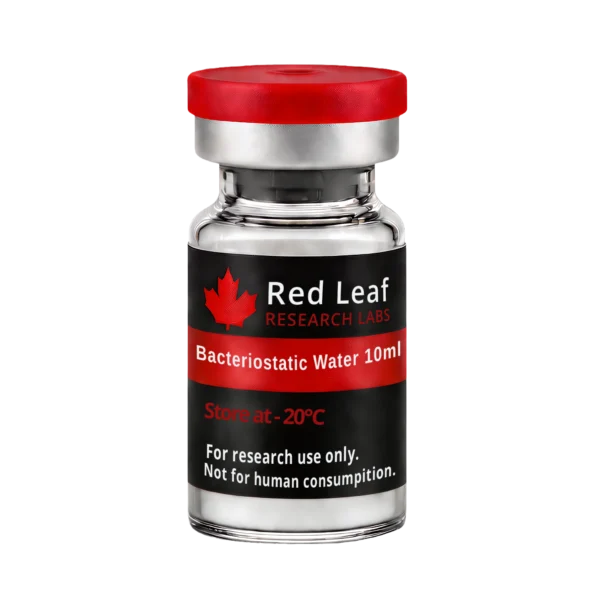
Bacteriostatic water explained, shipping in a Canadian summer, and the peptide calculator for the arithmetic.
A prompt that works with any of them: “Here is an article. Summarise the argument in five bullet points. Then tell me what it does not address, and what I should read next to fill that gap.”
Where AI and peptides are going
Worth knowing, because the same technology that invents citations is doing real work at the other end of the field. In 2024 the Nobel Prize in Chemistry went to David Baker, Demis Hassabis and John Jumper. Hassabis and Jumper built AlphaFold, which predicts how a protein folds from its sequence. Baker’s lab does the reverse, designing proteins that never existed in nature. It was the first time an AI-enabled breakthrough took a Nobel in the sciences.
That matters here because folding is the whole problem. A peptide is a short chain of amino acids, and what it does depends almost entirely on the shape that chain takes. Working out a shape used to mean months of laboratory work. AlphaFold2, published in Nature in 2021, brought it down to something close to instant. Design followed: Baker’s group has published work generating macrocyclic peptide binders from scratch, testing a small fraction of tens of thousands of computer-generated designs and finding binders whose real crystal structures matched the prediction closely.
The distance between those two cards is the most useful thing in this guide.
Where Red Leaf stands
- Everything we sell is research material. Not a drug, a supplement or a treatment, and not for human or animal use.
- We do not endorse or promote personal use of anything we sell, and we do not publish dosing plans or protocols.
- We publish what the research shows, including when it shows very little. A thin evidence base is a fact about the compound, not a marketing problem to work around.
- Every batch carries an independent lab report with a link to verify it at the testing laboratory, not just a PDF on our own server.
- We believe in harm reduction, and we would rather you had good information and a real conversation with a physician than neither.
Red Leaf Research Labs is owned and operated by Baba Kahn, a former Canadian Forces member. More about who we are on our about page.
Common questions
Can AI tell me how to use a peptide?
It will try, and it will read well. But it blends published trial doses, animal studies and unsourced forum practice into one confident paragraph without labelling any of it. Ask instead what doses were used in published human trials, who ran them and how many people took part. The decision belongs with you and a physician, and Red Leaf does not endorse personal use.
Which AI is best for peptide research?
Use two. A research tool built on a real paper database, such as Consensus, Elicit or Semantic Scholar, to find what exists. A general assistant such as ChatGPT, Claude or Gemini to explain what you found. Then verify the references on PubMed yourself.
How often does AI make up research citations?
Often enough that checking is not optional. A study in JMIR Mental Health in November 2025 examined 176 citations generated by GPT-4o and found 19.9% were fabricated. The rate rose from 6% on a well-studied topic to 28 to 29% on more specialised ones. Peptide research is a specialised topic.
Why does the AI keep giving me useless answers?
Almost always the first message. A topic with a question mark makes the model guess, and it guesses generic. Say who you are, what you are trying to work out, what sources count and what the answer should look like. The back and forth mostly disappears.
How do I check whether a reference is real?
Search the exact title on PubMed, then Google Scholar. If there is a DOI, put it after doi.org in your browser; a real one resolves to a real paper. Then open the abstract and confirm it says what the AI claimed, because a real paper with an invented claim attached is the more common error.
Is it safe to upload a lab report to an AI?
A certificate of analysis carries no personal information, so yes, and it is a good use. Ask it to explain each section and list what a careful buyer would question. Then verify the report at the testing laboratory’s own site, which is the one step AI cannot do for you.
Should I tell my doctor I am researching peptides?
Yes, and name the compound rather than describing it vaguely. The most common real risk is an interaction with something you already take, and that can only be checked against your actual prescriptions. A physician working from half the picture is the situation where things go wrong.
Where should I start reading on the Red Leaf blog?
What peptides are, the beginner’s guide for Canada, and research peptide terminology if the vocabulary is the obstacle. If you are assessing a supplier, start with our posts on spotting irresponsible suppliers and on third-party testing.
The bottom line
AI has made peptide research far more approachable than it was five years ago. A hard paper that would have stopped you cold can now be explained in plain English in thirty seconds. That is a real gain and it is worth using.
It has also made it far easier to end up confidently wrong. The same tool that explains a real study will invent one, in the same voice, and never flag the difference.
The whole discipline comes down to three habits. Be clear about what you want before you type. Check every source yourself. Take the good questions to a physician and be honest with them.
Transparency is key. Conversation is paramount. Learn from one another. Education is forever.
Handling supplies
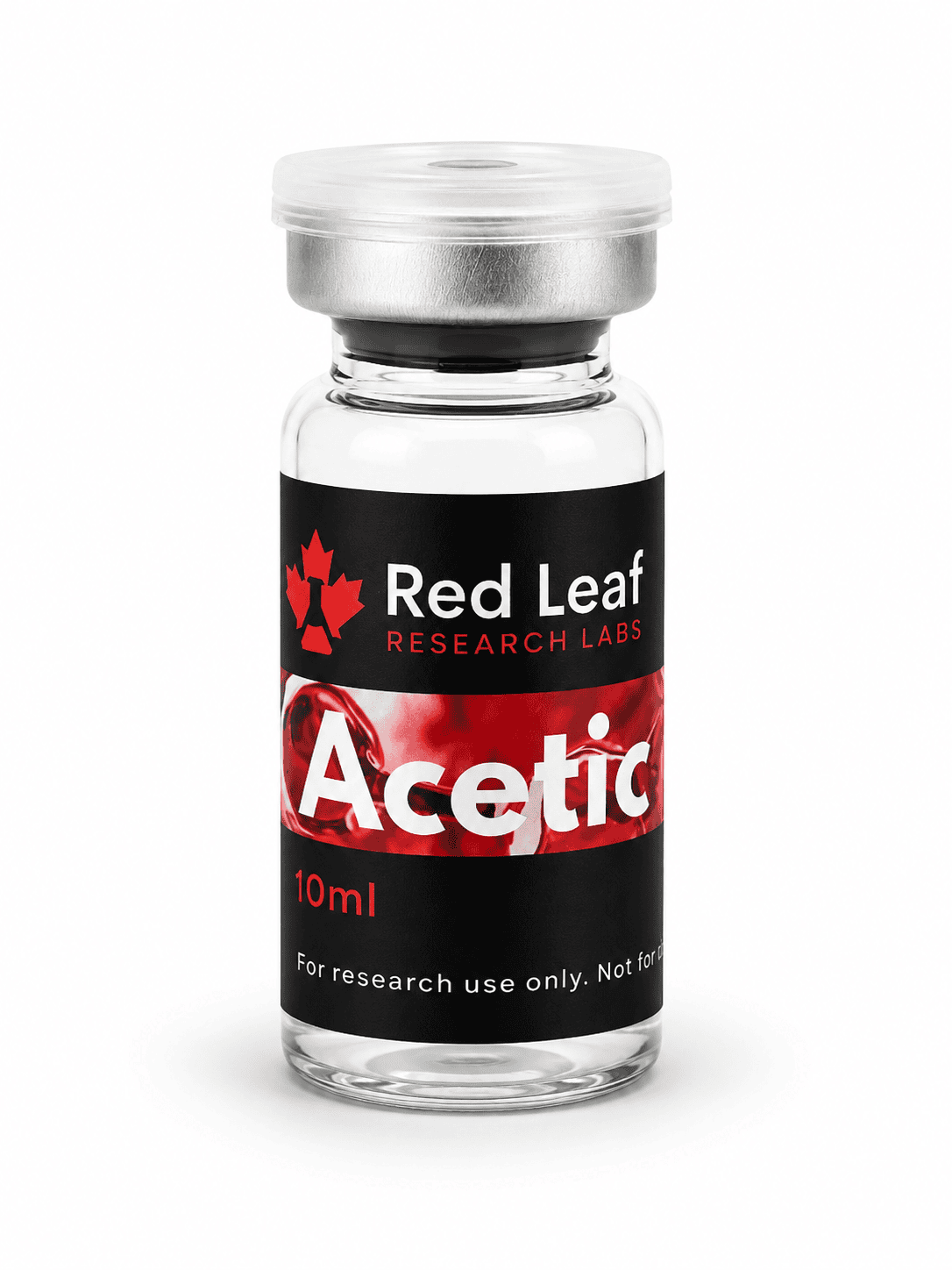
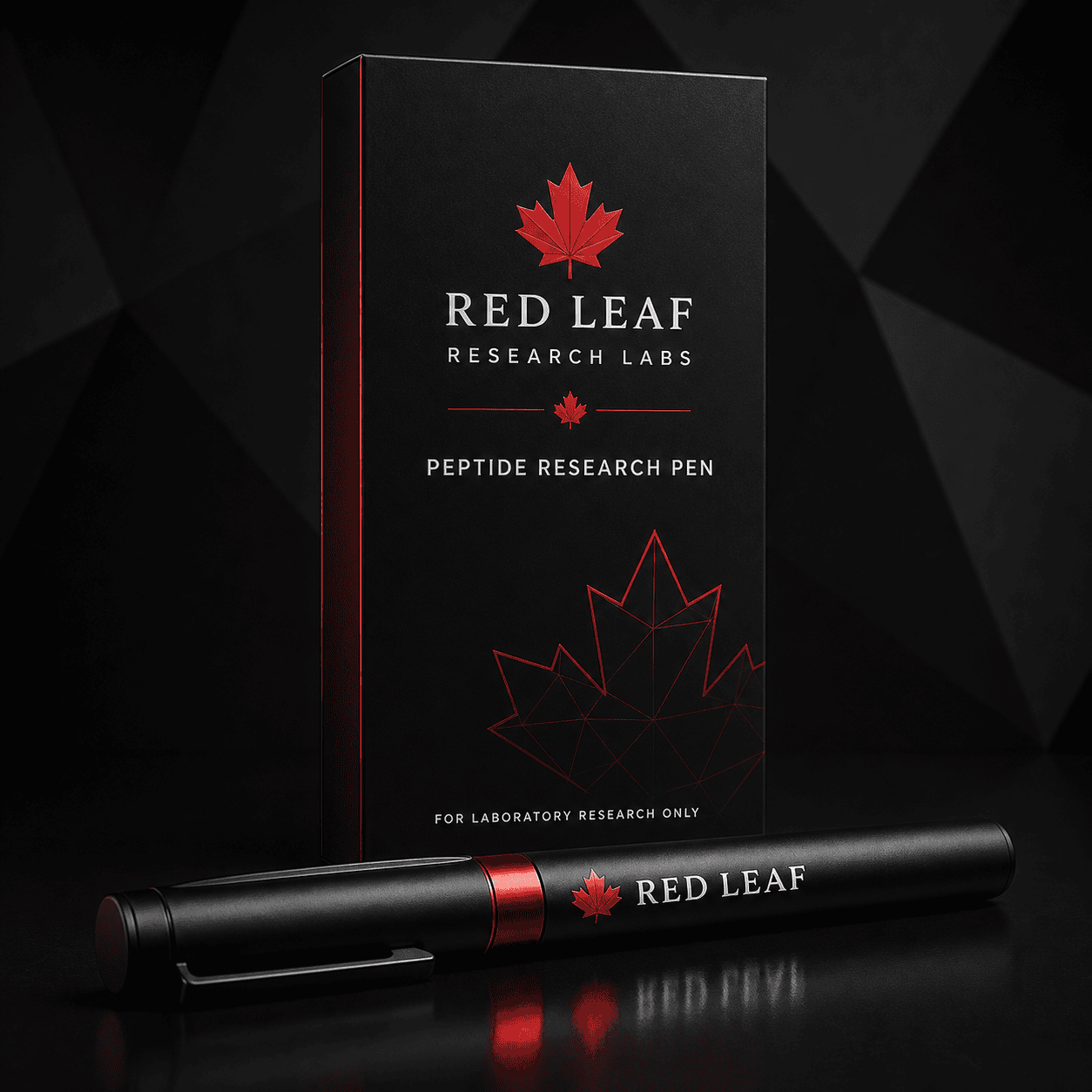
Nothing on this page is a recommendation to use anything. These are the neutral items a research setting needs, and the calculator that does the arithmetic AI should not be doing.
Every batch we ship carries an independent lab report, with a link to verify it at the testing laboratory. Purity and amount both shown, no exceptions.