Owned and operated by a cf veteran


Why a triple agonist hits the gut first, what the trials recorded. And why the same mechanism causes both the effect and the nausea.
- Slower stomach emptying
- Gut effects lead the list
- Worst while dose rises
- Research use only
Retatrutide slows how fast the stomach empties. That is the same mechanism that makes people feel full sooner. And the same one that causes nausea, diarrhea, constipation and vomiting. In the trials those effects were most common while the dose was going up. And mostly mild. Retatrutide is not approved anywhere.
- What is retatrutide?
- How it works in the body
- Retatrutide and the digestive …
- Does retatrutide make you poop…
- The common gut side effects
- Why does it affect bowel movem…
- How long do the digestive effe…
- Managing it: what actually helps
- Who gets it worst?
- When to contact a healthcare p…
- Compared with other GLP-1 comp…
- Common questions
- The short version
Ask anyone who has looked into retatrutide what it does. And they will tell you about the weight. Ask what it does to your gut and the answers get vague.
They should not be. The gut effects are the best-documented thing about this compound. And they are not a bug. They are the same mechanism that makes it work, seen from the other side.
One thing before we start. Because it matters and a lot of pages get it wrong. Retatrutide is not an approved medicine. It is not prescribed anywhere in the world. Nobody has a treatment plan on it outside a clinical trial. Anything below is what the research shows, not instructions for using it.
What is retatrutide?
An investigational compound being studied for weight and metabolic conditions. Investigational means testing is not finished and no regulator has approved it.
It gets lumped in with GLP-1 drugs, and that is only two thirds right. GLP-1 drugs pull one lever. Retatrutide pulls three – GLP-1, GIP and glucagon. That third one is what makes it different from everything before it.
What the research has looked at:
- Blood sugar control
- Appetite
- Insulin sensitivity
Those are the things being studied. They are not a list of promises. And the trials that produced them are still running.
Understanding what it does to digestion is not a footnote to any of that. It is most of what people actually experience.
How it works in the body
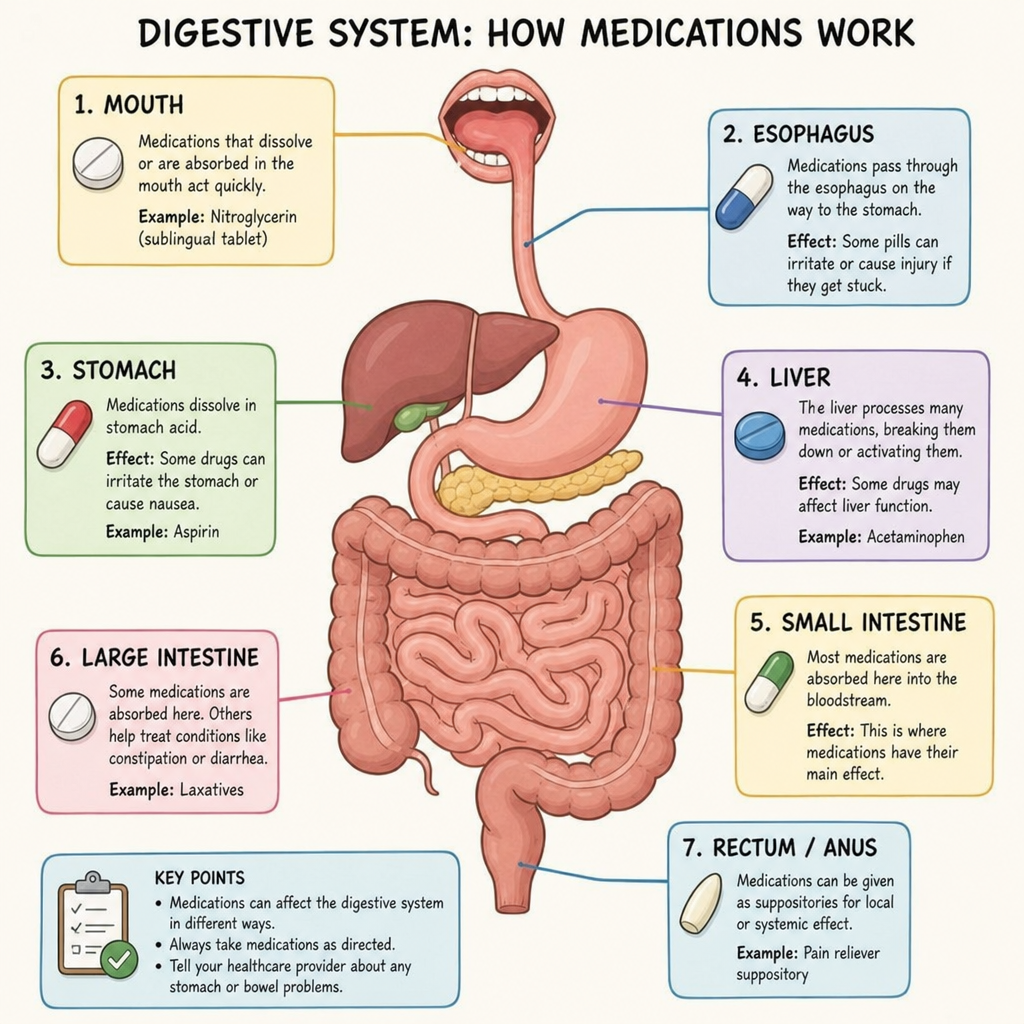
Retatrutide switches on receptors that control appetite and blood sugar. Three of them.
The one you feel is GLP-1. It slows your stomach down.
That is the whole trick. Food sits in your stomach longer. So you stay full longer. So you eat less. Everything else follows from that one change.
It also sharpens the insulin response after meals, which is why blood sugar steadies.
So, three effects, tightly linked:
- Your stomach empties more slowly
- Your insulin response improves
- Your appetite drops
Now look at that first line again. A stomach that empties slowly is a stomach that feels full, heavy. And sometimes queasy. You cannot have the appetite effect without it.
How strongly any of this lands varies enormously between people. That is why two people on the same dose can have completely different weeks.
Retatrutide and the digestive system
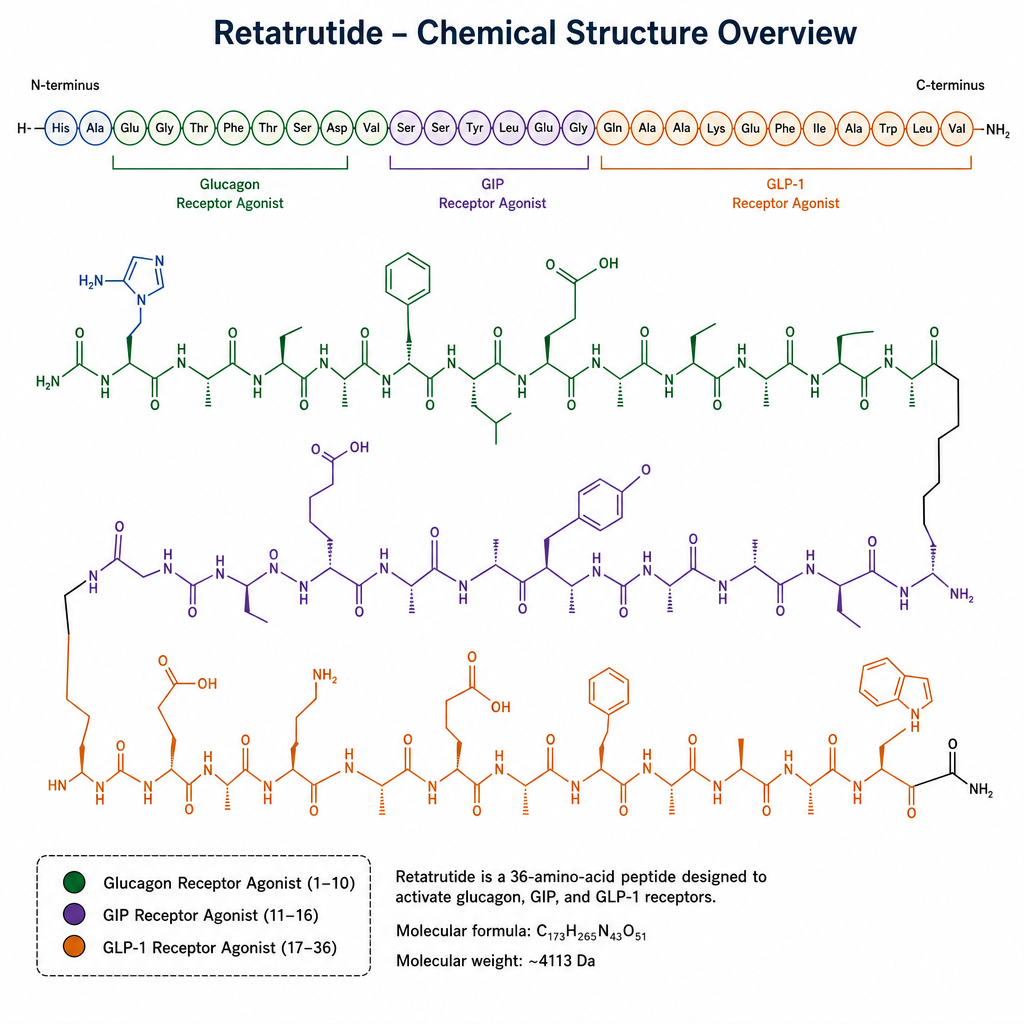
Slowing your stomach down changes everything downstream of it.
Food moves through differently. Stool consistency changes. Some people go more often, some less. Softer stools are common, and so is outright diarrhea.
Here is the part worth sitting with. That slowdown is not a side effect that happens to accompany the useful part. It is the useful part. The fullness that stops you eating and the discomfort that ruins your evening are the same event.
Which is why “can I get the appetite effect without the gut effect” has no good answer. Nobody has found one.
In short, retatrutide:
- Slows how fast your stomach empties
- Changes how often you go
- Changes what it looks like when you do
Most people find it settles. Some do not. If it does not settle, that is a conversation with a clinician, not something to push through.
Does retatrutide make you poop more? The science
Often, yes. Here is why.
The stomach empties slower. So food arrives further down the tract on a different schedule. Your gut also secretes more fluid and its muscle contractions change.
More fluid in the bowel means softer stool. Softer stool means more frequent, more urgent trips.
What drives the change
- Slower stomach emptying: food arrives downstream differently, and bowel habits follow.
- More fluid secretion: the direct route to loose stools.
Not everyone gets this. Individual responses vary a lot. And the same dose does very different things to different people.
What helps
- Fluids: loose stools take water and salts with them. Replace both.
- Fibre: adjusting it up or down changes things. but slowly. And one variable at a time.
For most people this fades as the body adjusts. Knowing it is coming makes it much easier to handle than being blindsided by it.
The common gut side effects
Nausea and vomiting. Diarrhea and loose stools. Constipation and general irregularity.
That is the list. And it is the same list for every drug in this family. There is a fuller rundown of peptide side effects elsewhere on the site.
Most of it is temporary and eases as your body adapts.
The two you will meet first
- Nausea: usually right at the start, and usually mild.
- Diarrhea: can be frequent, and usually settles.
Some people get it worse than that. Severe or persistent symptoms are a reason to get medical help early rather than waiting to see.
What takes the edge off
- Fluids: the single most useful thing, for both vomiting and diarrhea.
- Diet: more fibre for constipation, plainer food for everything else.
Nausea and vomiting
Nausea is usually the first thing anyone notices. It tends to be mild and tends to fade as the body adjusts.
Vomiting turns up alongside it sometimes, and is less common.
Tips for nausea
- Eat slowly. You are working with a stomach that is already emptying slowly. Do not overwhelm it.
- Smaller meals, more often. Same reasoning.
Both of these work better than people expect. That is worth knowing before reaching for anything stronger. If it does not settle, speak to someone.
Diarrhea and loose stools
This comes from the change in gut motility. Uncomfortable, and usually manageable with fluids and food changes.
Fluids are not optional here. Diarrhea takes water and electrolytes with it. And dehydration is the thing that actually gets people into trouble.
Tips for diarrhea
- Drink more, including electrolytes. Plain water alone does not replace what you are losing.
- Keep food plain. Skip the heavy meals, and skip the caffeine while it lasts.
It usually eases as the body adapts. If it does not, that needs a doctor.

Constipation and irregularity
Less common, but it happens. Everything is moving through more slowly, and sometimes it slows too much.
Irregularity in general. going more one week and less the next. is part of the same adjustment.
What helps with constipation
- Fibre. Boring, and it works.
- Movement. Regular exercise gets things going. Even walking.
Persistent problems are worth raising with a professional rather than managing indefinitely on your own.
Why does it affect bowel movements at all?
Because of what it was designed to do. There is no separating the two.
Retatrutide changes gut motility. That is the mechanism. Slower stomach emptying changes bowel habits. And depending on the person it can go either way. diarrhea for some, constipation for others. Because different parts of the gut respond differently.
It also changes how nutrients are absorbed, which affects stool consistency on its own.
Anyone with an existing digestive condition tends to notice more. So does anyone in their first few weeks. The body usually settles.
The three reasons, short
- Gut motility: slower movement, changed digestion.
- Nutrient absorption: different processing, different stools.
- Individual variation: the same drug, very different guts.
How long do the digestive effects last?
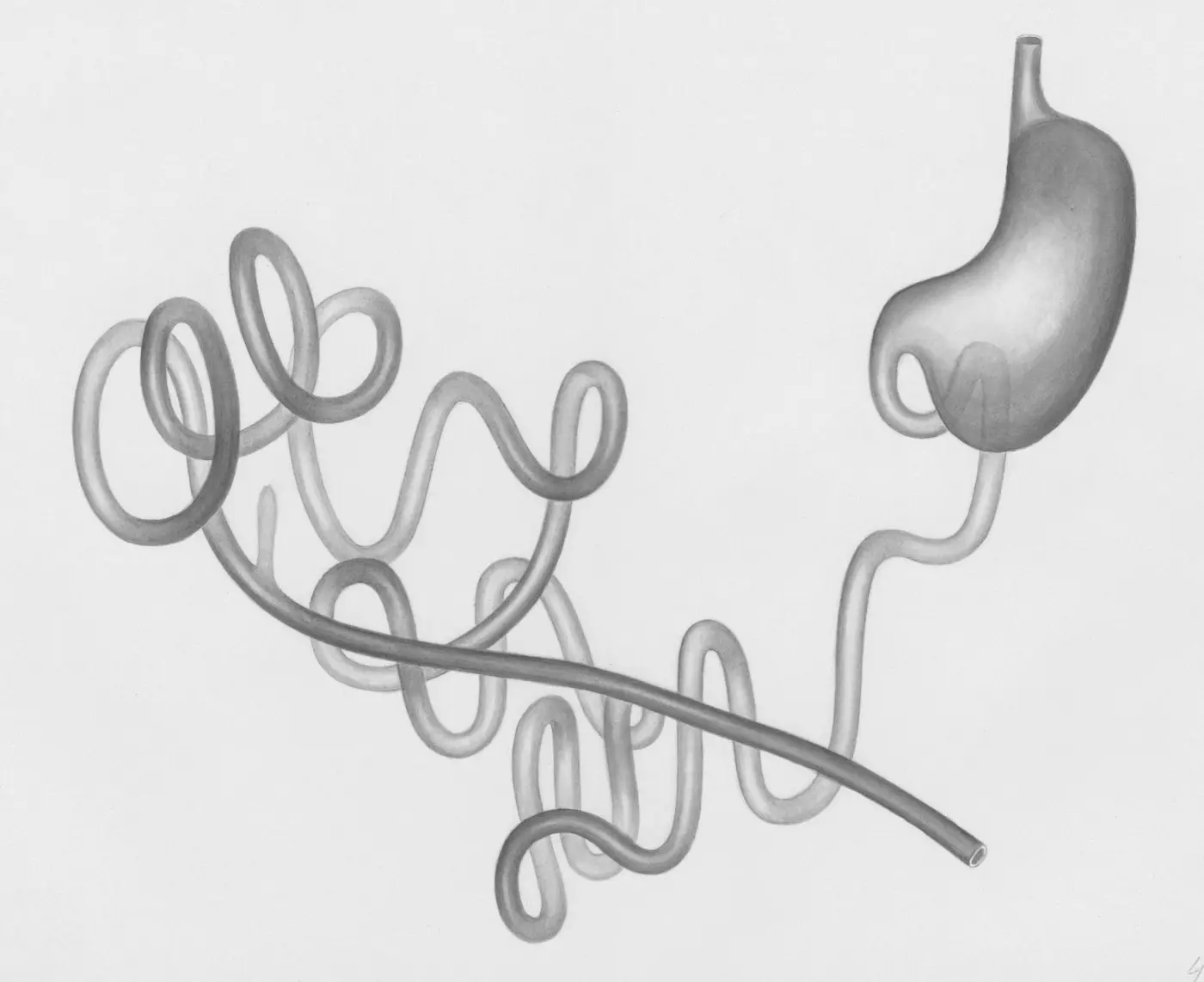
Usually the first few weeks are the worst of it.
Most people find things improve as the body adjusts. And that adjustment takes anywhere from a couple of weeks to a couple of months.
Sometimes it does not improve. That is a reason to reassess with a clinician, not to grit your teeth.
Three things change how long it takes:
- Starting dose: higher starts mean rougher starts. This is well documented in the trial data.
- You: some guts are simply more sensitive than others.
- Diet: what you eat during the adjustment either helps or prolongs it.
Managing it: what actually helps
Fluids first. Water helps digestion and it is the main defence against diarrhea.
Then food. Fibre-rich, balanced, and not too much at once.
Worth trying:
- Smaller, more frequent meals – less work for a slow stomach
- Less spicy and fatty food – both make everything worse
- Probiotics. may help the gut flora. Though the evidence here is thinner than the marketing
Movement helps too. Nothing dramatic – walking and gentle exercise are enough to keep things regular.
And the unglamorous ones:
- Stress: your gut listens to it more than you would like
- Rest: recovery is not optional
- Paying attention: do not push through discomfort just to prove a point
Keep a short log – what you ate, what you did, what happened. Patterns show up fast in writing and almost never in memory.
Talk to a clinician before making big dietary changes. And be patient. None of this works overnight.
Who gets it worst?
Not everyone has digestive trouble. Some groups reliably have more of it.
Anyone with an existing gastrointestinal condition – IBS being the obvious one. A gut that is already sensitive notices more.
Anyone new to this class of compound. The first weeks are the hardest, and that is true across the whole family.
The risk factors, plainly:
- A history of digestive disorders
- Being new to GLP-1-type compounds
- Higher doses
Older adults tend to have a harder time too. Because digestion changes with age anyway. There is more on managing risk in our harm reduction guide.
When to contact a healthcare provider
Some digestive trouble is just digestive trouble. Some of it is a signal.
Get advice if things are not improving over time. Persistent symptoms need looking at.
Get help immediately for:
- Severe abdominal pain
- Diarrhea that has gone on long enough to dehydrate you
- Vomiting you cannot stop
Those can mean complications. Do not wait them out, and do not diagnose yourself from a forum.
Compared with other GLP-1 compounds
Retatrutide sits in the same broad family as the approved GLP-1 drugs. And shares most of their properties. The difference is the glucagon receptor. That none of the others touch.
Every drug in the family affects digestion. And each one does it slightly differently. How much you feel it depends on which compound, what dose. And who you are.
The differences that matter:
- Dose requirements
- How long effects last
- How often and how badly side effects show up
One difference is bigger than all of those, though. The others are approved. Retatrutide is not. Our retatrutide vs Ozempic comparison goes through it properly.
Common questions
What is retatrutide used for?
It is being studied for weight management and metabolic conditions, including insulin sensitivity. Studied, not approved – it is not used for anything as an approved treatment.
Does retatrutide cause digestive problems?
Yes, and they are the most commonly reported effects in trials. Nausea, vomiting and diarrhea top the list. Most of it eases with time.
How does it affect bowel movements?
By slowing how fast your stomach empties. That changes what happens further down. And can produce either diarrhea or constipation depending on the person.
Does everyone get side effects?
No. It varies with the dose, your health, and your gut. Some people barely notice.
Are the side effects permanent?
Usually not. Most digestive effects settle as the body adjusts. The ones that do not settle need a clinician.
What can be done about them?
Fluids, plainer food, smaller meals, and time. And professional advice rather than a protocol off the internet.
The common ones:
- Nausea
- Diarrhea
- Vomiting
And the less common ones:
- Constipation
- Bloating
- Abdominal discomfort
Why does retatrutide upset the stomach?
It slows stomach emptying. Food sits longer, which brings nausea, fullness and changes in bowel habit.
Does retatrutide cause constipation or diarrhea?
Trials reported both. Diarrhea and constipation each showed up more often than on placebo.
When are gut effects worst?
While the dose is being raised. Reports describe them easing after that.
Do gut effects mean it is working?
No. They come from the same mechanism, but symptoms are not a measure of effect.
When should gut symptoms be checked?
If they are severe, will not stop, or are getting worse. Long vomiting or diarrhea dries you out.
The short version
- Retatrutide slows your stomach down. That is how it works, and it is why your gut complains.
- Nausea, diarrhea and constipation are the common effects, and they are worst early on.
- Most of it settles within a few weeks to a couple of months.
- Fluids and electrolytes matter more than anything else, because dehydration is the real danger.
- Smaller, plainer meals eaten slowly help more than people expect.
- Existing gut conditions, higher doses and being new to the class all make it worse.
- Severe pain, unstoppable vomiting or dehydrating diarrhea need a doctor now.
- It is not an approved medicine. Nobody is prescribing it, and it is sold here for research only.
Knowing what is coming is most of the battle. The gut effects are not a sign something has gone wrong. they are the drug doing the thing it was built to do. And you are feeling it from the inside.
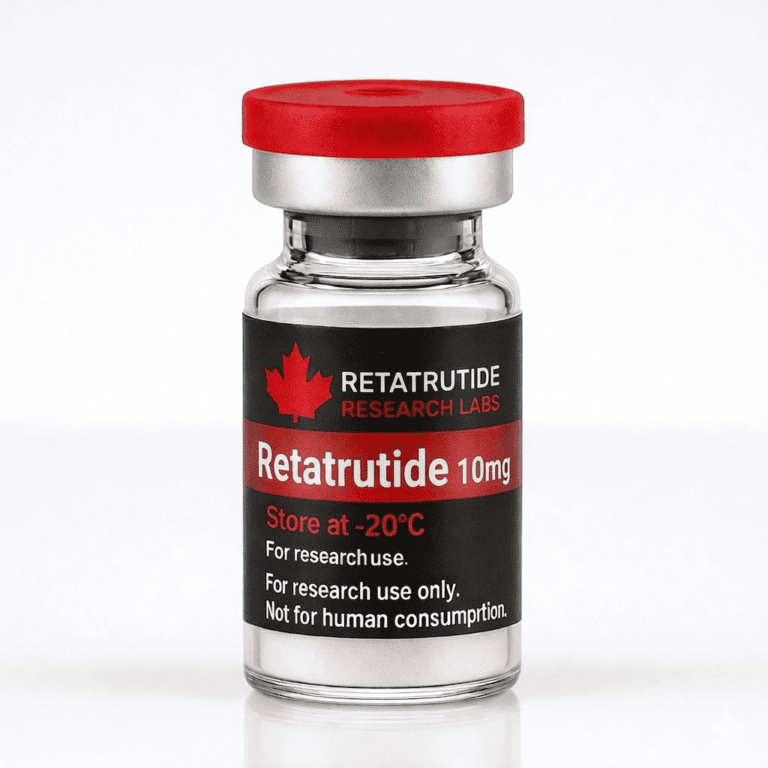 Retatrutide 10mg$79.99 CAD · research use onlyRetatrutide 20mg$149 CAD · research use onlyRetatrutide 30mg$199 CAD · research use only
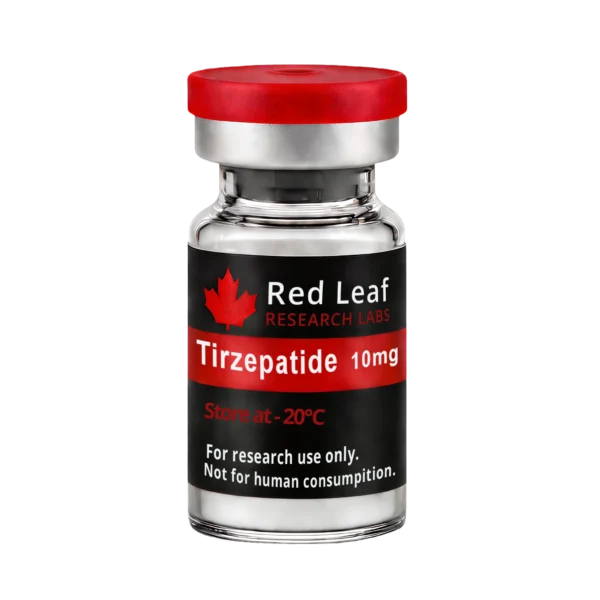 TirzepatideFrom $54 CAD · 10mg or 20mg
 Bacteriostatic Water 30mlMixing liquid for lab work
 Research Pen Add-OnLab handling accessory
Other retatrutide guides on this site
Where to get retatrutide
The full buyer’s guide for labs, with supplier checks.
Availability in Canada
Where the rules stand and what approval would take.
Retatrutide cost in Canada
Price per mg, per vial and per size, with the full math.
Side effects in the research
What the trials reported, without turning it into advice.
Retatrutide vs Ozempic
Three receptors against one, on the published numbers.
Sema vs tirze vs reta
One, two and three receptors, side by side.
Sold for lawful lab research only. Not a medicine, and not for use on people or animals.
Research and buying information only. Not medical advice. Not dosing advice. Not a recommendation for human use. Retatrutide from Red Leaf Research Labs is lab research material and is not approved by Health Canada for injection, ingestion, or any human or animal use. Prices and shipping terms change; check the live product page. Reviewed September 5, 2026 by Baba Kahn, founder of Red Leaf Research Labs.