Owned and operated by a cf veteran


A bad disc can take over your whole life. This herniated disc treatment guide puts every option side by side. That means physio, microdiscectomy, artificial disc replacement, spinal fusion, stem cells, BPC-157 and TB-500 peptides, and traction. It covers the bulging disc, the herniated disc and foraminal stenosis. You get plain words, real Canadian costs and real wait times.
- 9 options compared
- 1 proof scorecard
- $ Canadian costs
- 50 weeks: median wait for spine surgery
Most herniated and bulging discs get better without surgery within weeks to months, so physio and time come first. Is a disc pressing on a nerve, and the leg pain will not let up? Then a microdiscectomy has the strongest proof and the fastest relief. Artificial disc replacement and fusion are bigger surgeries for worn-out or unstable discs. Stem cells are still being tested. BPC-157 and TB-500 have promising animal research but no human disc trials. Traction helps some people feel better for a while, but it has not been shown to fix the disc.
- The short version
- What a disc is
- Bulging vs herniated disc
- Foraminal stenosis
- Your MRI is not the whole story
- Can a disc heal on its own?
- The proof scorecard
- Side-by-side table
- Physio, time and injections
- Microdiscectomy
- Artificial disc replacement
- Spinal fusion
- Which surgery?
- Stem cells
- BPC-157
- TB-500
- BPC-157 and TB-500 together
- Traction and decompression
- With or without traction
- Costs in Canada
- Wait times
- Recovery timelines
- When to go to the ER
- Which path fits you?
- Myths
- Questions people ask
The short version
- Discs are cushions between the bones of your spine. When the soft middle pushes out, it can press on a nerve.
- A bulging disc spreads out a little all the way around. A herniated disc has a tear, and some of the middle leaks out in one spot.
- Foraminal stenosis means the hole where a nerve leaves the spine has gotten tight. A disc, bone spurs or thick ligaments can cause it.
- Most herniated discs shrink on their own. The bigger the leak, the more likely the body is to clean it up.
- Microdiscectomy is the best-proven surgery for a disc pinching a nerve. It gives faster leg pain relief.
- Artificial disc replacement keeps the spine moving. Fusion locks two bones together. Both are bigger jobs.
- Stem cells, BPC-157 and TB-500 are early science. The lab and animal results look good. Proof in people with bad discs is missing.
- Traction may ease pain for a while. It has not been shown to heal a disc or open a tight nerve hole for good.
What a disc is, and what goes wrong
Your spine is a stack of bones. Between each pair of bones sits a disc. Think of it like a jelly donut. The outside is a tough ring. The inside is soft gel. The disc soaks up bumps when you walk, lift and twist.
With age, lifting, sitting a lot or an injury, the tough ring can get weak or crack. Then the soft middle pushes out. If it pushes toward a nerve, you feel it. That can be sharp back pain, pain down the leg called sciatica, pins and needles, or a weak foot.
Most disc problems happen in the low back, at the two lowest levels. Doctors call them L4-L5 and L5-S1. Discs in the neck can do the same thing and send pain down the arm.
Bulging disc vs herniated disc
People use these words like they mean the same thing. They do not. Here is the simple difference.
| Bulging disc | Herniated disc | |
|---|---|---|
| What happens | The disc spreads out a little all the way around | A crack lets the soft middle leak out in one spot |
| How common | Very common with age, even in people with no pain | Less common, often after a strain or lift |
| Nerve pain | Less likely, unless the space is already tight | More likely, often down one leg or arm |
| Heals on its own? | Rarely shrinks, but pain often settles | Often shrinks, especially bigger leaks |
| Usual first step | Physio, movement, core strength | Physio, time, pain control, then surgery if needed |
Bulging disc treatment is mostly about building strength and keeping active. A bulge on its own rarely needs surgery. It becomes a problem when it adds to other narrowing, like in foraminal stenosis.
Foraminal stenosis: when the nerve’s doorway gets tight
Each nerve leaves your spine through a small hole on the side. That hole is called a foramen. Think of it as a doorway. When the doorway gets smaller, the nerve gets squeezed. Doctors call this foraminal stenosis, or neural foraminal narrowing.
Three things most often shrink the doorway. A disc that bulges or herniates to the side. Bone spurs from wear on the small joints of the spine. And a disc that has lost height, so the bones sit closer together. Often it is a mix of all three.
Your MRI report may grade it as mild, moderate or severe. Mild narrowing is common and often causes no pain. Moderate or severe narrowing that matches your symptoms is more likely to be the cause.
Foraminal stenosis treatment starts the same way as a herniated disc: physio, activity changes and pain control. An injection near the nerve can calm it down. If that fails, a surgeon can widen the doorway. That is called a foraminotomy, and it is often done with a microdiscectomy. When the bones have collapsed or slipped, fusion or a disc replacement may be needed to hold the space open.
Your MRI is not the whole story
Here is something that surprises most people. Many people with no back pain at all have discs that look bad on an MRI. A large review of 33 studies looked at the scans of over 3,000 people with no pain. The number with a bulging disc goes up with age.
From a 2015 review of 3,110 people with no back pain. A bulge on a scan does not always mean it is the cause of your pain.
So a scan alone should not decide your treatment. What matters is whether the scan matches your symptoms. It also matters what a doctor finds when they test your strength, feeling and reflexes.
Can a herniated disc heal on its own?
Yes, often. The body treats the leaked gel like something that does not belong. It sends cells to break it down and clear it away. Over weeks to months, the leak can shrink or even disappear.
A review of 31 studies found the odds of the disc shrinking depend on the type. The bigger the leak, the better the odds.
Chiu and team, 2015. Shrinking on a scan and feeling better are not the same thing, but they often go together.
A big Dutch trial backs this up. People with sciatica from a herniated disc got either early surgery or care without surgery first. Surgery eased leg pain faster. But after one year, about 95 in 100 people in both groups felt recovered. Many people in the no-surgery group never needed an operation.
How long does a herniated disc take to heal? Many people feel much better in 6 to 12 weeks. Some take 6 months or more. Still in strong pain after 6 to 12 weeks? Getting weaker? Then it is time to talk about surgery.
The proof scorecard: how strong is the evidence?
Not every herniated disc treatment has the same amount of proof behind it. Some have been tested on thousands of people. Some have only been tested in rats or in a lab dish. This chart shows the difference at a glance.
A plain-language read of the published research, grouped into bands. Not to scale. It shows how much proof exists, not how well something will work for you. Traction has lots of studies, but they mostly show little or no lasting benefit.
Herniated disc treatments side by side
Here is every herniated disc treatment in one table. Costs are rough 2026 Canadian prices. Surgery in a public hospital is covered by your provincial plan, but you may wait a long time.
At a glance: who it suits, recovery and cost
| Treatment | Best for | Back to normal | Rough cost (CAD) |
|---|---|---|---|
| Physio and time | Almost everyone, first | 6 to 12 weeks for many | $90 to $150 a visit, often covered by work plans |
| Epidural injection | Bad leg pain while waiting | Days | Most often covered |
| Microdiscectomy | Leg pain from a pinched nerve that will not settle | 2 to 6 weeks | Covered, or private from about $20,000 |
| Artificial disc replacement | Worn disc at one or two levels, mostly neck | 6 to 12 weeks | Covered in some provinces, or private $20,000+ |
| Spinal fusion | Unstable, slipped or collapsed levels | 3 to 6 months, bone fuses up to a year | Covered, or private $20,000+ |
| Stem cells | Worn discs, in trials | Unknown | $5,000 to $25,000, not covered |
| BPC-157 | Research only | Unknown | Research material |
| TB-500 | Research only | Unknown | Research material |
| Traction | Short-term relief for some | Varies | $60 to $150 a session |
What each one does, and its biggest downside
| Treatment | What it does | Biggest downside |
|---|---|---|
| Physio and time | Calms the nerve, builds strength while the disc heals | Slow; pain can be hard to live with meanwhile |
| Epidural injection | Steroid near the nerve to cool swelling | Relief often lasts weeks, not forever |
| Microdiscectomy | Removes the piece of disc pressing the nerve | Disc can herniate again |
| Artificial disc replacement | Swaps the worn disc for a moving implant | Not everyone qualifies; big surgery |
| Spinal fusion | Joins two bones so they stop moving | Stiffer spine; extra stress on nearby levels |
| Stem cells | Cells injected to try to repair the disc | Not approved; proof still missing |
| BPC-157 | Peptide linked to tissue repair in animals | No human disc studies |
| TB-500 | Peptide linked to healing and blood flow in animals | No human disc studies |
| Traction | Gently pulls the spine apart | Little lasting benefit in trials |
The herniated disc treatment ladder
Most people climb this ladder one step at a time. Many never get past the first step.
Time, physio and injections
Walk, move, see a physio. Give it 6 to 12 weeks. An epidural can calm bad leg pain.
Microdiscectomy
If a pinched nerve will not settle, remove the piece pressing on it.
Disc replacement or fusion
For worn out, collapsed or unstable discs.
Start here: herniated disc treatment without surgery
For most people, the first herniated disc treatment is not surgery. It is time, movement and a good physio. The goal of this first herniated disc treatment is to calm the nerve and keep you moving while the body cleans up the leak.
- Keep moving. Short walks are better than bed rest. Bed rest makes most backs stiffer and slower to heal.
- Physio. A physiotherapist can find positions that ease the leg pain, then build your core and hip strength. Many people find that bending backward eases disc pain, while others need the opposite. A physio can tell which one is you.
- Pain control. Over-the-counter pain pills can help for a short time. Ask your pharmacist or doctor what is safe for you.
- Heat or ice. Both are cheap and safe. Use whichever feels better.
- An epidural steroid injection. A doctor puts a steroid near the angry nerve. It can take the edge off bad leg pain for weeks. It does not fix the disc, but it can buy time while the body heals.
Still in bad pain after 6 to 12 weeks? Getting weaker? Then it is time to see a spine surgeon.
Microdiscectomy: the best-proven surgery for a pinched nerve
What it is. A surgeon makes a small cut in your back, often about 2 to 3 centimetres long. Using a microscope, they move the muscle aside and take out only the piece of disc pressing on the nerve. The rest of the disc stays. Most people go home the same day or the next day.
How well it works. Microdiscectomy is the most studied surgical herniated disc treatment. It works best for leg pain, not back pain. In the Dutch trial above, people who had early surgery got leg pain relief much faster. By one year, the groups ended up about the same. So the big win is speed.
Microdiscectomy recovery time
Microdiscectomy recovery time. Most people walk the same day. Desk work often starts again in 2 to 4 weeks. Heavy lifting and hard sports most often wait 6 to 12 weeks. Your surgeon will set your plan.
Artificial disc replacement: keep the motion
What it is. The surgeon takes out the whole worn disc and puts in a man-made disc. It is most often made of metal and medical plastic. Unlike fusion, it lets that part of your spine keep bending and twisting. Doctors call it disc arthroplasty or total disc replacement.
Neck vs low back
Neck vs low back. Artificial discs are used most in the neck. There, the surgeon goes in from the front. In the low back, the surgery goes in through the belly. That is a bigger job, and fewer people are a good fit.
How well it works. In the neck, a review of trials followed people for 7 years. Those with an artificial disc needed a second surgery at the same spot less often. It was about 5 in 100, vs 13 in 100 after fusion. They also needed surgery on the disc next door less often. In the low back, a review of 4 trials found disc replacement did at least as well as fusion at 5 years. It also cut the risk of another operation about in half.
Who is a good fit for a disc replacement
Who is a good fit. Most often adults with one or two worn discs, healthy bones and no major slip or instability. People with weak bones, bad arthritis in the small joints, or an unstable spine are most often better served by fusion.
Spinal fusion: lock it in place
What it is. The surgeon removes the damaged disc and joins the two bones above and below it. They use bone graft, and most often screws, rods or a small cage. Over months, the two bones grow into one solid piece. That level stops moving.
When it is used. Fusion is not the usual first surgery for a simple herniated disc. Surgeons use it when the spine is loose and unstable. Fusion also helps when one bone has slipped forward on another. Another reason is a disc that has sunk so low that the nerve holes are crushed. And some people need it after the same disc leaks again and again.
Spinal fusion recovery. Most people stay in hospital for a few days. Light activity starts within weeks. Full recovery takes 3 to 6 months, and the bone can take up to a year to fully fuse. Smoking slows fusion a lot.
Microdiscectomy vs artificial disc vs fusion
If you are facing back surgery, these are the three main choices. Here they are next to each other.
| Microdiscectomy | Artificial disc | Fusion | |
|---|---|---|---|
| What is removed | Just the piece pressing the nerve | The whole disc | The whole disc |
| Spine motion after | Kept | Kept | Lost at that level |
| Surgery size | Small | Medium to big | Big |
| Hospital stay | Same day to 1 night | 1 to 3 nights | 2 to 5 nights |
| Main goal | Free a pinched nerve | Replace a worn disc | Stop an unstable level |
| Main risk | Herniating again | Implant wear or shift | Wear on nearby levels |
Stem cell therapy for back pain
What it is. Stem cells are cells that can turn into other kinds of cells. The idea is to inject them into a worn disc. The hope is that they help it rebuild, or at least calm the swelling. Most Canadian clinics take cells from your own bone marrow or belly fat. They spin them down, then inject them back.
How well it works. This is still being tested. The biggest effort is a company called Mesoblast. Its earlier trial found less pain a year after a single injection into the disc. A larger phase 3 trial finished treating 350 people in August 2026, and the results are expected in mid-2027. No stem cell treatment for disc problems is approved yet, in Canada or the US.
Stem cell therapy in Canada
Stem cell therapy in Canada. Private clinics charge a lot. Basic injections using your own cells often run about $5,000 to $8,000. Some packages cost $25,000 or more, especially abroad. Provincial plans and most insurance do not cover them.
Who it might suit. Right now, the best place for stem cells as a herniated disc treatment is a proper clinical trial. Does a clinic promise a cure? Ask what study backs that up. Ask what they will do if it does not work.
BPC-157 for back pain and herniated discs
What it is. BPC-157 is a small peptide made of 15 building blocks. It is based on a protein found in stomach juice. We cover the basics in our BPC-157 Canada guide.
What the research shows. In animals, BPC-157 has been linked to faster healing of tendons, ligaments, muscles and nerves. It seems to help new blood vessels form and calm swelling. In one study, rats with spinal cord injuries recovered more movement after a single dose.
What it does not show. A 2025 review found 36 studies on BPC-157 for muscles, bones and joints. Thirty-five were in animals. Only one was in people, and it was a small look back at knee pain. There are no trials of BPC-157 for a herniated disc, a bulging disc or foraminal stenosis in people.
A fair read. BPC-157 is not a proven herniated disc treatment. It cannot push leaked gel back into a disc. If it helps anything, the research points to calmer swelling and better healing of the soft tissue around the problem. That is a question for more research.
TB-500 for injury recovery
What it is. TB-500 is a lab-made piece of a natural protein called thymosin beta-4. Your body uses thymosin beta-4 to help cells move to an injury and to build new blood vessels.
What the research shows. In animal and lab studies, thymosin beta-4 has been linked to wound healing, muscle repair and blood vessel growth. Researchers are interested in it for heart, eye and skin repair.
What it does not show. We could not find any human trial of TB-500 for back pain, a herniated disc or spine surgery recovery. Most of what is said online comes from animal work and personal stories.
BPC-157 and TB-500 together (the “Wolverine stack”)
Online, BPC-157 and TB-500 used together are often called the Wolverine stack, after the comic book hero who heals fast. The idea is that they help healing in two different ways. BPC-157 is linked to blood vessels and calmer swelling. TB-500 is linked to helping cells move to the injury.
That logic makes sense on paper. But no trial has tested the pair for a disc problem in people. Any claims about the stack for sciatica or a herniated disc come from stories, not studies. For a closer look at how the two differ, see our BPC-157 vs TB-500 guide. Red Leaf sells BPC-157, TB-500, a BPC-157 / TB-500 blend and KLOW as research materials for lab use.
Traction and spinal decompression
What it is. Traction gently pulls your spine apart. A physio can do it by hand. It can also be done with a machine, a home neck unit, or an inversion table that tips you upside down. Many clinics sell it as spinal decompression therapy on a motorized table.
The idea. Pulling the bones apart could take pressure off the disc and widen the nerve doorways for a moment. That is why some people feel relief while they are on the table.
How well it works. A Cochrane review of 32 trials looked at low back pain, with and without sciatica. It found that traction did little or nothing for pain, daily function or getting back to work. That was true alone or added to other care. The trials were small, so this could change. Neck traction for arm pain has a bit more support as part of physio, but results are mixed.
Peptides and stem cells, with or without traction
People often ask whether adding traction makes peptides or stem cells work better. The honest answer is that nobody has tested it. Here is what we can and cannot say.
The pattern is the same across all four. As a herniated disc treatment, traction may ease pain for a while, and that can be worth something. But it has not been shown to make any other treatment work better.
What herniated disc treatment costs in Canada
In a public hospital, surgery is covered by your provincial plan. The cost is your time on the wait list. Private surgery and many other options are paid out of pocket. Here are rough ranges.
Rough 2026 ranges from Canadian clinic prices. Not to scale. Public surgery is covered by provincial plans. Many work benefit plans cover physio.
Spine surgery wait times in Canada
This is the hard part of the Canadian system. Look at the Fraser Institute’s 2025 report. The typical wait for spine and brain surgery was 49.9 weeks. That is from your family doctor’s referral to the day of surgery. That was the longest wait of any specialty. Orthopaedic surgery was close behind at 48.6 weeks.
Urgent cases, like a weak foot or loss of bladder control, are seen much faster. But if your pain is bad and you are not an emergency, you may wait close to a year.
- Get the referral early. If pain is not easing by 6 weeks, ask your doctor to refer you, even while you keep trying physio.
- Ask to be on a short-notice list. Some surgeons can call you when another patient cancels.
- Ask about injections. An epidural can make the wait easier.
- Keep moving. Stronger people tend to recover faster after surgery.
- Know the red flags. If they show up, go to the ER instead of waiting.
Recovery timelines after back surgery
Here is what recovery often looks like. Your own surgeon’s plan comes first, because every spine and every surgery is different.
Microdiscectomy
Walk the same day. Desk work in 2 to 4 weeks. Heavy lifting after 6 to 12 weeks. Leg pain often eases right away. Numbness can take months.
Artificial disc
Walk within a day. Light work in 2 to 6 weeks. Most daily life back by 3 months. Neck surgery tends to heal faster than low back.
Spinal fusion
A few days in hospital. Light activity in weeks. Most things back in 3 to 6 months. The bone keeps fusing for up to a year.
No surgery? Many people with a herniated disc feel much better in 6 to 12 weeks with physio and time. Some take 6 months or longer.
When to go to the ER right away
Most back pain is not an emergency. But some signs mean a nerve is badly squeezed and needs help within hours. Go to the emergency room if you have any of these:
- You cannot pee, or you leak pee or poop without meaning to.
- Numbness in the groin, inner thighs or buttocks, the area that would touch a saddle.
- Weakness that is getting worse, like a foot that slaps the floor or a leg that gives out.
- Back pain with fever, or after a bad fall or crash.
- Pain with weight loss you cannot explain, or a history of cancer.
Which herniated disc treatment path fits you?
Use this list to find your starting point. Then take it to your doctor or spine surgeon.
- New pain, no weakness? Physio, walking and time. Most people improve in 6 to 12 weeks.
- Bad leg pain that will not ease after 6 to 12 weeks? Ask about an epidural and a surgeon referral. A microdiscectomy is the best-proven fix.
- Worn disc at one or two levels, and a stable spine? Ask whether you are a candidate for an artificial disc replacement.
- A slipped bone, a collapsed disc or an unstable spine? Fusion may be the right tool.
- Foraminal stenosis that matches your symptoms? Physio and an injection first. Surgery can widen the nerve doorway if they fail.
- Curious about stem cells or peptides? Treat them as early science. Look for real clinical trials, and never skip a proven treatment for them.
Herniated disc treatment myths
Questions people ask about herniated disc treatment
What is the best treatment for a herniated disc?
For most people, physio, movement and time come first. Does leg pain from a pinched nerve last past 6 to 12 weeks? Then a microdiscectomy has the strongest proof.
What is the difference between a bulging disc and a herniated disc?
A bulging disc spreads out a little all the way around. A herniated disc has a crack. The soft middle leaks out in one spot, and that is more likely to pinch a nerve.
Can a herniated disc heal on its own?
Often, yes. Studies show the disc shrinks on its own in most extrusions and almost all sequestrations. Bulges shrink less often, but pain often settles.
How long does a herniated disc take to heal?
Many people feel much better in 6 to 12 weeks. Some need 6 months or more.
What is foraminal stenosis?
It is a narrowing of the hole where a nerve leaves the spine. A disc, bone spurs or a collapsed disc can squeeze the nerve and cause arm or leg pain.
What is the microdiscectomy recovery time?
Most people walk the same day. Desk work starts in 2 to 4 weeks. Heavy lifting waits 6 to 12 weeks.
Is an artificial disc better than fusion?
For the right person, it can be. In neck trials, people with an artificial disc needed fewer repeat surgeries than people with a fusion. Not everyone qualifies.
When is spinal fusion needed?
Fusion is for a loose spine, a slipped bone, a sunken disc, or a disc that keeps leaking. It is not the usual first surgery for a simple herniation.
Does stem cell therapy work for back pain?
It is still being tested. A large trial is due to report in 2027. No stem cell treatment for disc problems is approved yet.
Can BPC-157 heal a herniated disc?
There are no human studies on it. Animal studies link BPC-157 to healing of tendons, muscles and nerves, but not to fixing a disc.
What is the Wolverine stack?
It is a nickname for BPC-157 and TB-500 used together. No trial has tested the pair for back or disc problems in people.
Does traction or spinal decompression work?
Some people feel short-term relief. A review of 32 trials found little or no lasting benefit for low back pain with or without sciatica.
How long is the wait for spine surgery in Canada?
In 2025, the median wait for neurosurgery was 49.9 weeks from referral to surgery. Urgent cases are seen faster.
How much does private back surgery cost in Canada?
Private spine surgery most often starts at about $20,000. Disc replacement and fusion often cost more.
When is back pain an emergency?
Go to the ER if you lose control of your bladder or bowels. Also go for numbness in the groin, weakness that keeps getting worse, or back pain with a fever.
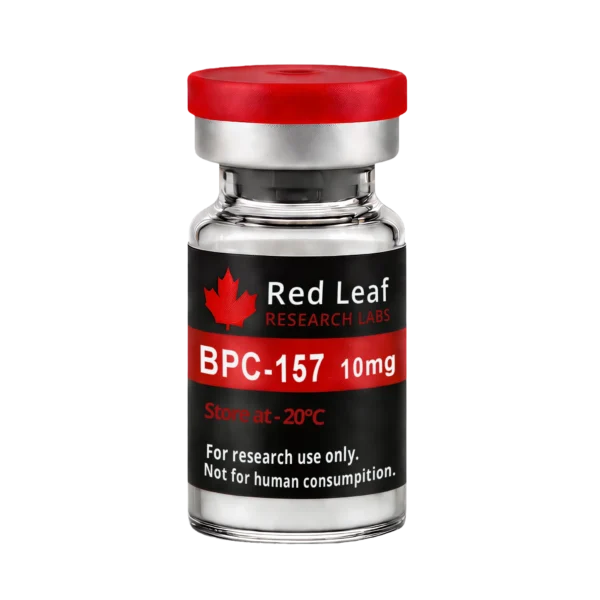 BPC-157 (10mg)$75
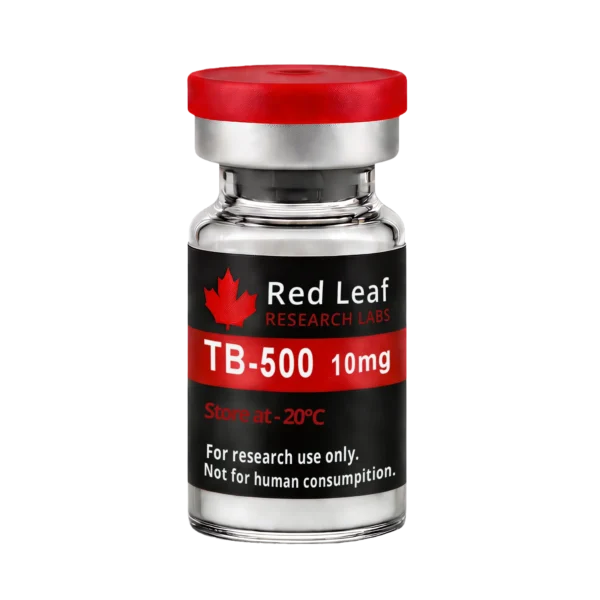 TB-500 (10mg)$84.99
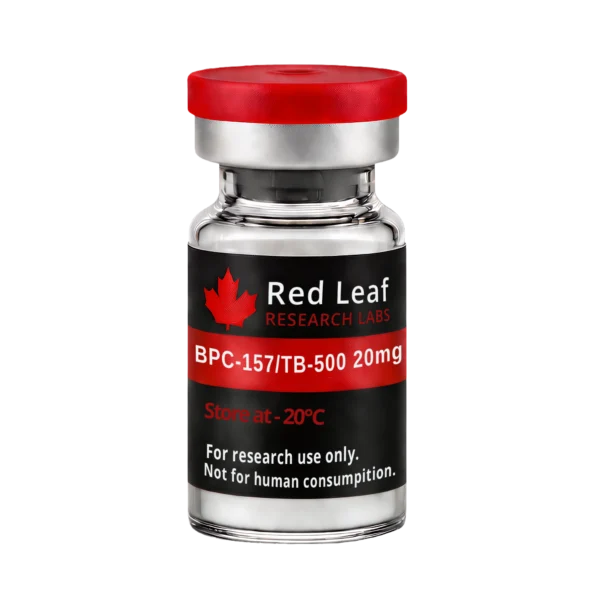 BPC-157 / TB-500 20mg$110
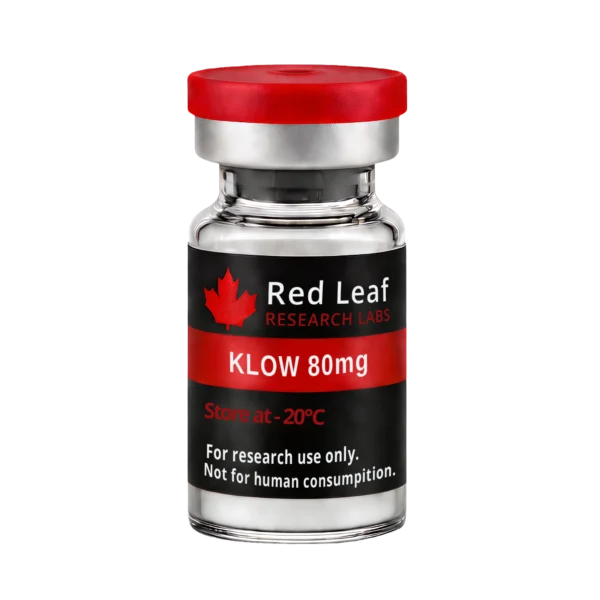 KLOW 80mg – 3ml vial$125
 Pfizer Bacteriostatic Water 30ml$24
 Peptide Pens Canada – Red Leaf Research Pen Add-On$99
Every Red Leaf research vial carries an independent lab report with a verify link, right on the product page. Free express shipping on Canadian orders over $250.
Research use only. All products sold by Red Leaf Research Labs are laboratory materials supplied for in-vitro research and are not for human or veterinary use. Nothing on this page is medical advice, a dose, or a protocol. The owner’s story above is a personal account, not a claim about any product. Talk to a doctor about back pain, and go to the ER for the warning signs listed on this page. Full wording on our legal terms page.