Owned and operated by a cf veteran


The copper peptide, from malachite eye paint to modern matrix research — and what the delivery system has to do with the results.
- Copper-binding tripeptide
- Matrix and wound models
- Blue is copper, not quality
- Research use only
GHK-Cu is a copper-binding tripeptide studied in extracellular-matrix signalling, fibroblast behaviour, collagen organisation and wound models. The delivery system was part of most of those experiments, so a hydrogel study does not test a freeze-dried vial. And the blue colour tells you copper is present, nothing more.
- GHK-Cu Canada: the essential facts
- Did Cleopatra really use copper?
- Copper before peptides: colour, symbolism and practical use
- What exactly is GHK-Cu?
- From discovery to modern GHK-Cu research
- What does the human evidence actually show?
- GHK-Cu in cosmetics versus GHK-Cu research material
- Is GHK-Cu legal in Canada?
- Why “GHK-Cu Canada” searches are growing
- How to evaluate GHK-Cu information online
- From malachite to molecular biology: what truly changed?
- What researchers still need to learn
- A responsible Canadian perspective
- The lasting lesson of copper
- Frequently asked questions about GHK-Cu in Canada
- What the Cleopatra comparison can—and cannot—teach us
- Sources and further reading
Quick answer: Ancient Egyptians used copper-bearing malachite as green eye paint thousands of years before modern chemistry. Cleopatra VII almost certainly knew the cosmetic tradition that surrounded her, but no surviving source proves that she personally followed a specific “copper skincare routine.” Today, the phrase GHK-Cu Canada refers to a very different material: a defined, blue copper complex formed when the three-amino-acid peptide GHK binds copper. Researchers study that complex in skin, wound, inflammation and tissue-remodelling models. The historical connection is copper—not an unbroken recipe from Cleopatra’s dressing table.
Few skincare stories are as irresistible as a royal beauty secret. Cleopatra, copper and a vivid blue peptide seem to form a perfect line from the ancient world to the laboratory. The true story is better, because it shows how observation, archaeology and molecular science can illuminate one another without turning legend into fact.
This guide follows copper from ancient Egyptian cosmetic palettes to the discovery of GHK-Cu in human plasma in the twentieth century. It explains what researchers know, where evidence remains preliminary, and what Canadians should understand about the sharp legal and safety distinction between cosmetics, research materials and unauthorized injectable products.
Research and safety notice: This article is educational and does not provide medical advice, treatment instructions, dosing or reconstitution guidance. Red Leaf Research Labs supplies research-use materials only. They are not approved by Health Canada for injection, ingestion, therapeutic use, cosmetic application on clients, or human or animal use.
You can check any of these numbers with our reconstitution calculator, which converts vial size and water volume into mg per mL and syringe units.
GHK-Cu Canada: the essential facts
- GHK is a tripeptide made from glycine, histidine and lysine.
- GHK-Cu is the complex formed when GHK binds a copper(II) ion. In cosmetic ingredient lists, a related naming convention is Copper Tripeptide-1.
- The complex was identified in human plasma in 1973, not recovered from an ancient formula.
- Ancient Egyptian green eye paint often contained malachite, a copper carbonate mineral. That is authentic archaeological history.
- No reliable surviving evidence establishes a personal copper regimen used by Cleopatra VII.
- Laboratory, animal and limited human cosmetic research has examined GHK-Cu in relation to extracellular matrix activity, wound processes, inflammation and visible skin characteristics.
- These findings do not establish injectable GHK-Cu as an approved treatment.
- Health Canada specifically warns consumers not to buy or use unauthorized injectable peptides, and has named GHK-Cu among the examples.
Did Cleopatra really use copper?
The most accurate answer is: ancient Egyptians demonstrably used copper-containing cosmetics, while Cleopatra’s personal use is plausible but not directly documented. That distinction matters. Cleopatra VII lived from 69 to 30 BCE, very late in a cosmetic tradition already thousands of years old. By her lifetime, eye paint, oils, ointments, perfumes and elaborate cosmetic containers were established parts of Egyptian material culture.
Museum collections and archaeological studies identify malachite—a green copper carbonate mineral—as an ancient Egyptian eye-paint material. Lumps of ore, grinding stones, palettes and green residues have been found in burials. The pigment was ground and could be combined with a medium so it would adhere around the eyes. The Global Egyptian Museum describes malachite as a green copper ore used in Egypt almost exclusively for eye paint, while University College London’s Digital Egypt resource documents malachite ore found with palettes and grinding pebbles.
That is strong evidence for a civilization-wide practice. It is not the same as an inventory from Cleopatra’s palace or a first-person description of her daily routine. Many online articles collapse “ancient Egyptians used malachite” into “Cleopatra used copper on her skin.” A responsible history keeps those claims separate.
Why Cleopatra became the face of ancient beauty
Cleopatra’s modern image combines ancient accounts, Roman propaganda, later art, theatre, film and cosmetic marketing. She was a multilingual ruler and political strategist whose historical importance went far beyond appearance. Yet each era remade her as a beauty icon. As a result, generic Egyptian practices—milk baths, mineral pigments, honey masks, oils and perfumes—are routinely attached to her name even when contemporary evidence is missing.
The famous donkey-milk bath is a good example. Scholars searching ancient literary databases have reported no ancient source that proves Cleopatra bathed in milk. The absence of a surviving record does not prove she never did it; it means the claim should be labelled legend rather than fact. The copper story deserves the same care.
What Cleopatra could have encountered
As the last active ruler of the Ptolemaic Kingdom, Cleopatra lived in a court where Egyptian and Hellenistic customs met. She would have been surrounded by long-standing traditions of eye paint, scented oils, unguents and personal adornment. Copper-bearing malachite remained part of the broader archaeological record of Egyptian cosmetics, although black galena-based kohl became especially prominent in later periods.
A historically honest formulation is therefore: Cleopatra inherited a culture with a deep tradition of copper-containing mineral cosmetics. It is reasonable to use her as the narrative doorway into that culture, but not to present a reconstructed copper peptide routine as her documented beauty secret.
Copper before peptides: colour, symbolism and practical use
To an ancient user, malachite was not “GHK-Cu.” It was a mineral pigment with a striking green colour. Modern chemical names help us understand its composition, but they do not make the ancient preparation molecularly equivalent to a peptide complex.
Green had cultural resonance in Egypt, evoking vegetation, renewal and vitality. Eye cosmetics could serve aesthetic, social, religious and practical purposes at the same time. Oils and ointments helped condition skin in a dry climate. Dark and green pigments framed the eyes. Some historical formulations may also have had effects that ancient users observed without understanding molecular mechanisms.
Researchers have investigated antimicrobial or biological effects of certain ancient eye-paint compounds, but it is easy to overgeneralize. Ancient mixtures varied, and some commonly used minerals contained lead. “Natural,” “royal” and “ancient” are not synonyms for safe. No one should recreate ancient mineral cosmetics from raw ore for use on the skin or eyes.
The key historical bridge is curiosity, not continuity
The strongest connection between malachite and GHK-Cu is a recurring human interest in copper at biological surfaces. Ancient artisans selected a copper mineral for colour and cultural meaning. Modern researchers isolate molecules, quantify concentrations, model pathways and test hypotheses. The modern complex is not the perfected version of an ancient recipe; it is the product of a different knowledge system.
What exactly is GHK-Cu?
GHK is shorthand for the amino-acid sequence glycyl-L-histidyl-L-lysine. Three amino acids make it a tripeptide. The histidine residue and neighbouring chemical groups provide a binding environment for copper. When GHK coordinates a copper(II) ion, the result is commonly called GHK-Cu or the copper tripeptide complex.
The complex is often blue because copper’s electronic structure affects how it absorbs visible light. That colour makes an appealing visual link to Egyptian blues and greens, but the chemistry is distinct from malachite. Malachite is an inorganic copper carbonate hydroxide mineral. GHK-Cu is a defined coordination complex involving an organic peptide.
A molecule already connected to human biology
GHK was first isolated from human plasma in 1973 during work investigating factors associated with liver tissue growth. Subsequent research found GHK in human fluids and examined its affinity for copper. The complex has been studied as a possible carrier or regulator that makes copper available within tightly controlled biological contexts.
Copper is an essential trace element. Enzymes use it in processes involving connective tissue, antioxidant defence, energy metabolism and pigmentation. Yet free copper can also participate in damaging oxidation chemistry. Biology therefore binds, transports and buffers it carefully. GHK-Cu is interesting partly because it offers a model for how a small peptide may coordinate copper rather than leaving the ion unbound.
Why levels and context matter
Popular explanations sometimes portray copper as uniformly restorative. Biology is more conditional. The same element can be necessary at an appropriate location and amount but disruptive when its form, dose or compartment changes. Experimental findings depend on cell type, model, delivery method, concentration, formulation and outcome measured.
That is why a result in cultured fibroblasts cannot be translated automatically into a consumer promise. A laboratory mechanism, an animal wound model, a finished cosmetic and an injectable drug are four different evidence and regulatory questions.
From discovery to modern GHK-Cu research
Interest in GHK-Cu expanded from copper transport to tissue repair and skin biology. Reviews describe work in cell culture, animal models and smaller clinical or cosmetic studies. The recurring themes include extracellular matrix regulation, wound remodelling, inflammatory signalling and antioxidant-related processes.
Extracellular matrix and collagen-related research
The extracellular matrix is the structural environment surrounding cells. Collagens, elastin, proteoglycans and other molecules help determine tissue strength and organization. Skin ageing and injury both involve changes to this matrix, but in very different contexts.
Experimental literature reports that GHK-Cu can influence fibroblast activity and the production or remodelling of certain matrix components. Some studies have described increased collagen, elastin, glycosaminoglycan or decorin-related measures. Researchers have also examined matrix metalloproteinases and their inhibitors—the paired systems involved in breaking down and rebuilding extracellular material.
The useful interpretation is not “GHK-Cu creates new skin.” It is that the complex appears capable of modulating signals involved in matrix turnover under some experimental conditions. Whether that produces a meaningful outcome in people depends on formulation, exposure, study quality and the clinical question.
Wound-healing models
Wound repair unfolds through overlapping phases: haemostasis, inflammation, tissue formation and remodelling. Copper-dependent enzymes and matrix processes contribute to this sequence. GHK-Cu has therefore been evaluated in experimental wound models, including animal studies that measured closure, granulation tissue, vascular features or biochemical markers.
Some models report favourable differences compared with controls. These findings provide a reason for further investigation, not authorization for self-treatment. Animal wounds are deliberately controlled research systems. Human wounds vary by cause, depth, infection, blood flow, medication, diabetes and many other factors. Products placed on broken skin face different safety and regulatory requirements from ordinary cosmetics.
Inflammation and oxidative stress
Reviews also discuss anti-inflammatory and antioxidant-associated observations. GHK-Cu has been linked in experimental systems to changes in inflammatory mediators and protection against certain forms of cellular stress. The wording matters: it may influence pathways or markers; it has not thereby been proven to treat every condition in which inflammation is involved.
Broad pathway claims are particularly vulnerable to exaggeration. Thousands of substances change gene expression in cells. The important questions are whether the effect is reproducible, relevant at realistic exposure, associated with a meaningful endpoint and supported by controlled human evidence.
Gene-expression findings
One modern strand of GHK research uses gene-expression databases to identify patterns that shift in the presence of GHK or GHK-Cu. Authors have proposed that the peptide may influence networks related to repair, inflammation and tissue homeostasis. These analyses can generate valuable hypotheses, but they are not equivalent to clinical trials. A changed transcript does not guarantee a changed protein, tissue function or health outcome.
What does the human evidence actually show?
The best way to discuss GHK-Cu is to separate evidence tiers.
- Chemistry is established: GHK binds copper and forms a characterized complex.
- Biological activity is supported in experimental systems: cell and animal studies report effects relevant to matrix biology, wounds and inflammatory signalling.
- Topical cosmetic evidence is suggestive but limited: some small studies and manufacturer-associated research report improvements in visible skin parameters.
- Broad therapeutic and injectable claims are not established: GHK-Cu is not an approved injectable drug in Canada.
Reviews of bioactive compounds for skin health describe copper tripeptide complexes as cosmetic ingredients associated with skin protection and regeneration. Older human studies are often summarized as showing changes in skin density, thickness, laxity or wrinkle appearance after topical use. However, many reports are small, older, difficult to verify in full, or tied to proprietary formulations. They do not provide the breadth of independent randomized evidence expected for a drug claim.
Finished-product performance also cannot be inferred from ingredient presence alone. Stability, pH, packaging, concentration, vehicle, skin penetration and interactions with other ingredients all matter. A blue serum and a vial of research material should never be treated as interchangeable.
GHK-Cu in cosmetics versus GHK-Cu research material
This distinction is central for Canadian readers.
Cosmetic products
A finished cosmetic is manufactured and represented for cleansing, improving or altering the appearance of skin, hair, teeth or complexion without therapeutic claims. Canadian cosmetics must comply with the Food and Drugs Act and Cosmetic Regulations. Manufacturers and importers have notification, ingredient, labelling and safety responsibilities. Appearance claims are not a loophole for drug claims.
On a cosmetic label, consumers may see Copper Tripeptide-1. The full formula—not only one headline ingredient—determines the experience and safety profile. Anyone with reactive skin should follow the finished product’s label and consult an appropriate health professional about persistent irritation.
Research-use-only material
Research materials are supplied for controlled laboratory investigation. “Research use only” is a use restriction, not a promise that a product is suitable for personal experimentation. Qualified laboratories rely on written protocols, risk assessments, analytical documentation, appropriate containment and institutional rules.
Red Leaf’s legal disclaimer states that its materials are not approved for human or animal use, injection, ingestion, therapeutic treatment or cosmetic application on clients. Researchers evaluating Canadian suppliers can also review the site’s guide to research peptides in Canada.
Unauthorized injectable products
An injectable product sold with health or anti-ageing claims belongs in a very different regulatory category. Sterility, endotoxin, particulate matter, identity, potency, manufacturing controls and clinical evidence become critical. A purity percentage alone cannot establish injection safety.
In April 2026, Health Canada warned that unauthorized injectable peptides sold online can seriously harm consumers and explicitly listed GHK-Cu among examples. In May 2026, the regulator also published a recall involving GHK-Cu powder identified as an unauthorized active pharmaceutical ingredient. Canadians should check for an eight-digit Drug Identification Number when a product is represented as a drug and should not interpret “peptide,” “laboratory tested” or “research grade” as authorization for human injection.
Is GHK-Cu legal in Canada?
The accurate answer depends on product and representation, not just the molecule’s name.
- A compliant finished cosmetic may contain Copper Tripeptide-1 and be sold subject to Canadian cosmetic requirements.
- A genuine research material may be supplied for legitimate laboratory use under appropriate restrictions.
- A product marketed to diagnose, treat, mitigate or prevent disease may be a drug and require authorization.
- An unauthorized injectable GHK-Cu product is not made lawful merely by printing “research use only” on the label while marketing it for personal use.
Regulatory classification is fact-specific. Claims, dosage form, route, packaging, advertising and intended use can all affect status. For current official guidance, consult Health Canada rather than relying on a seller’s social-media description.
Why “GHK-Cu Canada” searches are growing
Search interest sits at the intersection of skincare, longevity culture, hair-loss discussions and the broader peptide trend. Semrush’s Canadian database on August 11, 2026 showed an estimated 210 monthly searches for “ghk-cu canada,” 390 for “ghk-cu peptide canada,” and 320 for the unhyphenated variation “ghk cu peptide canada.” The primary term had a keyword-difficulty estimate of only 6%, suggesting an accessible result set.
Yet low keyword difficulty does not lower the standard of evidence. Health information is a trust-sensitive subject. A page is more useful when it acknowledges uncertainty, cites primary or authoritative sources, explains Canadian rules and avoids giving consumers a protocol for an unauthorized product.
How to evaluate GHK-Cu information online
1. Identify the evidence level
Ask whether a statement comes from a test-tube experiment, animal model, observational report, controlled human study, systematic review or marketing page. These sources answer different questions. A mechanistic study can explain plausibility but usually cannot prove a consumer outcome.
2. Look for the actual formulation and route
Topical, oral and injectable exposure are not equivalent. Neither are a finished cosmetic serum, raw powder and sterile authorized drug. If a page shifts between them without warning, its conclusions are unreliable.
3. Check for authorization, not just certificates
A certificate of analysis may report identity or purity for a tested sample. It does not replace manufacturing authorization, clinical evidence, sterility validation or a DIN. Health Canada’s databases and safety notices are more authoritative for Canadian regulatory status.
4. Watch for historical storytelling presented as proof
Cleopatra is a compelling introduction, not a clinical endpoint. A claim does not become scientifically stronger because it is described as ancient wisdom. Archaeology establishes that Egyptians used copper-bearing malachite; it does not validate a modern injection protocol.
5. Prefer transparent uncertainty
Credible writing distinguishes “is,” “may,” “has been studied” and “has been proven.” It names study limitations and avoids testimonials as substitutes for controlled data. In an emerging field, intellectual honesty is a mark of expertise.
From malachite to molecular biology: what truly changed?
The journey from ancient Egypt to GHK-Cu is not a straight product-development timeline. It is a sequence of transformations in how humans understand materials.
Ancient material knowledge: craftspeople recognized colour, texture, source and practical behaviour. They developed tools for grinding and mixing minerals and embedded cosmetics in social and ritual life.
Chemical classification: mineralogy and analytical chemistry later identified malachite as a copper compound and distinguished elements, salts and ores.
Biochemistry: scientists learned that metals are not only pigments or structural materials; they are cofactors carried and controlled by biological molecules.
Peptide science: isolation and sequencing made it possible to identify GHK, characterize its copper binding and test effects in defined models.
Modern regulation: societies developed separate frameworks for cosmetics, research chemicals and drugs because intended use and route profoundly alter risk.
This broader history is more instructive than the idea of a single royal secret. It shows science turning a familiar element into a precise research question.
What researchers still need to learn
Several questions remain open. High-quality independent studies could clarify which topical formulations deliver meaningful amounts of GHK-Cu to relevant skin layers, what concentrations remain stable, which visible outcomes are reproducible and how results compare with established cosmetic ingredients.
Longer and larger controlled trials would help quantify benefits and adverse effects across varied ages and skin types. Research should separate ingredient-level findings from finished-product claims. For hair and scalp questions, investigators need clinically meaningful endpoints rather than extrapolation from wound or skin-cell models.
For systemic or injectable use, the evidence gap is larger. Researchers would need rigorous pharmacokinetics, toxicology, dose-ranging, manufacturing controls and randomized clinical trials before therapeutic conclusions could be justified. Online popularity cannot substitute for those steps.
A responsible Canadian perspective
Canada’s contribution to this conversation should be both curious and cautious. GHK-Cu is a legitimate subject of biochemical research. Copper peptides also have an established presence in the international cosmetics vocabulary. At the same time, official Canadian warnings about unauthorized injectable peptides are recent and explicit.
These facts can coexist. It is possible to describe promising mechanisms without recommending personal use, to discuss cosmetics without treating raw research powder as a cosmetic, and to appreciate ancient Egyptian ingenuity without inventing a Cleopatra protocol.
For laboratories, the practical priorities are identity, traceability, analytical documentation, controlled handling and use within approved protocols. For consumers, the priorities are reading finished-product labels, checking the regulatory category and avoiding unauthorized injections. For writers and brands, the priority is precise language.
The lasting lesson of copper
Copper’s story has endured because the element is visually beautiful, chemically versatile and biologically important. Ancient Egyptians saw a green mineral that could transform the eye. Modern researchers see a metal ion whose behaviour changes when coordinated by a three-amino-acid peptide.
Cleopatra stands at the cultural centre of the story, but not as the inventor of GHK-Cu. Her world gives us the archaeological opening: copper-bearing colour, ritual and personal care. Modern biochemistry supplies a separate chapter: plasma peptides, coordination chemistry and controlled experiments. Canadian regulation supplies the necessary final chapter: a molecule’s context and intended use matter as much as its name.
That is the honest arc from Cleopatra to today. It is not a 2,000-year-old beauty recipe reborn. It is something more interesting—a record of how human beings moved from using a remarkable material to asking, molecule by molecule, what it does.
Frequently asked questions about GHK-Cu in Canada
Did Cleopatra use GHK-Cu?
No. GHK-Cu was identified by modern biochemical research, and there is no evidence Cleopatra used the defined peptide complex. Ancient Egyptians did use malachite, a copper-bearing green mineral, in eye cosmetics. Cleopatra may have known that tradition, but her personal use is not directly documented.
What is GHK-Cu?
GHK-Cu is a coordination complex between copper(II) and the tripeptide glycyl-L-histidyl-L-lysine. Researchers study it in models related to copper transport, extracellular matrix regulation, wound processes, inflammation and skin biology.
Is GHK-Cu the same as Copper Tripeptide-1?
Copper Tripeptide-1 is the name commonly encountered on cosmetic ingredient lists for a copper complex of the GHK tripeptide. Product formulas vary, so the ingredient name alone does not establish concentration, stability, delivery or performance.
Is GHK-Cu legal in Canada?
Status depends on the finished product, claims, route and intended use. Copper Tripeptide-1 may appear in compliant cosmetics. Research materials may be supplied for legitimate laboratory work. GHK-Cu is not thereby an approved injectable treatment, and Health Canada has warned about unauthorized injectable GHK-Cu products.
Is injectable GHK-Cu approved by Health Canada?
No authorized injectable GHK-Cu product was identified in the Health Canada materials reviewed for this article. Health Canada’s April 2026 warning specifically names GHK-Cu among unauthorized injectable peptides consumers should not buy or use.
What does research say about GHK-Cu and skin?
Cell, animal and limited human cosmetic research suggests possible effects on matrix remodelling, collagen-related measures, wound biology and visible skin characteristics. The evidence is not equally strong for every claim, and broad therapeutic conclusions are not established.
Can research-grade GHK-Cu be used as a cosmetic ingredient at home?
“Research grade” indicates a laboratory-use context, not suitability for home formulation or application. Raw material and a compliant finished cosmetic are not interchangeable. Red Leaf products are not intended for cosmetic application on clients or for human use.
Why is GHK-Cu blue?
The copper ion’s electronic environment within the peptide complex influences light absorption, producing a characteristic blue colour. This is different from the green of malachite, which is an inorganic copper carbonate mineral.
Does GHK-Cu grow hair?
Mechanistic and preclinical discussions have generated interest in hair and follicle biology, but robust clinical evidence for GHK-Cu as a hair-loss treatment remains limited. It should not replace assessment or authorized treatments recommended by a qualified professional.
How should Canadians verify a GHK-Cu claim?
Check whether the source distinguishes cosmetics, research materials and drugs; review the evidence type; verify authorization through Health Canada; and be sceptical of dosing instructions, injectable claims or testimonials presented without controlled human data.
What the Cleopatra comparison can—and cannot—teach us
The comparison is useful when it encourages better questions. What materials did ancient people choose, how were they prepared, and what did those materials mean in daily life? How did later chemists learn to identify copper within minerals? How do modern biochemists distinguish a copper salt from a copper-protein or copper-peptide complex? Each question belongs to a different discipline, and combining their answers produces a richer account than a simple beauty-secret headline.
The comparison becomes misleading when it implies endorsement. Cleopatra’s fame cannot validate a contemporary formulation, and the biological activity of GHK-Cu cannot retroactively explain every ancient cosmetic practice. Archaeological evidence, molecular experiments, cosmetic testing and drug authorization are independent layers of proof. Keeping them separate protects both good history and good science.
For Canadian readers, this distinction has practical value. Search results often place retail listings, cosmetic serums, research vials and wellness claims on the same page. Similar names can create a false sense that the items are equivalent. They are not. Before evaluating any claim, identify the material, formulation, intended use, route, evidence level and regulatory category. That six-part check is more useful than any royal anecdote.
Sources and further reading
- GHK Peptide as a Natural Modulator of Multiple Cellular Pathways in Skin Regeneration, a peer-reviewed review of GHK-Cu research.
- Bioactive Compounds for Skin Health: A Review, including discussion of copper tripeptide complexes in cosmetics.
- Local and Systemic Peptide Therapies for Soft Tissue Regeneration, a narrative review discussing GHK-Cu evidence.
- Global Egyptian Museum: Malachite, describing copper ore used as Egyptian eye paint.
- UCL Digital Egypt: Cosmetic Materials, archaeological context for malachite and palettes.
- Health Canada: Think twice before injecting peptides bought online, April 9, 2026.
- Health Canada recall: GHK-Cu and BPC-157 powder, May 7, 2026.
- Health Canada: Regulatory information for cosmetics.
Last reviewed: August 11, 2026. Regulatory information can change; consult current Health Canada guidance.
 GHK-Cu 100mg$64.99 CAD · research use only
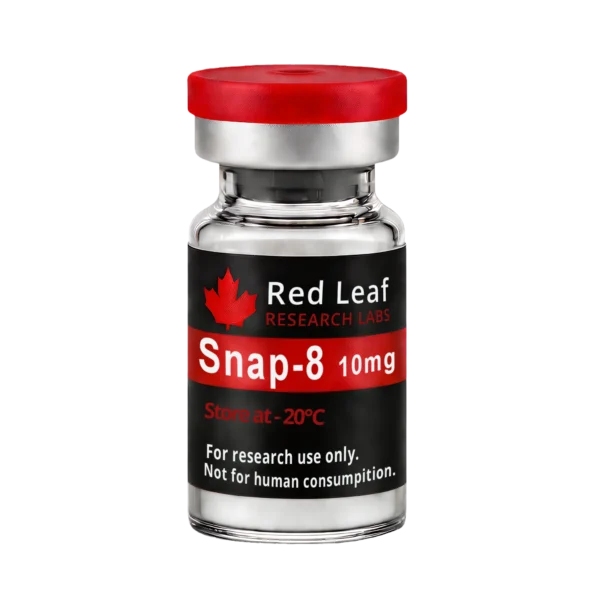 Snap 8 10mg$59.99 CAD · research use only
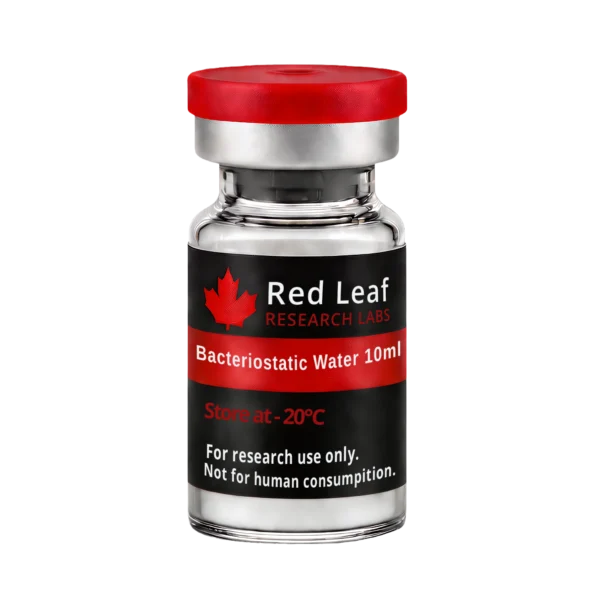 Bacteriostatic Water$10 CAD · research use only
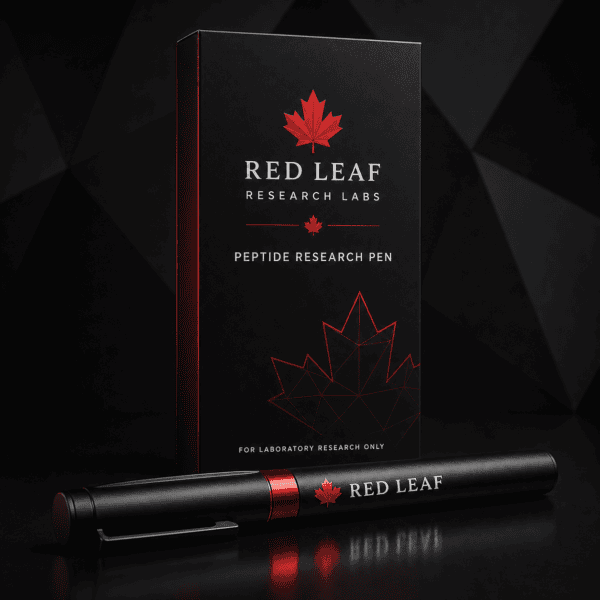 Peptide Pens Canada – Red Leaf Research Pen Add-On$99 CAD · research use only
Every product page carries its batch lab report with a verification link you can check at the testing laboratory, not just a PDF we host.
Research use only. Products sold by Red Leaf Research Labs are not approved by Health Canada for cosmetic application, therapeutic treatment, injection, ingestion, or any form of human or animal use. No claims are made regarding clinical outcomes, safety or efficacy. Pricing and stock are current at the time of publication and subject to change.