
 Owned and operated by a cf veteran

What the retatrutide trials actually reported. Mostly gut trouble. Here are the numbers, in plain words, with nothing sold to you.
- Gut effects most common
- 3,000+ people in Phase 3
- Not approved anywhere
- Testing still going
Most retatrutide side effects in the trials were gut effects. Diarrhea, nausea, constipation and vomiting. They mostly showed up while the dose was going up, and were mostly mild. Bigger doses meant more of them and more people quitting. Rarer findings turned up too. A faster heart rate. Odd skin feelings. One case of pancreatitis. A few gallbladder events. The drug is not approved anywhere and safety testing is not finished.
Updated August 2026: Retatrutide is a drug that is still being tested. It is not approved as a medicine anywhere. Nobody has finished working out how safe it is.
That last part is the whole point of this page, so here it is again. The testing is not finished.
What the testing has shown so far is fairly clear, and it is mostly about your gut. Most people in the trials got some kind of stomach trouble. It usually turned up while the dose was being raised. It was usually mild. Bigger doses caused more of it, and more people quit.
A few less common things showed up too. A faster heartbeat. Odd feelings in the skin. A small number of pancreas and gallbladder problems.
Below is what the trials actually reported, in plain words. Red Leaf Research Labs sells retatrutide for lab research only. Nothing here is medical advice, and nothing here is a suggestion to use it.
Retatrutide side effects at a glance
| Finding | What clinical trials reported |
|---|---|
| Diarrhea | One of the most frequent events; reported by 27.4%–33.6% of retatrutide groups in TRIUMPH-2 versus 13.2% with placebo. |
| Nausea | Reported by 13.7%–28.0% in TRIUMPH-2 versus 8.0% with placebo. |
| Constipation | Reported by 14.0%–16.8% in TRIUMPH-2 versus 9.4% with placebo. |
| Vomiting | Reported by 5.5%–15.7% in TRIUMPH-2 versus 4.2% with placebo. |
| Decreased appetite | Reported by 5.8%–17.1% in TRIUMPH-2 versus 4.5% with placebo. |
| Altered skin sensation | Dysesthesia occurred in 4.5%–7.3% of TRIUMPH-2 groups versus 0.7% with placebo. |
| Treatment discontinuation | In TRIUMPH-2, 3.8%–11.6% discontinued because of adverse events, compared with 4.9% on placebo. |
One thing to keep in mind about those Phase 3 numbers. They come from the company running the trials, in a July 2026 announcement. When this page was updated, the full TRIUMPH-2 and TRIUMPH-3 papers were not out. Nobody outside the company had checked them.
Why retatrutide upsets your gut
Most drugs in this family pull one lever. Retatrutide pulls three.
The three are called GIP, GLP-1 and glucagon. You do not need to remember the names. What matters is that one of them, GLP-1, is the one your gut listens to.
GLP-1 tells your stomach to empty more slowly. It also tells your brain you have had enough to eat. That is the whole reason the drug exists.
It is also exactly why people feel sick.
You cannot have one without the other. The thing that makes you eat less is the same thing that makes your stomach unhappy. Every drug in this family works this way. That is why nausea, diarrhea, throwing up and constipation keep showing up.
In the peer-reviewed Phase 2 trial, the gut trouble mostly happened while the dose was being raised. It was mostly mild to moderate. Bigger doses caused more of it. Starting lower helped a bit. There is a longer explanation of retatrutide’s effects on digestion if you want the detail.
What the first proper trial found
338 adults. 48 weeks. That is the study everybody quotes.
Between 73% and 94% of the people on retatrutide had at least one side effect. On placebo it was 70%. So nearly everyone had something, including the people getting nothing at all.
Between 6% and 16% quit because of side effects. Nobody on placebo quit.
Serious events hit 4% on the drug and 4% on placebo. The same number. That is reassuring, but only a little. 338 people over 48 weeks is not enough to catch something rare.
The researchers also reported:
- Heart rate went up, and more so at bigger doses. It peaked around week 24 and came down after that.
- Skin sensitivity in 7% of people on the drug, against 1% on placebo.
- One serious case of acute pancreatitis.
- Three gallbladder events — one case of cholecystitis and two of gallstones.
- Liver enzymes over three times the normal limit in 1% of people, and they settled back down.
- No serious low blood sugar, no medullary thyroid cancer and no C-cell hyperplasia during the trial.
That last line gets quoted a lot. Read it carefully.
It says nobody in this trial got those things. It does not say the drug cannot cause them. Those are two different sentences, and people mix them up constantly.
What the big 2026 trials added
In July 2026 the company put out early numbers from two more studies. TRIUMPH-2 and TRIUMPH-3. Over 3,000 people between them. 80 weeks.
Nothing new turned up. It was the gut again.
In TRIUMPH-2: diarrhea in 27.4%–33.6% of the retatrutide groups, nausea in 13.7%–28.0%, constipation in 14.0%–16.8%, throwing up in 5.5%–15.7%. TRIUMPH-3 looked much the same.
Most of it was mild. Most of it settled down while people kept taking the drug.
But 13.5% of the 12 mg group in TRIUMPH-3 quit because of side effects, against 4.8% on placebo. The higher the dose, the more people bail out. That is the same thing Phase 2 showed, just with more people watching.
And hold on to this. These are topline numbers, released by the company that makes the drug. Nobody outside has checked the working yet.
Are there serious retatrutide risks?
Retatrutide is not approved. So there is no official leaflet listing the warnings and the reasons not to take it. Nobody has written that document, because the drug is not finished.
Here is what researchers are watching.
Throwing up and diarrhea that will not stop
Keep either going long enough and you get dry. Your salts go out of balance. That is an ordinary side effect turning into a real problem. Bad symptoms, or ones that keep going, need a doctor. Not a forum.
Pancreatic and gallbladder events
The Phase 2 trial had one serious case of acute pancreatitis. It also had several gallbladder events. That is far too few to work out a real risk. It is still worth knowing they happened.
A faster heartbeat
Heart rate went up in Phase 2. It went up more on bigger doses. What that means over years, nobody knows. Get urgent help for chest pain. Or fainting. Or a heart that stays fast. Or bad trouble breathing.
Odd feelings in the skin
Doctors call it hyperesthesia and dysesthesia. It means skin that tingles, burns or feels odd when nothing is wrong with it. In the trials it was usually not severe. It happened more often on retatrutide than on placebo.
The things nobody knows yet
Phase 3 adds a lot. It cannot tell you what happens after years. It cannot tell you about rare events. And it says nothing about people who were kept out of the trials.
Does retatrutide cause fatigue?
People talk about this a lot online. The honest answer is that tiredness has too many causes here to pin on one thing. Eating far less will do it. So will feeling sick. So will being dry, sleeping badly, or blood sugar moving around.
Our separate guide, Does Retatrutide Make You Tired?, pulls the trial findings apart from the forum stories.
Retatrutide safety compared with Ozempic and Mounjaro
These three are not one drug with three labels. They pull different levers. Treating them as swappable is a mistake.
Stomach trouble runs across the whole family. What barely exists is head-to-head testing. So anyone saying one is gentler is guessing.
There is also a plainer gap. Ozempic and Mounjaro have been in real people for years, outside trials. Problems get reported. Retatrutide has not. There is no pile of real-world safety reports, because there are no approved patients.
Our Retatrutide vs Ozempic comparison goes through the mechanism, the evidence and the regulatory differences.
Common questions
What is the most common side effect of retatrutide?
Stomach trouble, by a wide margin. Diarrhea, nausea, constipation and throwing up came top in the 2026 Phase 3 topline numbers.
Do retatrutide side effects get worse at higher doses?
Yes, that is what the trials showed. More gut trouble in the higher-dose groups, and starting lower helped some. That is an observation from a trial, not a dosing suggestion.
How long do retatrutide side effects last?
A lot of it happened while the dose was going up, then eased off. No published figure fits every person or every symptom. Anyone giving you a number is making it up.
Does retatrutide cause cancer?
No medullary thyroid cancers in the 48-week Phase 2 trial. No C-cell growth either. That is not the same as proving it cannot happen. Answering that needs bigger studies and longer follow-up. Neither exists yet.
Is retatrutide approved in Canada?
No. It is still being tested. In July 2026 the company said it planned to file for US approval in 2027. Anyone selling it as an approved treatment is lying to you.
Is retatrutide safe?
Nobody can answer that yet. Safety testing is not finished and no regulator has reviewed it. The trials show mostly mild gut effects, plus rarer findings. That is not the same as a safety record.
What are reta peptide side effects?
Reta is shorthand for retatrutide, so the same list applies. Diarrhea, nausea, constipation, vomiting and lower appetite came top in the trials.
How long does retatrutide stay in the body?
Trials dosed it once a week, which points to a long half-life. No exact figure is published for every person, and half-life is not the same as how long effects last.
Does retatrutide burn fat?
Trials measured weight change, not fat burning on its own. The reported average was 24.2% at 48 weeks in the Phase 2 12mg group. That is a trial average, not a promise.
What do retatrutide before and after photos prove?
Nothing you can rely on. Photos are not controlled data. Trial averages come from watched groups with placebo comparisons. Photos have neither.
How fast do retatrutide results show up?
The trials ran 48 to 80 weeks, so results were measured over months, not weeks. Anyone quoting a fast timeline is guessing.
Does retatrutide cause hair loss?
It was not reported as a common finding in the published trials. Rapid weight change itself is a known trigger for shedding, which makes the two hard to separate.
Can retatrutide cause pancreatitis?
One serious case of acute pancreatitis was reported in the 48-week Phase 2 trial. One case in 338 people is far too few to work out a real rate. It is still worth knowing it happened.
Is retatrutide worse than Ozempic for side effects?
Nobody knows. There is no head-to-head trial. Gut effects run across the whole family, and comparing numbers from separate trials is not a fair test.
Where can I read the trial data myself?
The Phase 2 obesity trial is in the New England Journal of Medicine. The Phase 3 TRIUMPH numbers are sponsor topline releases from July 2026 and have not been peer reviewed.
The short version
- Retatrutide is not approved anywhere. The testing is still going.
- The most common side effects are stomach ones, and they come from the same mechanism that makes it work.
- Most of it was mild to moderate and turned up while doses were being raised.
- Bigger doses meant more side effects and more people quitting. Up to 13.5% in the 12mg TRIUMPH-3 group.
- Rarer things were seen. A faster heartbeat. Odd skin feelings. One pancreatitis case. A few gallbladder events.
- “No cases were seen” is not the same as “it cannot happen”.
- The 2026 Phase 3 numbers came from the company, and nobody outside has reviewed them yet.
Stories online cannot tell you if something is safe. Trials can, in time. Until the full papers are out, this is the best anyone has.
Research-use notice: This article is for teaching and research reference only. It is not medical advice. It is not a diagnosis. It is not treatment advice. It is not a recommendation for use on people or animals. Red Leaf Research Labs products are sold for research use only.
Sources
- Jastreboff AM et al. Triple–Hormone-Receptor Agonist Retatrutide for Obesity — A Phase 2 Trial. New England Journal of Medicine (2023).
- Rosenstock J et al. Retatrutide in people with type 2 diabetes: Phase 2 trial. The Lancet (2023).
- TRIUMPH-2 and TRIUMPH-3 sponsor-reported topline results (July 23, 2026).
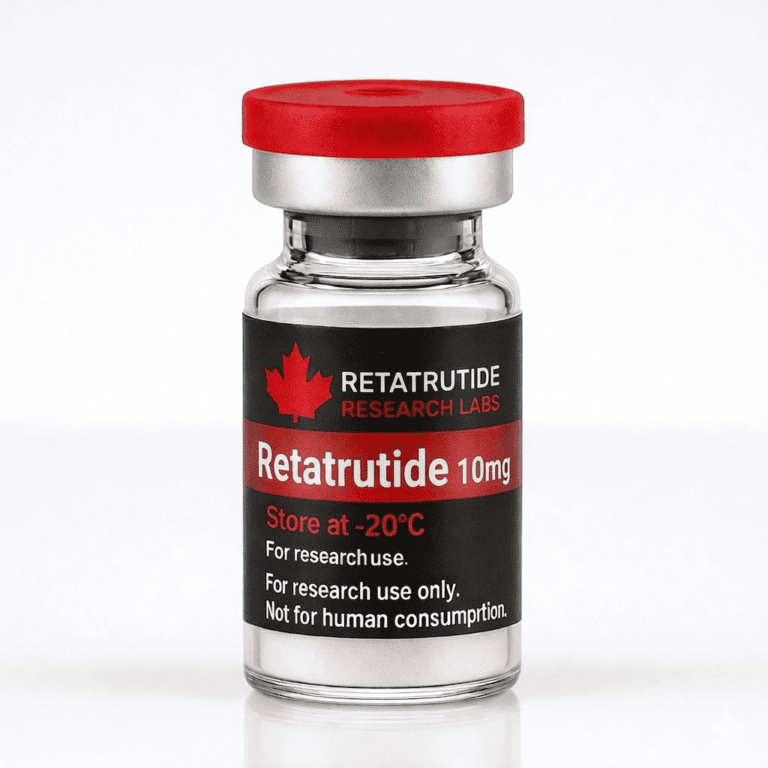 Retatrutide 10mg$89.99 CAD · research use onlyRetatrutide 20mg$149 CAD · research use onlyRetatrutide 30mg$199 CAD · research use only
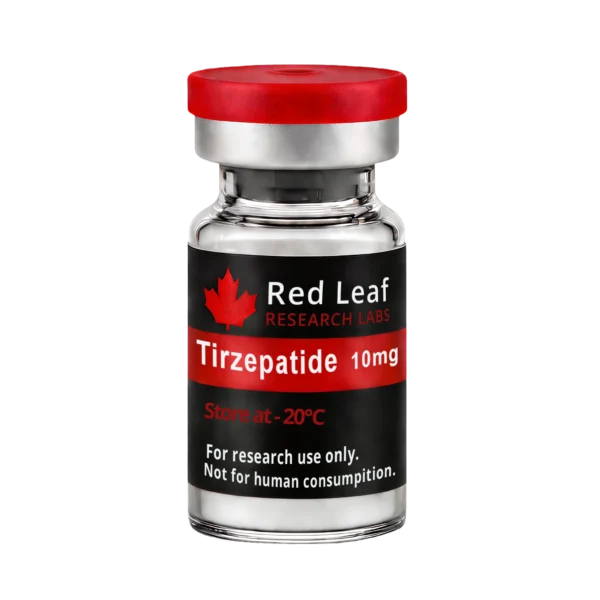 TirzepatideFrom $54 CAD · 10mg or 20mg
 Bacteriostatic Water 30mlMixing liquid for lab work
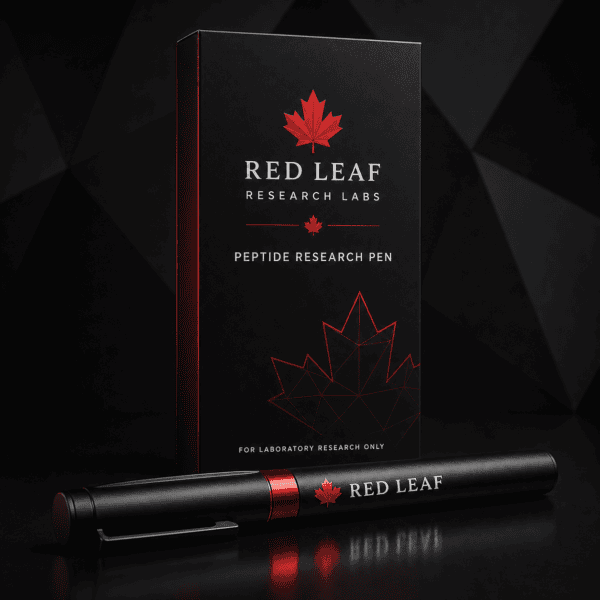 Research Pen Add-OnLab handling accessory
Other retatrutide guides on this site
Where to get retatrutide
The full buyer’s guide for labs, with supplier checks.
Availability in Canada
Where the rules stand and what approval would take.
Retatrutide cost in Canada
Price per mg, per vial and per size, with the full math.
Side effects in the research
What the trials reported, without turning it into advice.
Retatrutide vs Ozempic
Three receptors against one, on the published numbers.
Sema vs tirze vs reta
One, two and three receptors, side by side.
Sold for lawful lab research only. Not a medicine, and not for use on people or animals.
Research and buying information only. Not medical advice. Not dosing advice. Not a recommendation for human use. Retatrutide from Red Leaf Research Labs is lab research material and is not approved by Health Canada for injection, ingestion, or any human or animal use. Prices and shipping terms change; check the live product page. Reviewed September 5, 2026 by Baba Kahn, founder of Red Leaf Research Labs.