
 Owned and operated by a cf veteran


Why appetite drops on a triple agonist, what the trials actually measured. And where the forum talk runs ahead of the data.
- 3 receptors at once
- Slower stomach emptying
- Trial data only
- Not approved anywhere
Retatrutide switches on GLP-1, GIP and glucagon receptors. GLP-1 slows the stomach and tells the brain you have had enough. That is the main reason appetite drops in the trials. And it is the same mechanism behind the nausea. What the trials measured was weight change and reported symptoms, not hunger on its own. Retatrutide is not approved anywhere.
- Reta and appetite suppression …
- What is Reta?
- Does retatrutide suppress appe…
- How do researchers measure app…
- What did the Phase 2 appetite …
- What did participants say abou…
- How might retatrutide affect a…
- Is appetite suppression the on…
- Why does it differ so much bet…
- “Reta no appetite” means two o…
- Appetite suppression is not na…
- What are the limits of the evi…
- What Canadian laboratories sho…
- How to evaluate appetite claim…
- Common questions
- The short version
- Research references
Short answer: “Reta” is shorthand for retatrutide, an investigational peptide that switches on the GIP, GLP-1 and glucagon receptors. In controlled human research, people taking it reported less appetite, less hunger. And a smaller sense of how much they could eat. But the effect varied a lot between people, it was not the only reason weight came off. And complete loss of appetite is not a goal anybody should be chasing.
Online, this whole subject gets flattened into one question: does reta crush your appetite?
The research answers something more useful than that. Researchers did not measure “appetite” as one thing. They measured hunger, fullness, satiety, how much you think you could eat, how much you consciously restrain yourself. And how much you eat in response to cues. Those are six different things. And they did not all move the same way.
This page goes through what was actually measured and what it found. It gives no dosing, mixing or personal-use instructions. Retatrutide is a research compound. And what is sold online should never be assumed to be what was used in the trials.
Reta and appetite suppression at a glance
- Reta means retatrutide – one investigational triple-receptor agonist.
- Appetite is not one thing. Hunger, fullness, satiety, food desire and cue-driven eating are related but separate.
- The research found real changes. Phase 2 analyses reported bigger reductions in appetite, hunger and prospective food consumption in some retatrutide groups than placebo.
- People differed. Not everyone experienced the same size or shape of change.
- Weight change is not just appetite. The GIP, GLP-1 and glucagon activity affects several parts of how the body handles nutrients and energy.
- The evidence belongs to the material studied. A trial result does not authenticate a vial labelled “Reta”.
What is Reta?
An informal nickname for retatrutide research material. In the literature it is also called LY3437943.
It is a peptide built to act on three receptor families: GIP, GLP-1 and glucagon. Each of those has its own role in blood sugar, how you respond to food, gut signalling, how much you eat and how you use energy. and they overlap.
You will see it called “GLP-3” online. Catchy, and made up. There is no GLP-3 receptor. The accurate description is a GIP/GLP-1/glucagon triple agonist.
Retatrutide has been tested in randomised studies in adults with obesity, related conditions, or type 2 diabetes. That literature is far stronger than anything on a forum. It still needs reading carefully. Because a group average does not tell you what one person will feel. And results from a monitored trial do not transfer to an unverified vial. There is background on how peptides work if the mechanism side is new to you.
Does retatrutide suppress appetite?
On several measures, yes.
A prespecified analysis inside a Phase 2 type 2 diabetes trial compared retatrutide against placebo and against an active comparator. Participants filled in validated appetite scales and an Eating Inventory.
At week 24, the groups on 4 mg or more reported bigger reductions in overall appetite, hunger and prospective food consumption than placebo.
Satiety and fullness were less consistent. And against the active comparator, the picture was messier than against placebo.
A separate analysis of the Phase 2 obesity trial found weight loss happening alongside changes in eating behaviour. less hunger. And less tendency to eat or overeat in response to cues.
Which is worth noting. And is not the same as proving appetite explains the weight loss. Two things happening together is not one thing causing the other.
So the honest answer: retatrutide was associated with appetite suppression on several validated measures, the size and shape of it varied. And “appetite suppression” is an umbrella covering things that did not all move together.
How do researchers measure appetite?
Appetite is a feeling, so you cannot weigh it. Researchers use standard instruments instead.
The common one is a visual analogue scale. You mark where you are on a line running between two opposite statements. “not hungry at all” at one end, “as hungry as I have ever felt” at the other. Do that repeatedly and you can compare across weeks and between groups.
What gets measured:
- Overall appetite: general desire to eat.
- Hunger: the conscious feeling of wanting food.
- Fullness: the physical sense of food being in your stomach.
- Satiety: the process that stops you eating more after a meal.
- Prospective food consumption: how much you think you could eat right now.
- Dietary restraint: deliberately holding back.
- Disinhibition: overeating in response to cues, stress or opportunity.
These do not collapse into one number. And treating them as if they do is where most online writing goes wrong.
Someone can feel much less pulled towards food without feeling stuffed. Someone else can eat smaller portions while still getting properly hungry before meals. “Zero appetite” describes neither of them.
What did the Phase 2 appetite analysis find?
275 adults with type 2 diabetes, from a randomised double-blind study, assessed at 24 and 36 weeks.
It was prespecified. meaning appetite and eating behaviour were planned outcomes, decided before anyone saw the data. That matters more than it sounds. Analyses invented after looking at results find whatever the data happens to contain.
Against placebo, groups at 4 mg and above reported statistically significant reductions in overall appetite, hunger and prospective food consumption at week 24. Some measures moved at week 36 too. Though results varied by dose and endpoint. Against the active comparator, retatrutide did not consistently win on every measure.
Researchers also checked whether appetite change tracked weight change. It did, partly. Not perfectly.
That imperfection is the interesting bit. It argues against the intuitive model where the most appetite suppression must produce the most weight loss. That is not what the data shows.
One limit worth stating. These were self-reported scales, not measurements of every meal eaten. Self-report is the right tool for a subjective sensation. But expectations, memory and ordinary day-to-day variation all leak into it. Read the results as controlled evidence of perceived appetite change.
What did participants say about eating?
Interviews add something the scales miss.
In one Phase 2 interview study, most participants on retatrutide described a change in appetite or eating that mattered to them. Smaller portions. Different food choices. A shift in how much they thought about food.
Interviews tell you how people made sense of an experience. They cannot tell you how often that experience would happen in a wider population. there is no control group in a conversation.
The phrase you will see for the last one is “food noise”: constant thoughts about eating, urges, mental preoccupation. It is a useful phrase and it is not a clinical endpoint. It overlaps with disinhibition, cravings, hunger and emotional eating. And those stay separate things in the research.
How might retatrutide affect appetite?
Through its three targets, in different ways.
GLP-1 is the one tied to feeling satisfied after a meal, eating less, a slower-emptying stomach. And appetite pathways in the brain.
GIP is involved in nutrient-responsive signalling and may affect food intake. but how much appears to depend on metabolic state and on what other receptors are being activated alongside it.
Glucagon is the one that makes retatrutide interesting. Most people first meet glucagon as “the hormone that raises blood sugar”. And that undersells it. Experimental work suggests roles in satiety, gut transit and energy expenditure too. Balancing glucagon against GIP and GLP-1 is the whole research hypothesis.
None of which tells you what it feels like. Knowing a receptor is involved in appetite does not tell you how a three-receptor drug lands in one person. Potency, exposure, adaptation over time, baseline metabolism and what you ate that day all get in the way. There is more on the science behind peptide research if you want to go deeper.
Is appetite suppression the only reason for weight change?
No.
Eating less is a big part of it. But retatrutide was designed to touch more than one pathway. The glucagon component has been studied for effects on energy expenditure and liver metabolism. GIP and GLP-1 affect glucose-dependent signalling, insulin response and how nutrients get handled.
In the Phase 2 obesity trial, weight change tracked with dose and kept going across the full 48 weeks. Reported appetite changes did not line up neatly with every weight outcome.
So appetite is part of the explanation, not the whole thing.
That distinction is useful when reading anecdotes. Someone reporting only a modest change in appetite is not evidence that nothing metabolic happened. And someone reporting they cannot face food is not evidence of a better result.
Being unable to eat is a tolerability problem, not a success. It brings real risks around nutrition and hydration. And it is never the objective of a research protocol.
Why does it differ so much between people?
Because appetite is regulated by nearly everything.
Baseline hunger, sleep, stress, what food is around, what you ate, how your gut is working, other medications, general metabolic health. Trial participants also differed in body size, diabetes status and what they had tried before.
Time matters too. Gut and appetite effects change as exposure continues. So a response at week 24 is not the same as a response in week 2. Trials use planned schedules and monitoring precisely so those things can be separated.
And outside a trial there is a bigger problem: nobody knows what was in the vial. It could hold a different amount than the label says, a different compound entirely, degradation products or contaminants. “Reta did not suppress my appetite” cannot be evaluated at all when the material was never authenticated.
“Reta no appetite” means two opposite things
This search phrase is genuinely ambiguous, and the two meanings need different answers.
Meaning 1: I have no appetite at all
Trials did record decreased appetite as a reported event. And the appetite analyses found lower hunger and prospective food consumption scores in several groups.
But being unable to eat or drink is not what a good appetite response looks like. Severe appetite loss alongside ongoing nausea, vomiting, diarrhea, weakness or trouble keeping fluids down is a different question entirely. a tolerability and safety one.
This page cannot assess anyone’s symptoms. Severe or urgent ones need a qualified medical opinion, quickly. There is more on the reported retatrutide side effects.
Meaning 2: It did nothing to my appetite
Plenty of people report normal hunger and no change in food noise.
The controlled evidence supports that variability. not every appetite endpoint moved at every dose or time point. And a group average always contains a wide spread of individual responses.
Outside a trial there is the added uncertainty of what the material was, how much of it there was. And how it was stored.
Neither meaning is a reason to change a dose or start combining compounds because of something read online. For research purposes, the useful response is to define the endpoint, verify the material, record the timing. And keep hunger, fullness, nausea, cravings and actual food intake as separate observations.
Appetite suppression is not nausea
These get conflated constantly, and they are three different things.
Reduced appetite is wanting food less. Nausea is feeling sick. Early satiety is filling up sooner than you expected once you have started eating.
In the Phase 2 obesity study, gut adverse events were among the most commonly reported effects. nausea, diarrhea, vomiting and constipation, at varying rates across groups. Decreased appetite and early satiety were recorded separately from those.
That separation is deliberate and it matters. Not eating because food makes you feel sick is not the same outcome as feeling comfortably satisfied on less.
Any article that treats an inability to eat as a win is describing an adverse experience as a benefit. Not eating enough is not a result worth celebrating. And it is not what the research is measuring.
What are the limits of the evidence?
Several, and they should shape any conclusion here:
- Appetite outcomes were exploratory or secondary, not the main endpoint of the major trials.
- Visual analogue scales measure subjective states, and those wobble day to day.
- Results come from defined trial populations and may not generalise.
- Comparisons against placebo were much clearer than comparisons against active treatments.
- Appetite change did not explain all the weight variation.
- What happens after stopping is a separate question nobody has answered here.
- None of it validates a product from an unverified source.
The evidence is real. So are the limits. Anything summarising this subject without both is only telling you half of it.
What Canadian laboratories should verify
Start with identity, not the marketing.
A product page is not a certificate of analysis. And a certificate is only worth something when it matches the lot number on the vial in front of you.
For 20 mg retatrutide research material or any other labelled retatrutide format, the documentation should cover expected molecular identity, mass-spectrometric confirmation, chromatographic purity, net content, the test date. And traceable lot information.
Purity and content are two different measurements, and this catches people out. A high main-peak percentage says the material is mostly one thing. It does not say the vial contains the mass printed on the label. You can have 99% purity and half the stated amount.
Shipping matters too, particularly here. Canadian parcels see summer heat, winter freezing. And repeated swings between the two. Lyophilised material is more stable than material already in solution. But that is not a substitute for documented storage, prompt receipt. And actually investigating visible damage or a temperature excursion instead of shrugging at it.
Researchers comparing options can start at the Canadian research peptide shop and check lot-specific documentation before anything goes into a protocol. Our guide to choosing a supplier covers what separates real documentation from decorative documentation.
How to evaluate appetite claims online
Five questions handle almost all of it.
- What kind of evidence is this? A randomised trial beats a testimonial, every time.
- What was actually measured? Hunger, fullness, food intake and nausea are four different things.
- Which population, and when? Adults with type 2 diabetes at week 24 does not predict everyone else.
- Was the material authenticated? A story about an untested vial can neither confirm nor refute anything about the molecule.
- Is the claim as big as the data? “Reduced mean hunger score” and “everyone loses all appetite” are not the same sentence.
That beats ranking claims by how confident they sound. That is the default and is exactly backwards.
Common questions
Does Reta suppress appetite?
Phase 2 analyses found reductions in self-reported overall appetite, hunger and prospective food consumption in several retatrutide groups compared with placebo. How much. And in what way, varied.
Is Reta the same as retatrutide?
Yes, it is just the nickname. But a nickname on a vial label confirms nothing. the lot still needs analytical verification.
How does retatrutide affect hunger?
Through GIP, GLP-1 and glucagon receptors. That are involved in nutrient signalling, satiety, food intake and energy balance. Exactly how those produce the observed appetite and weight effects is not fully worked out.
Does everyone experience appetite suppression?
No. Studies report group averages, and individuals vary widely. Some notice a dramatic change. Others notice smaller portions or less cue-driven eating and not much else.
Is decreased appetite the same as nausea?
No. Decreased appetite is wanting food less. Nausea is feeling sick. Trials record them separately, even though they often turn up together.
Is appetite suppression responsible for all the weight change?
No. Eating less clearly matters. But retatrutide also works on pathways involved in glucose regulation, nutrient handling and energy expenditure. The appetite measures did not explain every weight outcome.
What does “prospective food consumption” mean?
How much food you think you could eat right now. Related to hunger. And measured separately from it, from fullness. And from what you actually ate.
What is “food noise”?
An informal phrase for constant food-related thoughts or urges. It is not a standardised endpoint. And it overlaps with hunger, cravings, disinhibition and emotional eating.
Can a product label prove a vial contains retatrutide?
No. It takes lot-specific identity, purity and content testing. Trial findings apply to authenticated trial material, not to whatever arrived in the post.
Is retatrutide available for personal use in Canada?
Research availability and authorised clinical use are different things. This page concerns laboratory research material and gives no medical or purchasing advice for personal use.
What should a retatrutide COA include?
It should match the vial’s lot. And cover identity testing, expected molecular mass, chromatographic purity, content or quantity where available, the test date. And laboratory traceability.
Why does retatrutide reduce appetite?
GLP-1 signalling slows how fast the stomach empties and acts on brain areas that handle fullness. You feel full sooner and for longer.
How fast does appetite drop?
Trial reports describe it building as the dose rises. There is no published figure that fits every person.
Is appetite loss a side effect or the point?
Both. It is the mechanism the drug is built around. And it is also listed as an adverse event when it goes too far.
Does appetite come back after stopping?
Research on this drug family says yes, appetite and weight generally return once the drug stops.
Can appetite loss be a problem?
Yes. Eating far too little brings low protein, low fluids and low minerals. That is why nutrition gets watched in the trials.
The short version
- Retatrutide reduced appetite, hunger and prospective food consumption in controlled research. but not uniformly. And not on every measure.
- Appetite is six or seven separate things. They did not all move together.
- Appetite change tracked weight change only partly, so it is not the whole explanation.
- Individual responses varied enormously. A group average hides a wide spread.
- Wanting food less, feeling sick, and filling up early are three different things.
- Being unable to eat is a tolerability problem, not a good result.
- None of the trial evidence tells you anything about an unverified vial.
The precise answer is more useful than the slogan. Match every claim to the endpoint that was actually studied. And match every vial to its own lot documentation. That works better than either hype or dismissal.
Research-use notice: this article is educational and intended for qualified laboratory research discussion. It is not medical advice and gives no dosing, reconstitution or personal-use instructions. Research materials described here are not intended for human or veterinary use.
Not sure how much bacteriostatic water to add? Our peptide calculator turns vial size and water volume into mg per mL and U-100 syringe units.
Research references
- Appetite, eating attitudes and eating behaviours during retatrutide treatment: phase 2 analysis.
- Patient-reported eating behaviours and weight change in a randomized retatrutide trial.
- Perceived benefits of retatrutide treatment: qualitative phase 2 study.
- Triple-hormone-receptor agonist retatrutide for obesity: phase 2 trial.
- Retatrutide in people with type 2 diabetes: randomized phase 2 trial.
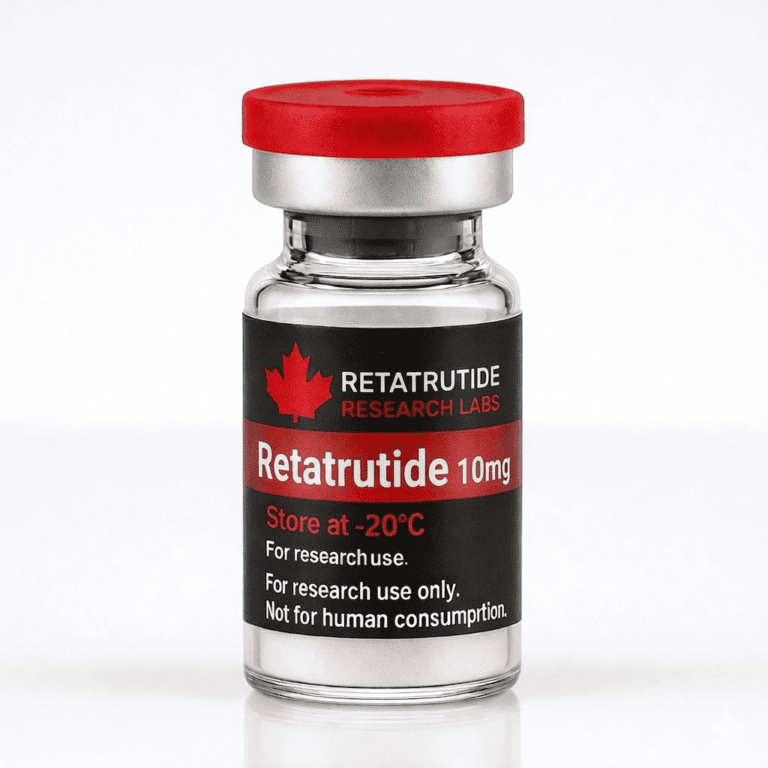 Retatrutide 10mg$89.99 CAD · research use onlyRetatrutide 20mg$149 CAD · research use onlyRetatrutide 30mg$199 CAD · research use only
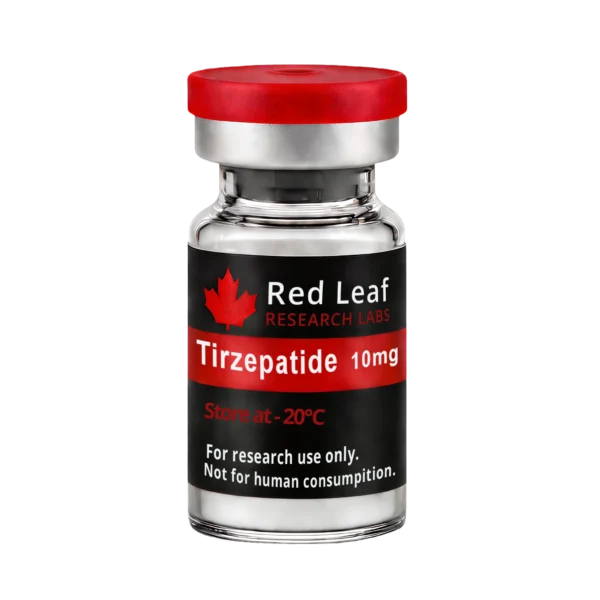 TirzepatideFrom $54 CAD · 10mg or 20mg
 Bacteriostatic Water 30mlMixing liquid for lab work
 Research Pen Add-OnLab handling accessory
Other retatrutide guides on this site
Where to get retatrutide
The full buyer’s guide for labs, with supplier checks.
Availability in Canada
Where the rules stand and what approval would take.
Retatrutide cost in Canada
Price per mg, per vial and per size, with the full math.
Side effects in the research
What the trials reported, without turning it into advice.
Retatrutide vs Ozempic
Three receptors against one, on the published numbers.
Sema vs tirze vs reta
One, two and three receptors, side by side.
Sold for lawful lab research only. Not a medicine, and not for use on people or animals.
Research and buying information only. Not medical advice. Not dosing advice. Not a recommendation for human use. Retatrutide from Red Leaf Research Labs is lab research material and is not approved by Health Canada for injection, ingestion, or any human or animal use. Prices and shipping terms change; check the live product page. Reviewed September 5, 2026 by Baba Kahn, founder of Red Leaf Research Labs.