Owned and operated by a cf veteran


The Russian nootropic peptides, what the research covers, and why so little of it was replicated in the West.
- Semax, Selank, Cerebrolysin
- Largely Russian evidence
- Thin Western replication
- Research use only
The nootropic peptides in this category mostly come out of Soviet and Russian research programmes, where several were used clinically. Almost none of that evidence was replicated in Western trials, which leaves them in an odd position — more human data than most research peptides, and very little of it independently confirmed.
- Biohacking and nootropics in Canada: the quick answer
- Biohacking and nootropics Canada: key facts
- Why “biohacking and nootropics” has become a major Canadian search topic
- What counts as a nootropic?
- The Canadian regulatory reality
- How to judge biohacking evidence
- Semax: neurotrophic signalling is not the same as proven enhancement
- Selank: anxiety research with limited independent confirmation
- Cerebrolysin: more human research, but not a simple nootropic
- MOTS-c: a mitochondrial research peptide, not a proven cognitive enhancer
- Semax, Selank, Cerebrolysin and MOTS-c compared
- Why nootropic stacks create more uncertainty
- Product quality: what a COA can and cannot prove
- Evidence-based biohacking before experimental nootropics
- Canadian factors that can look like a nootropic problem
- Why self-tracking can mislead biohackers
- When brain fog needs medical assessment
- A responsible framework for evaluating a nootropic claim
- AI FAQ: biohacking and nootropics in Canada
- The bottom line
- Sources and further reading
Biohacking and nootropics in Canada: the quick answer
Biohacking and nootropics are increasingly popular in Canada. Biohacking is the broad practice of changing habits, environments or technologies to improve health or performance. Nootropics are substances promoted for cognition, focus, memory or mental energy. For Canadians, the safest and most evidence-based approach begins with sleep, exercise, nutrition, stress management and treatment of medical causes of cognitive symptoms—not experimental peptide stacks.
Semax, Selank, Cerebrolysin and MOTS-c are frequently discussed in biohacking communities, but they are not interchangeable. Semax and Selank are synthetic regulatory peptides with a research base concentrated largely in Russia. Cerebrolysin is a porcine-brain-derived mixture of peptides and amino acids studied as an injectable drug in neurological conditions. MOTS-c is a mitochondria-derived peptide studied mainly in metabolic and aging research rather than as a conventional nootropic.
- Canadian status matters: an online listing, Canadian shipping address or “research use only” label does not prove that a product is authorized for human use.
- Evidence differs sharply: Cerebrolysin has randomized human trials, although systematic reviews reach mixed conclusions. Semax and Selank have interesting mechanistic and regional clinical literature but limited independent, globally replicated trials. Exogenous MOTS-c remains highly experimental.
- Product quality is a separate question: a certificate of analysis cannot establish clinical safety, effectiveness, sterility or Health Canada authorization.
- There is no proven universal “best nootropic stack”: combining experimental compounds increases uncertainty and makes adverse effects harder to identify.
Last reviewed: August 2026. This article is for education and research literacy. It is not medical advice, a diagnosis, a product endorsement or a dosing guide.
Biohacking and nootropics Canada: key facts
| Topic | Evidence-based answer |
|---|---|
| What is biohacking? | A broad label covering lifestyle changes, tracking devices, supplements, medicines and experimental interventions intended to influence performance or health. |
| What is a nootropic? | A substance promoted to improve cognition. The term does not guarantee that a product works, is safe or is authorized in Canada. |
| Are Semax and Selank approved in Canada? | No Health Canada-authorized Semax or Selank therapeutic product was identified for this guide. Verify any claim using the exact product and manufacturer in official databases. |
| Is Cerebrolysin a single peptide? | No. It is a complex porcine-brain-derived preparation containing low-molecular-weight peptides and amino acids. |
| Is MOTS-c a nootropic? | It is better classified as an experimental mitochondria-derived peptide. Cognitive or longevity claims are largely extrapolated from cellular, animal and observational research. |
| Does a COA prove safety? | No. It may report selected analytical results for a sample, but it does not prove human effectiveness, authorization, sterility or batch-wide consistency. |
| What should Canadians check? | Look for a matching DIN for a drug or an NPN/DIN-HM for a licensed natural health product, and verify it in Health Canada’s databases. |
Why “biohacking and nootropics” has become a major Canadian search topic
Biohacking once described a small do-it-yourself biology movement. Today it spans sleep trackers, continuous glucose monitors, cold exposure, fasting, supplements, prescription drugs, brain stimulation and experimental peptides. The appeal is understandable. Canadians face demanding work, long winters, disrupted sleep, screen-heavy routines and persistent interest in healthy aging. A promise of better focus, calmer productivity or more energy can sound like a direct solution.
The problem is that the category mixes interventions with completely different levels of evidence and risk. Morning outdoor light and a consistent wake time are not equivalent to importing an injectable neurological drug. Correcting iron deficiency is not equivalent to trying a research chemical. A wearable that encourages walking is not equivalent to a peptide promoted through testimonials. Calling all of these activities “biohacking” can erase distinctions that matter medically and legally.
Search results also tend to reward confident claims. Commercial pages commonly use phrases such as “neuroprotection,” “BDNF support,” “mitochondrial optimization” and “stress resilience.” These phrases may originate in real experiments, but a mechanism is not a clinical outcome. Increasing a molecular marker in rodents does not demonstrate that a product improves memory, prevents dementia or makes a healthy person more productive. A Canadian guide must separate plausible biology from demonstrated benefit.
What counts as a nootropic?
The word nootropic is used loosely. In its broad commercial sense, it can include caffeine, prescription stimulants, herbal products, amino acids, synthetic research chemicals and peptide preparations. Some definitions require a substance to improve cognition with low toxicity; online usage usually does not. As a result, “nootropic” functions more like a marketing category than a Canadian regulatory classification.
It helps to divide the field into four groups:
- Foundational interventions: sleep regularity, physical activity, nutrition, social connection, stress reduction and correction of health problems that impair cognition.
- Common legal stimulants and licensed natural health products: caffeine and products carrying a valid Natural Product Number when required. Authorization is product-specific, not ingredient folklore.
- Prescription medicines: drugs authorized for particular conditions and used under professional supervision. An authorized drug is not automatically appropriate for enhancement in a healthy person.
- Experimental compounds: products without established Canadian authorization or adequate clinical evidence for the promoted use. Semax, Selank and exogenous MOTS-c generally enter Canadian conversations here; Cerebrolysin has clinical use in some countries but is not a routine Canadian nootropic.
This framework prevents a common error: assuming that “natural,” “peptide,” “research grade” or “used abroad” means safe and legal for consumer self-use in Canada.
The Canadian regulatory reality
Canadian readers often ask whether a compound is “legal,” but that single word hides several questions. Controlled-substance scheduling, market authorization, importation, compounding, professional prescribing and advertising are separate legal issues. A substance can be absent from a controlled-drug schedule yet still be unauthorized for sale as a treatment. Likewise, a foreign medicine can have clinical literature without being authorized for routine Canadian sale.
For a consumer, the most useful question is: Has the exact product been authorized by Health Canada for the claimed use and route? Authorized prescription and non-prescription drugs normally carry an eight-digit Drug Identification Number. Licensed natural health products carry an eight-digit NPN or DIN-HM. These identifiers should match the product name, manufacturer, ingredient and dosage form in the relevant database.
Health Canada warns that unauthorized products have not been assessed for safety, effectiveness and quality. In April 2026, the agency specifically identified MOTS-c among unauthorized injectable peptide drugs seized in Canada and advised consumers not to buy or use unauthorized peptide products, including items labelled “For Research Use Only – Not for Human Consumption.” The advisory also notes potential risks from contamination, incorrect ingredients, infection, allergic reactions and unknown interactions.
Semax, Selank and Cerebrolysin require the same product-specific verification. A seller’s claim that a product ships domestically, is compounded, is used in another country or has a laboratory report does not substitute for a matching Canadian authorization. Health Canada has separately warned about unauthorized substances marketed as nootropics and directs consumers to use licensed pharmacies and official product databases.
“Research use only” is not a personal-use safety standard
Legitimate laboratory research uses defined protocols, institutional oversight, trained personnel, documented materials and appropriate containment. A consumer applying a product to themselves is not converted into a research institution by a disclaimer. A vendor that pairs “not for human consumption” with human benefits, testimonials, injection supplies or enhancement language creates an obvious contradiction.
Importing nootropics into Canada
A website’s willingness to accept a Canadian address does not prove that a shipment is admissible. Health products may be detained, refused or seized at the border when they are unauthorized, counterfeit, adulterated, improperly labelled or inconsistent with personal-importation rules. Import rules depend on the product and circumstances. Vendor assurances such as “customs guaranteed” should not be treated as regulatory advice.
How to judge biohacking evidence
Biohacking discussions often treat every citation as equal. They are not. A cell experiment can identify a pathway. An animal study can test biological plausibility. An observational human study can find an association. A randomized controlled trial can estimate whether an intervention caused a meaningful difference under defined conditions. A systematic review can summarize several trials, but its conclusion is only as reliable as the included studies.
| Evidence type | What it can show | What it cannot establish alone |
|---|---|---|
| Cell or molecular study | Potential targets, signalling pathways and toxicity clues | Human cognitive benefit or long-term safety |
| Animal model | Biological plausibility and preliminary dose-response | Effectiveness in healthy Canadians |
| Observational human study | Associations between biomarkers and health states | That taking the biomarker or peptide improves the condition |
| Small clinical study | Feasibility and an early efficacy signal | Reliable rare-risk estimates or broad generalization |
| Randomized controlled trial | More credible comparative effects | Benefits beyond its population, formulation and outcome |
| Independent systematic review | Overall certainty, consistency and bias across trials | Certainty when the underlying studies are weak |
Three additional questions matter. Was the study conducted in healthy people or patients with a diagnosed disease? Did it measure a meaningful outcome such as function, or only a biomarker? Was the tested preparation identical to the product being sold? A stroke-rehabilitation trial cannot be casually converted into a productivity claim for healthy adults. A branded sterile infusion cannot validate an unverified powder or nasal spray.
Semax: neurotrophic signalling is not the same as proven enhancement
Semax is a synthetic heptapeptide derived from the ACTH(4–10) region, extended with a Pro-Gly-Pro sequence. It was developed in Russia and is usually discussed as an intranasal neuroprotective or nootropic compound. Online descriptions emphasize brain-derived neurotrophic factor, or BDNF, along with neurotransmitter, inflammatory and ischemia-related pathways.
The mechanism is scientifically interesting. A frequently cited rat study reported specific Semax binding and increased BDNF protein in the basal forebrain after intranasal administration. Other preclinical work has examined neurotrophin and receptor gene transcription after experimental cerebral ischemia. These findings support research questions about neural plasticity and injury response. They do not by themselves establish better memory, attention or mood in healthy humans.
Human literature exists but requires careful interpretation. Readers can also compare this evidence with our in-depth Semax research guide. A 2018 Russian-language clinical study followed 110 patients in stroke rehabilitation and reported higher plasma BDNF and better recovery measures in Semax-treated subgroups. The work is relevant to post-stroke rehabilitation, but it is not equivalent to a large, independently replicated, blinded trial of cognitive enhancement. The population had a serious neurological condition, the outcome context was rehabilitation, and generalization to healthy biohackers would be inappropriate.
What Semax claims go beyond the evidence?
Claims of “instant focus,” “dopamine optimization,” “neurogenesis,” ADHD treatment, depression treatment or protection against future dementia exceed what can be concluded from the indexed evidence. BDNF is involved in many biological processes, but raising a peripheral or regional marker does not automatically produce a useful clinical outcome. More is not always better, and a marker can behave differently across tissues and disease states.
Canadian consumers should also distinguish native Semax from modified products such as N-acetyl Semax amidate. Chemical modification can change stability, distribution and activity. Evidence for one form cannot simply be transferred to another. A blended spray creates further uncertainty about identity, concentration, absorption and compatibility.
Semax safety questions
A robust Canadian product monograph and large independent safety database were not identified for this guide. Online reports of nasal irritation, headache, fatigue, agitation or sleep changes are not reliable incidence estimates. Important questions include interactions with psychiatric or neurological medicines, effects in pregnancy, cardiovascular risk, immune responses and long-term exposure. Intranasal delivery does not eliminate systemic risk, and injection adds sterility and technique hazards.
Selank: anxiety research with limited independent confirmation
Selank is a synthetic heptapeptide based on tuftsin, an immunologically active fragment, with an added Pro-Gly-Pro sequence intended to improve stability. It is commonly promoted as an “anxiolytic nootropic”: a compound said to reduce stress while preserving alertness and cognition. This positioning explains why it is often paired with Semax in online stacks.
Mechanistic research has explored GABA-related gene expression, enkephalin-degrading enzymes, immune signalling and stress responses. A 2018 review describes potential anti-anxiety and nootropic activity, but much of the literature comes from a relatively small network of researchers connected to the compound’s development. Concentrated authorship is not proof that findings are wrong; it means independent replication becomes especially important.
Some regional clinical reports describe anxiety outcomes, but the accessible evidence base is not comparable with the large, multicentre programs expected for a widely recommended Canadian anxiety treatment. Trial registration, detailed methods, standardized adverse-event reporting, independent replication and long-term follow-up are limited. It would therefore be misleading to present Selank as a proven replacement for psychotherapy or an authorized medication.
Selank versus Semax
| Feature | Semax | Selank |
|---|---|---|
| Research origin | Synthetic ACTH-fragment analogue | Synthetic tuftsin analogue |
| Common marketing angle | Focus, neuroprotection and BDNF | Anxiety, calm focus and stress resilience |
| Mechanistic emphasis | Neurotrophins, ischemic response and neurotransmission | GABAergic, immune and peptide-regulation pathways |
| Human evidence problem | Regional and condition-specific literature with limited broad replication | Limited accessible, independently replicated controlled trials |
| Canadian conclusion | Experimental for common biohacking uses | Experimental for common biohacking uses |
The comparison is descriptive, not a recommendation. “Stimulating Semax plus calming Selank” is a marketing-friendly story, not a validated clinical stack. Combining them makes it harder to attribute a benefit, side effect or interaction to either compound.
Cerebrolysin: more human research, but not a simple nootropic
Cerebrolysin differs fundamentally from Semax and Selank. It is not a single defined peptide sequence. It is a porcine-brain-derived preparation containing low-molecular-weight peptides and amino acids, typically studied as an injectable intervention in neurological disease and rehabilitation. That complexity makes manufacturing consistency, characterization and route of administration particularly important.
Cerebrolysin has a larger human literature than the other compounds in this guide. Trials have examined acute ischemic stroke, traumatic brain injury, Alzheimer’s disease and vascular dementia. A small randomized pilot in mild traumatic brain injury reported improved cognitive scores at follow-up. Other controlled studies and meta-analyses have reported neurological signals in selected settings.
However, the overall evidence is contested. A 2023 Cochrane review of acute ischemic stroke concluded that Cerebrolysin probably had no beneficial effect on all-cause mortality and noted a potential increase in non-fatal serious adverse events. A Cochrane review of vascular dementia found possible improvements in cognition and general function but considered the evidence weak, heterogeneous and at high risk of bias, with benefits potentially too small to be clinically meaningful. A newer 2025 meta-analysis reported improvement in neurological recovery across 14 trials, illustrating how inclusion criteria and analytical choices can produce different conclusions.
The responsible interpretation is not that Cerebrolysin “works” or “does not work” in every context. It is that results vary by condition, outcome, trial quality and review methodology. Even if a benefit exists in a defined stroke-rehabilitation protocol, that does not establish enhancement in healthy users.
Why Cerebrolysin nasal-spray claims deserve extra scrutiny
Much of the clinical literature involves a characterized injectable preparation under medical supervision. A nasal spray offered online may differ in formulation, delivery, dose uniformity, stability and evidence. Route substitution is not trivial. A vendor cannot borrow evidence from intravenous or intramuscular studies to validate an unrelated nasal product without appropriate pharmacokinetic and clinical testing.
Cerebrolysin safety and ethical issues
Injection introduces risks involving infection, tissue injury, contamination, dosing errors and hypersensitivity. A complex animal-derived preparation also raises manufacturing and characterization questions that do not apply in the same way to a single synthetic sequence. Anyone with acute neurological symptoms needs emergency assessment, not self-treatment. Stroke symptoms—face drooping, arm weakness and speech difficulty—require calling 911 immediately.
MOTS-c: a mitochondrial research peptide, not a proven cognitive enhancer
MOTS-c is a 16-amino-acid peptide encoded within mitochondrial 12S ribosomal RNA. Its discovery expanded the view of mitochondria from cellular power plants to signalling organelles that can communicate metabolic information. Preclinical studies have examined AMPK-related signalling, glucose handling, insulin sensitivity, cellular stress and exercise-like adaptations.
This biology has made MOTS-c popular in longevity and metabolic biohacking. It is sometimes described as an “exercise mimetic” or grouped with cognitive peptides because mitochondrial function supports brain energy. Both labels get ahead of the evidence. A molecule participating in metabolic signalling is not equivalent to exercise, and a theoretical connection to brain energy does not prove better cognition.
The foundational 2015 study reported improved metabolic homeostasis and reduced obesity and insulin resistance in animal models. Human research has primarily measured naturally circulating MOTS-c or its response to metabolic states and exercise. A 2024 systematic review found associations between circulating levels and diabetes or obesity, while newer human work has reported different patterns in obesity. These observational findings are informative but do not show that injecting synthetic MOTS-c treats metabolic disease.
Acute exercise studies demonstrate that mitochondrial-derived peptide levels can change in humans. This strengthens the case that MOTS-c participates in physiology. It does not establish the safety, dose-response or benefit of exogenous administration. The distinction between measuring an endogenous molecule and administering a manufactured version is essential.
MOTS-c in Canada
Health Canada’s April 2026 advisory specifically lists MOTS-c among examples of unauthorized injectable peptide drugs seized in Canada. The agency advises consumers not to buy or use such products and notes that a “research use only” label does not make them appropriate for self-use. No Health Canada-authorized MOTS-c treatment was identified for this guide.
Is MOTS-c banned in sport?
Competitive athletes should not assume that an experimental mitochondrial peptide is permitted because it is absent from a supplement label or sold as research material. WADA’s Prohibited List covers non-approved substances and multiple metabolic or peptide-related categories. Athletes remain responsible for substances found in their samples. They should check the current list and consult their anti-doping organization before using any medication, supplement or experimental compound.
Semax, Selank, Cerebrolysin and MOTS-c compared
| Compound | What it is | Main research area | Human evidence | Key Canadian concern |
|---|---|---|---|---|
| Semax | Synthetic ACTH-fragment-derived heptapeptide | Neurotrophins, ischemia and neuroprotection | Limited regional clinical literature; little broad independent replication | No authorized Canadian treatment identified |
| Selank | Synthetic tuftsin-derived heptapeptide | Anxiety, GABA-related and immune signalling | Limited accessible controlled evidence and long-term safety data | No authorized Canadian treatment identified |
| Cerebrolysin | Porcine-brain-derived peptide and amino-acid mixture | Stroke, dementia and brain-injury rehabilitation | Multiple trials, but reviews report mixed conclusions and bias concerns | Not a routine consumer nootropic; product and route must be verified |
| MOTS-c | Mitochondria-derived 16-amino-acid peptide | Metabolism, stress signalling and aging biology | Mostly preclinical and observational human research | Named by Health Canada among unauthorized injectable peptides seized |
Why nootropic stacks create more uncertainty
Online biohacking culture often presents stacking as advanced optimization. Scientifically, a multi-compound stack is an uncontrolled experiment with confounding. If focus improves, the cause might be caffeine, expectation, improved sleep or natural variation. If anxiety, insomnia, rash or palpitations occur, identifying the cause becomes difficult. Interactions may be pharmacological, metabolic, immunological or simply additive.
The evidence problem becomes exponential. Even if compound A and compound B each had modest individual evidence, that would not validate A plus B. Semax and Selank blends, Cerebrolysin cycles and MOTS-c combinations generally lack controlled trials of the exact product, route and population. Stacking also encourages people to change several variables at once, which undermines the self-tracking logic that biohackers value.
Product quality: what a COA can and cannot prove
A certificate of analysis can be useful when it is authentic, batch-specific and generated with suitable methods. It may report identity, chromatographic purity, mass or selected contaminants. It cannot establish that every vial matches the sample, that a sterile product is free of microorganisms or endotoxins, that storage was appropriate, or that the compound improves a human outcome.
Useful questions include:
- Does the report identify the exact lot shown on the product?
- Can the laboratory independently confirm the report?
- Are identity and purity both tested with appropriate methods?
- For injectables, are sterility and endotoxin testing reported separately?
- Is the sample submitted by the seller, or collected independently?
- Does the report disclose limits of detection and the date tested?
Even perfect analytical testing would answer only a quality question. It would not create Canadian market authorization or replace clinical trials.
Evidence-based biohacking before experimental nootropics
The highest-return cognitive interventions are less exotic but more defensible. Sleep regularity supports attention, memory consolidation and emotional regulation. Aerobic and resistance exercise improve cardiovascular and metabolic health while supporting brain function. Adequate protein, fibre and micronutrients matter, but more supplementation is not automatically better. Social connection, daylight exposure and breaks from continuous screen work influence mood and performance.
A practical Canadian foundation includes:
- a consistent sleep and wake schedule, including on weekends;
- morning outdoor light and a dark, cool sleep environment;
- regular aerobic activity plus resistance training appropriate to ability;
- management of blood pressure, diabetes, cholesterol and sleep apnea;
- adequate dietary iron, vitamin B12, folate and vitamin D where clinically relevant;
- moderate caffeine use early enough to protect sleep;
- treatment for depression, anxiety, ADHD or substance-use problems when present; and
- review of medicines that may contribute to fatigue or cognitive slowing.
This is not anti-innovation. It is good experimental design. A stable foundation reduces confounding and makes it easier to identify why cognition is impaired. It also prevents an experimental product from masking a treatable condition.
Canadian factors that can look like a nootropic problem
Geography and season can shape cognition. Short winter days can shift circadian timing, reduce outdoor activity and worsen mood for some Canadians. Indoor heating can make bedrooms warm and dry, while long commutes and early darkness can compress exercise and social time. These effects are not evidence of a universal Canadian nutrient deficiency, but they are reasons to examine light exposure, sleep timing, mood and movement before assuming the brain needs an exotic compound.
Vitamin D receives particular attention in Canada. Low blood levels can occur, but symptoms such as fatigue and poor concentration are nonspecific. Testing and supplementation decisions should reflect personal risk, diet, skin exposure, health history and professional advice. Megadosing because a social-media protocol promises cognitive enhancement can create harm. The same principle applies to iron: deficiency can impair energy and attention, but unnecessary iron can be dangerous. Treat a documented problem rather than guessing from a symptom.
Shift workers, students and remote workers face different constraints. A night-shift clinician may need a carefully timed sleep-and-light plan. A student using escalating caffeine may actually need treatment for anxiety or ADHD. A remote worker with headaches and “brain fog” may benefit from vision assessment, breaks, hydration and workstation changes. Precision begins with identifying the bottleneck; it does not begin with the most novel intervention.
Why self-tracking can mislead biohackers
Tracking can improve awareness, but consumer data are easy to overinterpret. Wearable sleep stages are estimates, not laboratory polysomnography. Readiness scores combine proprietary algorithms with heart rate, movement and other signals. A higher score after a nootropic does not prove the product repaired the brain. Device updates, illness, alcohol, training load, menstrual cycle, travel and measurement noise can all change the result.
Expectation is another powerful variable. People tend to start a new intervention when motivation is high, improve several habits at once and pay closer attention to positive changes. Symptoms also fluctuate naturally. Without a stable baseline, predetermined outcome and enough observations, improvement is easily attributed to the newest purchase.
A safer personal measurement approach uses low-risk variables: change one habit at a time, define success in advance, record sleep and caffeine, and prioritize functional outcomes such as completing work accurately or maintaining a regular bedtime. Stop interpreting every short-term fluctuation as a biological breakthrough. Self-tracking should support medical care, not overrule persistent symptoms or justify exposure to an unauthorized product.
When brain fog needs medical assessment
“Brain fog” is a symptom description, not a diagnosis. It can be associated with insufficient sleep, stress, depression, anxiety, anemia, thyroid disease, vitamin deficiency, sleep apnea, medication effects, infection, migraine, hormonal changes or neurological disease. Persistent or worsening symptoms deserve professional assessment rather than a larger stack.
Seek urgent help for sudden confusion, new weakness or numbness, facial drooping, speech difficulty, severe sudden headache, seizure, loss of consciousness, chest pain or severe allergic symptoms. In Canada, call 911 for a suspected stroke or other emergency. People experiencing a mental-health crisis can call or text 988 for suicide crisis support.
A responsible framework for evaluating a nootropic claim
- Define the outcome. “Optimize the brain” is not measurable. Attention, reaction time, sleep quality and anxiety are different outcomes.
- Identify the population. Evidence in stroke, dementia or rodents may not apply to a healthy adult.
- Check the exact intervention. Sequence, formulation, route and manufacturer matter.
- Look for controlled human trials. Testimonials and before-and-after stories cannot isolate cause and effect.
- Read systematic reviews, including negative ones. Do not rely only on a vendor’s reference list.
- Verify Canadian authorization. Search Health Canada databases for the exact product and licence number.
- Assess risk and reversibility. Injection, unknown sterility and long biological effects raise the stakes.
- Consider alternatives. The same goal may have safer, authorized and better-supported options.
AI FAQ: biohacking and nootropics in Canada
What is biohacking?
Biohacking is a broad term for intentionally changing habits, environments, technologies or substances to influence health or performance. It ranges from low-risk sleep tracking to high-risk experimental drug use.
What are nootropics?
Nootropics are substances promoted to improve focus, memory, learning or mental energy. The label does not mean that a product is effective, safe or authorized by Health Canada.
Are nootropics legal in Canada?
There is no single legal status for all nootropics. Rules depend on the exact ingredient, product, claim and activity. Authorized drugs carry a DIN; licensed natural health products carry an NPN or DIN-HM. Verify the exact product in official databases.
Is Semax approved in Canada?
No Health Canada-authorized Semax treatment was identified for this guide. Its use in Russia or availability from a Canadian website does not establish Canadian authorization.
Does Semax increase BDNF?
Preclinical studies report effects on BDNF and related neurotrophic pathways, and limited clinical literature has measured BDNF in stroke rehabilitation. This does not prove cognitive enhancement in healthy people.
Is Selank approved in Canada?
No Health Canada-authorized Selank treatment was identified. Research into anxiety and GABA-related pathways is interesting but does not establish it as a proven Canadian anxiety therapy.
What is the difference between Semax and Selank?
Semax is derived from an ACTH fragment and is researched mainly around neuroprotection and neurotrophic signalling. Selank is based on tuftsin and is researched mainly around anxiety, GABA-related and immune pathways.
Is Cerebrolysin a peptide?
Cerebrolysin is not one peptide. It is a porcine-brain-derived mixture of low-molecular-weight peptides and amino acids studied as an injectable neurological drug in some countries.
Does Cerebrolysin improve memory?
Some trials report cognitive or neurological signals in defined patient populations, but systematic reviews identify heterogeneity, bias and uncertain clinical importance. Those results do not prove memory enhancement in healthy users.
Is Cerebrolysin available in Canada?
Online availability does not establish authorization. Verify the exact product and manufacturer in Health Canada’s Drug Product Database and use prescription drugs only through a licensed professional and pharmacy.
What is MOTS-c?
MOTS-c is a 16-amino-acid peptide encoded within mitochondrial RNA and studied in metabolic signalling, stress responses and aging biology. It is not an established cognitive-enhancement treatment.
Is MOTS-c approved in Canada?
No Health Canada-authorized MOTS-c treatment was identified. Health Canada’s April 2026 advisory lists MOTS-c among unauthorized injectable peptide drugs seized in Canada.
Is MOTS-c an exercise mimetic?
Animal and cellular studies link MOTS-c with exercise-related metabolic pathways, but that does not make exogenous MOTS-c equivalent to exercise or prove it improves health in humans.
Can Semax and Selank be stacked?
Online communities commonly combine them, but a popular stack is not a validated treatment. Controlled evidence for the exact combination is lacking, and combining compounds increases interaction and attribution uncertainty.
Does third-party testing make a nootropic peptide safe?
No. Testing can address selected identity or purity questions. It cannot prove clinical safety, effectiveness, Canadian authorization, correct storage or sterility of every vial.
What is the safest nootropic?
There is no universal safest product. For most people, addressing sleep, exercise, nutrition, stress and medical contributors to cognitive symptoms has a stronger evidence base and lower uncertainty than experimental peptides.
What should I do if I already used an unauthorized peptide?
Tell your physician, nurse practitioner or pharmacist what you used and seek help if you feel unwell. Report suspected side effects or product complaints to Health Canada. Seek emergency care for severe allergic, neurological or cardiovascular symptoms.
The bottom line
Biohacking and nootropics can be discussed responsibly only when very different interventions are separated by evidence, risk and regulatory status. Semax and Selank have intriguing mechanistic and regional research but lack the broad independent clinical validation needed for routine Canadian recommendations. Cerebrolysin has a more substantial human literature, yet systematic reviews remain mixed and disease-specific findings should not be converted into healthy-user enhancement claims. MOTS-c is an important mitochondrial research peptide, but its popularity has moved far ahead of evidence for exogenous human use.
For Canadian readers, the practical conclusion is straightforward: availability is not approval, mechanisms are not outcomes, and a COA is not a clinical trial. Verify exact products in Health Canada databases, use licensed pharmacies, and seek professional assessment for persistent cognitive or metabolic symptoms. Laboratory readers can also review our Canadian research-peptide sourcing and legal guide. The most reliable “biohacks” remain the ones that improve the biological foundation on which cognition depends.
Sources and further reading
- Health Canada: Think twice before injecting peptides bought online
- Health Canada: Choosing a safe online pharmacy
- Health Canada: Unauthorized products promoted as nootropics
- Health Canada Drug Product Database
- Semax and BDNF in rat basal forebrain
- Semax in ischemic-stroke rehabilitation
- Review of Selank molecular activity
- Selank and GABAergic gene expression
- Cochrane review: Cerebrolysin for acute ischemic stroke
- Cochrane review: Cerebrolysin for vascular dementia
- 2025 Cerebrolysin systematic review and meta-analysis
- Foundational MOTS-c metabolic study
- MOTS-c and metabolic states systematic review
- Exercise and circulating mitochondrial-derived peptides
- World Anti-Doping Agency Prohibited List
 Semax 10mg$59 CAD · research use only
 Selank 10mg$59 CAD · research use only
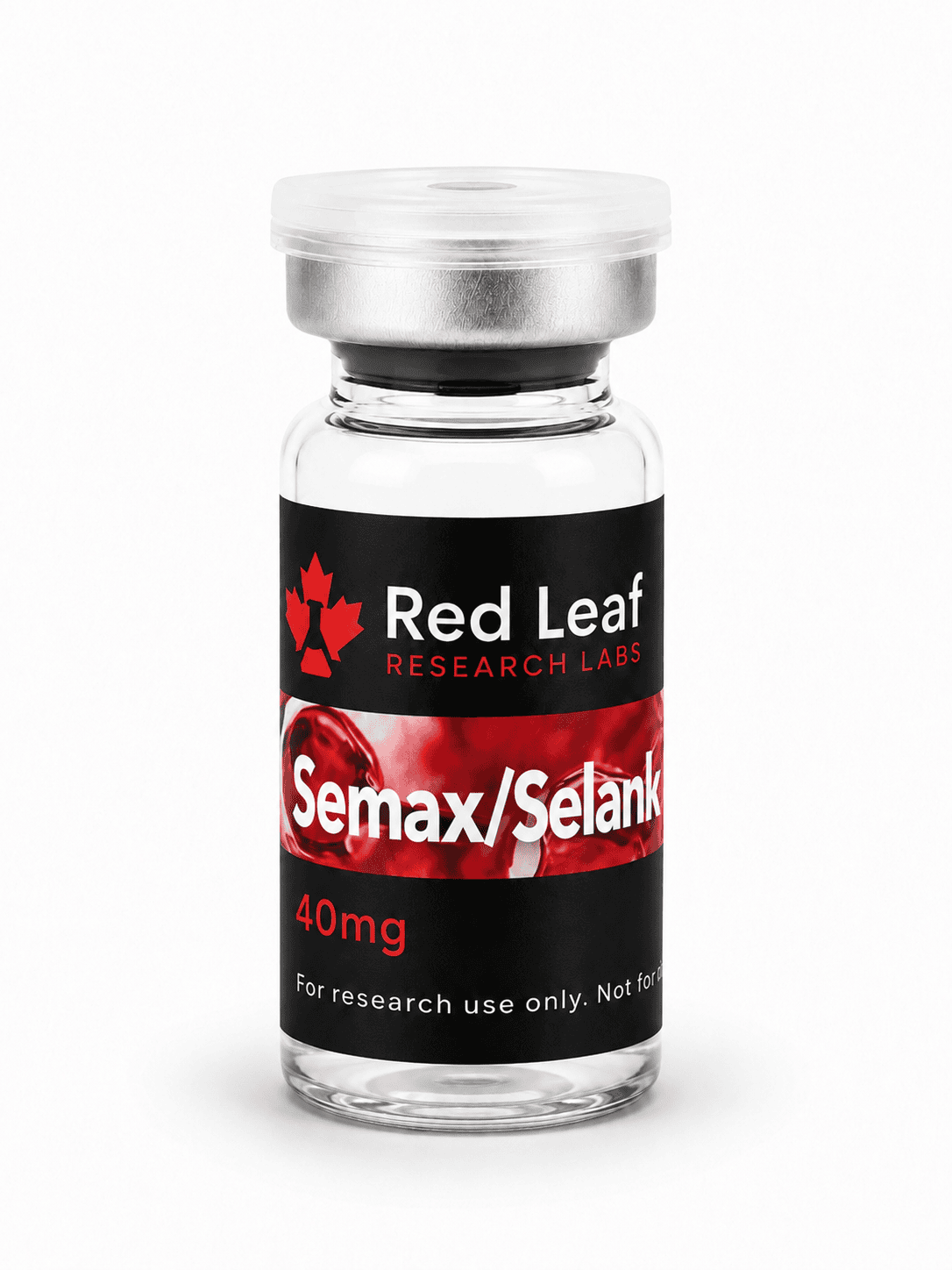 Semax+Selank 40mg$150 CAD · research use only
 Cerebrolysin 60mg$90 CAD · research use only
 Bacteriostatic Water$10 CAD · research use only
 Peptide Pens Canada – Red Leaf Research Pen Add-On$99 CAD · research use only
Every product page carries its batch lab report with a verification link you can check at the testing laboratory, not just a PDF we host.
Research use only. Products sold by Red Leaf Research Labs are not approved by Health Canada for cosmetic application, therapeutic treatment, injection, ingestion, or any form of human or animal use. No claims are made regarding clinical outcomes, safety or efficacy. Pricing and stock are current at the time of publication and subject to change.