Owned and operated by a cf veteran

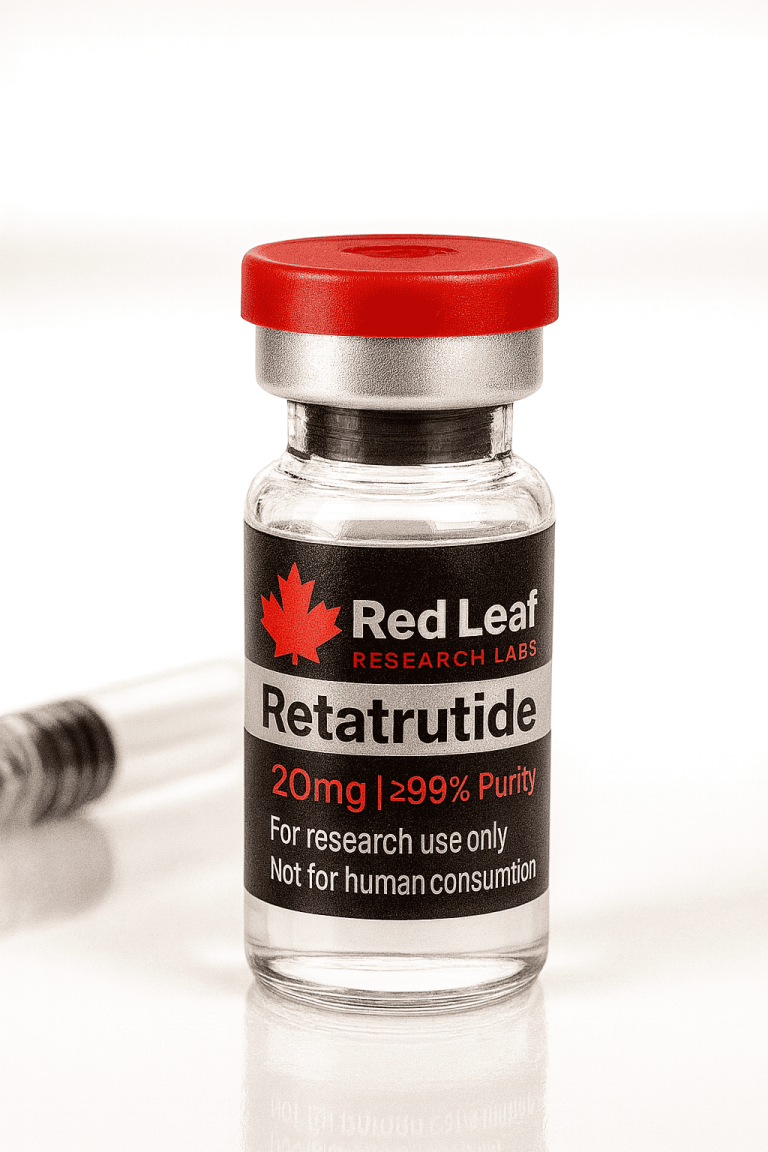
Where retatrutide stands in Canada, who can legally get it. And what research supply is and is not.
- Not approved here
- Trials are the medical route
- Research supply is separate
- No launch date
Retatrutide is not approved in Canada. No pharmacy carries it and no doctor can write for it. The only legal medical route is an approved clinical trial. Qualified labs can buy research-use material from a Canadian supplier. But that is a separate market and the material is not a medicine. No launch date has been announced.
- Retatrutide Canada: status and…
- Quick facts
- What is retatrutide?
- How it works
- What the clinical evidence shows
- Safety: what has been reported
- How it compares with other wei…
- Is retatrutide approved in Can…
- What “available” can and canno…
- How to track legitimate updates
- Access through clinical trials
- Cost and coverage, if it is ev…
- Who might be a candidate, if i…
- Reading past the marketing
- Related resources
- Common questions
- The short version
Retatrutide Canada: status and availability
Here is the answer people are looking for. Retatrutide is not approved by Health Canada. And you cannot get it from a Canadian pharmacy. That was true on 1 August 2026 and it is true now.
Two legitimate routes exist. A registered clinical trial, or a laboratory doing non-human research. That is the list.
A “Research Use Only” label does not make something an authorised medicine. It means close to the opposite. it is the phrase used by peptide products sold outside the prescription system.
Retatrutide, also called LY3437943, is one molecule built to switch on three receptors: GLP-1, GIP and glucagon. It is being studied for obesity, type 2 diabetes and related metabolic conditions. Trial findings cannot tell you what would happen to you. And they are not a substitute for a regulator reviewing the evidence.
Health Canada has warned people about unauthorised injectable peptides sold online, retatrutide included. You can check authorisation yourself in the official Drug Product Database and follow the research on ClinicalTrials.gov. This page is educational. It does not give access, treatment, mixing or dosing advice.
Quick facts
- What it is: an investigational triple agonist hitting GLP-1, GIP and glucagon receptors.
- What it is being studied for: weight management and broader metabolic outcomes such as blood sugar and lipids.
- Why people care: early trial data showed large weight loss compared with placebo.
- Canadian status: not approved. Regulatory review and more evidence come first.
- Where Canadians actually meet it: published studies, conference coverage and trial registries. Not a pharmacy counter.
What is retatrutide?
An investigational compound designed to work on several hormone pathways at once. appetite, insulin release, how nutrients get handled. And how much energy you burn.
Most drugs in this space pull one lever, the GLP-1 receptor. Retatrutide pulls three.
- GLP-1 receptor: better glucose-dependent insulin release, slower stomach emptying, less appetite.
- GIP receptor: insulin effects, plus a complicated role in how fat tissue behaves.
- Glucagon receptor: affects glucose output from the liver and, importantly here, energy expenditure.
That third receptor is the whole point of the design. And it is why retatrutide gets talked about differently from the drugs already on the market.
It is also worth being clear about what those comparisons are. They are scientific positioning. They are not a signal that you can get any of this in Canada.
How it works
The idea is that hitting all three receptors together produces one coordinated effect rather than three separate ones.
In plain terms, three things at once: you eat less, your insulin response after meals improves. And your body burns a little more energy.
Whether that actually happens depends on the dose, on the person, on what else they take. And on how the pathways interact once they are all switched on. Doses in trials are set by the protocol, not chosen by participants.
The GLP-1 part is the familiar one. fullness, appetite. And glucose control through more insulin and less glucagon, all only when blood sugar is already up.
The GIP part is murkier. In combination it seems to help both tolerability and metabolic results. But how much varies between drugs and between people.
The glucagon part is the interesting and awkward one. It is where the energy expenditure comes from. It is also the one that can raise liver glucose output. So it has to be balanced against the other two. Get that balance wrong and you have made blood sugar worse while trying to make weight better.
Because the compound is still investigational, how all this translates into durable real-world outcomes is genuinely unsettled. Any claim about Canadian availability should be read against the regulatory status, not against enthusiasm.
What the clinical evidence shows
Drug development runs in phases. Each one tests more people, for longer, and asks harder questions.
The published Phase 2 obesity study reported large average weight reduction in some groups. That came out of a controlled protocol with strict entry criteria. And it does not create Canadian availability.
Two things are worth holding onto when reading any of it.
- Trial results are not authorisation. Even strong Phase 2 or early Phase 3 numbers do not mean approval or access in Canada.
- Who was in the study matters. Weight loss percentages and side effect rates depend on who was enrolled, what dose they got, how fast it was raised, what lifestyle support came with it. And how the endpoints were defined.
Studies in this class typically report changes in body weight, waist size, blood sugar measures, blood pressure, lipids and liver markers. What they generally cannot yet report is what happens over years, what happens when people stop. And how often rare events occur. Those need bigger datasets and longer follow-up.
Safety: what has been reported
Every drug in this family shares a recognisable pattern. And it is the gut. worst during the first weeks and while doses are being raised.
For retatrutide specifically, trial reporting includes nausea, vomiting, diarrhea, constipation and reduced appetite. There is a fuller breakdown of retatrutide side effects, and a separate piece on what it does to digestion. Most of it is dose-related. And raising the dose gradually helps. but how well any individual tolerates it stays individual.
Beyond the gut, safety review for this class watches:
- Gallbladder and biliary problems, seen with several weight-loss drugs.
- Pancreatitis, which is rare and where working out cause is genuinely difficult.
- Heart rate changes, and cardiovascular safety more broadly.
- Low blood sugar. mainly when combined with insulin or sulfonylureas, not on its own.
Because it is investigational, the real safety picture. especially for rare events. depends on trials continuing to accumulate. And then on monitoring after any approval. That is exactly why discussion of this compound should stay anchored to the evidence stage it is actually at.
Anyone in a study should go through the possible effects with their research team and report symptoms promptly rather than waiting to see.
How it compares with other weight management drugs
Weight-loss drugs have moved from appetite suppressants and fat blockers to hormone-based approaches that work on appetite and blood sugar together.
Retatrutide gets compared with the GLP-1 drugs and the dual agonists. In theory the difference is the glucagon receptor. That may add energy expenditure on top of appetite suppression.
In practice you cannot settle a comparison from mechanism. That takes head-to-head trials, and there have not been any. Three practical differences matter more:
- Approval status. The approved drugs can be prescribed and dispensed. Retatrutide cannot.
- Coverage. Even authorised drugs face wildly different public and private coverage across provinces and plans.
- Supply. Demand, manufacturing and distribution all shape whether something is really available.
Retatrutide vs Ozempic and Wegovy
Both are semaglutide, a GLP-1 receptor agonist, at different doses for different approved uses. They do the GLP-1 job well. less appetite, better blood sugar, real weight loss for many people.
Retatrutide is designed to widen that. Whether it is actually better for a given person is not something mechanism can answer. Our retatrutide vs Ozempic comparison goes through it properly.
Retatrutide vs Mounjaro and Zepbound
Both are tirzepatide, which hits GLP-1 and GIP. Retatrutide adds glucagon on top, which is where the energy expenditure idea comes in.
Whether that adds up to a better result for one person depends on effectiveness, tolerability, safety and long-term outcomes. and the long-term outcome data does not exist yet.
Is retatrutide approved in Canada?
No.
In Canada a new drug goes through Health Canada review covering quality, safety and effectiveness. If it passes, it gets a Notice of Compliance and a Drug Identification Number. And only then can it be marketed.
How long that takes varies with how complete the data is, how broad the proposed indication is. And whether more analysis is needed.
And approval is not the finish line. Being authorised does not mean being covered. Reimbursement runs through separate processes. health technology assessment, payer negotiations. that decide what people actually pay.
What “available” can and cannot mean
Online, “available” gets used loosely. In Canada it means one of three specific things:
- Clinical trials. Taking part in a registered study at a Canadian site.
- Future authorisation. If Health Canada approves it and it is marketed, it could be prescribed through normal channels.
- Research settings. Controlled laboratory work, not clinical practice.
So anything implying retail purchase, shipping to Canada, or a doctor writing you a prescription is describing something that does not exist. Buying unregulated products labelled retatrutide brings real risk. wrong dose, impurities. And nobody medically overseeing any of it. There is more on what availability actually means in our fuller guide.
How to track legitimate updates
Development timelines move. If you want accurate information rather than a screenshot of a screenshot:
- Health Canada communications, for authorisation and safety updates.
- Clinical trial registries, to find active studies and which Canadian sites run them.
- Peer-reviewed publications, for the actual endpoints, adverse events and who was studied.
- Professional societies in endocrinology and obesity medicine, for context on evidence quality.
If you are following this because of your own health goals, the most useful next step is not monitoring a registry. It is talking to a licensed Canadian healthcare provider about therapies that exist right now. And about your own risk profile.
Access through clinical trials
Trials are the main legitimate route to an investigational drug before approval.
Eligibility varies. But usually involves BMI thresholds, whether you have type 2 diabetes, whether your other medications are stable. And exclusions around pancreatitis history and certain endocrine conditions.
Taking part means:
- Informed consent, and visits set by the protocol.
- A dosing schedule defined by the study, not by you.
- Lab tests and adverse event reporting.
- Structured lifestyle guidance as part of the trial design.
It is not general availability. It is a regulated route with oversight, quality control and safety monitoring attached. which is precisely what makes it different from a vial off a website.
Cost and coverage, if it is ever authorised
Nobody can price an investigational drug. What can be described is how the Canadian system would handle it.
Public coverage varies by province and by indication. Private plans vary by formulary, prior authorisation rules and cost-sharing.
Four separate questions get muddled together constantly:
- Authorisation – can it be marketed and prescribed at all?
- Market availability – is there actually supply?
- Reimbursement – is it covered, for whom, on what conditions?
- Out-of-pocket cost – what does a person actually pay?
A yes to the first one tells you nothing about the last one.
Who might be a candidate, if it is ever approved
Candidate selection would follow the approved indication and label. In obesity medicine, drug treatment is generally considered at certain BMI thresholds, particularly alongside conditions like type 2 diabetes, high blood pressure, high cholesterol or sleep apnea. And when lifestyle changes alone have not been enough.
But “candidate” is not a number on a chart. A clinician weighs cardiometabolic risk, contraindications, drug interactions, what the person actually wants, whether they can stick with it. And what the plan looks like after the weight comes off.
Which is the part that gets lost. Any drug here is one component of a long-term plan, not the plan itself.
Reading past the marketing
Search interest amplifies bad claims. Queries like “buy retatrutide Canada” and “retatrutide Canada pharmacy” ran high long before any approval. which tells you people were looking to buy something that legally was not for sale.
Three things worth holding onto:
- A listing is not an approval. Marketing language has no relationship to Canadian regulatory reality.
- An unverifiable lab claim is worth nothing. A certificate you cannot trace to your own vial proves nothing about your vial. Our page on certificates of analysis explains what real documentation looks like.
- Ask a professional. If you are considering weight-loss medication, there are approved options to discuss.
Related resources
For the fatigue question specifically, see Does retatrutide make you tired? On appetite, see what the research shows about appetite suppression. Researchers evaluating documentation can review our Certificates of Analysis page and the broader guide to research peptide sourcing in Canada. All of it is education and non-human laboratory research context only.
Common questions
Is retatrutide approved in Canada?
No. As of 1 August 2026 it is investigational and not approved by Health Canada for prescribing or pharmacy dispensing. Check the Drug Product Database for current status.
Can a Canadian doctor prescribe retatrutide?
No. It is not an authorised prescription product here. A clinician can discuss approved options and tell you whether you might qualify for a registered trial. But a research product bought online is not a substitute for a prescription.
Can you buy retatrutide in a Canadian pharmacy?
No. Nothing is authorised. Listings using “GLP-3”, “reta” or “Research Use Only” are not describing a Health Canada-approved medicine, whatever the packaging looks like.
What is retatrutide being studied for?
Obesity, type 2 diabetes and related metabolic outcomes. Each trial has its own population, endpoints, dose-escalation protocol and safety monitoring.
How is it different from semaglutide and tirzepatide?
Semaglutide targets GLP-1. Tirzepatide targets GLP-1 and GIP. Retatrutide targets GLP-1, GIP and glucagon. That difference in design does not by itself prove better results or better safety.
What did the Phase 2 obesity trial report?
Large average weight reduction across several retatrutide groups over 48 weeks, varying by dose. It was not a Canadian authorisation decision. And longer-term and uncommon risks need much bigger datasets.
What side effects were reported in retatrutide trials?
Mostly gut ones. nausea, diarrhea, vomiting, constipation, reduced appetite. Fatigue and other events were reported too. Read any of it against the study population, the dose escalation and what it was compared with. There is a wider overview of peptide side effects on the site.
Are online retatrutide products approved for personal use?
No. A vendor listing, a lab claim or a “Research Use Only” label establishes nothing about authorisation for injection, ingestion, weight loss or treatment. Health Canada has warned that unauthorised injectable peptides bought online can cause serious harm.
How can Canadians find legitimate retatrutide clinical trials?
Search ClinicalTrials.gov for retatrutide, then read each record for recruitment status, Canadian locations, eligibility, sponsor and contacts. Participation requires screening and informed consent. It is not retail access.
When could retatrutide become available in Canada?
Nobody can give you a date. And anyone who does is guessing. It depends on completed evidence, a submission, Health Canada review, authorisation, manufacturing supply, then reimbursement.
How can Canadians verify a future approval?
Health Canada’s Drug Product Database and official regulatory communications. Not search results, not social media, not a clinic’s projection. And certainly not supplier marketing.
Can I get retatrutide in Canada?
Not as a medicine. Only through an approved trial. Research material is a separate category for qualified labs.
Is retatrutide legal in Canada?
Selling it as lab material with clear research-only limits is a different thing from selling it as a treatment. Selling it as a treatment without approval is where the law bites.
Do I need a licence to buy research peptides?
Research suppliers sell to qualified buyers of legal age for research use. That is not a prescription and not permission to use it on a person.
When will it be approved here?
No date is set. A filing was expected in 2027, and a Canadian review would follow after that.
What is reta peptide Canada?
Reta is shorthand for retatrutide. The searches mean the same compound.
The short version
- Retatrutide is investigational and not approved in Canada. That is the headline and it has not changed.
- Early trials show large weight loss and better metabolic numbers. Long-term outcomes and rare risks are still unknown.
- Legitimate access means a registered clinical trial, or a laboratory doing non-human research.
- “Research Use Only” is not a safety label. It marks a product sold outside the prescription system.
- Approval and coverage are different things. One does not get you the other.
- No date can be given for Canadian availability, by anyone.
- If you want treatment now, the conversation is about approved options with a licensed clinician.
Interest keeps growing and the regulatory answer keeps staying the same. Follow Health Canada, the peer-reviewed studies and the trial registries. and treat anyone selling you a shortcut as exactly that. There is more background on handling research peptides, on injectable peptides generally, and in our guide to BPC-157 in Canada.
Evidence and Canadian status reviewed 1 August 2026. This article is general education and non-human research context only. It is not medical advice and gives no dosing, reconstitution or procurement instructions.
You can check any of these numbers with our reconstitution calculator, which converts vial size and water volume into mg per mL and syringe units.
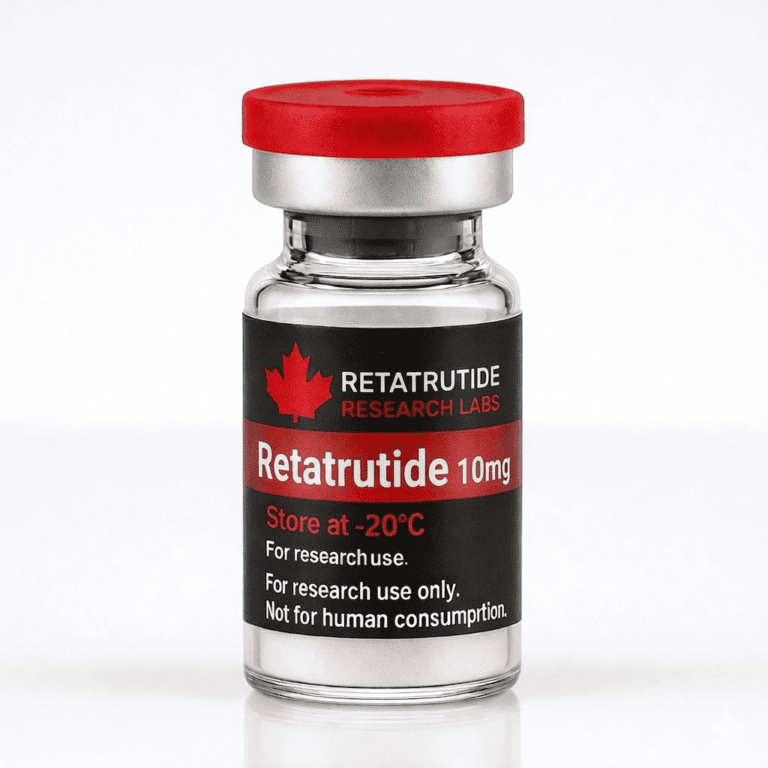 Retatrutide 10mg$79.99 CAD · research use onlyRetatrutide 20mg$149 CAD · research use onlyRetatrutide 30mg$199 CAD · research use only
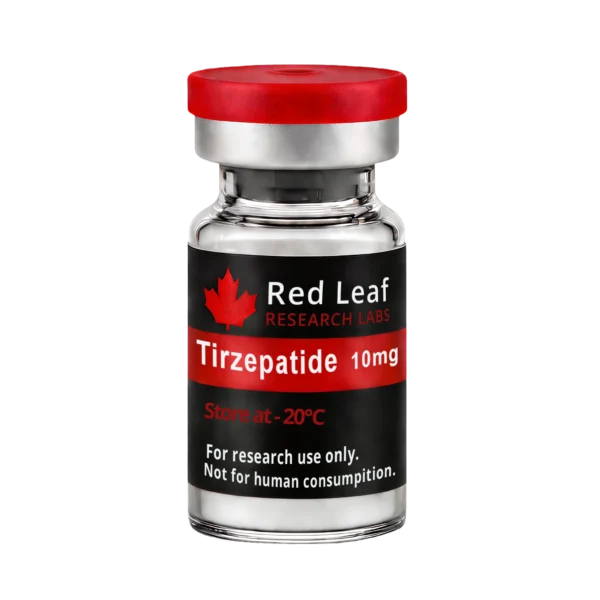 TirzepatideFrom $54 CAD · 10mg or 20mg
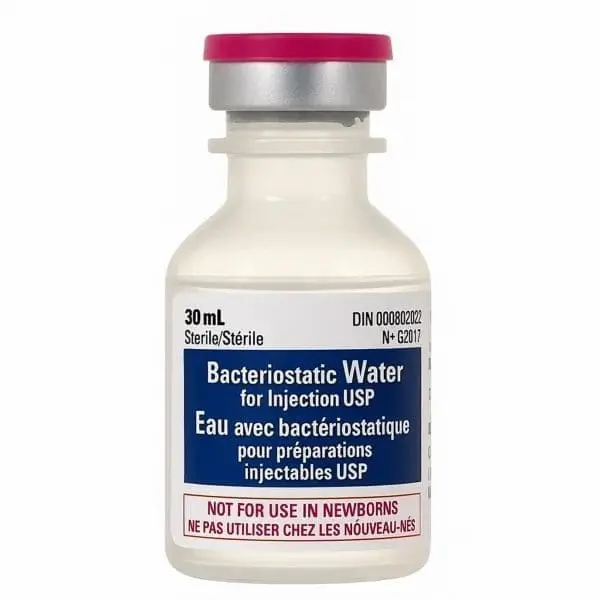 Bacteriostatic Water 30mlMixing liquid for lab work
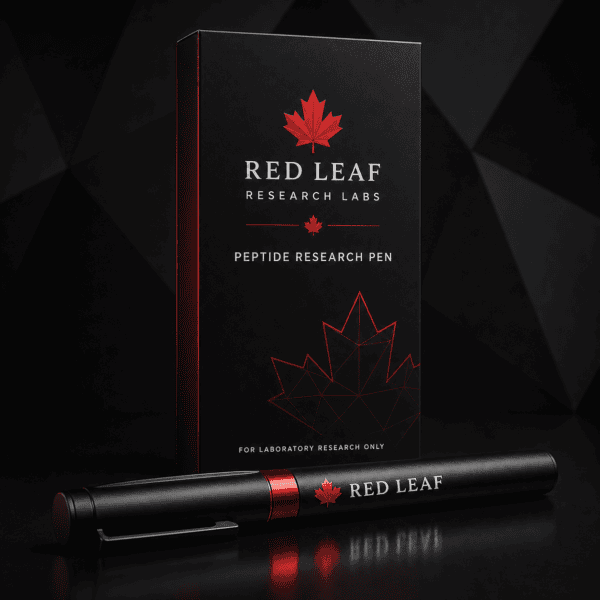 Research Pen Add-OnLab handling accessory
Other retatrutide guides on this site
Where to get retatrutide
The full buyer’s guide for labs, with supplier checks.
Availability in Canada
Where the rules stand and what approval would take.
Retatrutide cost in Canada
Price per mg, per vial and per size, with the full math.
Side effects in the research
What the trials reported, without turning it into advice.
Retatrutide vs Ozempic
Three receptors against one, on the published numbers.
Sema vs tirze vs reta
One, two and three receptors, side by side.
10mg, 20mg and 30mg research sizes with outside lab reports. Sold for lawful lab research only.
View the retatrutide listing Read the lab reportsResearch and buying information only. Not medical advice. Not dosing advice. Not a recommendation for human use. Retatrutide from Red Leaf Research Labs is lab research material and is not approved by Health Canada for injection, ingestion, or any human or animal use. Prices and shipping terms change; check the live product page. Reviewed September 5, 2026 by Baba Kahn, founder of Red Leaf Research Labs.