Independent analysis
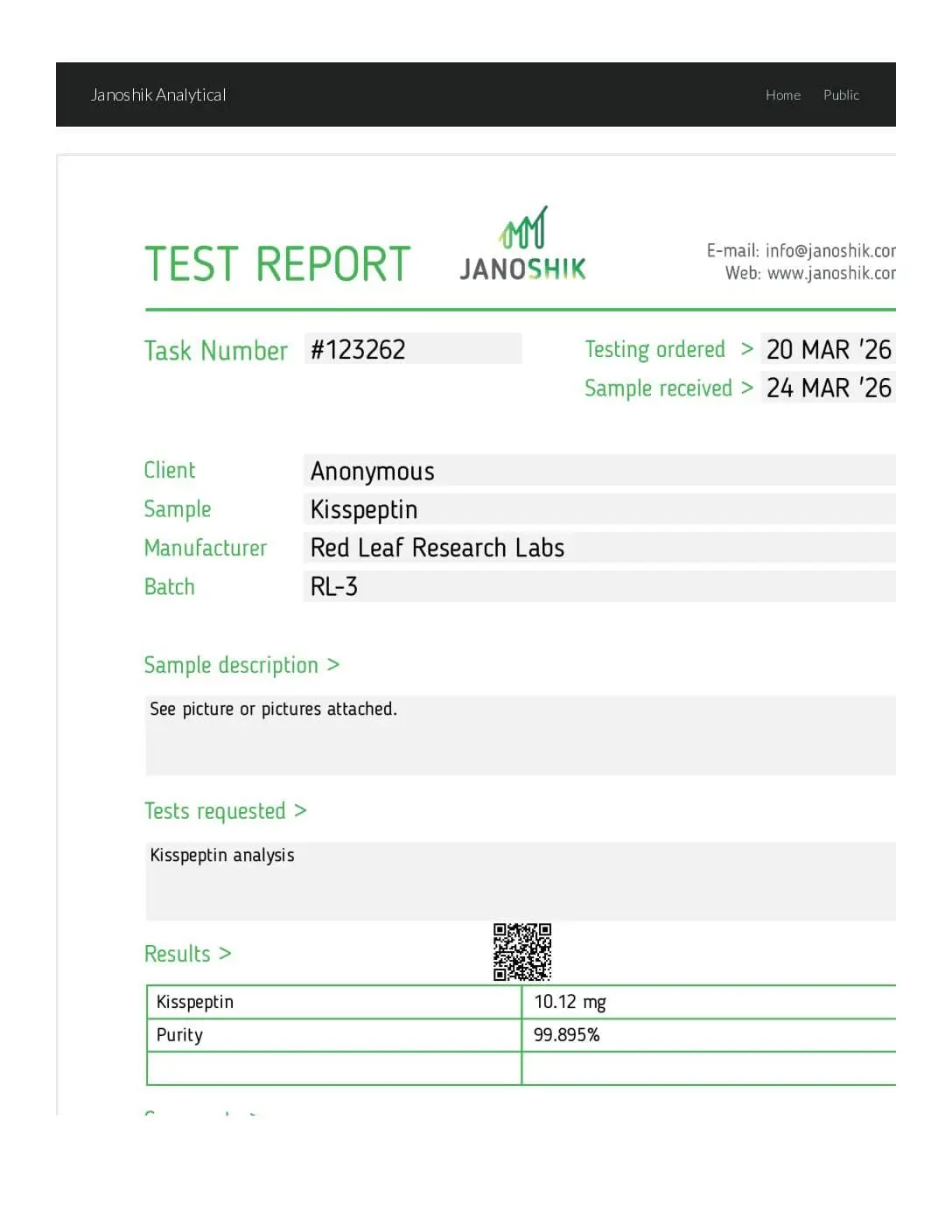
Kisspeptin
- Purity
- 99.895%
- Tested quantity
- 10.12 mg
- Report date
- March 25, 2026
- Task ID
- #123262

 Owned and operated by Baba Kahn, a CF veteran
FREE CANADA-WIDE EXPRESS SHIPPING ON ORDERS OVER $250
Reviews transferred over to Yotpo (over 140 reviews)
🍁 Owned and operated by a CF Veteran 🇨🇦
10% off: peptideparty
There are copycat websites, this is the only official Red Leaf website, please access the website direct or use Bing search (peptide friendly),
Pfizer bac water – In stock New Batch of G-H coming. RESTOCKED – Please double-check junk mail for emails
$109.00 Original price was: $109.00.$84.99Current price is: $84.99.
In stock
Research use only; Not for human or veterinary administration. This content is not a substitute for medical advice.
Research use only. This is laboratory material. It is not an approved medicine in Canada, it is not for human or veterinary use, and nothing on this page is dosing or administration guidance.
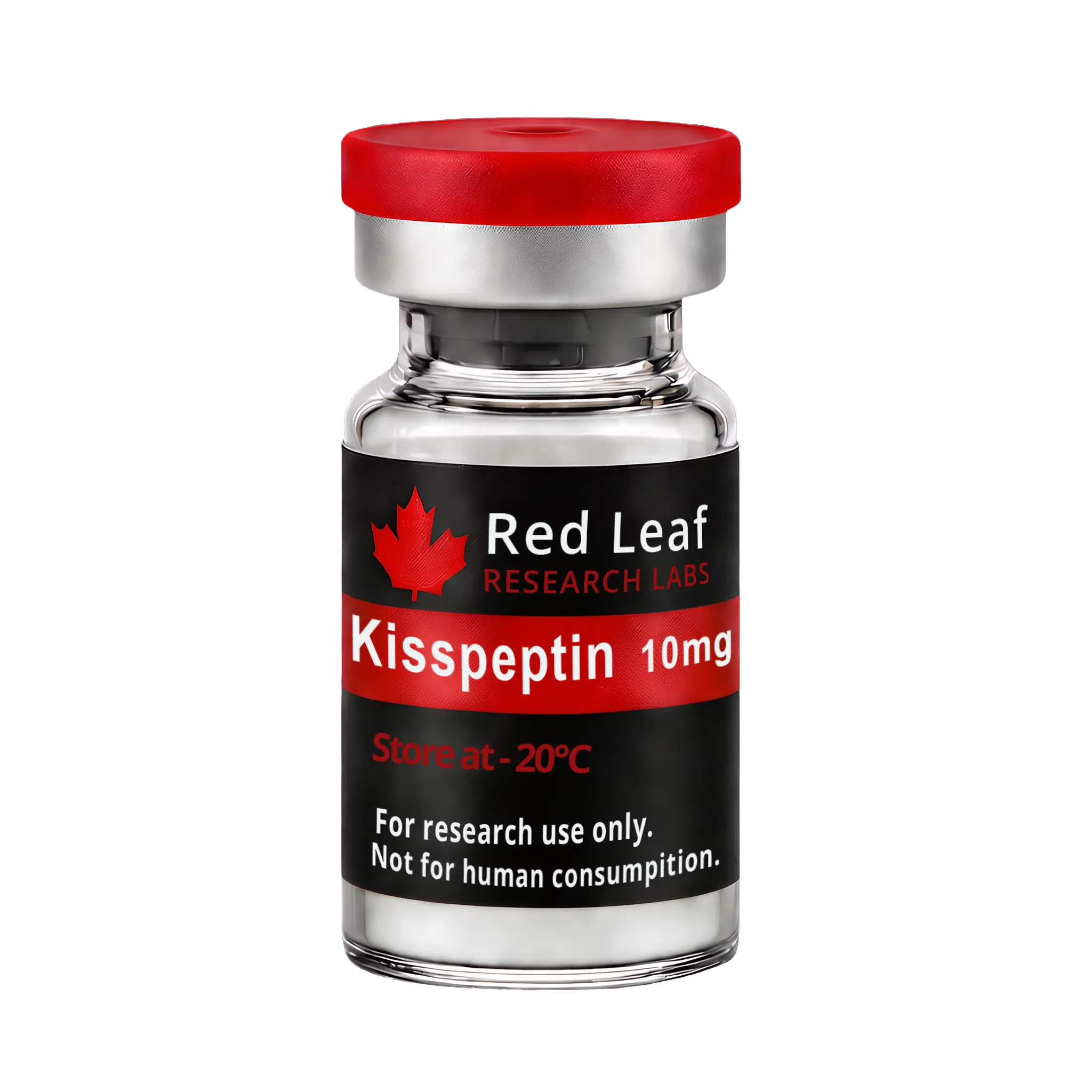
A sealed 10mg vial of lyophilized powder. Freeze-dried, so it is a solid cake or thin film at the bottom of the glass, not a liquid. Capped and labelled with the compound, the size and the batch number that matches the lab report.
Every batch goes to an outside laboratory before it is listed. The report gives two numbers that matter. Purity is how much of what is in the vial is the compound you paid for. Mass is how much material is actually in the vial. Purity is the number every supplier quotes; mass is the one many skip, and it is the one that catches underfilling. A vial labelled 10mg that measures 10mg or more was not shorted. A vial that measures 8mg is, whatever its purity says.
Ask any supplier for both numbers on the batch you are being sold, not a sample batch from last year. Ours included. The current report for this product is further down this page.
| Size | Price | Cost per mg |
|---|---|---|
| 10mg | $8.50 |
Working out how much to reconstitute? The peptide calculator does the arithmetic for any vial size.
Orders leave from inside Canada, so nothing crosses a border and nothing gets held at customs. Express shipping is free over $250. Below that it is a flat rate shown at checkout. Payment is by Interac e-Transfer. Tracking is sent by email once the carrier has the parcel.
Kisspeptin is not approved by Health Canada as a medicine. It is not prescribed here, and no pharmacy stocks it. It is supplied here as laboratory material for research use only. The research record is summarised in Kisspeptin: research guide.
Kisspeptin-10, the ten-amino-acid fragment used in most laboratory work. The full 54-amino-acid form is a different, much larger molecule.
From inside Canada, by express courier. Free over $250, flat rate below. Payment by Interac e-Transfer.
Purity and mass for the batch you are buying, on the Janoshik report on this page. A vial that measures at or above its label weight was not shorted.
The questions people actually ask are answered properly in these, not compressed into a product page.
Independent third-party testing
Review available analytical reports associated with this product.
Independent analysis
A certificate describes the submitted sample shown in that report. It does not establish clinical safety, efficacy, or suitability for human or veterinary use.
Why purity can differ a little between batches
Each batch is freeze-dried (lyophilized) in its own run. Small differences between runs and machines, such as temperature, drying time and the moisture left in the powder, affect how well the peptide holds up, and each raw peptide lot varies slightly too. The lab test (HPLC) also has a small margin from one run to the next. So one batch can read 99.8% and the next 98.6%, and both meet our 98% standard. That is why we send every batch to the same lab, Janoshik, and publish each report instead of quoting one best number. Some sellers never test at all, or show a report that was run for another company’s product with their own name on it. A report should match the product, the batch and the seller.
Third-party tested purity
Ultra high synthesis purity
Temperature controlled logistics
Trusted by researchers worldwide
This product is supplied in a lyophilized powder form to preserve its stability, purity, and potency.
For laboratory research purposes only. Not intended for human consumption.

You must be 18 or 19 years of age depending on the age of majority in your province and a licensed research professional
All products are sold in powder (lyophilized) form and require reconstitution with a suitable diluent for research purposes only. No dosing instructions are provided. We adhere to all provincial and federal laws in Canada around Research Only Chemical sales. We are not a pharmacy and/or compounding facility, nor do we promote or provide any advice for human or animal consumption.
By clicking ”I Agree” you confirm that you have read and accepted the Terms and Conditions stated above