Owned and operated by a cf veteran

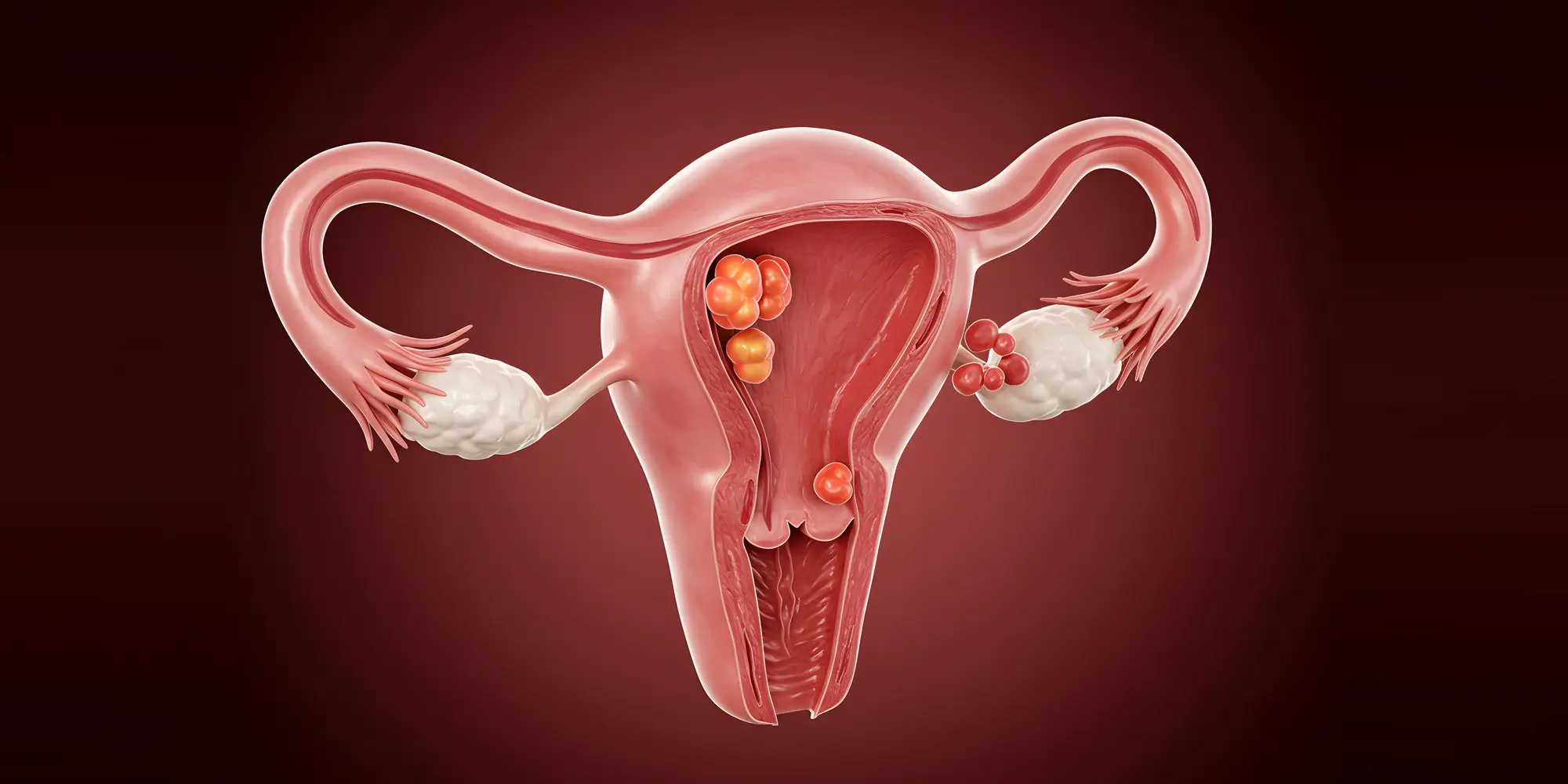
PCOS can make weight feel impossible to move. This PCOS weight loss guide looks at retatrutide, the new three-hormone shot. It covers what it may and may not do for women with PCOS. We compare it with Ozempic, Mounjaro and metformin. We also cover insulin resistance, the PCOS belly, periods, birth control and pregnancy, with real Canadian costs.
- 1 in 10 women have PCOS
- 28% average weight loss in retatrutide’s big trial
- 0 PCOS trials of retatrutide so far
- $ Canadian costs
Retatrutide has not been tested in women with PCOS yet. But it goes after the two things that drive PCOS the most: extra weight and insulin resistance. In its biggest trial, people lost about 28% of their body weight in 80 weeks. That is more than any weight loss drug so far. Losing even 5% can bring back periods and lower male-type hormones in PCOS. So the logic is strong, but the proof in PCOS is still missing. Birth control and pregnancy need extra care with these drugs.
- The short version
- What PCOS is
- Insulin resistance and the PCOS belly
- What retatrutide is
- What the trials show
- What it could mean for PCOS
- The proof scorecard
- Why 5% matters
- Fatty liver
- Retatrutide vs Ozempic vs Mounjaro vs metformin
- Side effects
- Birth control, fertility and pregnancy
- Other PCOS treatments
- Costs in Canada
- Who should not use these drugs
- What a year can look like
- Which path fits you?
- Myths
- Questions people ask
The short version
- PCOS is a hormone problem, not just an ovary problem. It affects about 1 in 10 women.
- Insulin resistance sits at the centre for most women with PCOS. It pushes weight up and pushes male-type hormones up.
- Retatrutide works on three hunger and sugar hormones at once: GLP-1, GIP and glucagon.
- It caused the biggest weight loss of any drug tested so far, about 28% on the top dose in its big trial.
- No trial has tested it in PCOS yet. What we know comes from obesity trials and from older drugs like Ozempic.
- Losing 5% to 10% of your weight can help PCOS a lot: more regular periods, better ovulation, less acne and hair growth.
- Watch your birth control. As weight drops, ovulation can come back, and some of these drugs may make the pill work less well.
- Stop before trying to get pregnant. These drugs are not for pregnancy.
What is PCOS?
PCOS stands for polycystic ovary syndrome. It is one of the most common hormone problems in women. About 1 in 10 women of child-bearing age have it. Many do not know it for years.
The name is a bit misleading. Women with PCOS do not really have cysts. They have many small egg sacs that start to grow and then stall. The real story is about hormones: too much insulin and too much of the male-type hormones called androgens.
Doctors most often diagnose PCOS when you have at least two of these three signs:
Common PCOS symptoms
- Weight gain, often around the middle, and weight that is hard to lose.
- Irregular or missing periods.
- Acne that lasts past the teen years.
- Dark hair growth on the face, chest or belly.
- Thinning hair on the head. Our hair loss guide covers the options.
- Trouble getting pregnant.
- Dark velvety skin on the neck or under the arms, a sign of insulin resistance.
- Low mood and anxiety, which are more common with PCOS.
Insulin resistance and the PCOS belly
Insulin is the key that lets sugar into your cells. With insulin resistance, the locks get sticky. The key does not turn well, so your body makes more and more insulin to push the sugar in.
That extra insulin causes two problems in PCOS. First, it tells your body to store fat, mostly around the belly. Second, it tells the ovaries to make more male-type hormones. Those hormones then stop eggs from being released and cause acne and hair growth.
Most women with PCOS have some insulin resistance, even women who are not heavy. And extra weight makes insulin resistance worse. It becomes a loop: more insulin, more belly fat, more insulin resistance, more hormones.
Sticky insulin locks
Your cells stop answering insulin well, so your body makes extra.
Belly fat and hunger
High insulin stores fat around the middle and can make you hungrier.
More male-type hormones
High insulin tells the ovaries to make more androgens. Periods stop and acne starts.
This is why the PCOS belly is so stubborn. It is also why breaking the insulin loop is the goal of most PCOS weight loss plans. And it explains why drugs that lower insulin and appetite have become such a big topic for PCOS.
What is retatrutide?
Retatrutide is a new weekly shot being tested for weight loss. It is still in trials and is not approved anywhere yet. It copies three gut hormones at once. That is why some people call it a “triple agonist” or even “GLP-3”.
We explain the basics in our guide to what retatrutide does in the body. We compare it with the older drugs in our semaglutide vs tirzepatide vs retatrutide guide.
What the retatrutide trials show
Retatrutide has now been tested in thousands of people with obesity. Here is what the two biggest studies found.
- Phase 2 trial, 338 adults, 48 weeks. People on the top 12 mg dose lost an average of 24.2% of their body weight. People on the dummy shot lost 2.1%.
- TRIUMPH-1, 2,339 adults, 80 weeks. People on 12 mg lost an average of 28.3%, about 70 pounds. On 9 mg they lost 25.9%, and on 4 mg they lost 19%.
- Women in these trials. About half the people in the phase 2 trial were women. As with other drugs like this, women on the higher doses tended to lose a bit more weight than men.
To put that in context, here is how retatrutide compares with the drugs women with PCOS are most often offered today. These numbers come from each drug’s own big obesity trial. They were not tested head to head, so treat the chart as a rough guide.
Retatrutide: TRIUMPH-1. Mounjaro: SURMOUNT-1 (15 mg). Wegovy: STEP 1 (2.4 mg). Metformin: typical results in PCOS studies. Different trials and people, so this is not a head-to-head test.
What retatrutide could mean for women with PCOS
No study has given retatrutide to women with PCOS and then measured their periods, hormones or fertility. So everything below is a reasoned guess. It is based on what the drug does to weight and insulin, and on what similar drugs do in PCOS. Here is each PCOS problem, what PCOS treatment could help, and how much proof exists.
| PCOS problem | How retatrutide might help | Proof in PCOS? |
|---|---|---|
| Weight and the PCOS belly | Strong appetite control and more energy burned | Not tested in PCOS, but huge loss in obesity trials |
| Insulin resistance | Lower weight and better insulin action | Strong in diabetes and obesity trials, not in PCOS |
| Irregular periods | Weight loss often brings periods back | Seen with Ozempic-type drugs in small PCOS studies |
| High male-type hormones | Less insulin means the ovaries make fewer androgens | Some drop seen with older GLP-1 drugs |
| Acne and dark hair growth | May slowly ease as androgens fall | Weak proof so far, and hair takes months to change |
| Fertility | Ovulation can return with weight loss | Must stop the drug before trying to conceive |
| Fatty liver | The glucagon part pulls fat out of the liver | Strong liver results, but not in a PCOS group |
A 2025 review of GLP-1 drugs in women with PCOS found they helped with weight, insulin and, in some studies, cycles and androgens. The same review named retatrutide as a possible future option, because of how large its results have been. That is a fair summary: promising, not proven.
The proof scorecard: how much PCOS research is there?
This chart shows how much research exists for each option in women with PCOS specifically, not in people in general.
A plain-language read of the published PCOS research, grouped into bands. Not to scale. It shows how much proof exists in PCOS, not how well a drug works for weight in general.
Experts from many countries wrote the 2023 international PCOS guideline. It says GLP-1 drugs can be considered for weight in adults with PCOS, along with healthy habits. It also says women need reliable birth control while on them. The review behind that advice found that liraglutide and semaglutide did better than a dummy pill for weight in PCOS.
Why losing even 5% matters in PCOS
You do not need to reach a “goal weight” for PCOS treatment to work. Small losses matter. For a woman who weighs 200 pounds, 5% is just 10 pounds. Here is what studies of PCOS weight loss often report as the weight comes off.
First changes
Insulin starts to work better. Periods may become more regular. Some women start to ovulate again.
Hormones shift
Male-type hormones often drop. Acne may ease. The odds of ovulating each month go up.
Bigger health wins
Lower risk of type 2 diabetes, less liver fat, and better blood pressure and cholesterol.
The people in retatrutide’s big trial lost far more than 15% on average. That is why so many women with PCOS are watching it. But more loss is not always better for everyone. Very fast loss can bring muscle loss, hair shedding and loose skin. See our loose skin guide for more on that.
Fatty liver: a hidden PCOS problem
Women with PCOS are more likely to have fat build up in the liver. Doctors now call it MASLD. It often has no symptoms until it is advanced.
This is where retatrutide stands out. Its glucagon part tells the liver to burn its stored fat. A liver study was done inside the phase 2 trial. People with fatty liver on the 12 mg dose saw their liver fat drop by about 82% in 24 weeks. Most of them, 86%, had a normal amount of liver fat by then.
That study did not look at PCOS. But fatty liver is so common in PCOS. That makes it one of the most interesting parts of the retatrutide story for these women.
Retatrutide vs Ozempic vs Mounjaro vs metformin for PCOS
These are the four names that come up most when women with PCOS ask about weight loss medication. Here they are side by side.
At a glance: hormones, weight loss and PCOS proof
| Drug | Hormones it copies | Average weight loss | Proof in PCOS |
|---|---|---|---|
| Retatrutide | GLP-1, GIP and glucagon | About 28% (80 weeks) | None yet |
| Mounjaro / Zepbound | GLP-1 and GIP | About 21% (72 weeks) | Very early |
| Ozempic / Wegovy | GLP-1 | About 15% (68 weeks) | Small trials, some good results |
| Metformin | None (helps insulin work) | About 2% to 3% | Many trials, long history |
Status in Canada and biggest downside
| Drug | In Canada | Biggest downside |
|---|---|---|
| Retatrutide | Not approved; still in trials | No PCOS data, no long-term safety data yet |
| Mounjaro / Zepbound | Prescription | Can make the birth control pill work less well |
| Ozempic / Wegovy | Prescription; first generic approved in 2026 | Stomach side effects; must stop 2 months before pregnancy |
| Metformin | Prescription, cheap | Small weight loss; upset stomach |
Retatrutide side effects
Retatrutide’s side effects are much like those of Ozempic and Mounjaro, and they are most common while the dose is going up. Our retatrutide side effects guide goes deeper.
Birth control, fertility and pregnancy
This is the most important section for women with PCOS. Please read it even if you skip the rest.
- The pill may work less well. Mounjaro slows the stomach and lowers how much of the birth control pill gets into your blood. Its label says to use a backup method, like condoms, for 4 weeks after you start. Do the same after each dose increase. Or switch to a method that is not a pill.
- Retatrutide has not been studied with the pill. Because it also copies GIP and slows the stomach, it is safest to assume it could act like Mounjaro. An IUD, implant or ring avoids the problem.
- Stop before you try to conceive. The Wegovy label says to stop at least 2 months before a planned pregnancy. The drug takes a long time to leave the body. Retatrutide also lasts about a week per dose, so a long gap is wise. Ask your doctor.
- Not for pregnancy or breastfeeding. None of these weight loss drugs are for use while pregnant or breastfeeding.
- Trying to conceive with PCOS? Doctors often use letrozole, a pill that helps you ovulate. Weight loss before pregnancy can also lower the risk of diabetes during pregnancy.
Other PCOS treatments in Canada
Retatrutide, if it is ever approved, would be one PCOS treatment among many. These are the PCOS treatment options Canadian doctors use today. Most women use more than one.
What PCOS weight loss drugs cost in Canada
Prices below are rough monthly costs without insurance in 2026. Many work plans cover some of them, but coverage for weight loss is patchy.
Rough 2026 ranges from Canadian pharmacy reports. Not to scale. Canada approved its first generic semaglutide in April 2026, which is expected to cost much less than Ozempic once it reaches pharmacies.
Retatrutide has no pharmacy price because it is not approved yet. It is only sold in Canada as a research material for lab use.
Who should not use GLP-1 weight loss drugs
These drugs are not safe for everyone. Doctors avoid them or take extra care in these cases:
- You are pregnant, trying to get pregnant, or breastfeeding.
- You or a close family member had medullary thyroid cancer, or a condition called MEN 2.
- You have had pancreatitis in the past.
- You have a history of an eating disorder. Strong appetite drugs need close care from a doctor.
- You have type 1 diabetes, or you take insulin, unless your doctor is managing the doses.
- You have serious stomach problems, like a stomach that already empties very slowly.
What a year of PCOS weight loss can look like
This is what a year often looks like for women with PCOS on a GLP-1 type drug plus healthy habits. Everyone is different.
Months 0 to 3
The dose goes up slowly. Appetite drops. Nausea is most common now. Weight starts to move, and insulin starts to work better.
Months 3 to 6
Many women pass the 5% mark. Periods may start to come more often. This is the time to be sure your birth control is solid.
Months 6 to 12
Weight loss slows and levels off. Acne and hair growth may slowly ease. Ask your doctor to recheck blood sugar, liver and hormones.
What happens if you stop? In trials of these drugs, most people regain much of the weight within a year of stopping. Insulin resistance and PCOS symptoms can come back with it. Planning for the long term matters.
Which PCOS treatment path fits you?
Use this list to find a starting point. Then take it to your doctor.
- Just diagnosed? Start with healthy habits and a blood test for sugar, cholesterol and liver. Ask about metformin.
- Irregular periods, acne or dark hair growth are the main problem? The birth control pill, with spironolactone if needed, often helps most.
- Weight and insulin resistance are the main problem? Ask your doctor whether Ozempic, Wegovy or Mounjaro is right for you. They have the most proof today.
- Trying to get pregnant? Talk to a fertility doctor. Letrozole is the usual first pill. Stop weight loss shots well before you try.
- Curious about retatrutide? Watch for its approval and for PCOS trials. Treat it as a promising drug that has not been tested in PCOS yet.
PCOS weight loss myths
Questions people ask about PCOS and retatrutide
Can retatrutide help with PCOS?
It might, but it has not been tested in PCOS. It causes large weight loss and helps insulin work, and those are two of the main drivers of PCOS.
Is retatrutide approved in Canada?
No. It is still in trials and is not approved for PCOS or any other use in Canada.
How much weight did people lose on retatrutide?
About 28% of their body weight on the top dose after 80 weeks in the biggest trial. People on a dummy shot lost about 2%.
Is retatrutide better than Ozempic for PCOS?
It caused more weight loss in trials, but only Ozempic-type drugs have been studied in PCOS so far.
Is Mounjaro good for PCOS?
It causes more weight loss than Ozempic in trials. PCOS-specific research is very early. It can make the birth control pill work less well.
What is the best weight loss medication for PCOS?
There is no single best one. Ozempic-type drugs have the most PCOS research among the new shots. Metformin is cheap and well studied. Your doctor will help you choose.
How can I lose weight with PCOS?
Start with more protein and fibre, fewer sugary drinks, walking and strength work. Ask your doctor about metformin or a GLP-1 drug if that is not enough.
How do I get rid of PCOS belly fat?
Lowering insulin is the key. Healthy habits, metformin and GLP-1 drugs all help. Losing 5% to 10% of your weight often shrinks the waist.
Can GLP-1 drugs make periods regular in PCOS?
In small PCOS studies, some women had more regular cycles as they lost weight. Results vary.
Can I get pregnant while on these drugs?
Yes, and it happens more than people expect, because ovulation can return with weight loss. Use reliable birth control.
Does retatrutide affect birth control?
It has not been tested. Mounjaro lowers how well the pill works, so a backup method or a non-pill method is the safe choice.
When should I stop before trying to get pregnant?
For Wegovy, at least 2 months before. Ask your doctor about any drug in this family.
Does metformin help PCOS weight loss?
A little. It helps insulin work and may help periods, but the weight loss is small, often 2% to 3%.
Does inositol work for PCOS?
Some women find it helps cycles and insulin. The proof is limited, but it is low risk. Ask your doctor.
Does retatrutide help fatty liver?
In its phase 2 trial, people with fatty liver on the top dose cut liver fat by about 82% in 24 weeks. That study did not focus on PCOS.
 RetatrutideFrom $79.99Retatrutide 10mg 10-Pack$500
 TirzepatideFrom $54
 GHK-Cu 100mg$64.99
 Pfizer Bacteriostatic Water 30ml$24
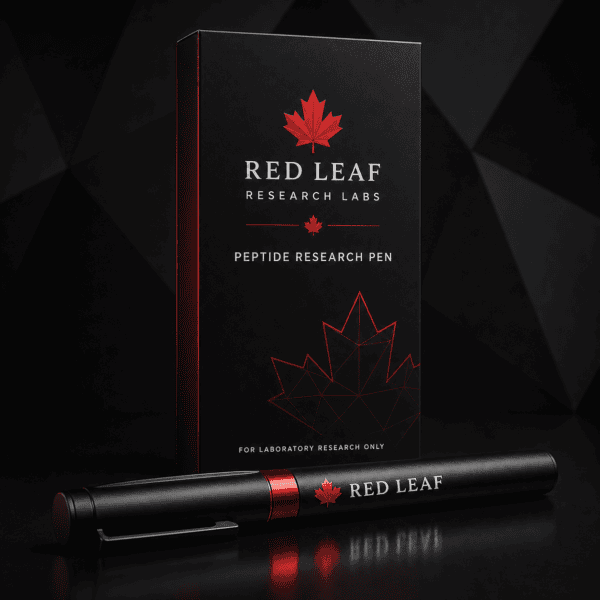 Peptide Pens Canada – Red Leaf Research Pen Add-On$99
Every Red Leaf research vial carries an independent lab report with a verify link, right on the product page. Free express shipping on Canadian orders over $250. The Retatrutide 10mg 10-Pack, a taster of what our members get, is open to everyone until October 31 or while supplies last.
Research use only. All products sold by Red Leaf Research Labs are laboratory materials supplied for in-vitro research and are not for human or veterinary use. Nothing on this page is medical advice, a dose, or a protocol. Retatrutide is not approved for PCOS or any other use in Canada. Prescription drugs mentioned here should only be used under a doctor’s care. Full wording on our legal terms page.