Owned and operated by a cf veteran

Thinning up top, a wider part, more hair in the drain. You have options. This hair loss treatment guide compares six of them side by side: finasteride vs dutasteride, red light therapy for hair loss, microneedling, GHK-Cu and other copper peptides for hair growth, and hair transplants. You get plain words, the real hair transplant cost in Canada, the best hair loss treatment for women, and an honest look at how strong the proof is for each one.
- 6 treatments compared
- 1 proof scorecard
- $ Canadian costs
- M + W men and women
For most men, the best-proven hair loss treatments are finasteride and minoxidil. Dutasteride is a stronger step up. Red light therapy and microneedling help a bit, mostly as add-ons. A hair transplant gives the biggest change but costs the most. Topical GHK-Cu is interesting but still early. For women, minoxidil comes first, and pills like finasteride need a doctor’s careful choice. All three drugs can cause side effects, so read that section before you start.
- The short version
- Why hair falls out
- Men vs women
- The proof scorecard
- Side-by-side table
- Finasteride
- Dutasteride
- Finasteride vs dutasteride
- Red light therapy
- Microneedling
- GHK-Cu on the scalp
- GHK-Cu with microneedling
- Hair transplants
- The missing one: minoxidil
- Side effects
- Best options for women
- Costs in Canada
- What goes well together
- How long it takes
- Myths
- Which one is right for you?
- Questions people ask
The short version
- Most hair loss is pattern hair loss. In men it starts at the temples and crown. In women the part gets wider.
- A hormone called DHT is the main driver. It slowly shrinks hair roots until they stop making thick hair.
- Finasteride and dutasteride lower DHT. They are the best-proven way to stop loss in men.
- Minoxidil helps hair grow. It works for men and women and you can buy the foam without a prescription.
- Red light and microneedling are helpers. They add a little on top of the main treatments.
- GHK-Cu is early-stage. Lab results look good. Human proof is still thin.
- A transplant moves hair. It does not stop future loss, so most people still need a treatment after.
- The drugs have side effects. Finasteride and dutasteride can affect sex drive and mood. Minoxidil can cause shedding, itching and extra body hair.
- Start early. Every option works better at saving hair you still have than at bringing back hair long gone.
Why hair falls out
Think of each hair root like a small plant pot. A big pot grows a thick, strong plant. A small pot grows a thin, weak one.
In pattern hair loss, a hormone called DHT slowly squeezes the pots on the top of your head. Each time a hair falls out and grows back, the pot is a little smaller. The new hair comes in thinner and shorter. After enough rounds, the pot is so small that the hair barely shows.
That is why hair loss feels slow. It is not that all your hair falls out at once. It is that each new hair is a bit weaker than the last one.
DHT is made from testosterone by a helper called 5-alpha reductase. Some people’s roots are more sensitive to DHT than others. That part runs in families. It can come from either side, not just your mom’s dad.
The hair on the back and sides of your head is different. Those roots do not mind DHT much. That is why a bald man still has hair around the sides. It is also why hair transplants take hair from the back.
Other reasons hair can fall out
Not all hair loss is pattern hair loss. Before you pick a hair loss treatment, rule these out with a doctor:
- Low iron or low vitamin D. Common, easy to test, easy to fix.
- Thyroid problems. Both too high and too low can thin hair.
- Big stress or illness. A high fever, surgery or a hard year can make lots of hair shed at once, about three months later.
- Fast weight loss. Losing weight quickly, including on GLP-1 weight loss drugs, can cause a big shed. It usually settles in a few months. Our side effects guide covers this.
- After a baby. Many women shed a lot two to four months after giving birth. It usually grows back.
- Patchy round bald spots. That may be alopecia areata, which is a different problem with different treatments.
Men vs women: hair loss looks different
The proof scorecard: how strong is the evidence for each one?
Not every hair loss treatment has the same amount of proof behind it. Some have been tested on thousands of people for years. Some have only been tested on cells in a lab dish. This chart shows the difference at a glance.
A plain-language read of the published research, grouped into bands. It is not to scale. It shows how much proof exists, not how much hair you will grow.
In 2025, a group of Canadian skin doctors agreed on the best treatments for pattern hair loss. They backed finasteride, dutasteride, minoxidil and microneedling for the right adults. They also saw red light therapy as a fair option. GHK-Cu is not on that list yet. That does not mean it does nothing. It means nobody has run the big human trials.
Hair loss treatments side by side
Here is every hair loss treatment in one table. The costs are rough Canadian prices for 2026. Your price will depend on your city, your clinic and your pharmacy.
At a glance: cost, timing and who it suits
| Treatment | Rough cost (CAD) | First results | Men | Women |
|---|---|---|---|---|
| Finasteride | $15 to $50 a month | 3 to 6 months | Yes, first choice | Only some women after menopause, by a doctor |
| Dutasteride | $30 to $70 a month | 3 to 6 months | Yes, often a step up | Rarely, by a specialist |
| Red light therapy | $300 to $1,500 for a cap or helmet | 4 to 6 months | Yes, as a helper | Yes, as a helper |
| Microneedling | $20 to $80 for a tool, or $200+ per clinic visit | 3 to 6 months | Yes, with minoxidil | Yes, with minoxidil |
| GHK-Cu (topical) | Varies | Unknown | Early research only | Early research only |
| Hair transplant | $8,000 to $20,000 | 6 to 12 months, full at 12 to 18 | Yes, if enough donor hair | Some women, if the loss is in one area |
| Minoxidil | $20 to $40 a month | 3 to 6 months | Yes | Yes, first choice |
How each one works, and its biggest downside
| Treatment | How it works | Biggest downside |
|---|---|---|
| Finasteride | Pill that lowers DHT by about 70% | Sexual side effects in a small share of men |
| Dutasteride | Pill that lowers DHT by about 90% | Stays in the body for months; off-label for hair |
| Red light therapy | Red light wakes up hair roots | You have to use it for good, several times a week |
| Microneedling | Tiny needles trigger repair and help creams soak in | Redness, and infection risk if not clean |
| GHK-Cu (topical) | Copper peptide linked to repair and bigger hair roots in lab tests | Very little human proof so far |
| Hair transplant | Moves roots from the back to the thin spots | Cost, surgery, and it does not stop future loss |
| Minoxidil | Opens blood flow and keeps hair in the growing stage | Early shedding; stops working if you stop |
Finasteride: the most-proven pill for men
What it is. Finasteride is a small daily pill, usually 1 mg for hair loss. It blocks the helper that turns testosterone into DHT. With less DHT around, the plant pots on your scalp stop shrinking.
How well it works. Finasteride has been studied since the 1990s. A large review of 12 studies with almost 4,000 men found clear benefits over a dummy pill. In the long studies, about 9 in 10 men on it kept the hair they had, and many grew some back. Men on the dummy pill kept losing.
How long it takes. You need at least 3 months to see a change. Most people judge it at 6 to 12 months. It only works while you take it. If you stop, the loss picks up again within about a year.
Topical finasteride
Topical finasteride. There is also a liquid or spray you put on the scalp. The idea is to act on the scalp while less reaches the rest of the body. Early studies look good, and it is getting more common in Canada through compounding pharmacies. It is newer, so it has less long-term data than the pill.
Women and finasteride. Women who are pregnant or could get pregnant should not take finasteride. They should not even handle broken or crushed tablets. It can harm a baby boy’s development. Some doctors use it for women after menopause, but the proof in women is much weaker.
Dutasteride: the stronger cousin
What it is. Dutasteride is a daily pill, usually 0.5 mg. It was first made for an enlarged prostate. It blocks both types of the DHT helper, not just one. So it cuts DHT by about 90%, compared with about 70% for finasteride.
How well it works. Head-to-head studies show dutasteride grows more hair than finasteride on average. In one trial, dutasteride added about 90 hairs in a small test patch, compared with about 57 for finasteride. It is an approved hair loss drug in South Korea and Japan. In Canada it is sold for the prostate, so doctors prescribe it off-label for hair.
Finasteride vs dutasteride: which should you pick?
In the finasteride vs dutasteride choice, think of finasteride as the first rung on the ladder and dutasteride as the next rung up.
- Start with finasteride if you are new to treatment. It has the most years of safety data and it is cheaper.
- Move to dutasteride if a year of finasteride did not do enough, or your doctor thinks you need a stronger drop in DHT.
- Side effects are close. If finasteride gave you trouble, dutasteride probably will too.
- Blood tests. Both drugs lower PSA, a prostate test number. Tell your doctor you take one so they read the test right.
A 2024 review of finasteride vs dutasteride trials came to the same view: dutasteride is stronger, finasteride has more history. Neither is a cure. Both only work while you keep taking them.
Red light therapy for hair loss
What it is. Red light therapy, also called low-level laser therapy or LLLT, shines red light on your scalp. It comes as a cap, a helmet, a comb or a clinic panel. The light is not hot and it does not burn.
How it may work. The red light seems to give the hair roots a small energy boost. It may also improve blood flow and keep more hairs in the growing stage longer. Think of it as sunlight for tired plant pots. It does not touch DHT at all.
How well it works. A 2024 review of many studies found that red light and laser devices raised hair density compared with fake devices. But the devices, colours and schedules were all different, so the results were mixed. Most studies ran 4 to 6 months. Adding red light on top of minoxidil did not always add much.
Who it suits. Red light is a good add-on hair loss treatment for people who do not want pills, or who want to add something on top of their main treatment. It is rarely enough on its own for moderate or heavy loss.
Microneedling for hair growth
What it is. Microneedling uses a roller, stamp or pen covered in tiny needles. The needles make many small pokes in the top layer of the scalp. Clinics do it with a pen. People also buy derma rollers to use at home.
How it may work. The tiny pokes tell the skin to repair itself. That repair sends growth signals to the hair roots nearby. The pokes also open small channels, so a cream like minoxidil can soak in better. It is a bit like aerating a lawn before you water it.
How well it works. The best-known study tested 100 men. One group used minoxidil alone. The other used minoxidil plus weekly microneedling. After 12 weeks, 82% of the microneedling group saw more than 50% improvement, compared with 4.5% of the minoxidil-only group. A 2024 review of many trials also found that adding microneedling helped. Most studies used needle depths around 0.5 to 1.5 mm, once a week or every other week.
Clean is key. Every study used clean tools. If you are not sure how to do it safely, a dermatology clinic can do it for you.
Topical GHK-Cu: the copper peptide on the scalp
What it is. GHK-Cu is a tiny peptide, just three building blocks, holding a copper atom. Your own body makes it. It is found in blood, saliva and urine. Levels are high when you are young and fall with age. We cover its history in our GHK-Cu history guide.
How it may work. In lab research, GHK-Cu is linked to skin repair, new collagen, and calmer inflammation. For hair, lab studies found it helped hair root cells grow and made hair roots bigger in a dish. It may also help blood vessels form around the roots. That is why it shows up in hair serums.
How well it works in people. This is the honest part. There are very few good human trials of GHK-Cu for hair loss. Most of what exists is lab work, animal work and small or mixed-ingredient studies. We could not find a large, controlled human trial proving GHK-Cu regrows hair on its own. So on our scorecard it sits at “mostly lab work”.
Where it fits. GHK-Cu is best seen as an exciting research area, not a proven hair loss treatment. Researchers study it alongside proven treatments, not instead of them. Red Leaf sells GHK-Cu 100mg as a research material for lab use. We also have a guide on GHK-Cu and skin.
GHK-Cu with microneedling
People often ask about pairing GHK-Cu with microneedling. The logic is simple. Microneedling opens tiny channels. GHK-Cu is a small molecule that could slip through them. Together they might reach the roots better than cream alone.
Here is what the research can and cannot say today:
- Microneedling has real proof, mostly when paired with minoxidil.
- GHK-Cu has lab proof for hair roots, and human proof for skin.
- The pair together has almost no trials. Any benefit people report may come from the microneedling itself.
- Needling raises absorption of everything. That includes anything unclean or untested. Purity and a real lab report matter even more here.
So without microneedling, topical GHK-Cu may not get deep enough. With microneedling, it may reach deeper, but the proof is still missing. That is the fair summary.
Hair transplants: the biggest change, the biggest bill
What it is. A surgeon moves hair roots from the back of your head to the thin spots. Those back roots do not mind DHT, so they keep growing in their new home. There are two main ways to do it.
Hair transplant cost in Canada
Hair transplant cost in Canada. Most clinics charge by the graft. A graft holds one to four hairs. In 2026, Canadian clinics commonly charge about $5 to $10 per graft. A typical session moves 1,500 to 2,500 grafts. That puts most transplants between about $8,000 and $20,000. Toronto, Vancouver and Montreal prices sit in that range, and some clinics add fees for tests and aftercare.
What to expect. The moved hairs usually fall out in the first few weeks. That is normal. New hair starts growing around month 3 to 4. You see a real change at 6 to 12 months. The full result shows at 12 to 18 months.
The part clinics skip. A transplant moves hair. It does not treat the cause. Your original hair keeps thinning around the new grafts. That is why most surgeons want you on a hair loss treatment like finasteride, dutasteride or minoxidil before and after. Without it, you may need a second surgery later.
Hair transplant for women
Hair transplant for women. Women can have transplants too, but fewer are good candidates. Women often thin all over, including at the back, so there is less strong donor hair. A transplant works best for women with loss in one clear area, like a high hairline.
The missing one: minoxidil
You did not ask about minoxidil, but any fair comparison has to include it. It is one of the two most-proven hair loss treatments in the world, for both men and women.
What it is. Minoxidil is a liquid or foam you put on your scalp once or twice a day. You can buy it at any Canadian pharmacy without a prescription, often for $20 to $40 a month. Doctors also prescribe it as a very low-dose pill.
How it works. It keeps hair in the growing stage longer and makes thin hairs thicker. It does not block DHT. That is why it pairs so well with finasteride or dutasteride. One stops the damage. The other helps growth.
Side effects: the part you need to hear
Finasteride, dutasteride and minoxidil are the best-proven hair loss treatments. But they are real drugs, and they can have real side effects. Some people get none. Some get side effects bad enough to stop. Know them before you start, and tell your doctor right away if something feels wrong.
Best hair loss treatment for women
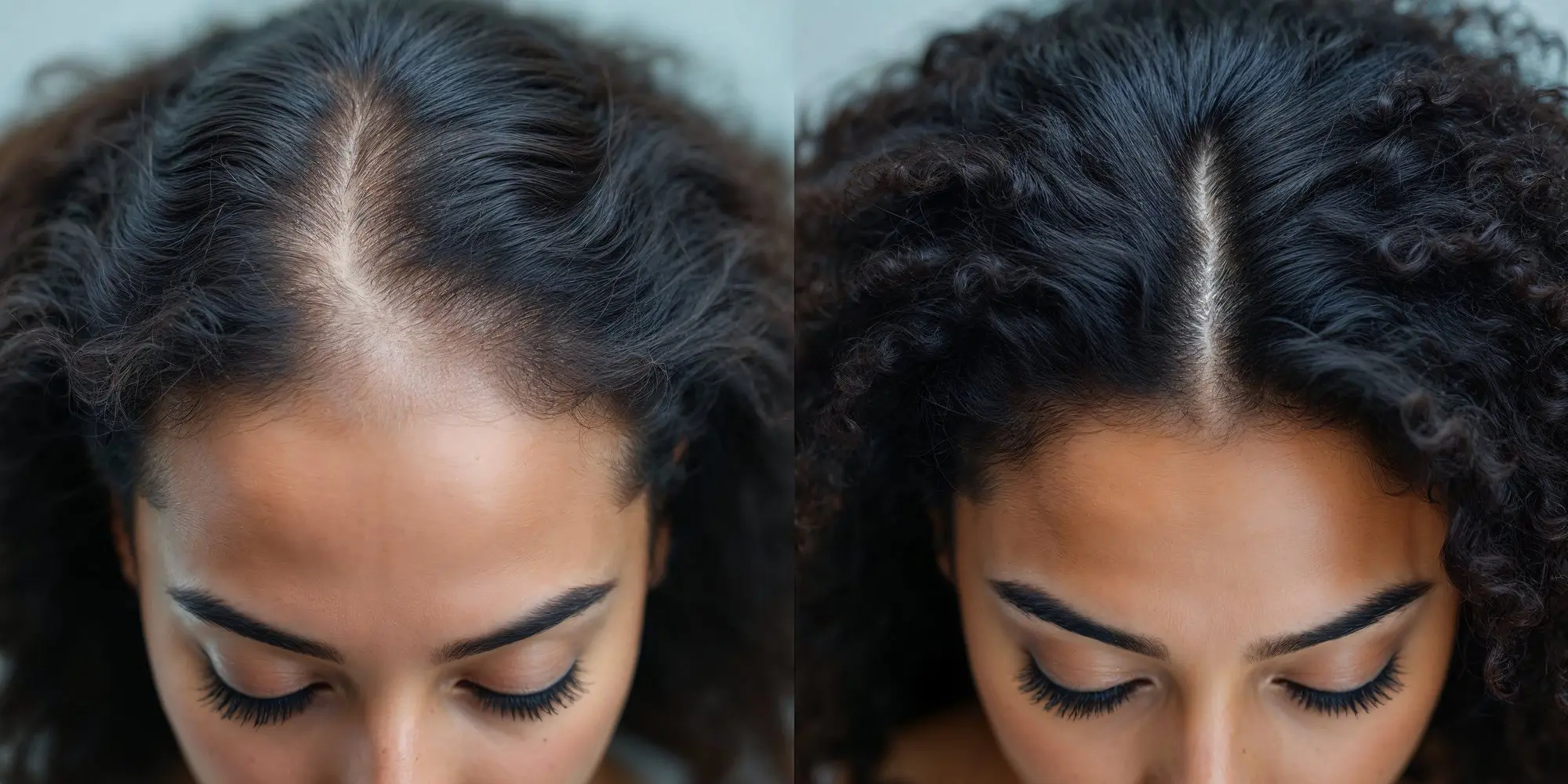
Women have fewer safe choices than men, mostly because some pills can harm a baby during pregnancy. Here is the usual order, from first step to last:
Get the blood test
Check iron, vitamin D and thyroid. Fixing a low level can stop the shedding on its own.
Start minoxidil, then add a helper
The foam or liquid is the proven first choice for female pattern hair loss. Give it 6 months. Microneedling or red light can add a little on top.
Ask about pills
A dermatologist may suggest low-dose oral minoxidil, spironolactone, or, after menopause, finasteride.
What women should skip. Finasteride and dutasteride are not for women who are pregnant, breastfeeding or could get pregnant. Only a specialist should decide if they fit a woman after menopause.
Is it hair thinning or shedding? Thinning is slow and shows as a wider part. Shedding is sudden, with lots of hair on the pillow and in the shower. Shedding often has a trigger, like a baby, stress, illness or fast weight loss, and it usually recovers. Thinning needs a treatment to hold the line.
What hair loss treatment costs in Canada
Price matters, because almost every hair loss treatment needs to be kept up for years. Here is a rough first-year cost for each one in Canadian dollars.
Rough 2026 ranges from Canadian pharmacy and clinic prices. Not to scale. Doctor visits, prescriptions and clinic fees vary by province and city.
Over ten years, pills and foam add up to a few thousand dollars. A transplant is a big one-time cost, but most people still pay for a pill or foam after it. That is worth knowing before you book.
What goes well together in hair loss treatment
Most people who get great results from hair loss treatment use two or three things at once. Each one does a different job. Here are the pairs with the best support:
How long does hair loss treatment take to work?
Hair grows slowly, about one centimetre a month. So every hair loss treatment needs patience. Here is what a normal year looks like on a proven treatment.
Months 0 to 3
Little to see yet. With minoxidil you may shed more. That is old hair making room for new.
Months 3 to 12
Shedding slows and fine new hairs show at the crown or part. Take photos in the same light each month. Judge it at month 12.
Year 2 and after
Results level off. The goal now is to hold what you have. Stopping usually means losing the gains within a year.
Hair loss treatment myths
Which hair loss treatment is right for you?
Use this quick list to pick your starting hair loss treatment. Then take it to your doctor or dermatologist.
- Just starting to thin, and a man? Finasteride plus minoxidil is the proven starting pair.
- A woman with a widening part? Blood test first, then minoxidil. Add microneedling or red light if you want more.
- Finasteride did not do enough after a year? Ask about dutasteride or oral minoxidil.
- No pills, please? Minoxidil with microneedling, plus red light therapy.
- Big bald areas already? Medicine can hold what is left. A transplant is the way to fill the gaps.
- Curious about peptides? Read the research on GHK-Cu, and treat it as early science, not a replacement for a proven treatment.
Questions people ask about hair loss treatment
What is the best hair loss treatment for men?
Finasteride and minoxidil have the most proof. Many men use both. Dutasteride is a stronger step up. A transplant is the biggest change but costs the most.
What is the best hair loss treatment for women?
Minoxidil is the proven first choice. Check iron, vitamin D and thyroid first. Microneedling and red light can help on top.
Is dutasteride better than finasteride?
It lowers DHT more, about 90% vs 70%, and grew more hair in head-to-head trials. Finasteride has more years of safety data and is the usual first step.
What are the side effects of finasteride, dutasteride and minoxidil?
Finasteride and dutasteride can lower sex drive, cause erection trouble, low mood and breast soreness, and sometimes the problems last after stopping. Minoxidil can cause scalp itch, early shedding and extra body hair, and the pills can cause swelling and a fast heartbeat.
Does red light therapy really work for hair loss?
It helps some people a little. Reviews show more hair density than fake devices, but results vary by device. It works best as a helper.
Does microneedling regrow hair?
Paired with minoxidil, yes, in several trials. On its own the proof is weaker. Keep the tool clean.
Does GHK-Cu help hair growth?
Lab studies say it helps hair root cells and makes roots bigger. Large human trials are still missing, so it is early science.
Is GHK-Cu better with microneedling?
Needling may help it soak in deeper. But there are almost no trials of the two together, so nobody can say how much it adds.
How much does a hair transplant cost in Canada?
Usually $5 to $10 per graft. Most people need 1,500 to 2,500 grafts, so about $8,000 to $20,000.
Is a hair transplant permanent?
The moved hair usually is. The hair around it can still thin, so most people keep using a treatment.
Can women take finasteride?
Not if they are pregnant or could get pregnant. Some doctors use it after menopause. Ask a specialist.
How long does finasteride take to work?
At least 3 months to see a change. Judge it at 6 to 12 months.
What happens if I stop treatment?
With pills, foam and red light, the gains usually fade within about a year. A transplant stays.
Can fast weight loss cause hair loss?
Yes. Losing weight fast can cause a big shed a few months later. It usually grows back once your weight settles and you eat enough protein.
Are peptides for hair growth proven?
Not yet. GHK-Cu is the most studied peptide for hair, but most proof comes from lab work. Treat any “miracle peptide” claim with care.
Can I buy finasteride in Canada without a prescription?
No. Finasteride and dutasteride need a prescription in Canada. Minoxidil foam and liquid do not.
 GHK-Cu 100mg$64.99
 KLOW 80mg – 3ml vial$125
 BPC-157 (10mg)$75
 Glutathione 1500mg$59.99
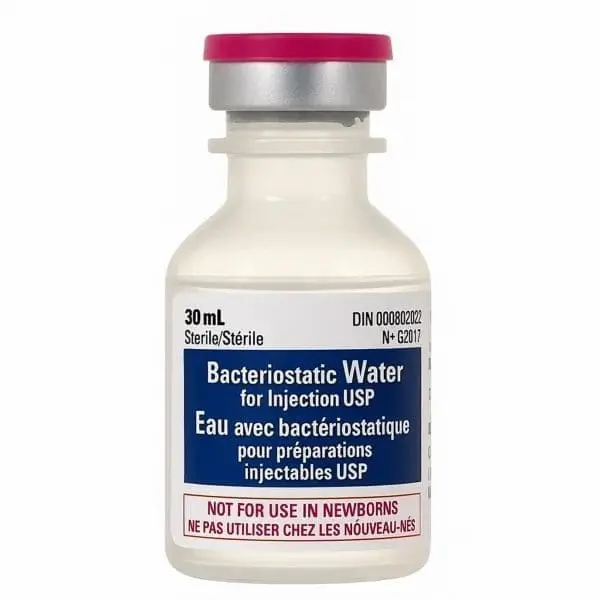 Pfizer Bacteriostatic Water 30ml$24
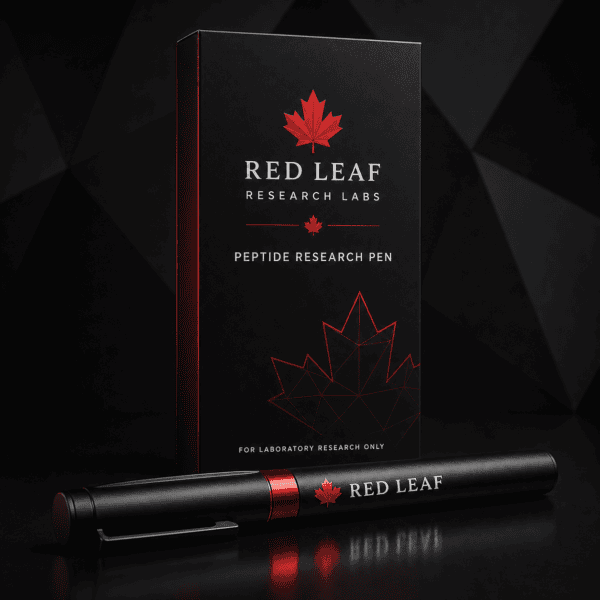 Peptide Pens Canada – Red Leaf Research Pen Add-On$99
Every Red Leaf research vial carries an independent lab report with a verify link, right on the product page. Free express shipping on Canadian orders over $250.
Research use only. All products sold by Red Leaf Research Labs are laboratory materials supplied for in-vitro research and are not for human or veterinary use. Nothing on this page is medical advice, a dose, or a protocol. Prescription drugs mentioned here should only be used under a doctor’s care. Full wording on our legal terms page.