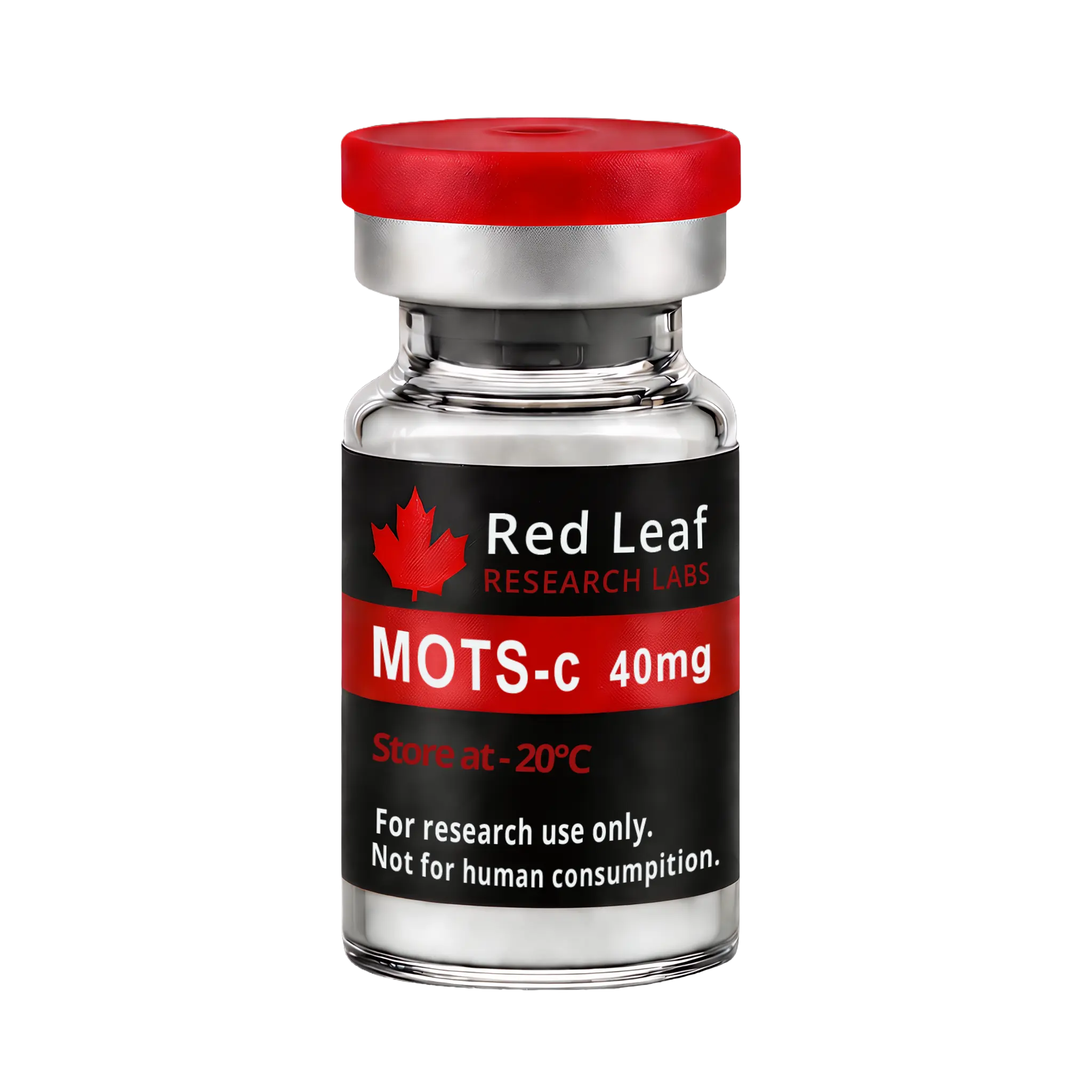
MOTS-c Peptide 40mg for Canadian Research
MOTS-c peptide 40mg is supplied as lyophilized material for laboratory research. MOTS-c is a mitochondria-derived peptide encoded within the mitochondrial 12S rRNA region. Scientists study it as a signalling molecule in experimental models involving cellular energy balance, metabolic stress and adaptation to exercise.
This product is intended only for qualified research use. It is not a medicine, supplement or personal-use wellness product. The information below summarizes the research in plain language without making treatment or performance claims.
Product overview
- Product: MOTS-c peptide
- Labelled amount: 40mg
- Format: lyophilized research material
- Research category: mitochondria-derived signalling peptide
- Intended use: analytical and laboratory research only
- Fulfilment: available through a Canadian research supplier
When the vial arrives, confirm the product name, lot number and condition of the package. Match the batch to its analytical documentation and follow the supplied storage information.
What is MOTS-c?
Mitochondria are best known for their role in cellular energy production, but they also participate in signalling. MOTS-c is a short peptide associated with mitochondrial DNA. Research suggests that it may act outside the mitochondria and participate in cellular responses to energetic or metabolic stress.
That makes the compound scientifically interesting, but it does not establish a health benefit. Laboratory findings describe effects observed under specific conditions. Results depend on the model, methods, endpoints and study population.
Major research areas
Cellular energy and metabolic signalling
Preclinical studies investigate pathways involved in glucose handling, energy sensing and cellular adaptation. Some work examines AMPK-related signalling and the response to metabolic challenges. These experiments help researchers form hypotheses; they do not prove that a research product improves metabolism in people.
Exercise and stress-response models
Animal and cellular models have explored the relationship between this peptide, physical activity and adaptation to stress. Researchers may measure endurance-related outcomes, gene expression or biochemical markers. Such endpoints are not interchangeable with clinical benefits or athletic-performance claims.
Aging-related research
Mitochondrial function changes with age, so the molecule also appears in experimental aging research. Studies may compare circulating levels, tissue responses or metabolic markers. Association does not establish causation, and an age-related observation cannot support a longevity claim.
Human clinical evidence
Human clinical evidence remains limited compared with the larger preclinical literature. Small or observational studies can help identify questions for future research, but they cannot establish broad safety, effectiveness or a consumer protocol. Canadian researchers should distinguish exploratory human data from replicated clinical trials.
How to evaluate MOTS-c research
A credible review starts with the study design. Before drawing a conclusion, ask:
- Was the experiment conducted in cells, animals or humans?
- How large and representative was the sample?
- Was there a suitable control group?
- Were the outcomes clinical, behavioural or only biochemical?
- Was the finding independently replicated?
- Do the authors report uncertainty and study limitations?
Headlines and product descriptions often collapse these evidence levels into one story. A careful researcher keeps them separate. For more background, read the Red Leaf guide to mitochondrial peptide research.
Quality checks for Canadian laboratories
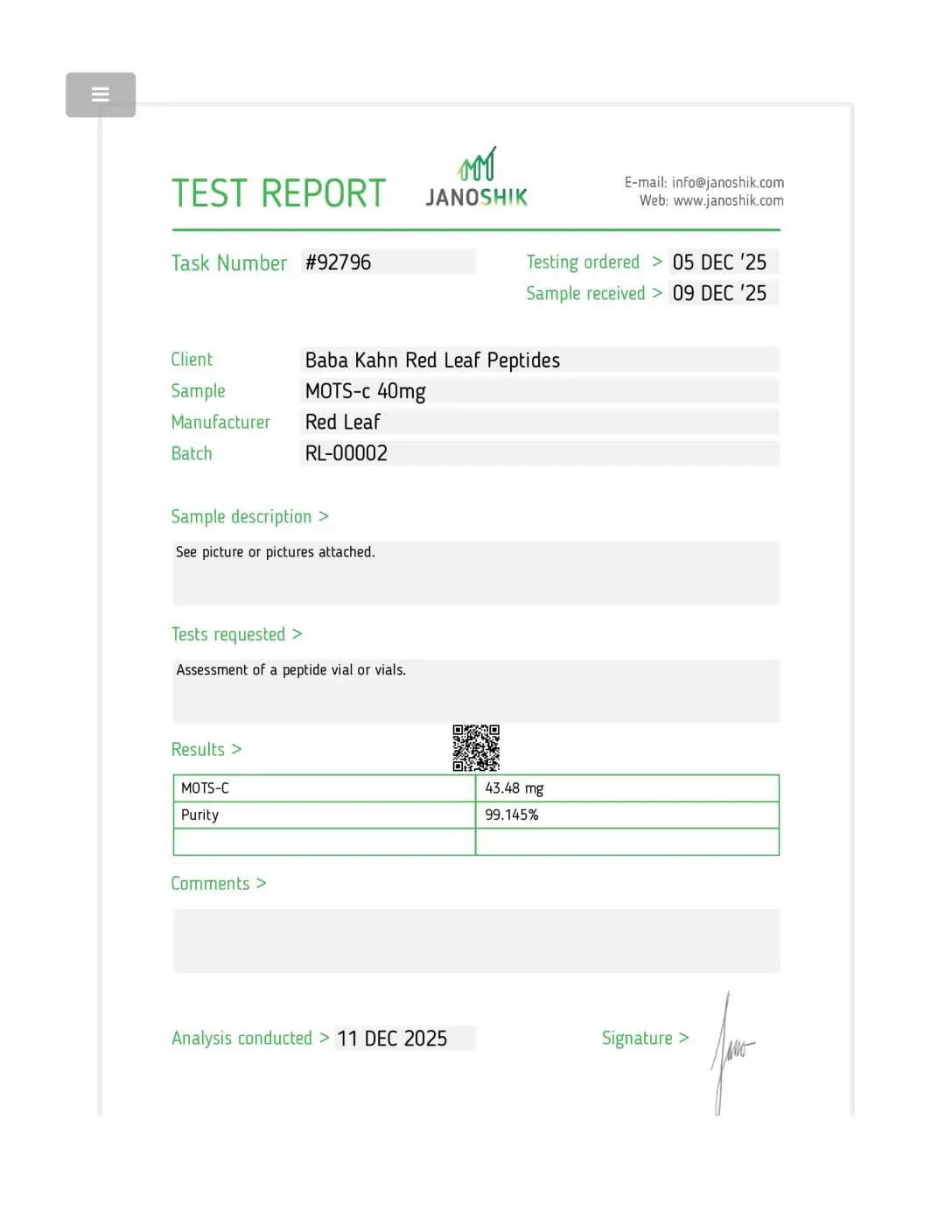
A label or headline purity number cannot answer every quality question. Review the batch-specific certificate of analysis and verify that the lot number matches the vial received.
High-performance liquid chromatography can estimate chromatographic purity. Mass spectrometry can support molecular identity. Net content, sterility and endotoxin status are separate considerations. Testing requirements should be chosen according to the study and institutional protocol.
Receiving checklist
- Inspect the outer packaging and vial for damage.
- Confirm the product name, labelled amount and lot number.
- Match the lot to the available analytical report.
- Record the delivery date and condition in the laboratory inventory.
- Move the material promptly to appropriate storage.
Domestic fulfilment may reduce transit and border delays, but supplier location alone does not prove quality. Traceable batches, realistic claims and responsive support matter more. Review our Canada-wide shipping information before ordering.
Storage and handling
Lyophilization removes water to improve stability during storage. It does not eliminate sensitivity to heat, moisture, light or repeated temperature changes. Keep the vial sealed until required by the study and follow the supplied storage conditions.
Only trained personnel should handle the material under an approved protocol. This page does not provide reconstitution, dosing, administration or injection-site instructions. Any injection site advice found in consumer content is outside the intended use of this laboratory product.
Research limitations and responsible use
Terms such as “energy,” “metabolism,” “performance” and “healthy aging” can make early research sound more conclusive than it is. A mechanism is not a guaranteed outcome, and promising animal data do not establish effectiveness in humans.
MOTS-c peptide 40mg is sold strictly for research and is not intended for human or veterinary use. Researchers are responsible for lawful procurement, institutional approval, risk assessment, documentation, storage and disposal.
Frequently asked questions
What is MOTS-c?
It is a short mitochondria-derived peptide studied as a signalling molecule in cellular-energy and metabolic-stress research.
Why is it called a mitochondrial-derived peptide?
Its coding sequence is associated with mitochondrial DNA rather than the nuclear genome that encodes most human proteins.
What do researchers investigate?
Published research includes cellular energy sensing, metabolic stress, exercise-related models and aging-associated biology.
Is the evidence mainly from human studies?
No. Much of the literature is preclinical. Human clinical evidence is comparatively limited and should be interpreted cautiously.
Does an animal study prove a benefit in people?
No. Animal models can explore mechanisms and generate hypotheses, but they cannot establish human safety or effectiveness.
Is this product intended for injection or personal use?
No. It is supplied exclusively for laboratory research and is not intended for human or veterinary administration.
What does a certificate of analysis show?
A COA summarizes tests performed on a batch. Researchers should confirm the lot number, methods and results rather than relying on a generic document.
Does HPLC purity establish identity and vial content?
No. Chromatographic purity, molecular identity and net content answer different analytical questions.
Where does Red Leaf Research Labs ship?
Canadian shipping details, delivery expectations and order information are available on the company’s shipping page.
Summary
MOTS-c peptide research focuses on mitochondrial signalling, cellular energy and metabolic adaptation. The evidence is strongest as a developing laboratory field, not as a basis for consumer promises. Canadian researchers should compare study quality, verify batch documentation and use the material only within an appropriate research protocol.
Independent third-party testing
Janoshik Lab Reports
Review available analytical reports associated with this product.
ANALYTICAL
REPORT
Independent analysis
MOTS-c Peptide 40mg
A certificate describes the submitted sample shown in that report. It does not establish clinical safety, efficacy, or suitability for human or veterinary use.


 Owned and operated by a cf veteran