Owned and operated by a cf veteran


One pulls a single lever. The other pulls three. Only one of them is an approved medicine. Here is the honest comparison.
- 3 receptors vs 1
- 28.3% vs no direct test
- Not approved vs approved
- No head-to-head trial
Ozempic is semaglutide. It works on one receptor, GLP-1, and it is an approved prescription medicine. Retatrutide works on three, GLP-1, GIP and glucagon, and it is not approved anywhere. In their own separate trials retatrutide showed bigger average weight loss. Nobody has tested the two against each other. So no one can say which is better.
- Retatrutide vs Ozempic: the sh…
- Retatrutide vs Ozempic at a gl…
- What is retatrutide?
- What is Ozempic?
- How do they work differently?
- Which causes more weight loss?
- Side effects, side by side
- Which is safer?
- Can you switch from Ozempic to…
- Cost and availability
- The verdict
- Common questions
- The short version
- Sources
- About this comparison
Retatrutide vs Ozempic: the short answer
They are not the same drug, and only one of them is a medicine.
Ozempic contains semaglutide. It pulls one lever, called GLP-1. It is approved. Doctors write for it. It has been in real patients for years.
Retatrutide pulls three – GLP-1, GIP and glucagon. It is still being tested. It is not approved anywhere.
In separate trials, retatrutide produced bigger average weight loss. But nobody has run the two against each other. So “bigger” comes from two studies with different people in them. That is not a comparison.
Medical note: this is educational, not medical advice. Do not use anything sold as retatrutide outside a registered trial. Talk to a doctor about diabetes or weight.
Retatrutide vs Ozempic at a glance
| Feature | Retatrutide | Ozempic |
|---|---|---|
| Active ingredient | Retatrutide (LY3437943) | Semaglutide |
| How it works | Switches on GLP-1, GIP and glucagon | Activates the GLP-1 receptor |
| Regulatory status | Still in testing. Not approved | Approved medicine for type 2 diabetes, and for cutting some heart and kidney risk |
| Weight-loss evidence | Up to 28.3% average loss at 80 weeks on 12mg. Company-reported Phase 3. | Ozempic trials are mostly about diabetes. Weight-dose semaglutide is sold as Wegovy. Different brand, different dose. |
| Direct comparison | No head-to-head retatrutide vs Ozempic clinical trial | |
| Common concerns | Nausea, diarrhea, constipation, vomiting. Safety still being studied | Nausea, vomiting, diarrhea, belly pain, constipation. Set label warnings |
What is retatrutide?
A once-a-week injectable being developed by Eli Lilly.
People call it a triple agonist. That sounds worse than it is. It means one molecule switches on three signals instead of one. GLP-1, GIP and glucagon.
GLP-1 and GIP handle hunger, digestion and insulin. Glucagon is messier. It ties into how you burn energy and handle sugar. The bet is that hitting all three does more than hitting one.
It is still being tested. Lilly says plainly that no regulator has approved it. The only legal way to get it is inside one of their trials. They have announced good Phase 3 results and plan to file in the US in 2027.
An announcement is not an approval. Remember that when a shop quotes those numbers at you.
What is Ozempic?
Ozempic is the brand name for semaglutide at the doses used for type 2 diabetes.
It switches on the GLP-1 receptor. That helps insulin come out when sugar is high. It slows the stomach. It takes the edge off hunger. One shot a week, on prescription.
It is approved for blood sugar in adults with type 2 diabetes. It is also approved to cut some heart and kidney risks. People often lose weight on it. That is not what it is approved for.
Here is what almost every comparison gets wrong. The big semaglutide weight-loss numbers come from Wegovy. That is semaglutide at 2.4mg for weight. Same molecule. Different brand, different dose, different approval.
So when a site shows “Ozempic results” for weight loss, check if they are really Wegovy’s.
How do they work differently?
Ozempic: one receptor
GLP-1 only. You feel full sooner. You eat less. Blood sugar behaves better. Your stomach empties more slowly, mostly in the first weeks.
Retatrutide: three receptors
Everything Ozempic does, plus GIP and glucagon. GIP is thought to add to the hunger and insulin signals. The glucagon part is where the interest in energy use and fat metabolism comes from.
But three is not automatically better. More levers means more things happening, and more ways to get unexpected side effects. “Triple agonist” describes the design. It is not a safety score.
Which causes more weight loss?
Retatrutide’s numbers are striking.
In Phase 2, the 12mg group lost 24.2% of their weight in 48 weeks. In May 2026 Lilly said the 12mg group in Phase 3 lost 28.3% at 80 weeks. The 9mg group lost 25.9%. The 4mg group lost 19.0%.
Those Phase 3 numbers come from the company. They had not been through a journal when this page was updated.
Now here is why you cannot line those up against Ozempic.
Ozempic’s trials enrolled people with type 2 diabetes and were built around blood sugar, not weight. The big semaglutide obesity trials used Wegovy. Different people, different doses, different lengths, different questions being asked.
Putting two numbers side by side does not make them comparable. It just puts them next to each other.
What you can fairly say is this. Separate trials point to retatrutide having the larger average effect. What you cannot say is by how much. Only a head-to-head trial answers that, and nobody has run one.
Side effects, side by side
Both work on the same family of pathways, so the side effects overlap heavily. It is the gut, for both of them.
- Retatrutide: nausea, diarrhea, constipation and vomiting were common in trials and got worse as the dose went up. Phase 2 also found heart rate rising with dose, peaking and then coming back down. There is more detail on what retatrutide does to digestion.
- Ozempic: the label lists nausea, vomiting, diarrhea, abdominal pain and constipation. It also carries warnings. Pancreatitis. Gallbladder disease. Kidney harm from dehydration. Bad gut reactions. Eye problems in diabetes.
One difference matters more than the rest. Ozempic carries a boxed warning about thyroid tumours seen in rats. Nobody with a family history of medullary thyroid cancer or MEN 2 should use it.
Retatrutide has no such warning. Not because it is cleared. Because nobody has finished writing its label. What ends up on it depends on the full evidence and the regulator. Neither exists yet.
Which is safer?
Ozempic, and it is not really close, for one unglamorous reason.
It has been through review. It is made to a standard. It has an official label listing the warnings. And it has years of reports from real patients outside trials. That is where rare problems turn up.
Retatrutide has a growing safety file and no real-world data at all. There is no market for it.
That does not make Ozempic right for everyone. A clinician still has to weigh medical history, other medicines, pregnancy plans, diabetes complications and the risk of side effects. It does mean this. There is no honest way to treat an unapproved product bought online as the equal of a real medicine.
Can you switch from Ozempic to retatrutide?
No, and there is nothing to switch to. Retatrutide is not an approved treatment. It should not be used outside a trial.
There is no conversion schedule, because you cannot convert to something that has not been approved. Swapping or stacking incretin drugs without medical oversight risks worse gut side effects, dehydration, and low blood sugar if certain diabetes medicines are involved.
If Ozempic is not working, or the side effects are too much, that is a talk with the prescriber. There may be approved options. Which one depends on the goal. Blood sugar, weight, heart risk, or something else.
Cost and availability
Ozempic is on prescription. What it costs depends on your country, province and plan.
Retatrutide has no real retail price. It is not approved and cannot be prescribed. Anything with a price tag on it is not a pharmacy product.
Lilly has warned that products claiming to be retatrutide outside its trials may hold the wrong compound, the wrong amount, or junk.
And a point worth being blunt about, since we sell research peptides ourselves: a certificate of analysis tells you what is in the vial. It does not turn an investigational chemical into an approved medicine. Those are different claims, and shops blur them on purpose.
The verdict
Retatrutide looks promising. Its trial numbers are bigger than anything tied to semaglutide.
It is also still in testing. No study has shown it works better or is safer than Ozempic. Nobody has checked.
Ozempic is the settled, regulated option for what it is approved to do. And if the topic is weight, the honest comparison is not reta against Ozempic at all. It is reta against Wegovy, because Wegovy is the one approved for weight.
So do not pick on a viral percentage or a receptor count. Approval status matters more. So does what you are treating, your health history, the side effects, whether you can get it, and what your doctor says.
Common questions
Is retatrutide the same as Ozempic?
No. Different molecules. Different companies. Different targets. Retatrutide hits GLP-1, GIP and glucagon. Ozempic is semaglutide and hits GLP-1.
Is retatrutide stronger than Ozempic?
It showed bigger average weight loss in its own trials. That is not the same as being stronger. The studies used different people, doses and designs. No one has tested them against each other.
Is retatrutide approved in Canada?
No. It is not approved by Health Canada, the FDA, or any other regulator.
Does retatrutide burn fat?
Trials showed big drops in body weight and waist size. Researchers are still studying how the three paths affect hunger and energy. Calling it a fat burner is marketing, not a description.
Does Ozempic cause weight loss?
It can. But that is not what it is approved for. Its approved uses are type 2 diabetes and cutting some heart and kidney risks. Wegovy is the semaglutide brand approved for weight.
Can you take retatrutide and Ozempic together?
There is no approved plan that does that. Retatrutide belongs in a trial. Anything involving Ozempic belongs with a prescriber.
What is the biggest difference between retatrutide and Ozempic?
How they work, and where they stand. One is an unapproved triple agonist with promising trial data. The other is an approved GLP-1 medicine with a full label and years of real-world safety reports.
Is retatrutide better than Ozempic?
Nobody knows. Retatrutide showed bigger average weight loss in its own trials. No trial has ever put the two side by side, so “better” has not been tested.
How is retatrutide different from Mounjaro?
Mounjaro is tirzepatide and works on two receptors, GIP and GLP-1. Retatrutide adds glucagon for three. Mounjaro is approved. Retatrutide is not.
Is retatrutide the same as Wegovy?
No. Wegovy is semaglutide at the weight-management dose. Most big “Ozempic weight loss” numbers online are really Wegovy numbers.
Can I buy retatrutide instead of Ozempic?
No. There is no approved retatrutide product to buy. Research material is not a medicine and is not a substitute for a prescription.
Which has more side effects?
Both cause gut effects. There is no head-to-head trial, so comparing rates from separate studies is not a fair test.
What is retatrutide called in trials?
LY3437943. That is the code to search if you want the studies themselves.
The short version
- Different drugs. Ozempic pulls one lever. Retatrutide pulls three.
- Ozempic is approved and prescribed. Retatrutide is still in testing and not approved anywhere.
- Retatrutide showed up to 28.3% average weight loss at 80 weeks. That is a company figure, not a reviewed one.
- No head-to-head trial exists. So nobody can tell you which is better.
- Most “Ozempic weight loss” figures online are actually Wegovy’s.
- Both cause gut side effects. Only Ozempic has a finished label and real-world safety data.
- A certificate of analysis is not an approval.
Sources
- New England Journal of Medicine: Retatrutide Phase 2 obesity trial
- Eli Lilly: TRIUMPH-1 Phase 3 topline results, May 2026
- Eli Lilly: Retatrutide status and public-safety information
- FDA: Ozempic prescribing information
Last reviewed: August 8, 2026.
About this comparison
Are retatrutide and Ozempic the same compound?
No. Ozempic contains semaglutide. Retatrutide is a different molecule, still in testing, built to hit three paths.
Can results from separate trials be compared directly?
Not reliably. The people, the goals, the length and the design all differ. Any one of those can move a result.
Does this comparison recommend a treatment?
No. It is teaching only. It is not a substitute for advice from a Canadian health professional.
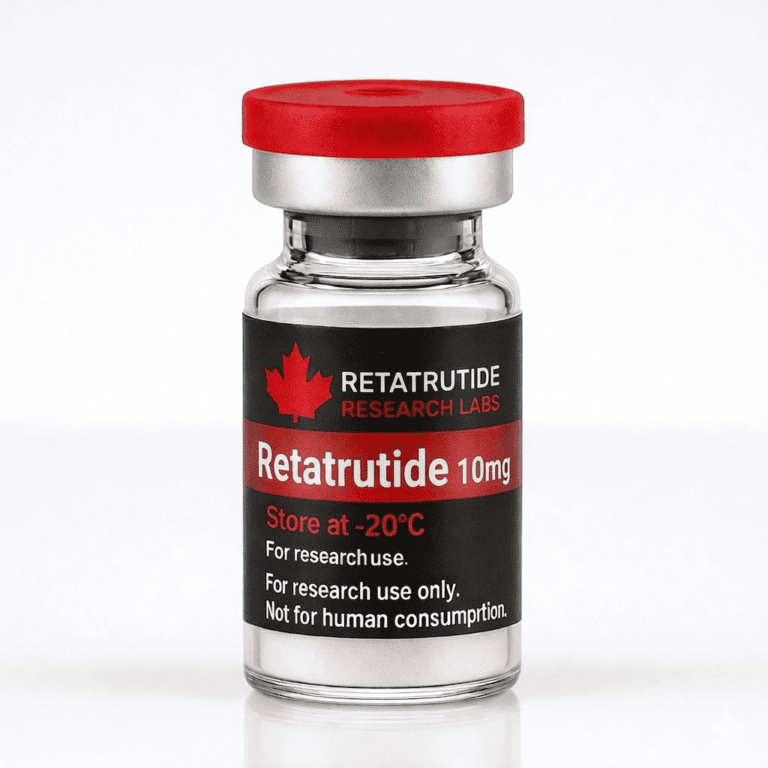 Retatrutide 10mg$79.99 CAD · research use onlyRetatrutide 20mg$149 CAD · research use onlyRetatrutide 30mg$199 CAD · research use only
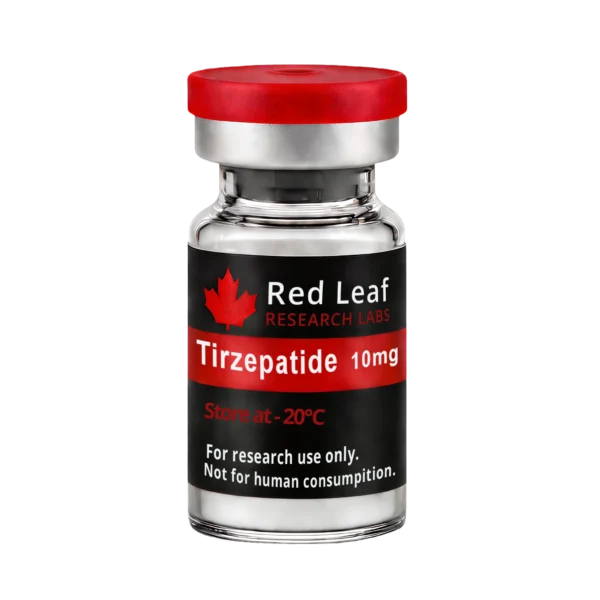 TirzepatideFrom $54 CAD · 10mg or 20mg
 Bacteriostatic Water 30mlMixing liquid for lab work
 Research Pen Add-OnLab handling accessory
Other retatrutide guides on this site
Where to get retatrutide
The full buyer’s guide for labs, with supplier checks.
Availability in Canada
Where the rules stand and what approval would take.
Retatrutide cost in Canada
Price per mg, per vial and per size, with the full math.
Side effects in the research
What the trials reported, without turning it into advice.
Retatrutide vs Ozempic
Three receptors against one, on the published numbers.
Sema vs tirze vs reta
One, two and three receptors, side by side.
Sold for lawful lab research only. Not a medicine, and never a stand-in for one.
Research and buying information only. Not medical advice. Not dosing advice. Not a recommendation for human use. Retatrutide from Red Leaf Research Labs is lab research material and is not approved by Health Canada for injection, ingestion, or any human or animal use. Prices and shipping terms change; check the live product page. Reviewed September 5, 2026 by Baba Kahn, founder of Red Leaf Research Labs.