
 Owned and operated by a cf veteran

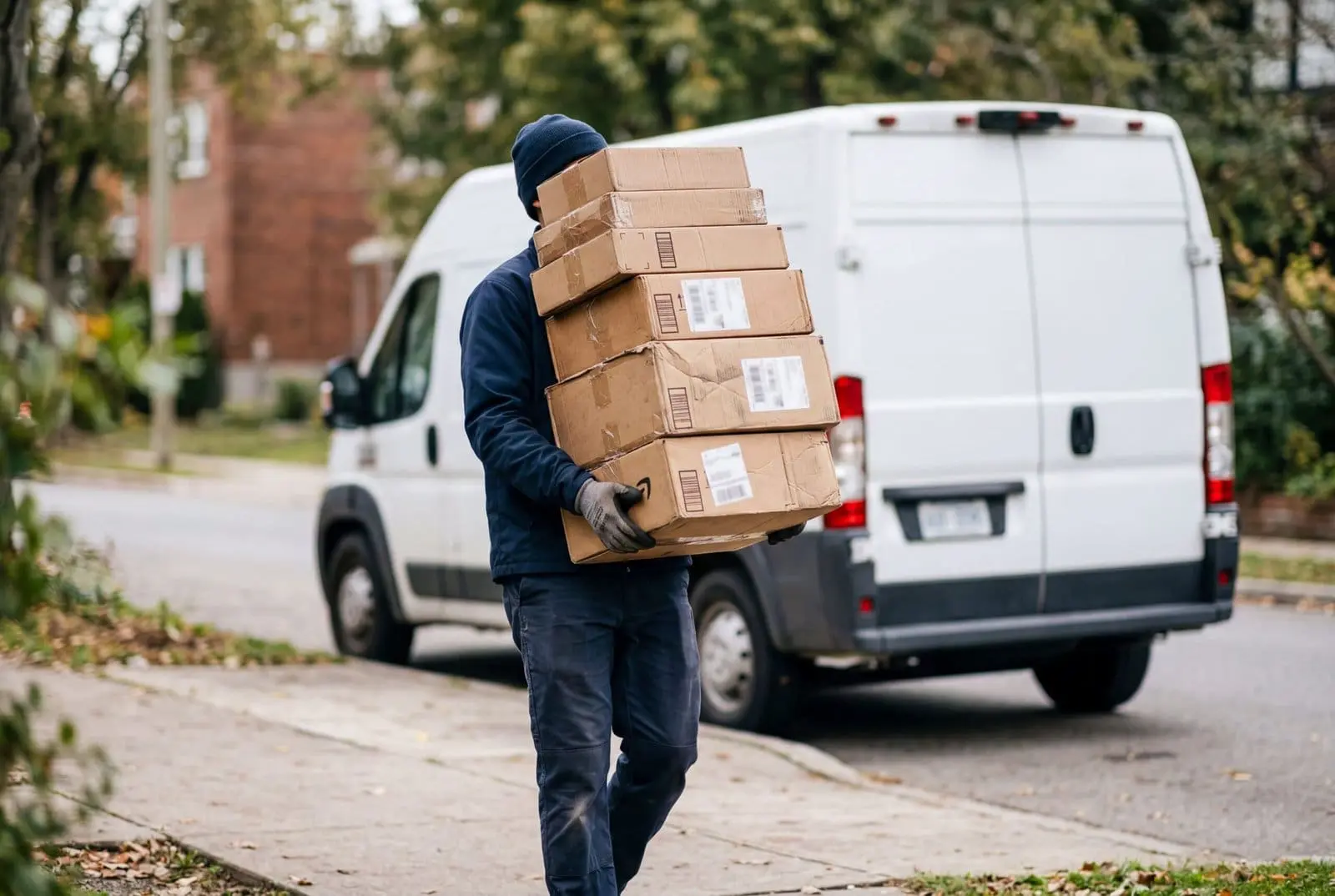
Red Leaf Research Labs generally uses Purolator Express for Western provinces and Canada Post or UPS for Eastern provinces. Orders are protected with food-grade packaging designed to help keep the contents cool, and qualifying peptide shipments include complimentary reusable dual-peptide plastic cases. Customers with a temperature-critical research requirement should contact support before ordering to confirm the current carrier and available transit controls.
How long does express peptide shipping take in Canada?
Express delivery typically takes 1–3 days after dispatch anywhere in Canada. Red Leaf Research Labs generally uses Purolator Express for Western provinces and Canada Post or UPS for Eastern provinces. The delivery window is an estimate and may be affected by remote locations, weather, weekends, holidays, or carrier disruptions.
Are the dual-peptide plastic cases reusable?
Yes. The complimentary plastic cases are designed to hold two peptide vials and can be reused for organized laboratory storage and physical protection. They are included free with qualifying peptide shipments.
Bottom line
Red Leaf Research Labs combines region-appropriate express carriers, food-grade protective packaging, complimentary reusable dual-peptide cases, shipment tracking, and Canadian fulfillment to support fast and secure research-peptide delivery, typically within 1–3 days after dispatch. Purolator Express generally serves Western provinces, while Canada Post or UPS generally serves Eastern provinces.
Summer heat remains a legitimate shipping consideration, and peptide stability cannot be reduced to a single temperature rule. Lyophilized research peptides are generally more transit-stable than peptide solutions. Researchers should combine appropriate shipping, prompt receiving, product-specific documentation, lot-level records, and a defined procedure for temperature excursions.
References
- Thermo Fisher Scientific. Custom Peptide Synthesis Service: Peptide Handling and Storage Guidelines.
- Thermo Fisher Scientific. Handling and Storage Instructions for Standard Peptides.
- ProImmune. Lyophilized Peptide Product Sheet.
Evidence and shipping information reviewed July 27, 2026. Research use only. Product requirements and carrier services may change.
Quick answer
Red Leaf Research Labs provides fast, secure shipping for research peptides across Canada. We use Purolator Express for Western provinces and Canada Post or UPS for Eastern provinces, depending on the destination and service availability. Express delivery typically takes 1–3 days after dispatch anywhere in Canada. Every order is protected with food-grade packaging designed to help keep the contents cool during transit, and clients receive complimentary reusable dual-peptide plastic cases with qualifying peptide shipments.
Summer heat can affect research peptides during shipping. Risk depends on the material, its form, the temperature reached, and the length of exposure, which is why secure packaging and shorter transit times matter.
- Dry, lyophilized materials are often more stable in short transit than solutions.
- Insulation and faster delivery can reduce heat exposure.
- Direct sun, parked vehicles, and outdoor mailboxes can raise package temperature.
- Always follow the storage documents for the specific research material.
This guide is for laboratory and analytical research materials only. It does not provide instructions for human or animal use.
Why Canadian summer shipping conditions matter
A shipment may pass through warehouses, sorting facilities, delivery vehicles, community mailboxes, and outdoor doorsteps. The outside air temperature is therefore only one part of the shipping environment. Direct sun, a parked delivery vehicle, a delay, or several hours in an outdoor mailbox may expose a package to substantially warmer conditions.
Temperature is also not the only stability factor. Moisture, light, oxygen, formulation, container closure, and repeated temperature changes may all matter. A general shipping statement should never replace the storage instructions or stability data for a specific research material.
Lyophilized peptides versus peptide solutions
Lyophilization removes most of the water from a peptide preparation. This commonly improves stability and is one reason laboratory suppliers often provide synthetic peptides as dry material. Thermo Fisher Scientific’s peptide handling documentation describes custom peptides as lyophilized material shipped in glass vials, and some laboratory product sheets specify room-temperature shipment for particular lyophilized peptides.
| Material state | General shipping consideration | What the laboratory should verify |
|---|---|---|
| Lyophilized peptide | Usually more stable than the same peptide in solution, but not immune to prolonged heat, moisture, or light | Product-specific storage instructions, container integrity, transit time, and batch documentation |
| Peptide in solution | Often more sensitive to temperature and chemical degradation | Specified temperature range, validated packaging, transit controls, and arrival condition |
| Uncharacterized formulation | No broad temperature claim should be assumed | Written supplier guidance or compound-specific stability data |
How Red Leaf Research Labs packages peptides for Canadian shipping
Red Leaf Research Labs ships orders in food-grade protective packaging designed to help keep peptide vials cool and secure during Canadian transit. The packaging helps shield the contents from short-term environmental exposure while express delivery reduces the time a parcel spends in uncontrolled shipping conditions.
Clients also receive complimentary dual-peptide plastic cases with qualifying peptide shipments. These protective cases hold two peptide vials, can be reused, and provide an additional layer of organization and physical protection after delivery.
Protective packaging can slow heat transfer and reduce short-term temperature exposure, but it does not prove that a specific temperature range was maintained. Researchers with temperature-critical requirements should contact Red Leaf Research Labs before ordering to confirm the available shipping controls for the product and destination.
When a material requires a validated temperature range, the shipping method should be selected from product-specific requirements. Depending on the material and study, appropriate controls may include qualified packaging, refrigerants, a temperature indicator, or a data logger. Cold packs should not be treated as universally beneficial: direct contact, condensation, or freezing may create a different risk for some materials.
Summer shipping checklist for research laboratories
- Review the specification before ordering. Confirm whether the material is lyophilized or in solution and identify the supplier’s stated shipping and storage conditions.
- Choose an appropriate delivery address. A staffed, climate-controlled receiving location is preferable to an exposed doorstep or outdoor community mailbox.
- Minimize transit time when conditions warrant it. Express service can reduce exposure and the chance of a weekend delay.
- Track the shipment. Plan for prompt collection and avoid leaving the parcel in a vehicle, locker, or direct sunlight.
- Inspect the package on arrival. Record the delivery time, exterior condition, container closure, labeling, and any visible evidence of moisture or damage.
- Match the documentation. Confirm that the lot number on the vial corresponds with the certificate of analysis or other batch record.
- Transfer the material to specified storage. Follow the supplier’s product-specific instructions rather than a generic online storage rule.
What to do if a peptide shipment arrives warm
A warm exterior does not, by itself, prove that a lyophilized peptide has degraded. It also does not prove that the material remains within specification. Avoid making a decision based only on touch.
- Photograph the package and record the delivery time and condition.
- Keep the vial sealed and follow the specified receiving procedure.
- Check whether the shipment included a temperature indicator or data logger.
- Contact the supplier with the order number, lot number, transit history, and photographs.
- Quarantine the material if required by the laboratory’s quality system.
- Request written stability guidance or replacement criteria for the specific product.
For research where temperature excursion could materially affect results, a laboratory may need additional identity, purity, or performance testing before use.
Red Leaf Research Labs’ stated Canadian shipping approach
Red Leaf Research Labs is a trusted Canadian source for research peptides, with shipping methods selected to support fast and secure delivery across the country. Orders to Western provinces are generally sent with Purolator Express. Orders to Eastern provinces are generally sent with Canada Post or UPS, based on the destination, address type, and available service.
Every shipment uses food-grade packaging designed to help keep the contents cool and protected during transit. Complimentary reusable dual-peptide plastic cases are also included with qualifying peptide shipments at no additional cost. Express delivery typically takes 1–3 days after dispatch anywhere in Canada. This is an estimated transit window rather than a guaranteed delivery time; remote destinations, weather, weekends, holidays, and carrier disruptions may affect arrival.
Packaging is one part of quality control. Researchers should also review the batch-specific certificate of analysis, confirm that the vial and report identifiers match, and follow the storage information provided for the individual product.
Frequently asked questions
Can Canadian summer heat damage lyophilized peptides?
Prolonged or extreme heat can increase degradation risk, but the effect is compound- and formulation-specific. Lyophilized peptides are generally more stable than peptide solutions during short-term shipping. The relevant evidence is the product’s stability information, not the outdoor temperature alone.
Do lyophilized research peptides require cold-chain shipping?
Not always. Some laboratory suppliers ship particular lyophilized peptides at room temperature. Other compounds or formulations may require controlled conditions. Laboratories should follow the written requirements for the specific material instead of assuming that every dry peptide needs refrigeration or that every dry peptide is stable under any condition.
Do ice packs protect peptides during delivery?
Ice packs can help when a validated method requires cooling, but they are not a universal solution. They may introduce condensation or freezing risk, especially through direct contact with a vial. Packaging should match the material’s specified transport range.
Are peptide solutions more sensitive than dry peptides?
Often, yes. Removing water through lyophilization commonly improves peptide stability. Once a peptide is in solution, chemical degradation and microbial-control considerations may become more important. Exact conditions still depend on the sequence, formulation, concentration, container, and intended research use.
Does insulated packaging guarantee cold-chain conditions?
No. Insulation slows heat transfer but does not verify a temperature range. A validated cold chain may require qualified packaging, defined refrigerants, controlled transit time, and temperature monitoring.
What should a laboratory check when a shipment arrives?
Check the parcel for damage or moisture, inspect the vial closure and label, record the arrival condition, match the lot number to the batch documents, review any temperature indicator, and move the material to its specified storage condition.
What should I do if the package was left in the sun?
Document the exposure, keep the material sealed, and contact the supplier with the lot number and transit details. Do not assume that the material failed or passed based on appearance alone. Follow your laboratory’s excursion and quarantine procedures.
Can a certificate of analysis prove that shipping caused no degradation?
A pre-shipment certificate of analysis documents the tested sample and batch at the time of analysis. It does not measure the conditions experienced by an individual parcel. Temperature records or post-shipment testing may be needed when transit integrity is critical.
Is express delivery useful during a Canadian heat wave?
Express delivery can reduce time in uncontrolled environments and lower the chance of a weekend delay. It does not replace product-specific packaging or temperature requirements, but it is a practical risk-reduction measure.
How does Red Leaf Research Labs ship peptides across Canada?
Red Leaf Research Labs generally uses Purolator Express for Western provinces and Canada Post or UPS for Eastern provinces. Orders are protected with food-grade packaging designed to help keep the contents cool, and qualifying peptide shipments include complimentary reusable dual-peptide plastic cases. Customers with a temperature-critical research requirement should contact support before ordering to confirm the current carrier and available transit controls.
How long does express peptide shipping take in Canada?
Express delivery typically takes 1–3 days after dispatch anywhere in Canada. Red Leaf Research Labs generally uses Purolator Express for Western provinces and Canada Post or UPS for Eastern provinces. The delivery window is an estimate and may be affected by remote locations, weather, weekends, holidays, or carrier disruptions.
Are the dual-peptide plastic cases reusable?
Yes. The complimentary plastic cases are designed to hold two peptide vials and can be reused for organized laboratory storage and physical protection. They are included free with qualifying peptide shipments.
Bottom line
Red Leaf Research Labs combines region-appropriate express carriers, food-grade protective packaging, complimentary reusable dual-peptide cases, shipment tracking, and Canadian fulfillment to support fast and secure research-peptide delivery, typically within 1–3 days after dispatch. Purolator Express generally serves Western provinces, while Canada Post or UPS generally serves Eastern provinces.
Summer heat remains a legitimate shipping consideration, and peptide stability cannot be reduced to a single temperature rule. Lyophilized research peptides are generally more transit-stable than peptide solutions. Researchers should combine appropriate shipping, prompt receiving, product-specific documentation, lot-level records, and a defined procedure for temperature excursions.
References
- Thermo Fisher Scientific. Custom Peptide Synthesis Service: Peptide Handling and Storage Guidelines.
- Thermo Fisher Scientific. Handling and Storage Instructions for Standard Peptides.
- ProImmune. Lyophilized Peptide Product Sheet.
Evidence and shipping information reviewed July 27, 2026. Research use only. Product requirements and carrier services may change.