Owned and operated by a cf veteran


What delta sleep-inducing peptide is, and why the name promises more than the research delivers.
- Named for one 1977 finding
- Sleep research thin
- Not approved in Canada
- Research use only
DSIP was named after a single line of 1970s rabbit research, and the name has been doing marketing work ever since. The actual sleep evidence in humans is thin and inconsistent. It is not approved in Canada and is supplied as research material.
DSIP Canada searches usually refer to delta sleep-inducing peptide, an experimental nine-amino-acid peptide studied in sleep architecture, neurological signalling, circadian biology, stress response and neuroendocrine models. Despite its name, DSIP is not an approved sleep treatment in Canada, and the evidence does not establish it as a reliable sleep aid for people.
Quick answer: DSIP is a research peptide with the sequence Trp-Ala-Gly-Gly-Asp-Ala-Ser-Gly-Glu (WAGGDASGE). Canadian researchers should treat it as an investigational laboratory material, assess study design and analytical documentation carefully, and follow institutional rules and applicable Canadian law.
- Also called: delta sleep-inducing peptide
- Length: nine amino acids (a nonapeptide)
- Main research areas: sleep and EEG patterns, circadian signalling, stress biology and neuroendocrine regulation
- Evidence status: investigational, with mixed findings and limited modern human evidence
- Canadian status: not authorized by Health Canada as a sleep aid or therapeutic drug
What is DSIP?
Delta sleep-inducing peptide is a small peptide first reported during sleep-related research in the 1970s. Its memorable name came from early experimental observations involving spindle and delta-wave EEG activity. That label should not be read as proof that the molecule consistently induces sleep in humans.
DSIP is commonly described as a naturally occurring neuropeptide or peptide-like biological signal. Researchers have reported DSIP-like immunoreactivity in mammalian tissues, but its exact physiological role, receptor target and mechanism remain unresolved. That uncertainty is central to an accurate reading of the literature.
Why DSIP Canada is a distinct research topic
Canadian searchers often want two different answers: what the compound is and what rules or quality considerations apply in Canada. A useful DSIP Canada guide must address both. Scientific interest does not equal authorization, and a product described as “research use only” is not automatically safe, legal for personal use or suitable for administration.
Health Canada has specifically named DSIP in public advisories about unauthorized injectable peptide drugs. The agency states that unauthorized products have not been assessed for safety, efficacy or quality and advises consumers not to buy or use them. Read the current Health Canada peptide advisory for official guidance.
What researchers study about DSIP
Sleep architecture and EEG activity
Early experiments examined whether DSIP changed slow-wave sleep, spindle activity, sleep latency or other EEG measures. Results varied by model, route, timing and experimental conditions. The historical literature is scientifically interesting, but it does not support a simple claim that DSIP reliably improves sleep.
Circadian and neurological signalling
Researchers have also explored DSIP in relation to biological timing and central nervous system signalling. Proposed interactions have included neurotransmitter and opioid-related pathways, but no single confirmed receptor or complete mechanism explains all reported effects.
Stress-response and neuroendocrine models
Some studies investigated links between DSIP-like activity and hormonal or stress-response systems. These findings are hypothesis-generating. Differences between laboratory models, small studies and older analytical methods limit how confidently they can be generalized.
What the evidence does and does not show
The DSIP evidence base is older and less consistent than the marketing language seen on many peptide pages. Animal and laboratory findings can help define research questions, but they cannot establish safety, efficacy or a treatment protocol for people. Modern, well-controlled clinical evidence is limited.
- Supported: DSIP is a nine-amino-acid peptide with a long history in sleep and neuroendocrine research.
- Still uncertain: its endogenous biological role, primary receptor and reproducible mechanism.
- Not established: that DSIP safely treats insomnia, improves recovery or produces dependable benefits in humans.
For historical context, see the peer-reviewed DSIP research update indexed by PubMed and the earlier DSIP review. These sources are useful starting points, but their age and the mixed literature should be considered.
How Canadian laboratories can evaluate DSIP research material
A certificate of analysis is useful only when it can be connected to the exact batch being evaluated. A credible record should identify the compound, lot or batch number, test date, laboratory and analytical method. “Lab tested” without a traceable report gives researchers little to verify.
- Identity: mass spectrometry or another suitable method should support that the material is DSIP.
- Purity: HPLC results should include a readable chromatogram and clearly stated method or result.
- Batch match: the report, vial and product record should use the same lot identifier.
- Quantity: purity percentage does not prove the amount of material in a vial; net content requires separate verification.
- Handling records: storage, transport and chain-of-custody details matter for reproducibility.
- Scope: a purity test alone does not establish sterility, endotoxin status, safety or suitability for use in humans or animals.
DSIP Canada FAQ
What does DSIP stand for?
DSIP stands for delta sleep-inducing peptide. It is a nonapeptide, meaning it contains nine amino acids.
What is the amino-acid sequence of DSIP?
The commonly reported DSIP sequence is Trp-Ala-Gly-Gly-Asp-Ala-Ser-Gly-Glu, abbreviated WAGGDASGE.
Is DSIP naturally occurring?
DSIP has been described in the scientific literature as a naturally occurring peptide, and DSIP-like immunoreactivity has been reported in mammals. Its precise endogenous role remains debated.
Does DSIP induce sleep?
The name reflects early experimental observations, not a proven clinical outcome. Studies have produced variable results, and current evidence does not establish DSIP as a reliable sleep treatment.
What is DSIP studied for?
Research topics include sleep architecture, EEG activity, circadian signalling, stress-response biology, neurological pathways and neuroendocrine regulation.
Is DSIP approved in Canada?
DSIP is not authorized by Health Canada as a sleep aid or therapeutic drug. Health Canada has named DSIP in warnings concerning unauthorized injectable peptide drugs.
Can “research use only” DSIP be used by people?
No. A research-use label does not make a substance approved or suitable for human use. Health Canada advises consumers not to buy or use unauthorized injectable peptide products, including products marketed as research use only.
What should a DSIP certificate of analysis include?
Look for the compound name, a matching batch number, test date, identified laboratory, analytical method, numerical result and supporting chromatogram or spectrum. Confirm that the report applies to the material under study.
Does a high HPLC purity result prove a DSIP sample is safe?
No. HPLC purity does not by itself confirm identity, vial content, sterility, endotoxin levels, absence of contaminants or safety. Each claim needs an appropriate test.
How should DSIP research be interpreted?
Check the model, sample size, control group, dose conditions, route, timing, endpoints and statistical analysis. Separate animal or laboratory observations from claims about people, and look for independent replication.
Is DSIP the same as the Canadian DSIP marine program?
No. In Canadian government material, DSIP can also mean the Delegated Statutory Inspection Program for vessels. In peptide research, DSIP means delta sleep-inducing peptide. Adding “peptide” or “sleep peptide” to a search removes that ambiguity.
Bottom line for DSIP Canada research
DSIP is a historically important but still unresolved research peptide. The most accurate Canadian overview distinguishes early findings from established evidence, explains the regulatory context and treats analytical documentation as a research-quality issue rather than proof of human safety. Researchers should use primary sources, current institutional procedures and official Canadian guidance when planning or reviewing work.
Explore related educational resources in our Canadian peptide research library, including the ARA-290 research guide.
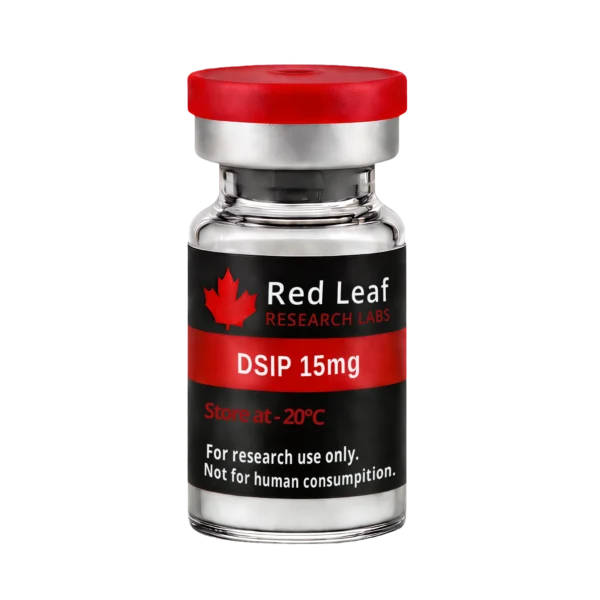 DSIP 15mg$89.99 CAD · research use only
 Selank 10mg$59 CAD · research use only
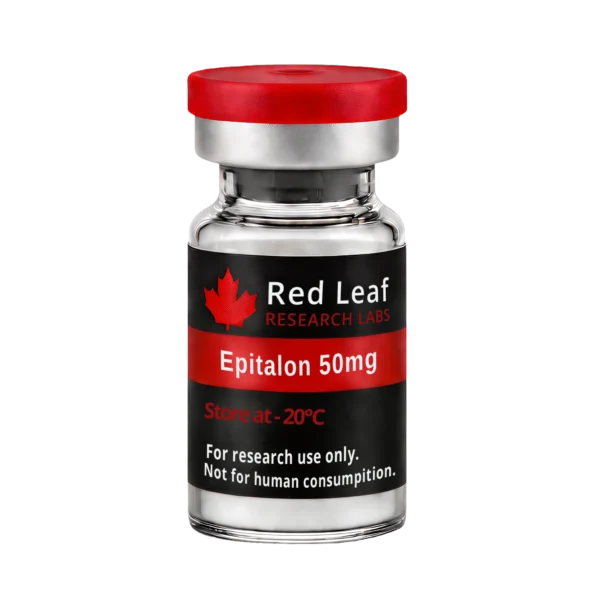 Epitalon 50mg$90 CAD · research use only
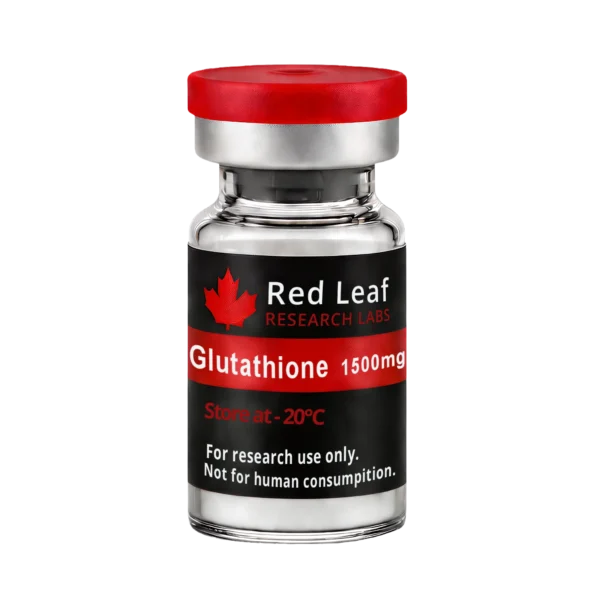 Glutathione 1500mg$59.99 CAD · research use only
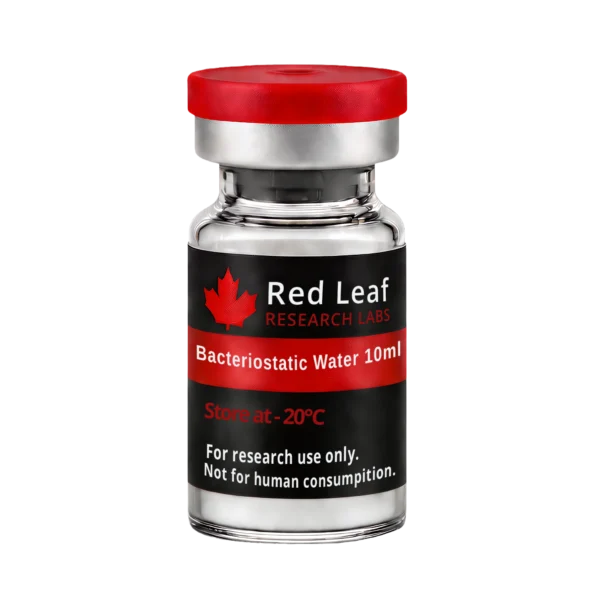 Bacteriostatic Water$10 CAD · research use only
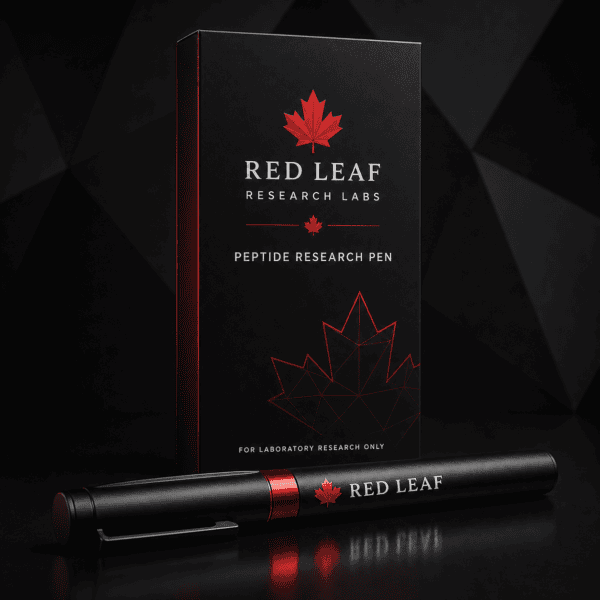 Peptide Pens Canada – Red Leaf Research Pen Add-On$99 CAD · research use only
Every product page carries its batch lab report with a verification link you can check at the testing laboratory, not just a PDF we host.
Browse the catalogue See the lab test sheetsResearch use only. Products sold by Red Leaf Research Labs are not approved by Health Canada for cosmetic application, therapeutic treatment, injection, ingestion, or any form of human or animal use. No claims are made regarding clinical outcomes, safety or efficacy. Pricing and stock are current at the time of publication and subject to change.